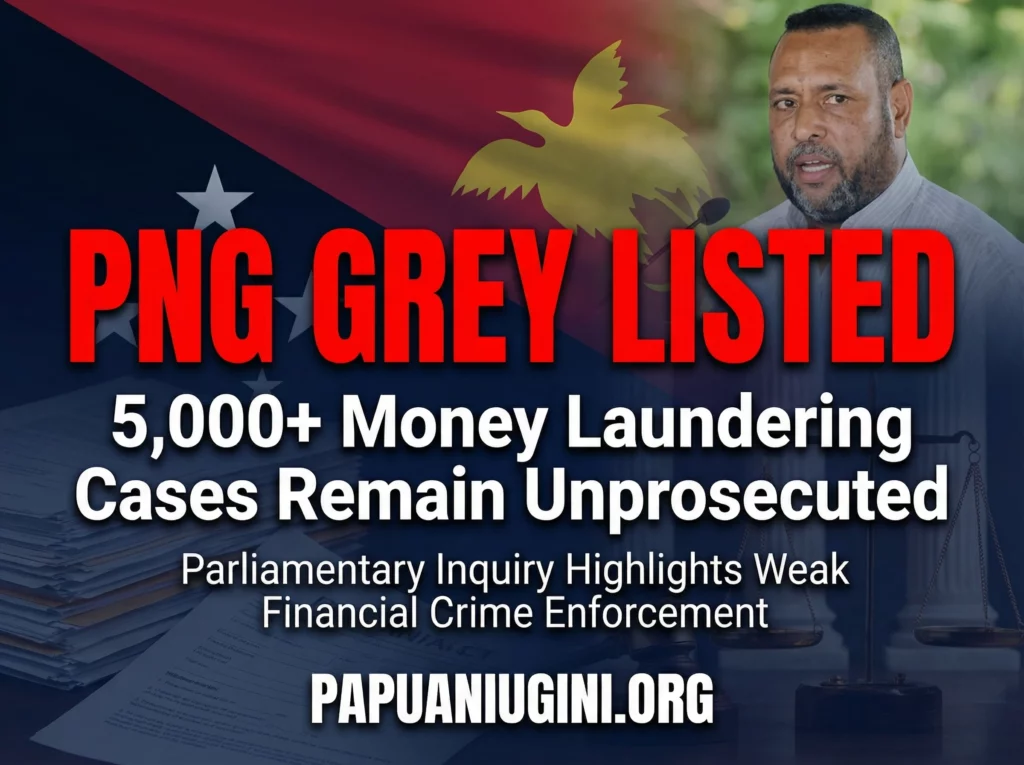
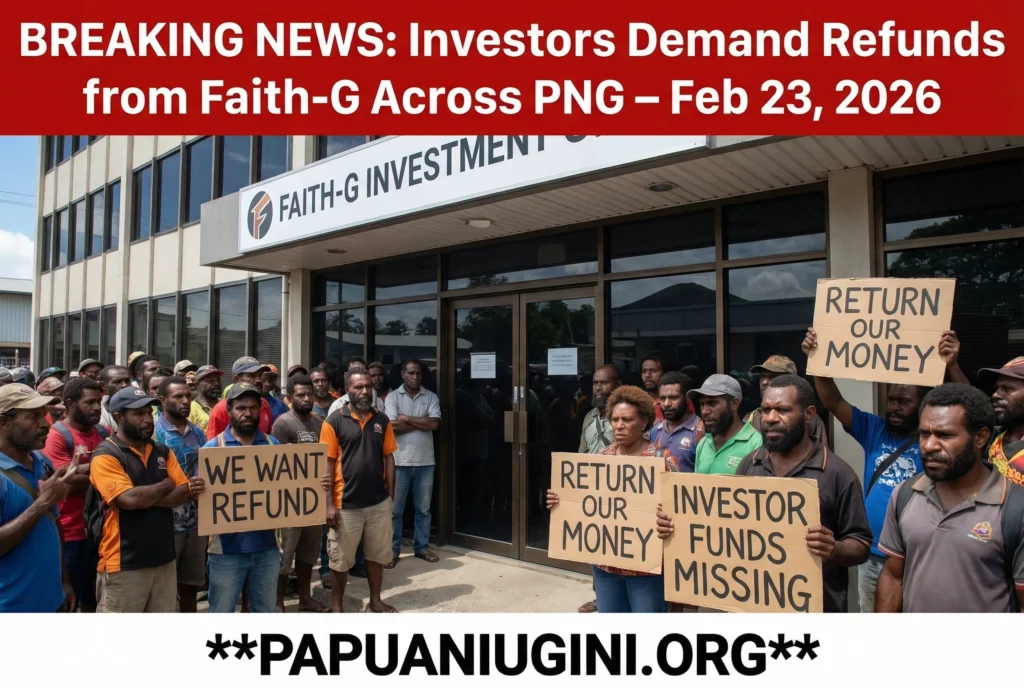
PNG FATF Grey List: Why Stronger Financial Crime Enforcement Is Needed. Why Papua New Guinea Must Strengthen Enforcement and Coordination to Exit the FATF Grey List
Papua New Guinea’s placement on the Financial Action Task Force (FATF) grey list shows that the country still needs to strengthen how it detects, investigates, and punishes money laundering and terrorist financing. Experts say exiting the grey list will require real enforcement results such as prosecutions, convictions, and confiscation of illegal assets — not just new laws. Strong coordination between government agencies and stronger transparency systems are needed to improve national financial governance and restore international confidence.
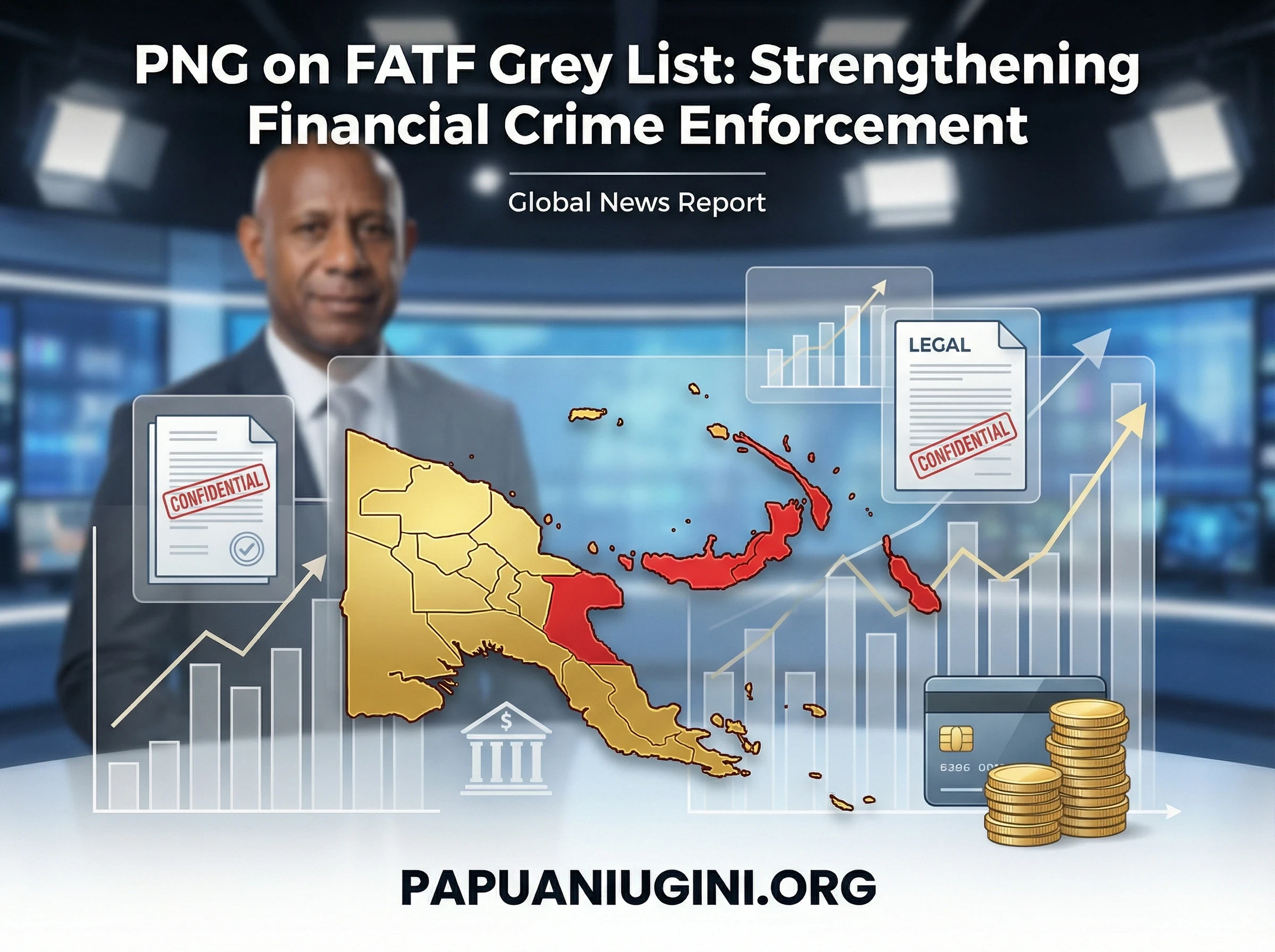 Papua New Guinea financial reform news highlighting FATF grey list and anti-money laundering enforcement measures. Designed by Image Studio AI
PNG FATF Grey List: Why Stronger Financial Crime Enforcement Is Needed.
Being placed on the Financial Action Task Force (FATF) grey list means Papua New Guinea’s systems for detecting, investigating, and punishing money laundering and terrorist financing are not yet fully effective. Exiting the list requires demonstrable enforcement outcomes, prosecutions, convictions, and confiscated assets, not merely the passage of legislation. Importantly, grey-listing does not automatically mean PNG is corrupt; it indicates weaknesses in national governance arrangements and institutional coordination.
A central challenge is insufficient coordination at the national level. Effective compliance requires Cabinet-level oversight and structured cooperation among key agencies such as the Bank of Papua New Guinea, the Financial Analysis and Supervision Unit, the Royal Papua New Guinea Constabulary, the Internal Revenue Commission, the Investment Promotion Authority, and the Customs Service. These bodies must consistently share intelligence, operate joint investigations, and monitor measurable enforcement targets. Without a coordinated “whole-of-government” approach, even strong laws will not produce credible results.
Most citizens and ordinary businesses are not the drivers of financial crime. The higher risks typically arise from complex financial networks, politically exposed persons, large commercial entities, and concealed beneficial ownership structures. Addressing these requires transparency of company ownership, effective unexplained-wealth enforcement, and strong supervision of high-risk sectors.
Sustainable reform therefore depends on political commitment. Measures such as firm anti-corruption enforcement, reduced tolerance for abuse of office, and institutional accountability frameworks can help restore confidence in governance. The objective is clear: create a system where illicit funds cannot be safely hidden or used within Papua New Guinea.
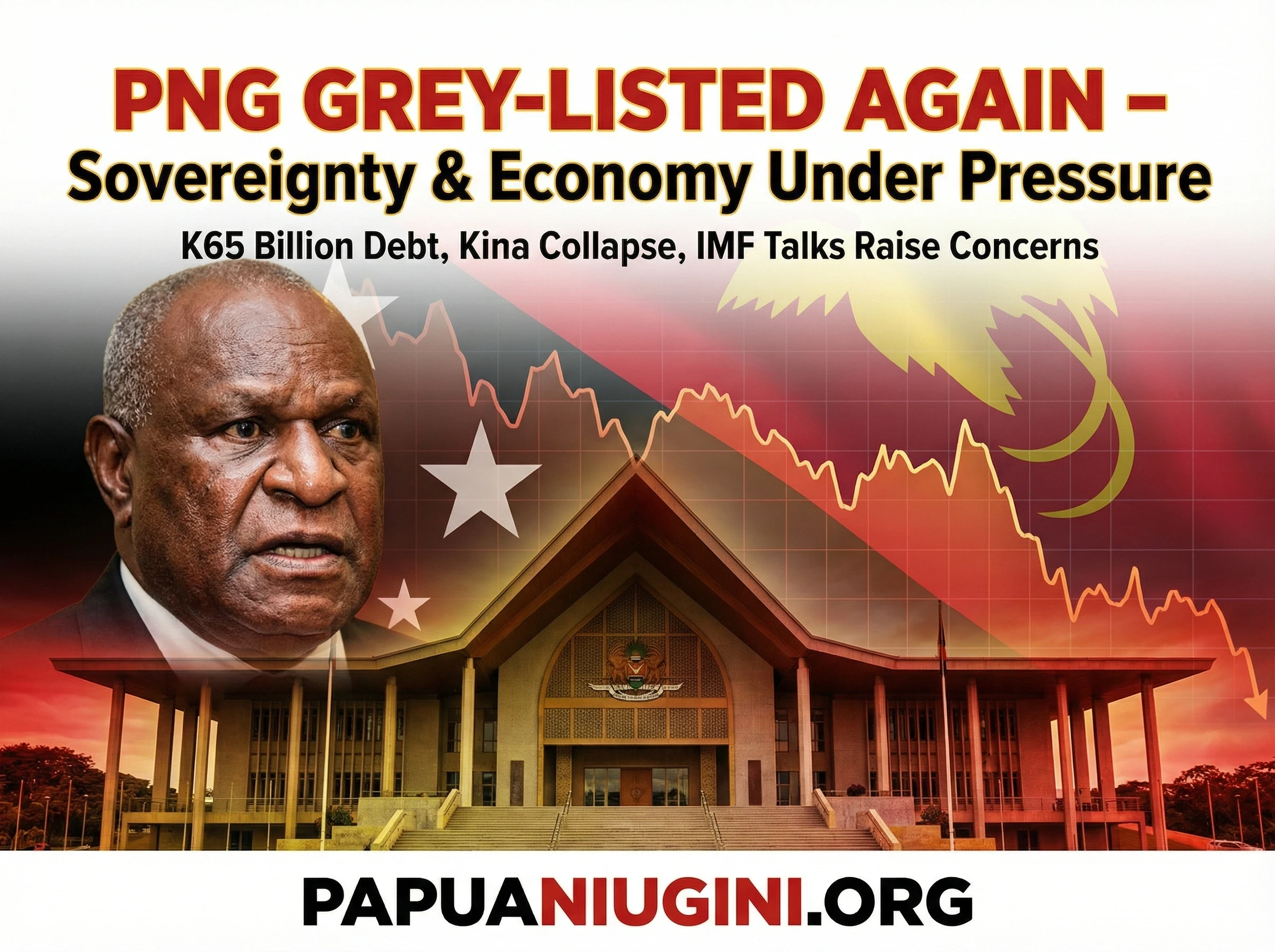 Designed by Image Studio AI
Related Posts
- PNG Grey listing: 5,000 Unprosecuted Money Laundering Cases Raise Alarm
- PNG Grey Listing Sparks Sovereignty & Economic Concerns Amid K65 Billion Debt
- Important Call For PNG Legal Reform: Some Laws Are Not Good
- Daniel Baulch Exposes Flawed Anti-Corruption Strategy In Papua New Guinea (PNG)
- Corruption Core: The Masterminds Bleeding the Nation
- Anslom Nakikus: Papua New Guinea Reggae Star
- Crystal Kewe: Papua new guinea Young Tech CEO Transforming Digital Innovation
- Israel Launches Daylight Strike Targeting Iran’s Top Leadership
- Israel’s Daylight Strike On Iran’s Leadership
- Faith-G Investors Demand Refunds Across PNG