PNG-US military agreement For journalists, commentators, politicians, researchers and anyone interested in the PNG-US agreement, these three readings will help.
by: Academia Nomad
PNG-US military agreement For journalists, commentators, politicians, researchers and anyone interested in the PNG-US agreement, these three readings will help.
The first one is the Supreme Court ruling on the Enhanced Cooperation Partnership in 2005, where AFP were immune to PNG laws. Supreme Court ruled the ECP Act unconstitutional.
Now the PNG-US agreement is not an Act/law, but it becomes a constitutional issue if it violates provisions of the Constitution and therefore falls under the ambit of the Supreme Court.
The second is an academic journal paper on the Australian interventions in Solomon Islands and PNG.
Third is a short article on why the U.S. refuses to be bound by international treaties in human rights and environmental concerns - to avoid being bound by it.
My hope is that our journalists read these articles, and when asking the political leaders, they ask questions that matter (sovereignty, practicalities, national interest, destabilising impacts of geopolitics etc.).
1. http://www.paclii.org/pg/cases/PGSC/2005/32.html
2. https://www.tandfonline.com/.../10.1080/13698240600877221
3. https://www.cfr.org/.../international-treaties-united...
To download the second reading, go to Google Scholar, and type “Police-Building in Weak States: Australian Approaches in Papua New Guinea and Solomon Islands”And then click on the “pdf” version to go directly to the PDF article and download or read.
If you click on the link above, it will ask you to buy it. It’s actually free, you just need to go for the PDF version.
Read more news and stories here. Watch online news and documentaries about Papua New Guinea here.
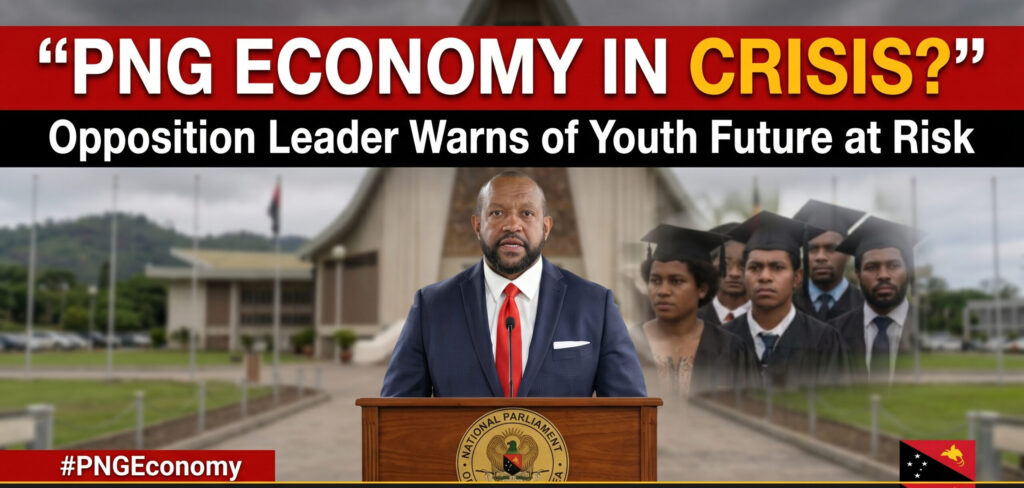
Opposition Leader James Nomane criticises the PNG government over economic damage affecting young graduates and calls for a Vote of No Confidence to restore leadership.
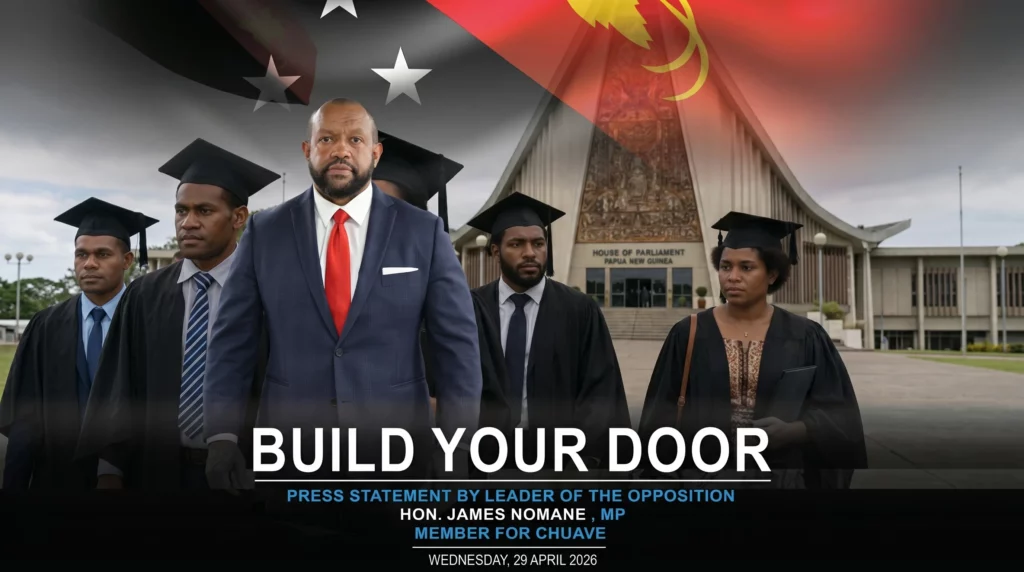
PNG Opposition Leader and Member for Chuave Hon, James Nomane urges graduates to stop waiting for opportunities and instead “build their own door,” highlighting unemployment, corruption, and the need for discipline and leadership among young people
Many Papua New Guineans know Anslom Nakikus as a famous reggae singer. But fewer people know that he is also a well-educated man who studied at the University of Papua New Guinea and the University of Goroka before rising to international music success. His story shows how education and talent can work together to inspire a generation.