
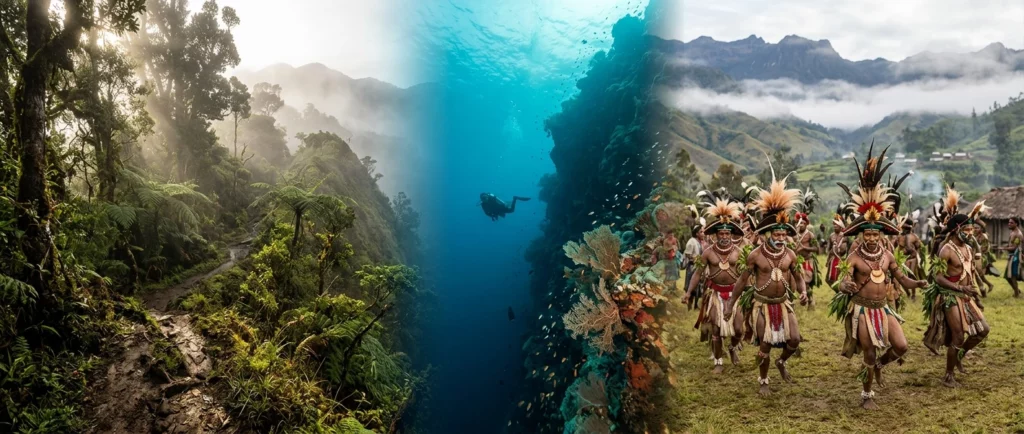
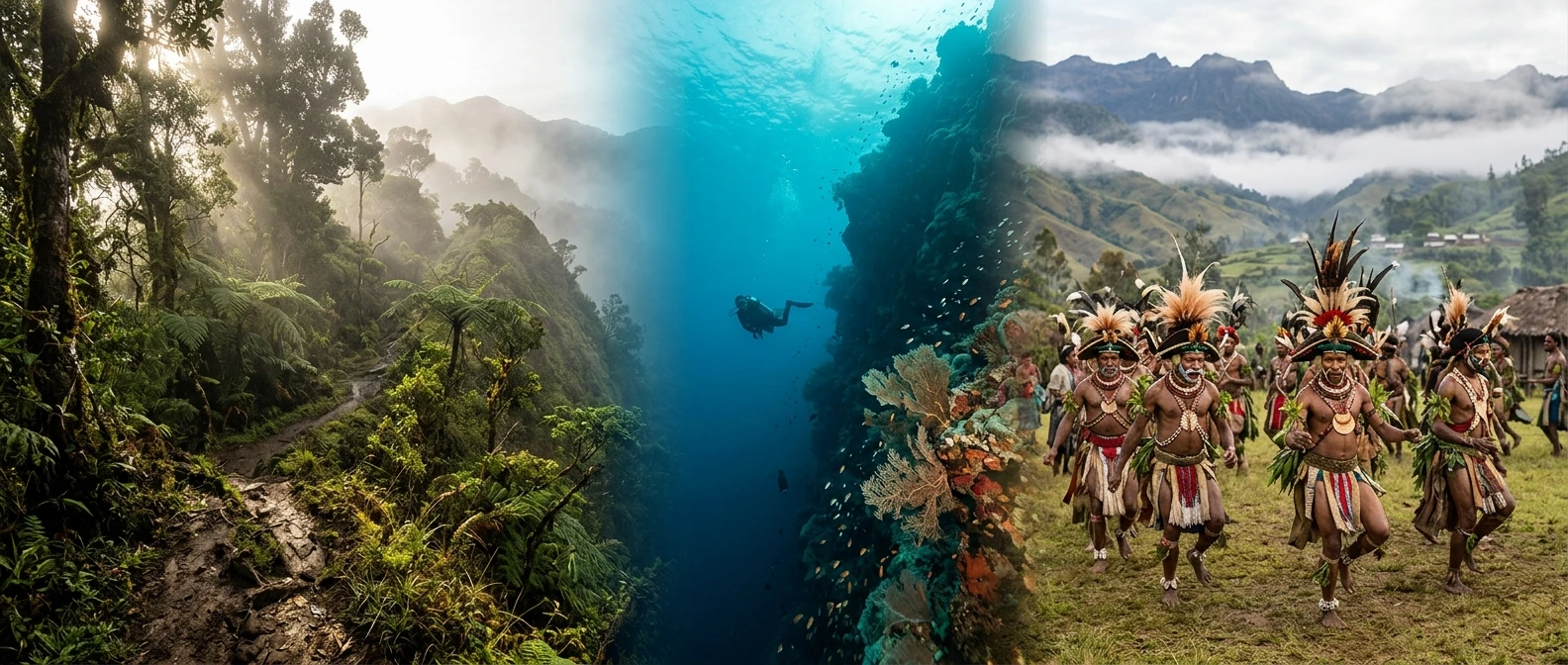
Papua New Guinea rarely fits into the same box as Fiji, Vanuatu or the Cook Islands, and anyone planning a trip here quickly discovers why. The country is a single nation but it behaves like several different destinations stitched together: a mountain war trail in the Owen Stanley Range, a reef system in Milne Bay that divers rank among the best on earth, and a Highlands cultural calendar built around festivals that have nothing to do with beaches at all. Most travel writing treats Papua New Guinea as one undifferentiated patch of jungle and leaves it at that. This guide treats it as what it actually is: three distinct trip-planning problems, each with its own permits, seasons and physical demands, that can be combined into one itinerary if you plan the logistics honestly from the start.
What Makes Papua New Guinea an Adventure Destination Different From the Rest of the Pacific
Most Pacific adventure travel is built around resorts with good infrastructure sitting next to the thing you came to see. Papua New Guinea works differently because the terrain itself resists that kind of development. The country has over 800 languages, a mountainous spine that cuts road networks into isolated pockets, and a land tenure system where more than 95 percent of land remains under customary ownership. That last point matters more than any brochure will tell you: almost everywhere you go as an adventure traveler, you are moving through land that belongs to a specific clan or village, not a national park service.
This changes how adventure tourism actually functions here. There is no single office that issues one permit for the whole country. The Kokoda Track has its own trek authority and landowner fee structure. Diving operators negotiate access with coastal communities reef by reef. Highlands festivals are organized by provincial cultural councils working alongside the villages that perform. Understanding this fragmented structure, rather than expecting a Fiji-style tourism board to smooth it all into one booking, is the first real difference between planning a Papua New Guinea trip and planning almost anywhere else in the region.
Trekking the Kokoda Track: Permits, Physical Preparation and What the Trail Actually Demands
The Kokoda Track runs roughly 96 kilometers through the Owen Stanley Range between Owers’ Corner near Port Moresby and the village of Kokoda in Oro Province. It follows the route of the 1942 campaign between Australian and Japanese forces, and the history is inseparable from the walk: war memorials, former battle sites and village elders who can point out where specific engagements happened are part of the trail experience, not an add-on to it.
Every trekker needs a permit issued through the Kokoda Track Authority, and the fee goes toward track maintenance and payments to the local landowners whose territory the trail crosses. Most people walk with a licensed trekking company that handles the permit, hires local porters and guides, and arranges the logistics of food and camp sites along the way. Walking independently without a local guide is possible in principle but strongly discouraged, both for safety and because the villages along the route depend on trekking income that bypasses them if trekkers try to do it entirely on their own.
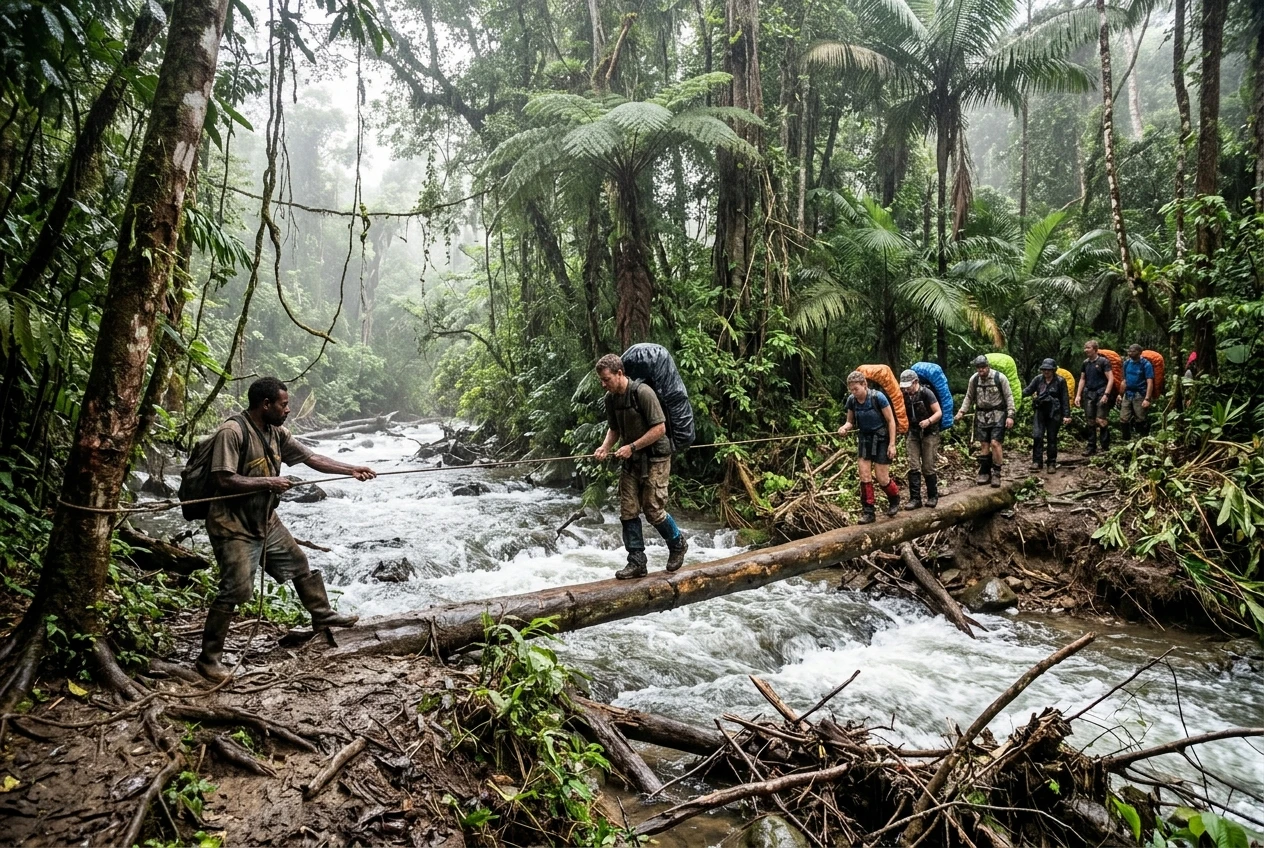
The physical demand is the part most trekkers underestimate. This is not a scenic walk. The track climbs and descends constantly through dense rainforest, crosses rivers that can rise fast after rain, and reaches altitudes where night temperatures drop sharply while days stay hot and humid. Most groups take between six and ten days to complete it, and fitness preparation should start months ahead with sustained hill walking under a loaded pack, not just general cardio.
Season matters as much as fitness. The drier months, roughly April through September, bring more stable trail conditions, while the wet season from December through March turns river crossings and ridge sections genuinely hazardous. Anyone building a combined itinerary needs to put Kokoda in the drier window and build everything else around it, not the other way around.
Diving the Coral Triangle: Milne Bay, Kimbe Bay and New Britain Compared
Papua New Guinea sits inside the Coral Triangle, the global center of marine biodiversity, and its diving reputation rests on reefs that have stayed remote enough to avoid the damage seen in more heavily visited parts of Southeast Asia. But “diving Papua New Guinea” actually means choosing between several regions with different strengths, and conflating them leads to disappointed trip planning.
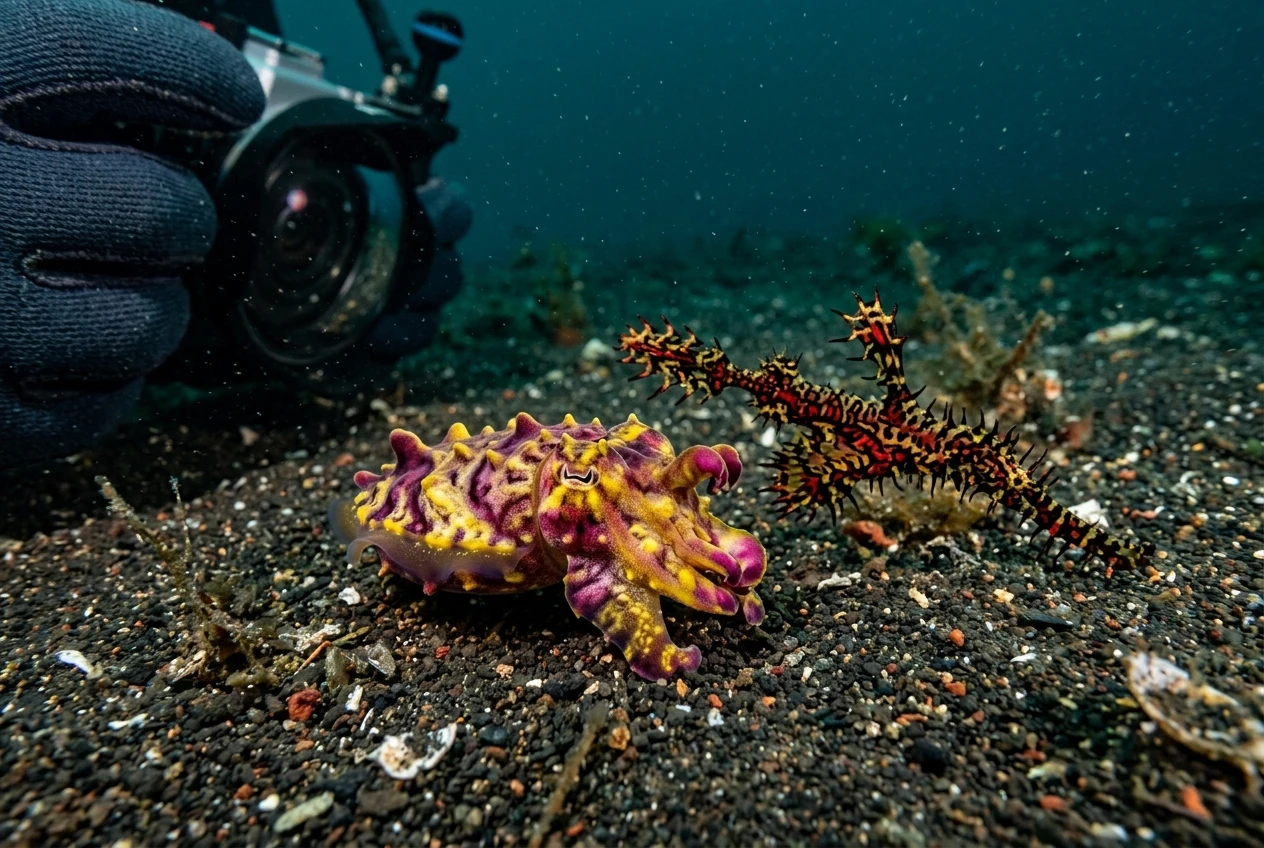
Milne Bay, at the eastern tip of the mainland, is known for muck diving and an unusually high count of rare critters: ghost pipefish, flamboyant cuttlefish, and a long list of nudibranch species that draw dedicated macro photographers. It is typically reached by liveaboard or by flying into Alotau and connecting to dive resorts along the bay.
Kimbe Bay, on the north coast of New Britain, is built around hard coral reef systems and wall diving, with healthy fish biomass that reflects decades of community-based marine protection work in the area. It has a more developed resort infrastructure than Milne Bay, which makes it a reasonable choice for divers who want strong diving without as much logistical complexity.
New Britain more broadly, including areas around Rabaul and Kimbe, also offers wreck diving tied to the Pacific War, along with volcanic landscape that is unusual even by PNG standards. Getting between these regions involves internal flights rather than road travel, since PNG’s road network does not connect most of these coastal areas to each other. Anyone trying to dive more than one of these regions on a single trip needs to budget real time and money for internal flights, which are not always frequent and can be affected by weather.
Cultural Tourism Done Right: Sing-Sing Festivals, Village Stays and Who Gets Paid
The Highlands sing-sing is the cultural centerpiece most international visitors picture when they think of Papua New Guinea: hundreds of performers from different tribal groups in elaborate feather headdresses, body paint and traditional dress, gathering for days of competitive dance and song. The two best known events are the Goroka Show and the Mount Hagen Cultural Show, both held in the Highlands region, typically in September. These dates can shift year to year, so confirming the current schedule with the provincial tourism office before booking flights is essential rather than optional.
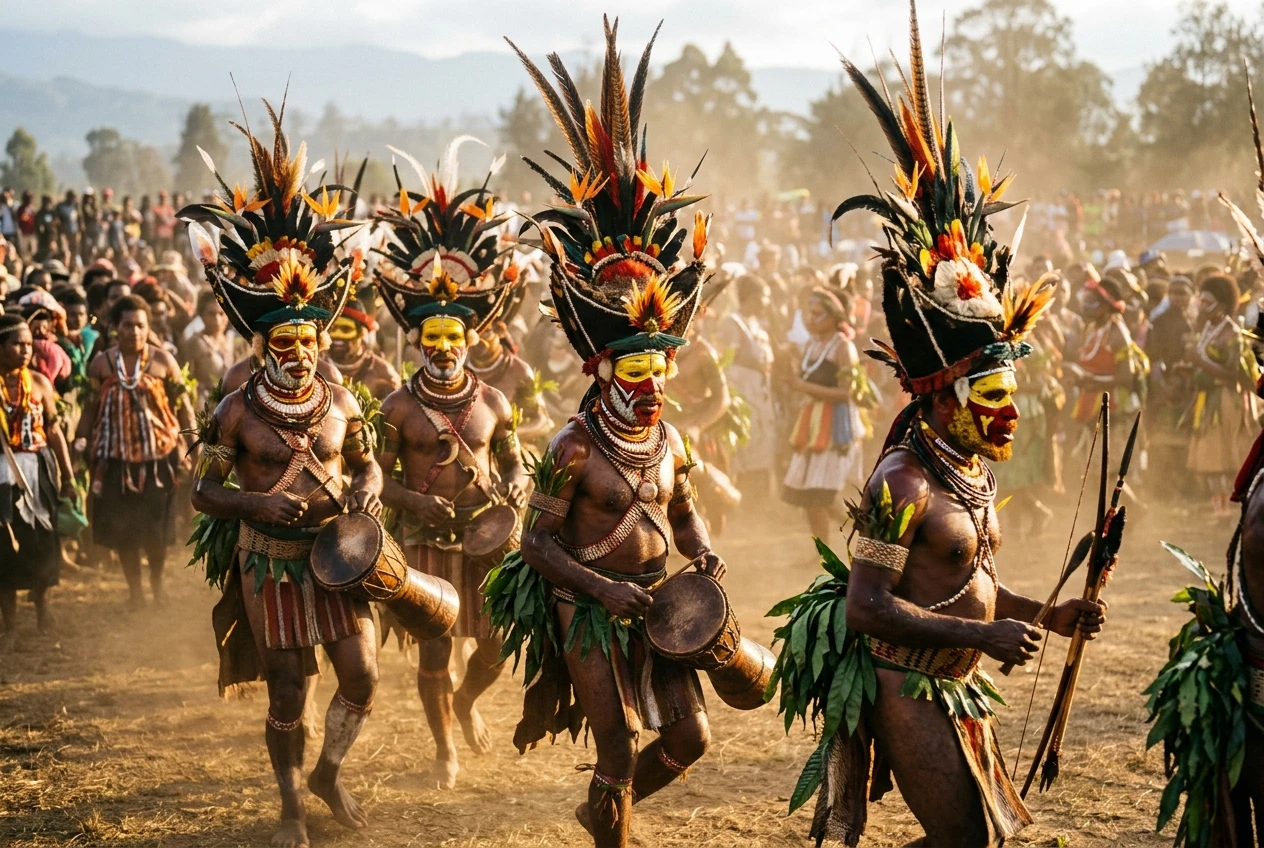
What separates a sing-sing visit that benefits local communities from one that does not usually comes down to a simple question: who is being paid, and for what. Performing groups travel from their home villages at real cost, often walking or taking rough transport for days to reach the show grounds, and their participation is not automatically compensated by the ticket price tourists pay to enter. Village-based tourism operators, local guides who can explain the meaning behind specific tribal dress and homestay programs run directly by families rather than by an outside operator put more of the money a visitor spends directly into the hands of the people performing and hosting.
This is worth deliberate effort because the alternative, a bus tour that drops visitors at the show grounds and leaves, channels most of the spending toward transport companies and international tour operators while the performing villages see very little beyond what they’re paid to show up. Booking through operators who work with specific village cooperatives, paying for homestays rather than hotel packages when the option exists, and asking directly how a guide or driver is compensated are all practical ways to shift that balance. The same logic applies beyond the Highlands shows themselves: village stays in coastal and island communities, arranged directly with the community rather than through a chain resort, put accommodation spending into local hands in the same way.
Getting There and Getting Around: Flights, Road Conditions and Honest Timelines
Papua New Guinea’s internal transport network is the single biggest factor that will determine whether a combined itinerary is realistic, and it deserves blunt treatment rather than optimistic brochure language. International flights arrive mainly through Port Moresby, with some connections through Nadzab near Lae. From there, reaching the Highlands, the islands, or Milne Bay almost always means a domestic flight rather than a road trip, because PNG’s terrain and limited road investment mean many provincial centers are not connected to each other by drivable roads at all.
Domestic flights within PNG are operated by a small number of carriers serving routes between Port Moresby, Lae, Mount Hagen, Goroka, Alotau, Kimbe and other provincial airports. Schedules can be limited to a few flights a week on some routes, and weather delays in mountainous areas are common enough that building a buffer day around any internal flight connection is a sound default, not excessive caution. Missing a connecting flight because of a delay on the leg before it is one of the most common ways a PNG itinerary unravels.
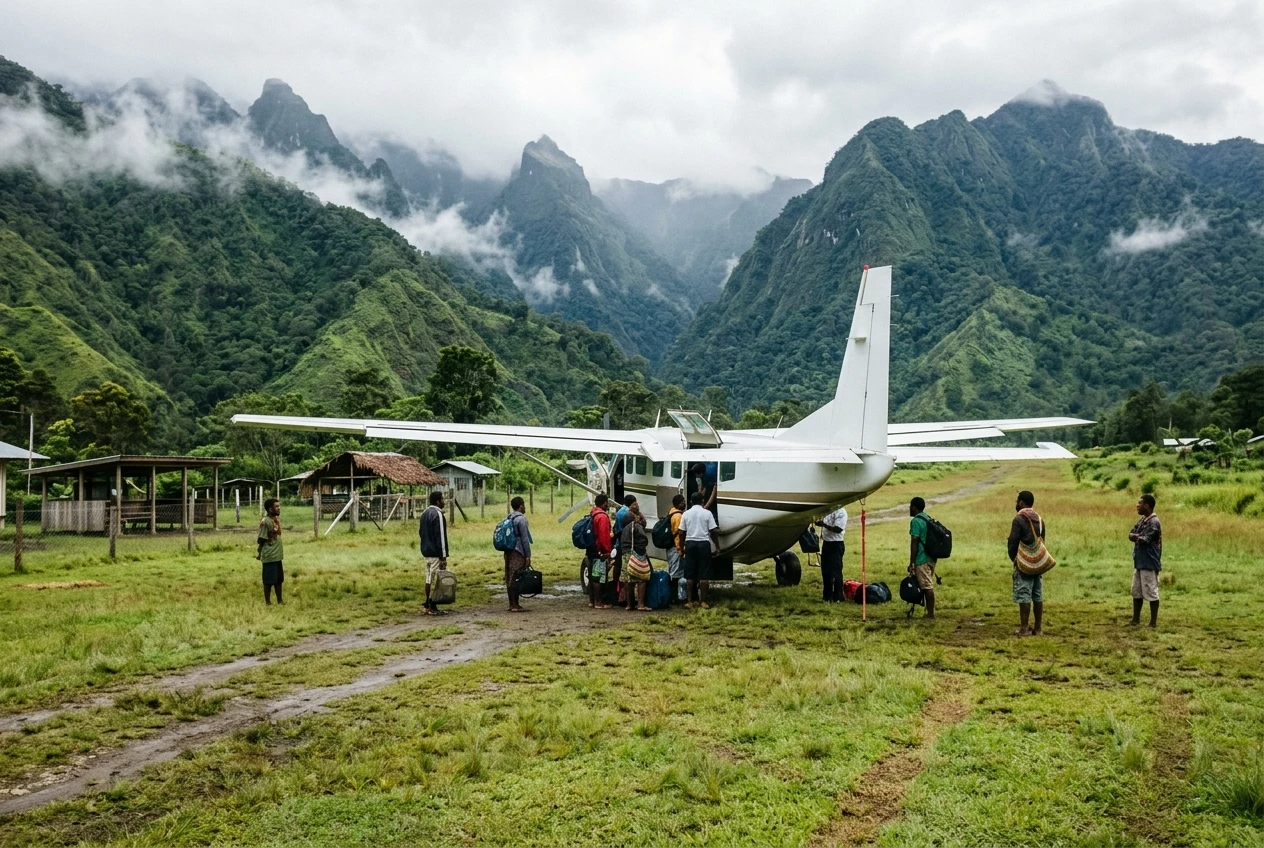
Where roads do exist, conditions vary enormously. The Highlands Highway, the main overland route connecting Lae to the Highlands provinces, is drivable but can be slow and rough in sections, particularly after heavy rain. Road travel between the Kokoda trailhead at Owers’ Corner and Port Moresby is short and manageable, but this is one of the few places in the country where overland transport between major adventure sites is straightforward. For almost everything else, flying is the realistic option, and travelers should price flights into the trip budget from the outset rather than treating them as an afterthought.
Health, Safety and Insurance Questions Every Adventure Traveler Should Ask First
Papua New Guinea requires practical health preparation that goes beyond routine travel vaccinations. Malaria is present across much of the country, including areas along the Kokoda Track and in coastal regions, so antimalarial medication prescribed before departure and consistent mosquito bite prevention are standard precautions rather than optional extras. A pre-trip consultation with a travel health clinic familiar with Melanesia is worth the appointment, since recommendations can vary depending on which regions of the country the itinerary covers.
Travel insurance deserves specific attention for this kind of trip, because standard policies often exclude or limit coverage for activities like trekking at altitude or scuba diving. Anyone planning to walk Kokoda or dive in Milne Bay or Kimbe Bay should confirm their policy explicitly covers those activities, and should check what it says about medical evacuation. Evacuation coverage matters more in Papua New Guinea than in many destinations because medical facilities outside Port Moresby and a handful of larger towns are limited, and reaching advanced care from the Kokoda Track or a remote dive site can take considerable time.
Personal safety questions in Port Moresby and other urban centers are worth asking directly of accommodation providers and tour operators rather than guessing from general reputation. Conditions vary by neighborhood and by time of day, and local operators who deal with international visitors regularly can give current, practical guidance that generic online warnings often cannot. Carrying cash for village fees and homestays, since card payment infrastructure is limited outside major towns, is another detail worth sorting out before departure rather than discovering on arrival.
Building One Itinerary That Combines Trekking, Diving and Culture Without Burning Out
Combining Kokoda, Milne Bay or Kimbe Bay diving, and a Highlands sing-sing into a single trip is realistic, but only if the sequencing respects what each leg actually costs in physical recovery and travel time. Kokoda should come first or stand alone, because finishing a six to ten day trek and then expecting to dive comfortably within a day or two underestimates how much recovery the body needs, particularly with the altitude changes and physical strain the track involves. A gap of several days between finishing the trek and getting in the water gives joints, feet and general fatigue time to settle before diving.
Diving logistics then need their own buffer, both for the internal flight to reach Milne Bay or Kimbe Bay and for the standard guidance against flying too soon after a dive, which affects the return flight scheduling at the end of that leg as much as the flight getting there. The Highlands sing-sing timing is the least flexible part of the whole plan, since the Goroka and Mount Hagen shows happen on fixed dates that need confirming directly with provincial tourism sources, so building the itinerary around that fixed date rather than trying to bend it to fit the other two legs tends to produce a far less stressful trip.
A realistic version of this combined trip runs two and a half to three weeks rather than the ten days some tour packages imply, once trekking, recovery, internal flights, diving days and the festival dates are all accounted for honestly. Travelers who try to compress all three into less time usually end up cutting the trek short, skipping dive days to make a flight, or missing the festival dates entirely. Building in the buffer days from the start, even if they feel like wasted time on paper, is what actually makes the combination work rather than becoming three rushed, disappointing versions of what could have been three strong experiences.
If you are working through the details of a Papua New Guinea trip, whether that means confirming Kokoda permit timing, comparing Milne Bay and Kimbe Bay diving seasons, or finding village-based ways to attend a Highlands sing-sing, subscribe to the PAPUANIUGINI.ORG newsletter so new travel guides and verified community tourism stories reach you as we publish them.