📰 News Summary: Papua New Guinea’s Prime Minister and Police Minister have come under renewed scrutiny following fresh criticism from Daniel Baulch (GAICD, Mldshp), Deputy Commissioner at the Independent Commission Against Corruption (ICAC). In a strongly worded statement published on PC Live, Baulch challenged the government’s claim that police can only recover stolen public funds after a court conviction. Calling the statement “false and dangerous,” Baulch argued that effective anti-corruption work begins with immediate financial tracing and asset restraint—not after conviction.
by: Daniel Baulch (GAICD, Mldshp)Daniel Baulch (GAICD, Mldshp) Deputy Commissioner @ Independent Commission Against Corruption PNG | GAICD, Master of Leadership Integrity, governance, regulation, emergency & crisis management, justice, law enforcement and investigation.
Here we go again: another glossy promise from the PM—now echoed by Minister Tsiamalili—that “a conviction” is what finally lets police trace and recover stolen public money. That is false. And it’s dangerous.
As someone with 25+ years in law enforcement and integrity work, I can say plainly: you do not wait for convictions to follow the money. In any competent, lawful anti-corruption response, financial tracing and rapid restraint are step one—not step last.
What best practice looks like (and what PNG should already be doing):
Follow the money immediately—banking records, trust accounts, land titles, vehicles, shell entities, crypto, offshore transfers.
Seek restraint/freezing orders early to preserve assets before they vanish or are converted to cash.
Run parallel financial investigations so evidence is gathered that is both inculpatory and exculpatory—protecting the innocent and exposing the guilty.
Move on facilitators and beneficiaries, not just the public official who signed the payment. If the money moved through your account or bought your property, you should be in the frame.
The Minister’s line that “a court conviction now clears the way to trace and recover” is a smokescreen for years of inaction. The reality:
Many beneficiaries of these funds should already have faced consequence.
Assets should have been frozen years ago—back when the PM was Finance Minister signing authorisations.
Saying “we’ll get every kina back” is fantasy. After years of delay, you’ll be lucky to find one!
International assessments have repeatedly flagged PNG’s failure to deliver real asset recovery outcomes—because the system is deliberately kept weak.
Let’s drop the theatre. If the Government is serious:
👉 Publish the freezing orders already obtained (dates, amounts, properties).
Name the beneficiaries and intermediaries.
👉 Table a month-by-month recovery dashboard: funds restrained, confiscated, and actually returned to Consolidated Revenue.
👉 Stop attacking independent anti-corruption bodies and practitioners while claiming “zero tolerance.” You can’t weaken institutions and then pretend to lead them.
Papua New Guineans aren’t asking for slogans. They’re asking for action that protects the people’s money. Follow the money at the start, preserve the assets, and put the beneficiaries before the court. Everything else is spin.
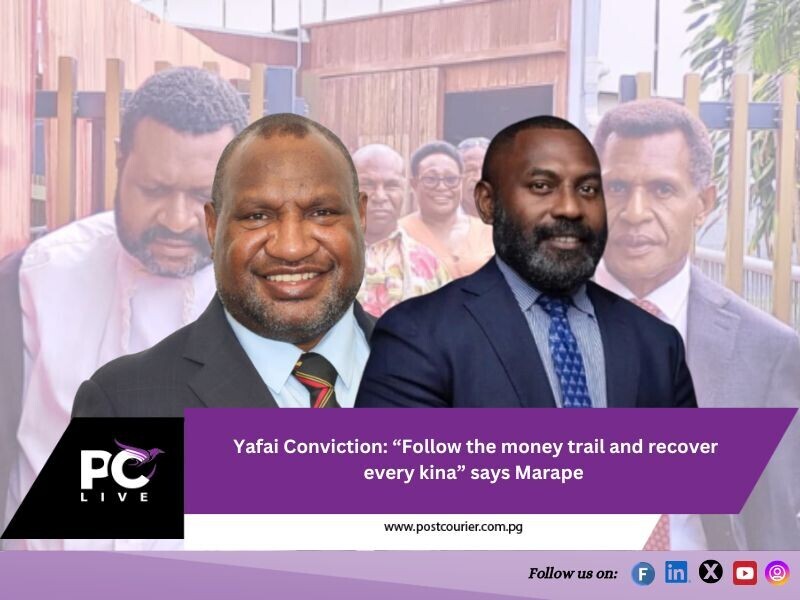
Source: PC LIVE
#TOP: “No one is above the law. The people’s money must serve the people, not personal interests. We will continue strengthening our institutions to ensure that corruption has no place in our country,” Marape concluded.
Read more here: (https://lnkd.in/gCfc3rQy)