PNG Power Limited (PPL) supplies the electricity behind shop freezers, clinic equipment, water pumps and children’s homework, so every blackout reaches ordinary households. This month, Lorna McPherson OL KMG, founding CEO of the PNG Chiefs NRL franchise and chair of Port Moresby Nature Park, announced on LinkedIn that she has joined the PPL board. Her opening line was blunt: “PNG Power is broken. I know, because I just joined its board.”

Her appointment comes while PNG Power reform in 2026 is moving on several fronts at once: partial privatisation, provincial handovers and new transmission lines, all during an El Niño dry spell.
Who Is Lorna McPherson?
McPherson describes herself as someone who “builds things in PNG.” She spent around sixteen years at Digicel PNG, where she was Senior Vice President, and is now founding CEO of the PNG Chiefs, the franchise preparing for Papua New Guinea’s entry into the NRL in 2028. According to her profile, she is also a director of the PNG Rugby Football League.
In her post, she ties her decision to her Digicel years, when the company extended mobile towers into areas many believed could not be reached. Her lesson is that progress came once people stopped treating the problem as impossible.
There is a precedent worth knowing. In 2015, during a declared state of emergency in the electricity sector, the Government appointed former Digicel PNG CEO John Mangos as Executive Director of PNG Power, citing Digicel’s success in mobile. The utility’s problems outlasted that appointment. Telecommunications experience is valuable, but it did not fix the utility on its own.
“Blackout Is a Noun, a Verb and a Weather Report”
McPherson’s central argument is cultural rather than technical. Papua New Guineans, she says, have learned to joke about blackouts, buy more diesel and say em olsem tasol (“that’s just how it is”) instead of demanding accountability.
She calls that shrug “the most expensive thing in PNG” and says everyone owns a piece of it. She also warns against quick-fix promises: the problems took more than twenty years to build and will take years to undo, and anyone claiming otherwise “is either lying or hasn’t looked.”
The Scale of the Problem
Low access
The World Bank estimated in 2021 that only about 13 per cent of PNG’s 8.6 million people had grid electricity, one of the lowest rates in the Pacific. The national target, set in the PNG Development Strategic Plan 2010 to 2030 and restated at APEC in 2018, is 70 per cent electrification by 2030. Analysts at the Development Policy Centre have questioned whether that is achievable without stronger electricity institutions. The figure does not count rural households that use small solar panels for lighting.

Frequent outages
World Bank data for 2015 showed PNG averaged more than 40 blackouts per month, the third highest in the world. A World Bank enterprise survey found that 11.5 per cent of small businesses named electricity as their biggest obstacle, compared with 4.2 per cent of all firms.
Losses, theft and unpaid bills
The Asian Development Bank points to ageing networks, electricity theft, illegal connections and low bill collection as reasons PPL’s revenue falls short of its costs. In 2021 the Post-Courier reported that theft, meter tampering and outages were costing the utility around K25 million a month.
In August 2026, Prime Minister James Marape said that in one major Highlands-grid centre, around 80 per cent of customers do not pay. He described PNG Power’s financial and operational condition as “terminal” after decades of underinvestment, citing independent reviews including work by Deloitte.
Frozen tariffs
Tariffs were largely unchanged for more than a decade after 2013. Kumul Consolidated Holdings (KCH) Managing Director David Kavanamur has argued this held back revenue. The Prime Minister has acknowledged that successive governments avoided price rises to protect households, allowing only a modest increase recently. Higher tariffs can stabilise the utility, but they also fall on families and small businesses already paying for backup diesel.
Sponsored: Power cuts, fuel costs and rising prices put pressure on every household budget. If you’re looking for practical ways to track spending and plan ahead, explore these budgeting tools here.
Where PNG Power Reform Stands in Late 2026
Revenue and debts
Kavanamur told the 2026 Business Advantage PNG Investment Conference that PPL’s revenue reached K1.05 billion in 2025, up from K960 million in 2023, its last audited year. The utility still owes substantial amounts to independent power producers (IPPs). In July 2026 the National Court ruled against PPL in a payment dispute with Dirio Power, and PPL has said it will appeal.
Partial privatisation
The National Executive Council decided in 2024 to partially privatise PPL. The State would keep 51 per cent and offer 49 per cent to private investors under the Public-Private Partnership Act 2022. KCH says it has completed solvency and director-liability assessments and an initial valuation, and has reached the scheme-of-arrangement stage. Responsibility for the utility moved to Minister for International Investment and Trade Richard Maru in mid-2026, with the stated aim of resolving PPL’s position before the 2027 National General Election.
Kavanamur’s reasoning is that the State’s borrowing capacity is close to its limit, so private capital is needed. Supporters see this as the most realistic route to investment and better management. Critics, including some unions and consumer voices, have raised concerns about pricing, job security and whether private operators will serve unprofitable rural areas.
Provincial partnerships
The Prime Minister has also outlined a plan to transfer loss-making “C centres” gradually to capable provincial governments or other licensed operators, regulated by the National Energy Authority. East and West Sepik are under examination, with the Ok Tedi power subsidiary cited as a working model. PNG Power would then concentrate on the main grids serving Port Moresby, Lae and the Highlands.
Infrastructure and El Niño
The Government says it has invested almost K1.5 billion in electricity infrastructure, including a 132-kilovolt line from Edevu to Port Moresby that lets an extra 54 megawatts reach the National Capital District. PPL also completed a 220-kilometre transmission line from Tari through Yonki to Lae in 2025 and is extending it to Hides, which KCH says could feed 5 to 10 megawatts onto the Ramu grid. New assets still need crews and budgets to keep them running; our piece on who looks after PNG’s new roads, bridges and clinics after the ribbon is cut covers the same problem in other sectors.
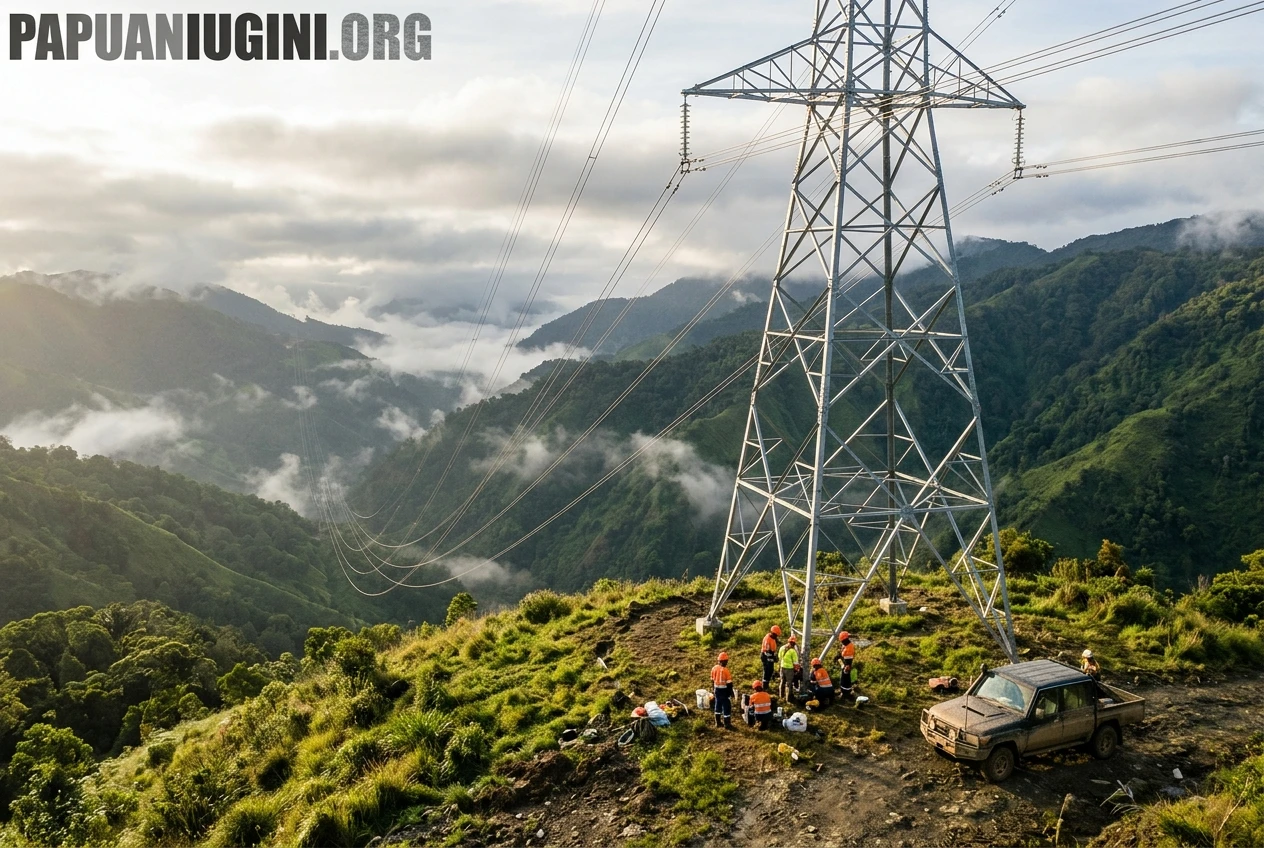
The operating conditions are hard. El Niño dry weather has lowered water levels in the catchment for the Yonki hydro station in Eastern Highlands, contributing to outages on the Ramu grid. The Lae Chamber of Commerce notes that when power fails, water supply often fails too. In Port Moresby, the Chamber of Commerce says businesses now plan for a backup generator and a backup to the backup. A government fuel subsidy introduced in March 2026 has eased diesel costs, but it was scheduled to end in December.
Leadership Turnover at PNG Power
Boards and chief executives have changed frequently over the past decade, and former acting managing director Carolyn Blacklock once described a “revolving door” of CEOs. The utility had no permanent CEO from 2023 until Paul Bayly was appointed in March 2025 through an NEC decision.
A new director is not a turnaround by herself. Reforms need leaders who stay long enough, with enough authority, to see them through.
What a Board Can and Cannot Do
PPL’s board sets policy, strategy and direction, while management runs daily operations. Several of the biggest decisions sit elsewhere:
- Tariffs need regulatory approval.
- Ownership and privatisation rest with the NEC and KCH.
- Government arrears depend on State agencies paying their bills.
- Major capital projects often depend on national budgets and partners such as the ADB and World Bank.
What a board can do is insist on transparent reporting, press management on collection and loss reduction, ask where money goes, and argue the utility’s case with its shareholder. That is what McPherson has promised: to be “inside the room arguing for it” rather than outside complaining.
Sponsored: Looking for more resources on business, leadership and growth? Check out this recommended offer.
How Citizens Can Measure Progress
McPherson invited the public to judge her by one test: whether the lights stay on. Readers who want to hold the board to that can watch these indicators:

- Outage frequency and duration in Port Moresby, Lae and Highlands centres.
- Bill-collection rates and action against illegal connections.
- Payments to independent power producers, which affect whether private generators keep supplying the grid.
- Privatisation milestones, including how investors are selected and on what terms.
- New connections outside major towns, measured against the 70 per cent by 2030 target.
Citizens have a part too: paying bills, reporting illegal connections and asking elected leaders where electricity funding has gone.
McPherson’s diagnosis matches the record: low access, frequent outages, heavy losses and debts, and a reform timetable that is tight before the 2027 election. She does not claim a quick fix.
What she brings is a high-profile director who has tied her reputation to a measurable outcome. The coming months will show whether privatisation, provincial handovers and new transmission lines turn into reliable power. As she put it, the lights will tell.
Frequently Asked Questions
Who is the new PNG Power board member? Lorna McPherson OL KMG, founding CEO of the PNG Chiefs NRL franchise, former Digicel PNG Senior Vice President and chair of Port Moresby Nature Park, announced in November 2026 that she has joined the board.
What percentage of Papua New Guineans have electricity? The World Bank estimated in 2021 that about 13 per cent had grid access. The national target is 70 per cent by 2030.
Is PNG Power being privatised? Partially. The proposal keeps 51 per cent with the State and offers 49 per cent to private investors under the Public-Private Partnership Act 2022.
Why are there so many blackouts in PNG? Independent reviews cite ageing infrastructure, electricity theft, low bill collection, frozen tariffs and debts to power producers. In 2026, El Niño dry conditions have also cut hydro output at Yonki.
Sources
- Lorna McPherson OL KMG, LinkedIn post (November 2026)
- Business Advantage PNG: PNG Power’s sale advances as El Niño tests the grid (1 Sep 2026)
- Department of PM & NEC: PM Marape outlines reform plan to revive PNG Power (26 Aug 2026)
- World Bank: Improved access to reliable, affordable energy (Apr 2021)
- Devpolicy: The crisis of governance in PNG’s power sector (Jul 2021)
- The National: No plan for energy sector development, says ADB
- Asia Pacific Report / Post-Courier: Power theft costs PNG provider K25m a month (Nov 2021)
- PNG Haus Bung: PNG Power appoints CEO Paul Bayly
- Business Advantage PNG: PNG Government restructures PNG Power (2015)
- Loop PNG: New leadership team at Port Moresby Nature Park
- Total RL: Meet the CEO of new NRL franchise PNG Chiefs