For decades, the conversation about young people in Papua New Guinea has been mostly about jobs: how many are needed, where they will come from, and what happens when there are too few. That conversation matters, but it leaves out the young people who could create jobs themselves.
The ROAR PNG Leaders Summit states a vision of preparing young Papua New Guineans to become investors, innovators, exporters, entrepreneurs and business owners who take part in building their own economy. Alongside it, the BRAVE LEET initiative has invited sponsors, partners and connectors to join its work next year.
The population makes this a pressing subject. According to the United Nations Population Fund (UNFPA), the 2011 National Census found that 58 per cent of the country’s 7.3 million people were under 25, and the population was growing at about 3.1 per cent a year. UNFPA projected roughly 13 million people by 2032. Other estimates differ and current figures await a new census, but every source agrees that a very large share of Papua New Guineans are young.
What would happen if more young Papua New Guineans were equipped not only to find employment, but to create businesses, generate jobs for others and contribute directly to the national economy? That is the central question for youth entrepreneurship in Papua New Guinea.
Beyond Employment: Why PNG Needs More Young Entrepreneurs
Public service, corporate roles and skilled trades give young people stability, income and training. But thousands leave school, college and university every year, and the formal economy has historically struggled to absorb them all.
The Government has set large targets. In March 2026, the World Bank noted that Papua New Guinea aims to create one million jobs and grow the economy to K200 billion by 2030. Targets of that size need contributions from small businesses as well as from large employers and the state.
Entrepreneurship works alongside employment and cannot solve youth unemployment by itself. A young person who starts a poultry farm, a mobile repair service, a tour guiding business or a digital marketing agency earns an income and may hire relatives, neighbours or peers.
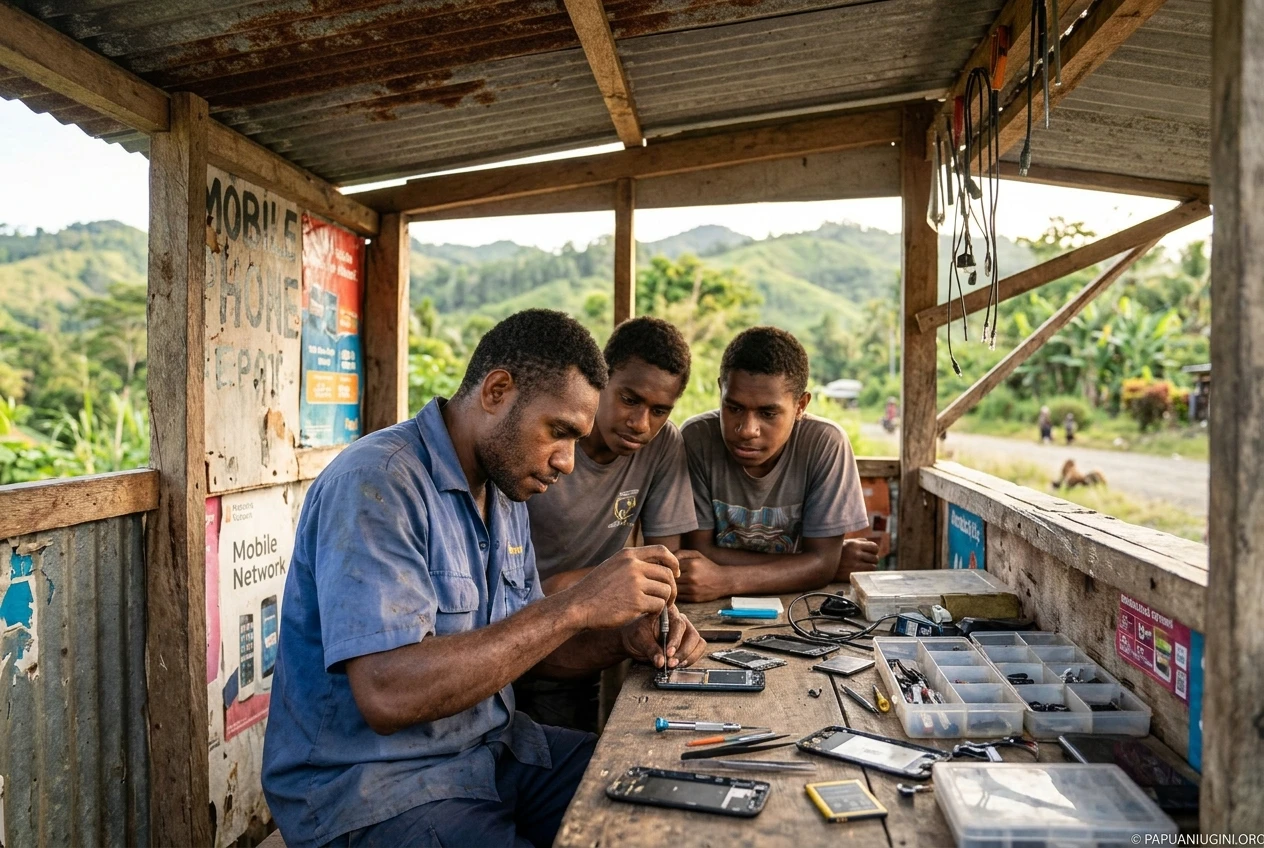
Small and medium enterprises (SMEs) carry much of the economy in other countries. The United Nations Development Programme (UNDP) has noted that they account for between 50 and 60 per cent of value added in OECD economies. In PNG the formal SME sector is much smaller: Oxford Business Group reported in 2020 that SMEs generated around 6 per cent of GDP and 0.8 per cent of exports. Locally owned businesses producing goods and services for local and export markets would keep more value inside the country.
Building an Entrepreneurial Ecosystem, Not Just Inspiring Young People
Three ideas are often used interchangeably, but they are different:
- Youth empowerment builds confidence, voice and aspiration.
- Entrepreneurship development builds the skills to start and run a business.
- An entrepreneurial ecosystem is the system of finance, markets, mentors, regulation, infrastructure and networks that lets businesses survive and grow.
A young person can leave a motivational event full of ideas and then meet a bank that will not lend without collateral, a market they cannot reach, or a registration process they do not understand. Sustainable youth business development needs all three layers.
A working ecosystem in Papua New Guinea would include:
- Practical business training in bookkeeping, pricing, marketing, customer service and planning.
- Mentors who have built businesses and can give honest feedback.
- Access to capital, from small loans and savings groups to angel investment and equity partnerships.
- Registration and regulatory support, so young owners can formalise, pay tax correctly and bid for contracts.
- Digital infrastructure, including connectivity, digital payments and online sales channels.
- Market access that links producers with buyers, distributors and supply chains.
- Export readiness, covering quality standards, packaging, certification and logistics.
These parts depend on each other. A coffee grower with a mentor but no buyer will struggle, and a tech founder with customers but no capital will stall.
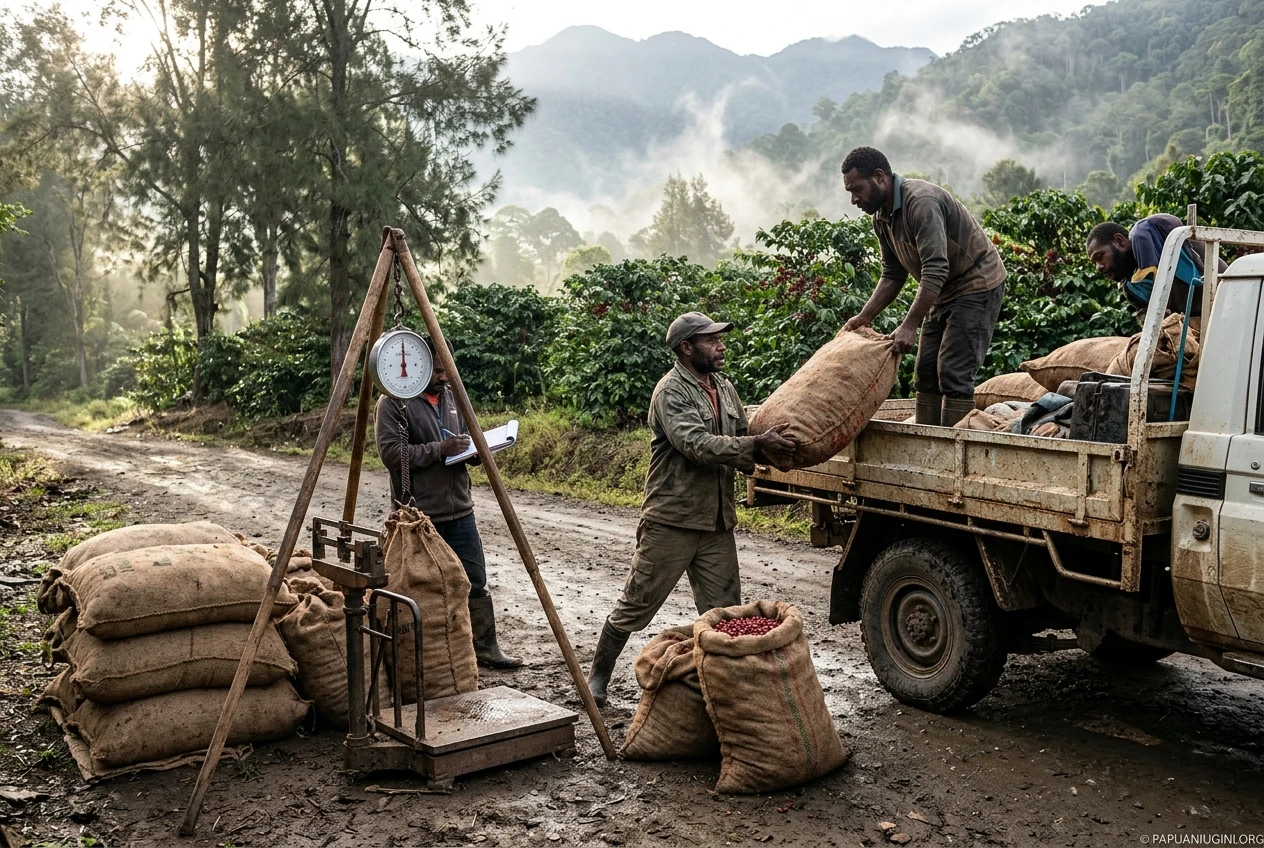
The obstacles are real. They include limited finance, gaps in business knowledge, high transport costs, uneven electricity and internet coverage, and difficulty reaching markets beyond the home community. Business Advantage PNG has reported that only around eight per cent of the country’s school students have access to school computers, so digital skills often have to be built outside school. Training and support programmes need to be designed around these conditions, including for readers with limited data. Our guide to digital tools for small business in Papua New Guinea covers what is practical to use.
Five Economic Roles for Young Papua New Guineans
The vision of the ROAR PNG Leaders Summit points to five roles:
- Investors who save and put capital into local businesses and community enterprises.
- Innovators who develop solutions to local problems, from agricultural processing to mobile services for rural communities.
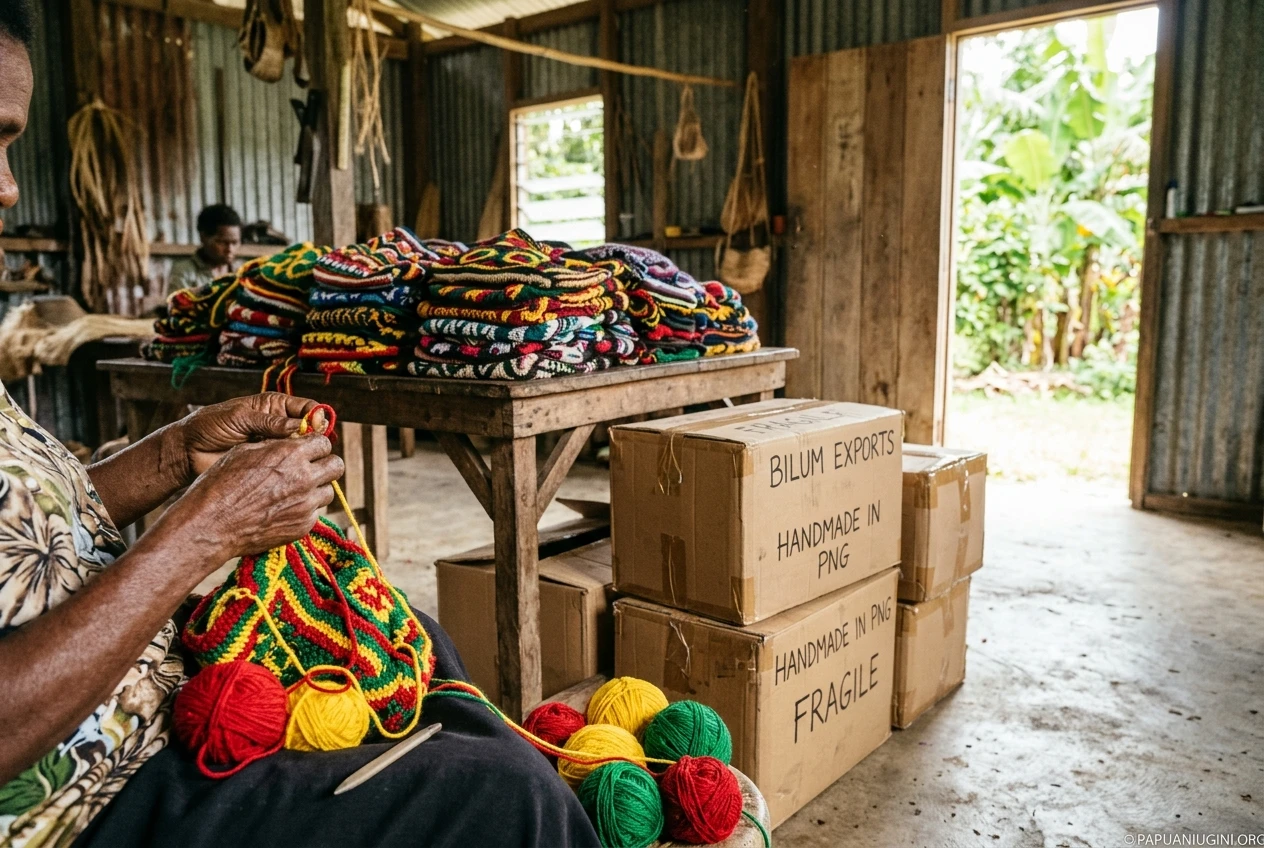
- Exporters who sell Papua New Guinean products such as coffee, cocoa, vanilla, coconut products, handicrafts and bilum designs to regional and international buyers. Our report on how Papua New Guineans are building their own coffee businesses shows what that path involves.
- Entrepreneurs who build businesses that last beyond a single season or contract.
- Employers who create work for other Papua New Guineans.
Talent does not turn into economic results automatically. The World Bank’s 2026 review, Converting Resource Wealth into Human Capital, estimated that a child born in Papua New Guinea today can expect to reach only 42 per cent of their potential productivity. Health, education and skills all affect that figure, and so does whether young people get real chances to apply what they learn.
The economy has long been shaped by mining, oil and gas. Resource revenue is important, but it does not create jobs at the scale a young population needs. Youth-led enterprises in agriculture, services, tourism and light manufacturing would broaden the economy and spread participation across provinces, districts and rural communities.
Connecting Young Founders With Sponsors, Partners and Connectors
The ROAR PNG Leaders Summit describes its purpose as turning youth potential into national economic capacity, with young people as active participants and future owners of the economy rather than passive beneficiaries.
Many young founders have ideas but no way to reach experienced business owners, investors, bankers, industry associations or development partners. A platform that puts these groups in one room can lead to collaboration with established firms, shared knowledge about what works and what fails, mentoring relationships, and contacts with suppliers, customers and partners. The value of any summit shows in the relationships and commitments that follow it.

BRAVE LEET’s invitation names several kinds of contributor:
- Sponsors provide the financial and material support that makes programmes, training and events possible.
- Business partners offer expertise, internships, procurement opportunities and exposure to real operations.
- Investors can look at mentoring-led investment, partnerships or future funding discussions.
- Mentors share experience and help young founders avoid costly mistakes.
- Connectors introduce young people to networks, markets, banks, government agencies and collaborators.
Connectors are easy to overlook. In a business culture built on personal relationships, one introduction can lead to a supplier, a buyer or a lender.
Sponsored resource: Entrepreneurs looking to strengthen their planning can explore additional tools and resources here.
Sectors Where Collaboration Is Possible
These sectors are often cited as areas for business partnerships in Papua New Guinea. They are broad areas for future collaboration, not confirmed BRAVE LEET programmes or investment offers.
- Agriculture and agribusiness: processing, packaging and branding of coffee, cocoa, vanilla, spices, fresh produce and coconut products.
- Tourism: community-based tourism, eco-lodges, cultural experiences, trekking services and hospitality. See our piece on community-based tourism in Papua New Guinea.
- Technology and digital services: mobile applications, digital payments, online marketing and remote services.
- Manufacturing: small-scale food processing, furniture and building materials.
- Renewable energy: solar installation and maintenance, especially for off-grid communities.
- Creative industries: fashion, music, film, design, handicrafts and contemporary bilum products.
Established companies gain from a stronger local supplier base, a more skilled workforce and growing domestic markets. Investors get early exposure to emerging ventures, and development partners support local capacity that lasts.
The Government’s SME Master Plan 2016 to 2030 aims to grow the number of SMEs from 49,500 in 2016 to 500,000 by 2030. Reaching a figure like that would need many young people and a supportive private sector. It would also need women: the SME Corporation reported in 2018 that 90 per cent of formal SMEs were male-owned, so support for young women entrepreneurs has to be part of any serious plan.
Beyond One-Time Sponsorship
A sponsorship can fund an event. A long-term partnership can change a young person’s prospects. Stakeholders can contribute in ways that last beyond one day or one season:
- Commit mentors for a full year rather than a single session.
- Open supply chains and procurement to youth-owned businesses.
- Offer internships, apprenticeships and work placements.
- Support access to suitable finance for promising ventures.
- Share market contacts, industry insight and practical expertise.
Sponsored resource: For readers interested in growing their knowledge and opportunities, discover more here.
Join BRAVE LEET Next Year
Papua New Guinea’s young population is both a challenge and an opportunity, and which one it becomes depends on the choices made now. Entrepreneurship will not solve every economic problem, but a stronger enterprise culture can add to employment, diversification, local production and exports.
If you are a business owner, investor, corporate leader, development partner or organisation interested in the economic future of Papua New Guinea, you can join BRAVE LEET next year as a sponsor, partner, mentor, investor or connector. If you know people who could contribute, share this article with them.
Sources
- UNFPA Papua New Guinea, Population dynamics (2011 Census data and growth projections): https://png.unfpa.org/en/topics/population-dynamics
- World Bank, press release on Converting Resource Wealth into Human Capital, March 2026: https://www.worldbank.org/en/news/press-release/2026/03/23/turning-resource-wealth-into-jobs-key-to-png-s-development-ambitions-world-bank
- Oxford Business Group, Small but mighty (PNG 2020 Report): https://oxfordbusinessgroup.com/reports/papua-new-guinea/2020-report/economy/small-but-mighty-the-government-is-pursuing-ambitious-plans-to-develop-local-entrepreneurship-to-boost-employment-and-growth
- Business Advantage PNG, Expanding SME sector critical to Papua New Guinea’s future (2018): https://www.businessadvantagepng.com/?p=13894
- UNDP Papua New Guinea, remarks at SME 2022 Breakfast: https://undp.org/node/335181
- Business Advantage PNG, school computer access: https://www.businessadvantagepng.com/the-keyboard-warrior-helping-papua-new-guinean-schoolchildren/