

Every year, people in Papua New Guinea pay money to someone who promised a mining job and then stopped answering their phone. Mining pays well by local standards, applications often go through agencies, and many job seekers live far from the offices that could confirm a vacancy. That is the situation fake recruiters rely on.
This guide gives you a way to vet any PNG mining recruitment agency before you send a single document. Every check can be done by phone, in person or online, so you can use whichever your situation allows.
Why mining job seekers are targeted by fake recruiters
Scammers go where the demand is. Mining is one of the best-known sources of formal employment in the country, and operations such as Ok Tedi, Lihir and Ramu Nickel are known to almost everyone. Thousands of graduates and young people apply for a small number of positions, and many are willing to pay for any advantage.
A fake recruiter uses that hope. They post a convincing advertisement, often on social media, and collect fees or personal documents from as many people as possible. By the time applicants realise nothing is happening, the page has been deleted or the phone is switched off.
Distance helps them too. If you live in a village or a provincial town, you cannot walk into a head office to ask questions, and scammers know it. The checks below are designed so that distance does not stop you from verifying an offer.

What a recruitment agency does and what it should never do
A genuine recruitment agency works for an employer. A mining company or one of its contractors asks the agency to find candidates for specific positions, and the agency advertises the roles, collects applications, screens them and passes suitable people forward. The employer is the client and normally pays the agency.
A genuine agency can reasonably ask you for:
- A CV and certified copies of your qualifications
- Details of your work history and referees
- Your availability and the province you are based in
- Attendance at an interview, in person or by phone
A genuine agency should never ask you for:
- Money to be considered, shortlisted or “registered” for a job
- Original certificates, or your passport, to be held by the agency
- Your bank card details or PINs, or payment to a personal mobile money account
- A decision on the spot, under pressure
The line between these two lists is the most useful thing to remember. An agency handles information about you. It does not need your money.
Five checks to run before you send any documents
Run all five checks. A real agency passes them easily, and a scam usually fails at least two.
1. Confirm the agency exists as a registered business
Ask the agency for its business registration details and the full name it is registered under. In Papua New Guinea, companies are registered with the Investment Promotion Authority (IPA), so you can ask the IPA to confirm that the name exists. If you have internet, check the IPA’s online records. If you do not, a phone call or a visit to an IPA office, or asking a relative or friend in town to do it, achieves the same result.
An agency that refuses to give its registered name, or gives a name that does not match what is on its advertisement, has failed this check.
2. Find a physical office and visit or call it
Ask for the street address, not only a PO Box or a Facebook page. If you are in the same town, go there. Look for a staffed office, a sign and real people doing real work, and not a room with nobody in it or a different business at that address.
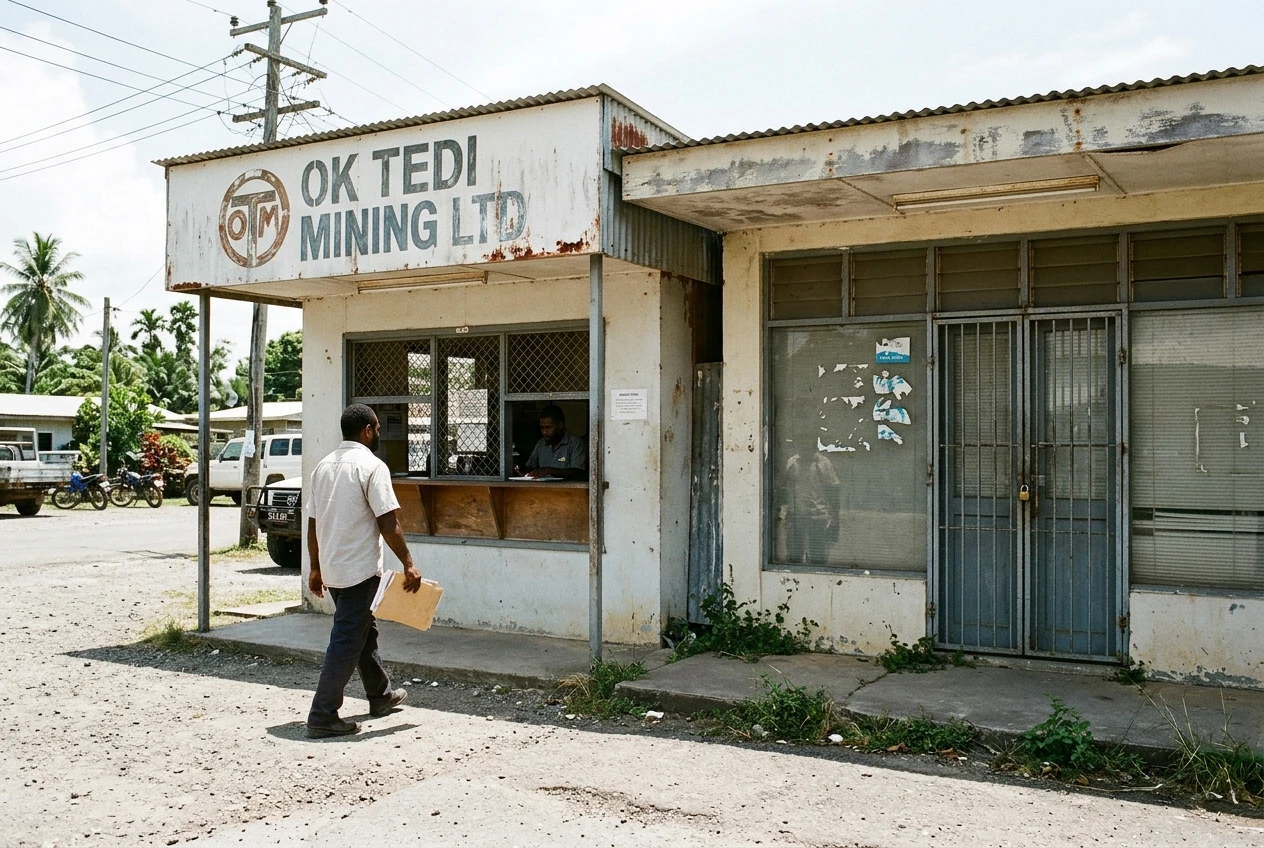
If you cannot visit, ask a trusted person nearby to go, or ring the landline and see who answers. A mobile number alone is not enough. Anyone can buy a SIM card.
3. Check how the agency contacts you
Look at the details on the advertisement. An agency that uses only a personal Facebook profile, a free email address, or a WhatsApp number, with no company email and no website, has weak credentials. This does not prove a scam, but combined with other failures it matters.
Also check that the name in the advertisement matches the name on the office, the email and any paperwork. Scammers sometimes copy a real agency’s name with one letter changed.
4. Confirm the vacancy with the mining company itself
This is the strongest check, and the next section covers it in detail. An agency can be real and still advertise a job that does not exist, or one that went to somebody else months ago.
5. Ask other people who have dealt with the agency
Ask people in your community, former students from your school or university, and people already working in mining whether they know the agency. A genuine agency that has placed people in jobs will have a record that someone can speak to. If nobody has heard of it and it has no verifiable placements, treat that as a warning.
Do not rely on testimonials that appear only on the agency’s own page. Anyone can write those.
Warning signs: fees, pressure and offers that sound too easy
Most fake recruitment follows a pattern. These are the signs that appear most often.
Fees of any kind. As a rule, you should not pay anything to be considered for a job. Scammers rename the fee to make it sound official: “processing fee”, “medical clearance fee”, “registration fee”, “uniform deposit”, “visa fee”, “security clearance”. Whatever the label, a payment requested before you have a signed contract from a verified employer is a red flag. Even if a fee later turns out to be for a real cost such as a medical, ask for the employer’s name and the clinic’s name and check them independently before paying anything.
Payment to a personal account. If you are told to send money to a person’s mobile money number or personal bank account, and not to a company account with a receipt, stop.
Pressure and deadlines. “Only three places left”, “pay today or lose your spot” and “the list closes tonight” are designed to stop you from checking. A real vacancy will still be there after you make a phone call.
A job offered without an interview. Mining companies hire for skilled and safety-critical work. If an agency offers you a job without asking about your experience or qualifications, or after one short message, it is not a normal hiring process.
Salary and conditions that are too good. Be cautious when the pay is far higher than the role usually attracts, or when the offer includes housing, flights and bonuses but no written details. Ask for the full terms in writing.
Guaranteed placement. No agency can guarantee that you will get a job at a mining company, because the company makes the hiring decision. Anyone who promises one is selling something other than recruitment.
Requests for original documents or sensitive details. Send copies, not originals. Do not share passwords, PINs or card numbers at any point in the process.
How to confirm a vacancy with the mining company directly
Whatever an agency tells you, the mining company or contractor named in the advertisement is the final authority on whether it is hiring. Here is how to check without relying on the agency.
- Write down exactly what the advertisement says. Note the job title, the company, the location, any reference number and the closing date.
- Find the company’s contact details from a source you already trust, not from the agency. Official company websites, the company’s printed notices and advertisements in the national newspapers are all sources. Do not use a number or email supplied by the agency, because a scammer can supply a number that leads to an accomplice.
- Contact the company’s human resources or recruitment office. If you have internet, use the careers page or the contact email on the official website. If you do not, call the main office, or visit the company’s office in the nearest town if there is one.
- Ask three questions. Is this position currently open? Is the named agency authorised to recruit for it? What is the official way to apply?
- Write down the answer, with the date and the name of the person you spoke to.
Many mining companies publish vacancies on their own channels. If a job truly exists, you will usually be able to find it there, or the company will tell you who is recruiting for it. If the company says it has no such vacancy and has never heard of the agency, you have your answer.
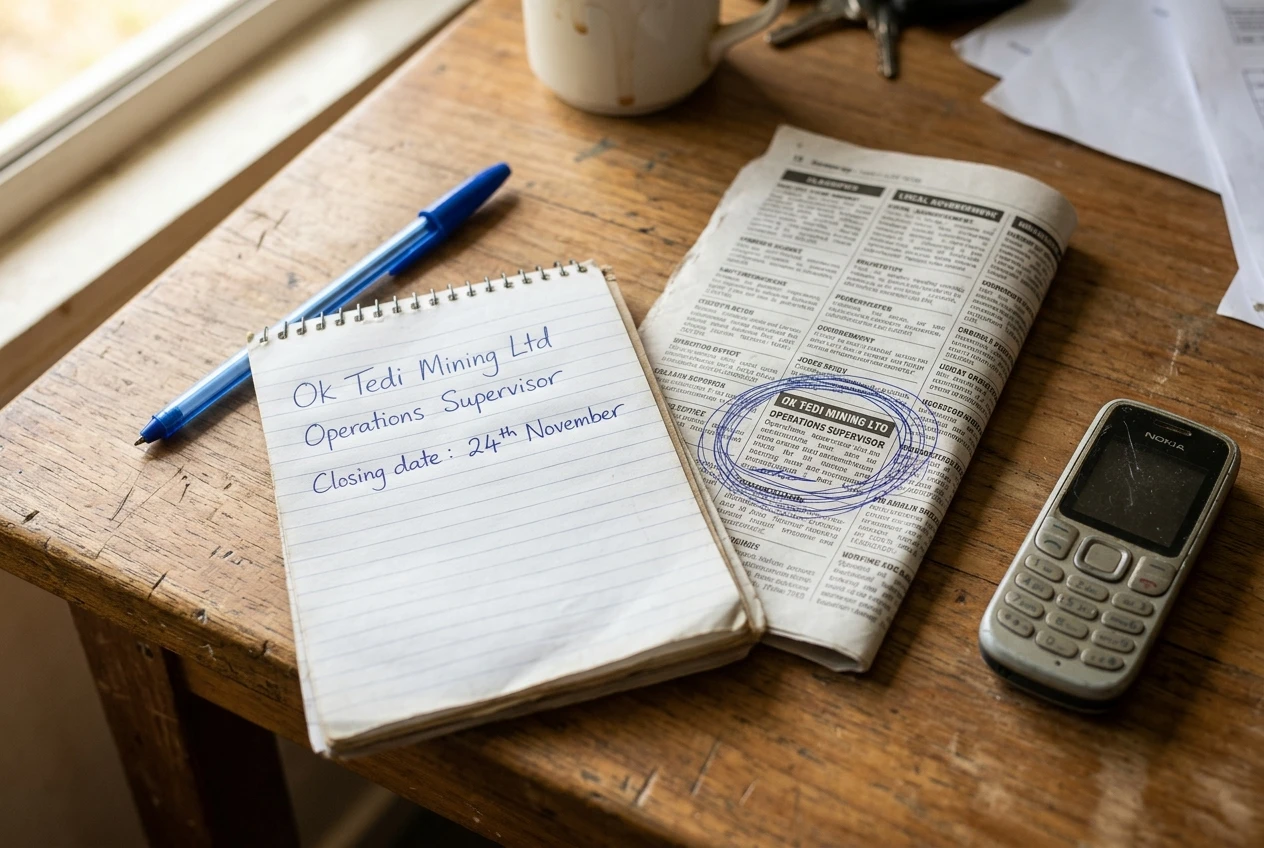
A phone call to a company office costs far less than the fees scammers ask for, and it can be done in one conversation.
Questions to ask an agency, and what a good answer sounds like
Put these questions to any agency, by phone or in writing. How they respond tells you almost as much as what they say.
“What is your registered company name and registration number?” A good answer gives you the full name and number immediately and does not mind you checking them.
“Which company is the employer, and which position is this?” A good answer names the mining company or contractor, the job title and the location. A bad answer is vague: “a big mining company in the Highlands.”
“Who is your contact at the employer?” A good answer names a department or a person you could verify yourself. If they say it is confidential, you can say you will confirm with the company before proceeding.
“Is there any fee for applying, interviewing or being placed?” A good answer is a plain no. If any fee comes up, ask who exactly receives the money and for what, then verify that with the employer.
“What documents do you need and how will you protect them?” A good answer asks for copies, explains what the agency does with them and does not ask for originals.
“What does the process look like from here?” A good answer describes screening, an interview and the employer’s decision, with realistic timing. A bad answer skips straight to payment or to a job offer.
“Can I confirm this vacancy with the company directly?” A genuine agency says yes. An agency that discourages you, or becomes angry or rushed, is telling you what you need to know.
What to do if you have already paid or shared your details
If you have already given money or documents, you may feel embarrassed. Do not let that stop you from acting, because scammers target educated and careful people too. Act quickly, in this order:
- Stop paying. Scammers often ask for a second or third payment to “complete” the process. Do not send more money hoping to recover the first.
- Keep every record. Save receipts, mobile money confirmations, screenshots of messages and advertisements, phone numbers and the names used. Write down dates and amounts.
- Contact your bank or mobile money provider immediately, explain what happened and ask what can be done about the transaction. They may be able to flag the receiving account.
- Report it to the police, with your records. A report creates an official record and may help if other victims come forward.
- Tell the mining company named in the advertisement. It may not know someone is using its name, and it can warn other applicants.
- Protect your identity. If you gave a copy of your passport, qualifications or bank details, watch for strange activity on your accounts. If you shared a password or PIN, change it right away. If you shared bank card details, ask your bank to replace the card.
- Warn people you know. Tell your class group, village group or church group. Scammers use the same advertisement again and again, and a quick message can stop someone else from paying.
Recovery of money is not guaranteed, so prevention matters far more than any step after the fact. The five checks above take a few hours at most.

Before you apply again
Choosing a PNG mining recruitment agency carefully takes patience, and patience is exactly what scammers try to take from you. Confirm the business, visit or call the office, check the vacancy with the mining company yourself, ask the questions above and pay no fee to be considered for a job. If an agency passes every check, you can send your copies with much more confidence.
PAPUANIUGINI.ORG will keep publishing practical mining career information and checking advertisements against official recruitment sources. Subscribe to the PAPUANIUGINI.ORG newsletter to get verified mining career guides and job-seeker warnings sent straight to you.

