

Most lists of small business ideas in Papua New Guinea start with what is popular. A better starting point is your own location: whether the power stays on, whether trucks and PMVs reach you in the wet season, whether your phone gets a signal, and how many people walk past your door each day. An idea that works in a Lae suburb can fail at a village junction, and the reverse is also true.
This guide is for school leavers, graduates, and anyone in a town or village who wants to start with limited savings. It shows you how to match an idea to what your place offers and how to test it before you commit your money. It gives no income figures or prices, because those change by place and season and only your own records can tell you what applies to you.
Start with what your location gives you
Write down what is around you before you write down what you would like to sell. Four things matter most: what people near you already buy, what they currently travel far to get, what grows or is made locally, and which skills you or your family already have.
A person near a busy market has foot traffic but also plenty of competition. A person in a quiet village may have few customers but also nobody nearby selling the same goods, so people walk or pay for transport to get them. Both situations can support a business, and each calls for a different kind of idea.
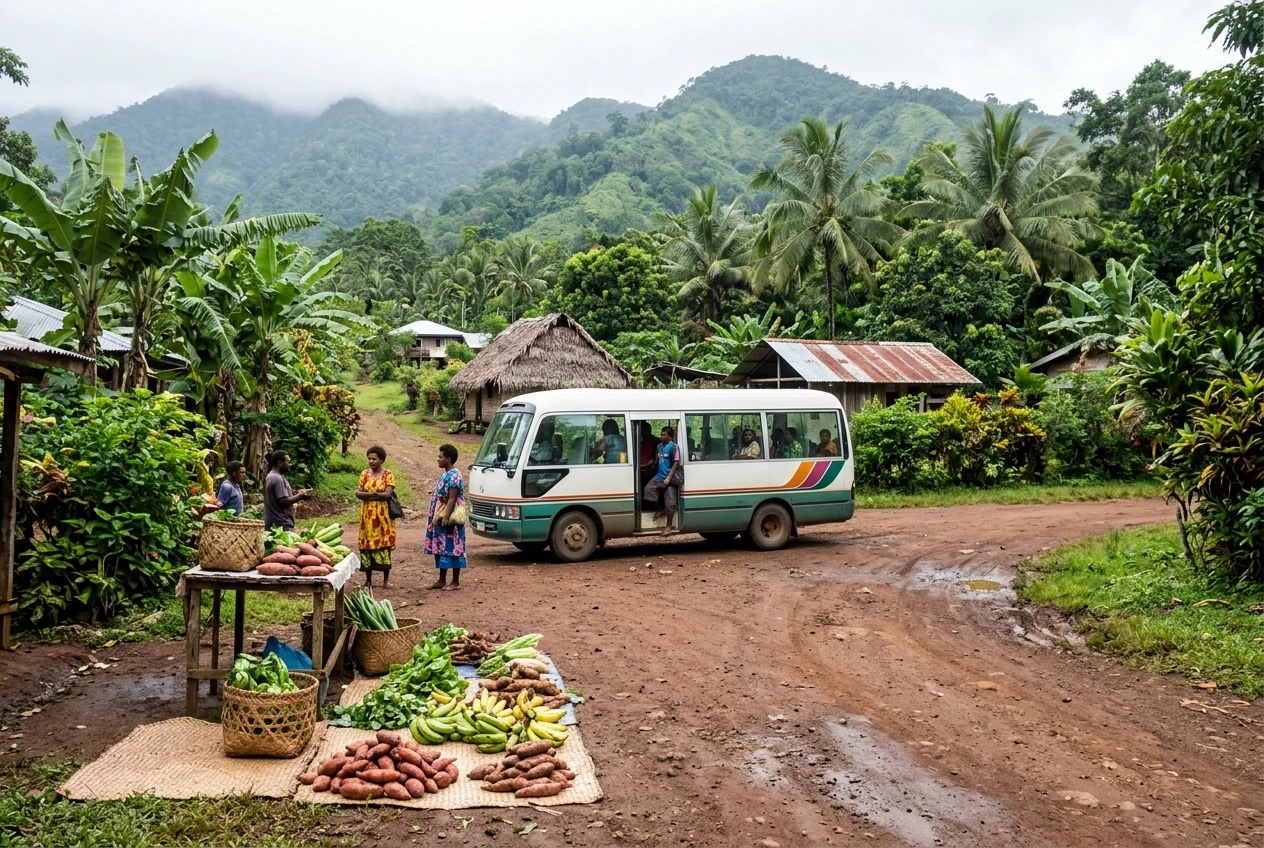
Look at it from the customer’s side. Ask what they find hard to get, what they buy often, and what they complain about. A business that fixes a frequent, small problem usually has steadier customers than one built on something people buy once a year.
Skills count as local resources too. Sewing, cooking, fixing phones or outboard motors, carpentry, bilum making and growing food are all things people already pay for. Starting from a skill you have saves you the cost of learning one.
Four questions to check before you pick an idea
Run any idea through these four questions. Write your answers in an exercise book, because answers on paper are harder to ignore than ones in your head.
1. Power: how reliable is it, really?
Watch your own area for a week and note how often the electricity goes off and for how long. Then ask whether your idea needs power at all. A freezer, a welding machine or an electric sewing machine stops working when the grid does. A stall selling dry goods, a hand-powered tool, or cooking over a fire does not.
If your idea does need power, work out the backup before you buy anything. That might be a small solar setup, a generator, or a design that lets you work when power is on and sell when it is off. Whichever you choose, add the running cost of the backup to your plan.
2. Roads: how do goods get to you and away from you?
Think about how supplies reach you and how your products reach buyers. Ask who drives the route, how often, and what happens to the road after heavy rain. Perishable goods such as fresh produce, fish or cooked food lose value every hour they wait for transport. Dry, durable goods can wait for a delayed truck or boat.

Find out too whether your suppliers will bring stock to you or whether you must collect it. Collecting stock means travel costs and time away from your stall, and both belong in your plan.
3. Mobile coverage: can customers and suppliers reach you?
Check which networks work where you plan to trade, and whether the signal holds all day or only in certain spots. If coverage is weak, a business that depends on orders by phone or social media will struggle, while one that relies on walk-in customers will not.
Where coverage is good, a Facebook page or a WhatsApp group can bring in orders at almost no cost. Where it is poor, your best advertising may be a clear sign, a regular spot and word of mouth. Plan for the coverage you have, not the coverage you hope for.
4. Customers: who will actually buy, and how often?
Count real people. Stand near your planned spot at different times on a weekday and on market day, and note how many walk past and what they carry. Talk to five or ten of them. Ask what they buy now, where they buy it, and what would make them switch.
Pay attention to when people have money. In many places cash flow follows pay fortnights, harvest or coffee seasons, and school fee periods. A business that depends on one busy week and then goes quiet needs a plan for the slow weeks.
Low-cost business types that suit town, peri-urban and village settings
These are categories rather than promises. Whether any one of them works depends on your answers to the four questions above.
In towns
Town settings usually offer more customers, better coverage and more competition. Ideas that fit include:
- Cooked food and snacks sold near workplaces, schools or bus stops, where people want a quick meal
- Laundry, ironing or clothing repair for workers who have little time at home
- Phone repair and accessories, if you have or can learn the skill
- Reselling goods in small quantities, such as sachets, single items or small packs that people on tight budgets prefer to buy a few at a time
- Printing, typing or form-filling help for people applying for jobs, scholarships or schools
Competition is the main risk in towns. If five people already sell the same thing on your street, you need a clear reason a customer would choose you, such as better hours, cleaner service or a product the others lack.
In peri-urban areas
Peri-urban settlements sit between town and village and often have large populations with limited local services. People there may travel into town for things that could be sold closer to home. Small trade stores, fresh produce from nearby gardens, and food stalls along the road people use to commute are common starting points. A service that saves residents a trip into town has a built-in selling point.
In villages
In villages, your customers are fewer but may be loyal, and your supplies may come from your own land. Options include:
- Selling garden produce at a nearby market or roadside
- Processing what you grow, such as drying, smoking or packing food so it keeps longer
- Handicrafts, including bilum, carvings and woven goods, sold to local buyers or at markets and festivals
- A small trade store that saves neighbours a long trip for basic goods
- Services the community needs, such as repairing tools or sewing school uniforms
If your craft draws on cultural designs or knowledge that belong to a community, speak with the right elders or owners first. Cultural ownership matters, and getting permission protects both the work and your reputation.
Businesses that need little or no reliable electricity or internet
If your area has poor power and weak signal, choose ideas that do not depend on either. These work with hands, tools and local goods:
- Fresh produce and food sales from gardens, with no refrigeration if you sell the same day
- Cooking over a fire or gas bottle, such as scones, boiled food or roast corn
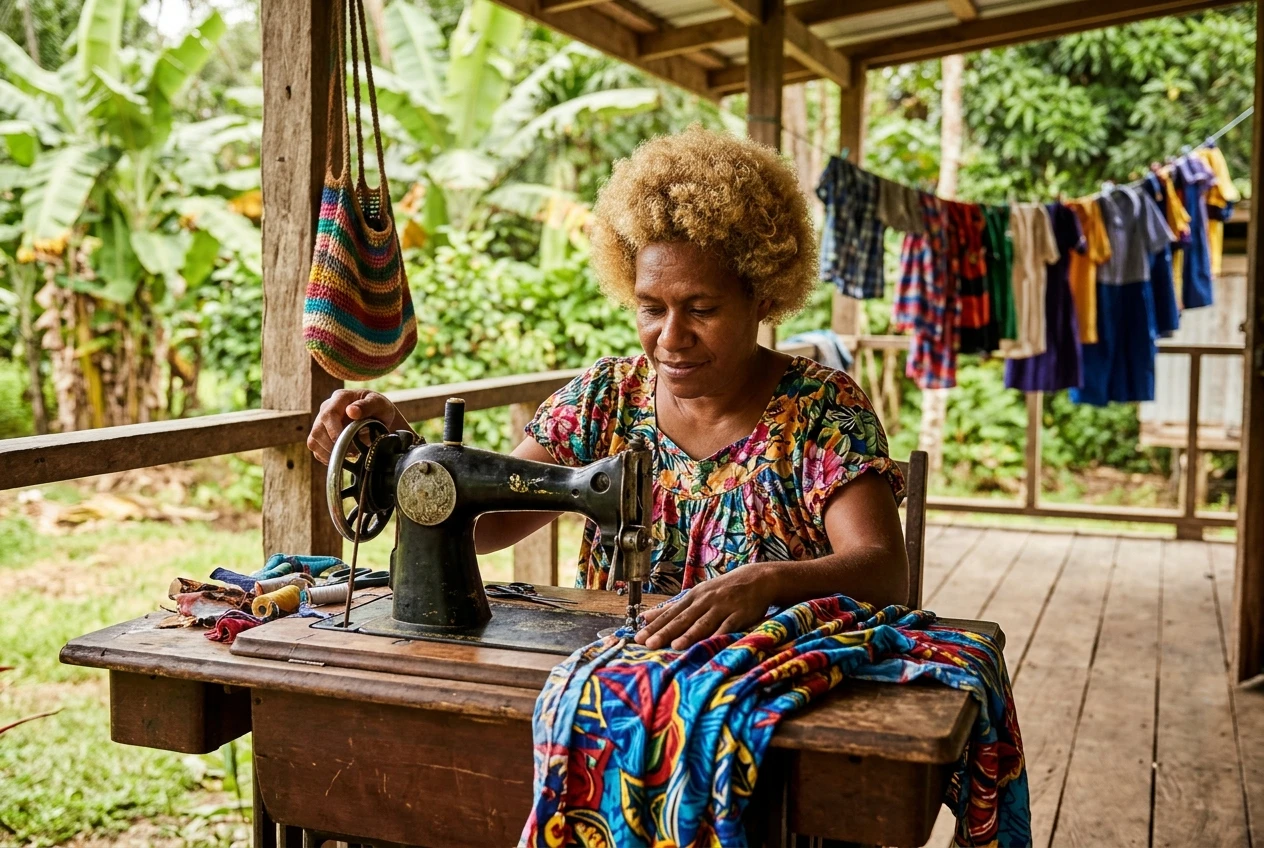
- Sewing and mending with a foot-powered or hand machine
- Carpentry and small repairs with hand tools
- Craft making, since bilum and woven goods are made without any power
- Basic trade store goods that do not need cold storage, such as dry goods, soap and school supplies
- Selling at weekly markets, which bring customers to you without any online presence
Some of these ideas can use a small amount of power without depending on it. A solar panel that charges phones for neighbours is an example, but it only makes sense if you know the equipment cost, how long it lasts, and how many people would pay to use it. Treat it as an add-on you test later, not as your first purchase.
Testing your idea small: a first month plan
Before you spend your savings, spend a small amount of money and a few weeks finding out whether anyone will pay for what you plan to sell. The aim is to learn something real with the smallest risk you can arrange.
Week 1: Observe and ask. Visit your planned spot at different times. Count customers, note what competitors sell, and talk to ten potential buyers. Write down what they say, including things you did not expect.
Week 2: Run a very small trial. Buy or make a small batch, only as much as you could afford to lose or use yourself. Sell it for a few days at your planned spot. If your idea is a service, offer it to a handful of people and ask for honest feedback.
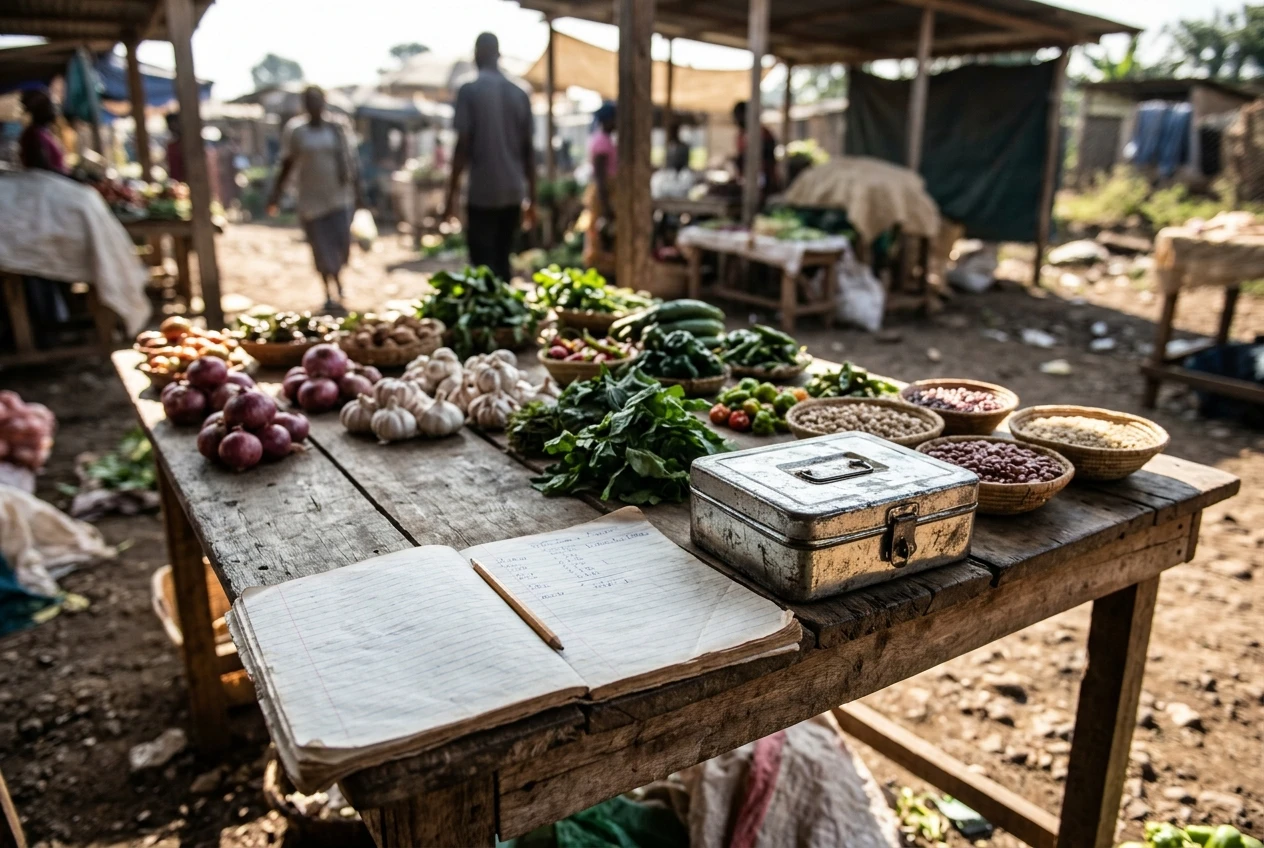
Week 3: Keep records. Write down every sale and every cost, including transport and your own time. Note which days were busy, what sold first, and what customers asked for that you did not have. An exercise book is enough.
Week 4: Review and decide. Look at your records and ask three plain questions. Did people buy? Did sales cover your costs once you counted transport and your time? Could you do this again next month without running out of money? If the answers are yes, increase your stock a little. If not, change one thing, such as the product, the place or the hours, and test again before spending more.
Never put all your savings into the first purchase. Buy stock in stages, and reinvest what you earn before you take money out. If a test fails, you want to have lost a small amount rather than everything.
If you are still deciding between earning a wage and building a business, the guide on how to apply for a mining job in Papua New Guinea explains what that path involves, so you can compare the two with real information.
Registering and staying legitimate: who to check with
Rules for registering a business, paying tax and holding licences change, and they differ by the kind of business and where you operate. This article does not list specific requirements, fees or deadlines, because anything printed here could be out of date by the time you read it. Confirm each one directly with the responsible body.
Two organisations to start with:
- The Investment Promotion Authority (IPA) handles business registration in Papua New Guinea. Ask them what type of registration suits your business, what documents you need, and what it costs now.
- The Internal Revenue Commission (IRC) handles taxation. Ask what tax obligations apply to a small business like yours, whether you need a tax number, and what records you must keep.
Depending on your business, other approvals may apply. Selling food, running a trade store, operating a vehicle or trading in certain goods can involve local government, health or transport requirements. Your provincial or district office and your local council are good places to ask which ones apply to you.
When you contact any office, write down the date, the name of the person you spoke to and what they told you. Ask for the information in writing where you can, and check official websites or offices rather than relying on what someone repeated second-hand. If you hear a figure or rule from a friend, confirm it before acting on it.
Be wary of anyone who offers to register your business or get a licence in exchange for a payment you cannot verify. Ask the official body whether the person is authorised.
Getting your goods to customers and paying suppliers when transport is the hard part
In much of Papua New Guinea, transport decides whether a business works. A good product that cannot reach buyers on time earns nothing.
Reduce how far goods must travel. If you can sell close to where you make or grow something, you spend less on transport and lose less to spoilage. Selling at a nearby market first, before looking at distant towns, keeps your costs low while you learn.
Match the product to the route. Fresh produce needs fast, frequent transport. Dried, smoked or packed goods can travel on slower schedules. If your transport is unreliable, process what you can so it keeps.
Share transport costs. Neighbours or other sellers heading to the same market may split a vehicle or boat hire with you. Agree the arrangement clearly beforehand so there are no disputes later.
Use courier services only after checking them. For parcels going to distant customers or coming from suppliers, compare what is available. Confirm current services, delivery areas and costs directly with the provider, and keep your receipts and tracking details where they are offered. Note that PNG Post and newspaper organisations such as the Post-Courier are separate organisations, so be sure you contact the right one.
Plan how you pay suppliers. Before you rely on a supplier, ask how they accept payment. Options may include cash on collection, bank transfer, or mobile money where it is available in your area. If you pay in advance and have to wait for delivery, you are carrying the risk, so start with small orders until a supplier has proved reliable. Always get a receipt and keep it.
Keep a buffer. Delays happen. Hold enough stock or enough cash to cover a late delivery, so a blocked road does not close your stall.
Mistakes first-time owners commonly make and how to avoid them
- Copying whatever the neighbour sells. If many people sell the same thing, buyers split among them. Look for a gap, or give customers a clear reason to choose you.
- Spending all savings on stock or equipment at once. Buy in stages and test demand first. Equipment you cannot use because the power is out is money tied up for nothing.
- Not counting your own costs. Transport, your time, packaging, spoilage and any fees all reduce what you keep. If you only count the price you paid for stock, you can think you are earning when you are not.
- Mixing business money with household money. Keep a separate tin, account or notebook for the business, and pay yourself a set amount on a set day. Without this, it becomes hard to tell whether the business is working.
- Giving too much credit. Selling on credit to friends and relatives can drain your stock without bringing in cash. If you offer credit, keep a written record and set limits.
- Ignoring the rules. Registration, licences and tax obligations can cause trouble later if they are skipped. Confirm early with IPA, IRC and your local office what applies to you.
- Depending on a single customer, supplier or season. If one buyer or one harvest provides all your income, losing it stops the business. Add a second product, second buyer or second supplier as you grow.
- Giving up after one bad week. A single slow week may reflect the weather, a pay cycle or a road problem rather than a bad idea. Look at your records over several weeks before you decide.
Choosing small business ideas in Papua New Guinea by what your area actually offers takes longer than copying a list, but it protects your savings and gives you real information about your customers. Start small, write everything down, and let your results decide what happens next.
Run a small business in Papua New Guinea, or just started one? Share your story with PAPUANIUGINI.ORG so other readers can learn from what worked, what didn’t, and how you handled power, transport and customers.
