Most land in Papua New Guinea is customary land, held by clans and communities under their own rules rather than owned by a company or an individual title-holder. That changes how tourism works. When a visitor sleeps in a village guesthouse, walks a forest trail or dives a reef, the people hosting them are usually the same people who hold the rights to that forest or reef. Community-based tourism in Papua New Guinea is built on that fact, and its main strength and its main difficulty both come from it.
This article explains how the model works, where the money can go, what it cannot do, and what both villages and visitors should check. For the mining side of landowner decisions, see our piece on what landowners can expect from a PNG mine and how the agreements work. Tourism is a different kind of choice, because the forest, reef or bird site stays standing and the land stays with the community.
Why a guesthouse on customary land is a different business from a hotel
A hotel company buys or leases a site, builds to a standard design, hires staff and sends profit to its owners. The land is a cost on the balance sheet. A guesthouse on customary land starts from the opposite position. The land already belongs to the community, it cannot simply be sold on the open market, and the people who run the guesthouse are usually related to the people who hold the land.
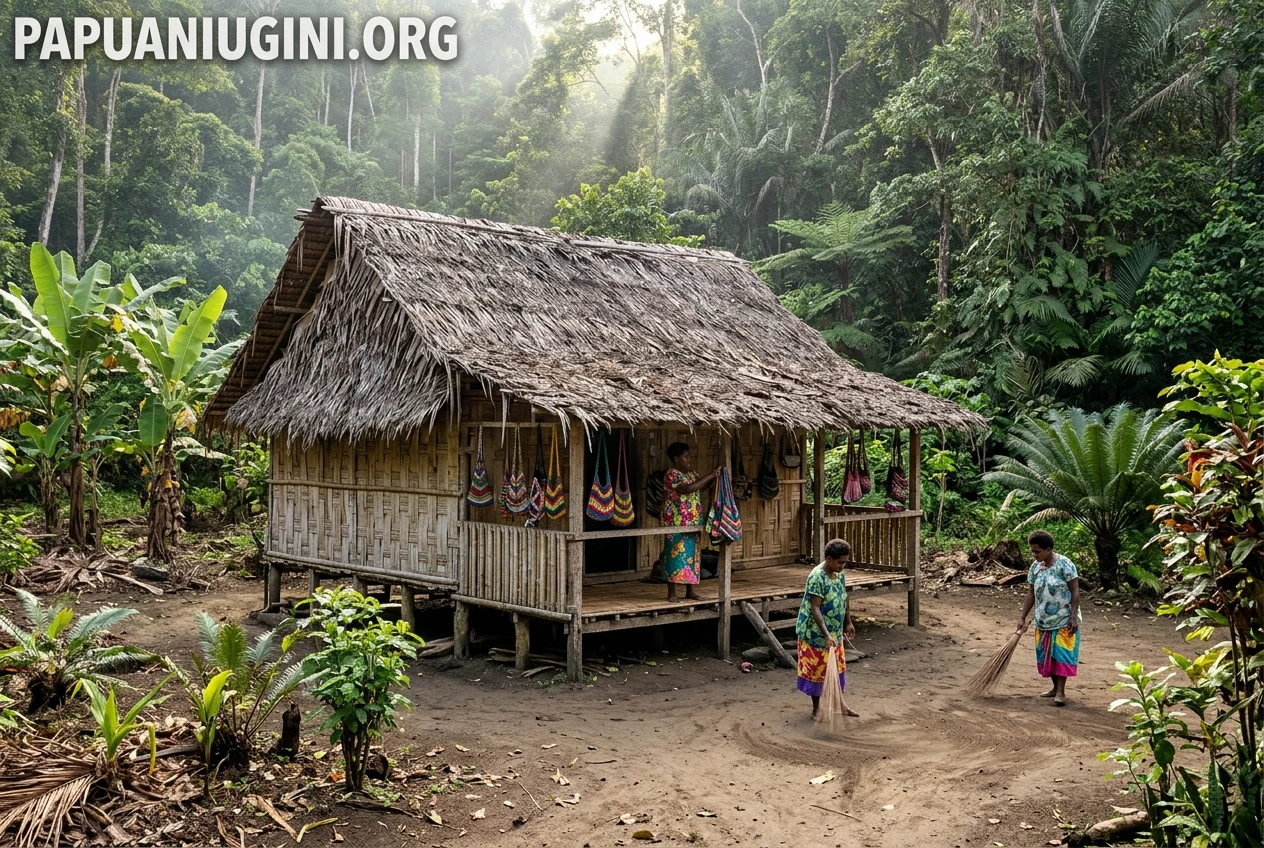
That difference shows up in several practical ways:
- The owner is a group, not a person. Permission to build, to guide visitors through a forest or to use a beach comes from clan members, not from one manager with a signature.
- Income is shared, not extracted. Money from visitors is more likely to be spent on school fees, a water tank, a boat engine or a church roof than sent to shareholders elsewhere.
- The product is the place. Visitors come for an intact forest, a working reef or a living culture. If the community clears the forest or overfishes the reef, the product disappears.
- The scale is small. A handful of rooms, a few guides and a local kitchen is the normal size. Few community operations can compete with a hotel on facilities, and they do not need to. What they offer is access to a place and to people that a hotel in town cannot.
None of this makes a village guesthouse cheaper or easier to run. It makes it a business that answers to the community’s decisions about its own land, which is the reason many landowners prefer it to selling or leasing out access.
Who decides: clans, landowner groups and the village meeting
Decision-making over customary land differs from one part of Papua New Guinea to another. Descent, clan structure, the role of big-men, women’s rights to land and the way boundaries are remembered are not the same in the Highlands, the Sepik, the Milne Bay islands or the Gulf. Any article that gives one rule for the whole country is wrong, and a village should not assume that a model from another province will fit its own customs.

Some points hold widely enough to be useful:
- Find out who actually holds the rights. A trail, a bird display tree and a stretch of reef may each belong to a different clan or sub-clan. A tour that crosses several holdings needs agreement from each.
- Agree before the first visitor arrives. Disputes over who may host, who earns from a guide fee and who gets a share of a bed levy are much harder to settle after money has started to flow.
- Put the agreement where everyone can see it. A village meeting that records decisions, and a land group that is formally registered where the law allows it, gives the community something to point to when a visiting operator or a family member says otherwise.
- Include women and young people in the discussion. In many communities women manage gardens, handicrafts and cooking, which are central to what visitors buy. Young people often carry the guiding and the phone contact with the outside world.
Consensus can be slow. A decision that takes several village meetings is frustrating for a tour company that wants an answer this week, but the slowness is a feature when the question is the future of a forest. The risk is the opposite one: a small group or an outside agent who signs on behalf of the whole community without a proper meeting.
How visitor money can end up protecting a forest, reef or bird site
Conservation does not follow automatically from tourism. A forest is protected by tourism only when the people who control it decide that visitors are worth more to them, over the long run, than the alternatives. That means the income has to be real, it has to reach the right people, and the community has to see the link between the income and the place.
For the link to hold, several things need to be in place:
- A clear fee structure. Visitors pay for specific things, such as site entry, a guide, a meal, a bed or a boat transfer, and the community knows what each payment is for.
- A rule about the share that goes to the resource. Some communities set aside part of the income for patrolling, trail maintenance or a fund tied to the site. Whether to do this, and how much, is the community’s decision, and it should be written down.
- Agreed limits on use. If a bird site is to stay productive, group sizes, viewing times and the places visitors may walk need limits. If a reef is the attraction, fishing and anchoring rules need to be agreed and enforced by the people who live beside it.
- Benefits that reach households. If only one family or a few committee members earn from visitors while everyone else bears the cost of restrictions, support for protecting the site will fade.
Conservation also needs the community to have a real alternative to rejecting a logging or plantation offer. A village that is paid well for visitors can say no to a quick payment for timber. A village with no income may feel it has little choice. Tourism does not remove that pressure; it gives the community a second option.
Birdwatching, diving and trekking: where the link to conservation is easiest to see
Some kinds of visits connect to conservation more directly than others, because the visitor pays for something that only exists if the habitat does.
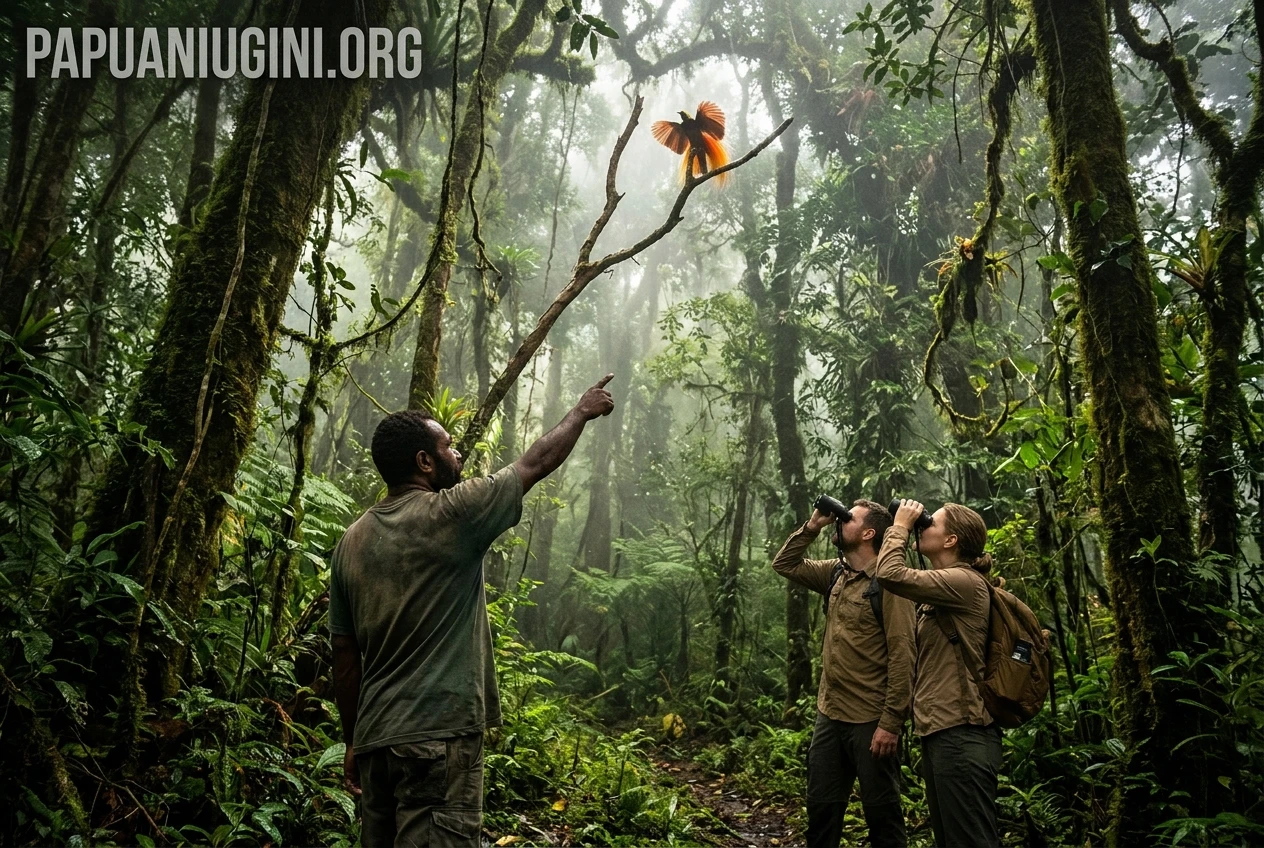
Birdwatching. Visitors travel to see particular species, and birds of paradise are the best known. The attraction is a bird at a specific tree or display ground, and it stays there only while the surrounding forest stays. A community that can show a visitor a bird has a direct financial reason to leave that forest alone. Local knowledge matters here: guides know the sites, the timing and the behaviour of the birds, and visitors cannot find them without that knowledge.
Diving and snorkelling. Customary rights in Papua New Guinea commonly extend to nearby reef and sea, not only to land. A dive operator or a visiting boat that wants to use a reef is using something the community holds. Reef condition is visible to every visitor, so damage from dynamite fishing, runoff or careless anchoring shows up in the experience and in the income.
Trekking. Walking routes cross land held by several groups, pass through gardens and depend on forest, rivers and mountain scenery. Porters, guides, campsite owners and village hosts along the route can all earn income. A route is also fragile in organisational terms: if one group along the way withdraws permission, or a dispute closes a section, the whole trip stops.
In each case the useful question is the same: what exactly is the visitor paying to see, and who controls it? Where the answer is a specific habitat owned by a specific community, the case for protecting it is strongest.
Where community tourism struggles: access, transport and thin margins
An honest account has to include the difficulties, and they are serious.
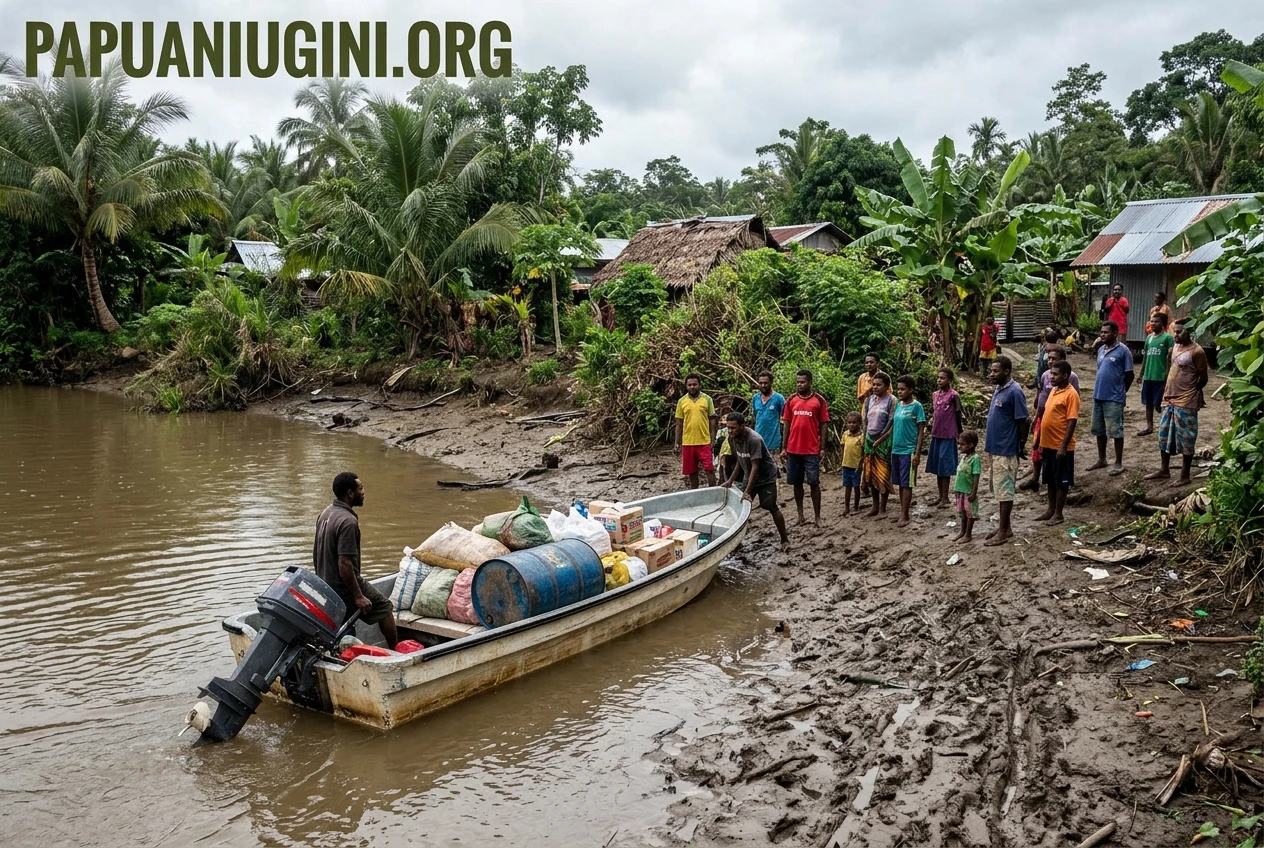
Access. Many of the places that interest visitors are far from an airstrip, a sealed road or a wharf. A visitor may need a domestic flight, a long road trip and a boat transfer to reach a village, and each leg has a cost and a risk of delay. Services that work in town, such as reliable phone coverage and internet, may not exist at the destination, so taking bookings and payments is difficult.
Transport. Flights get cancelled, boats depend on weather and fuel, and roads wash out. A visitor with a tight schedule may miss a connection and lose a day or the whole trip. Communities cannot fix national transport problems, but they can be open with visitors about them and avoid promising timings they cannot control. This is also why tourism income is uneven: a few good months can be followed by long gaps.
Thin margins. A guesthouse with a few rooms earns little in a slow month, and fixed costs such as roofing, mosquito nets, water, fuel and food still have to be met. Prices that look high to a visitor may barely cover the costs once transport of supplies is counted. Many community projects depend on help from outside to get started, whether from a church, a non-government organisation or a development partner, and the long-term question is whether the project can pay its own way when that help ends.
Skills and records. Hosting visitors involves bookings, safety, hygiene, first aid, communication in English and basic bookkeeping. These can be learned, but they take time and training, and a project can fail because nobody was keeping clear accounts, not because of a lack of visitors.
Dependence on a few people. If one guide, one committee chair or one outside partner holds all the contacts, the project is at risk when that person leaves.
Tourism is therefore unlikely to replace gardens, fishing, cash crops or other work for most families. It works best as an extra source of income that sits beside existing livelihoods.
Questions a village should ask before saying yes to tourism
A community weighing a tourism proposal, whether from an outside operator or from its own members, can work through a short list of questions at a village meeting:
- Who is proposing this, and who benefits most? Ask for the names of the people and companies involved and what each one will earn.
- Is there a written agreement? Check what it says about land use, duration, payments, and what happens if either side wants to end it. Seek independent advice before signing anything long-term.
- Who has the right to agree for the land? Confirm that every clan or family with rights to the site has been consulted, including those who live away from the village.
- How will money be shared and recorded? Decide in advance how fees are collected, who keeps the book, how often accounts are reported to the village and how disputes are handled.
- What happens to the place if many visitors come? Agree on group size, no-go areas, waste, noise and respect for sacred sites. Some places and knowledge should not be shown to outsiders, and the community has the right to say so.
- What will the village do if visitors stop coming? A tourism project that leaves the community worse off in a slow year is too risky.
- What help is available? Provincial tourism offices, community organisations and church or development partners may offer training or advice, and it is worth asking before committing money.
- Can we say no, or say yes slowly? Starting with a small trial, such as a few visitors and one or two guides, lets the community learn before it builds.
The village does not have to accept the first offer, and a yes to one kind of visitor can still be a no to another.
How a traveller can check that a tour really benefits the community
Many tours say they support local people. A visitor can check this before paying, using plain questions.
- Ask who owns the operation. Is it owned or co-owned by the community, or by an outside company that hires locals as labour? Both can be legitimate, but they are different arrangements.
- Ask where your money goes. A good operator can say what part of the price goes to the village, the guide, the landowners and the transport provider, even in general terms. An evasive answer is a warning.
- Check that the landowners agreed. A tour that crosses or uses customary land should have the permission of the people who hold it, and you can ask the host directly.
- Book directly where possible. Contacting a village guesthouse or its local representative sends more of the payment to the community than a long chain of agents does, though in remote areas a reputable local operator may be necessary for logistics.
- Pay fees, and pay them to the right person. Entry fees and guide charges are the community’s income. Ask who collects them and get a receipt where one is offered.
- Follow local rules. Dress, photography, no-go areas and behaviour around sacred sites are set by the community. Ask before you photograph people or ceremonies.
- Buy local. Food, crafts and services bought in the village keep more money there than goods carried in from town.
- Plan for delays. Allow spare days in your schedule, and read what your policy covers for remote travel, as our guide to what travel insurance must cover on a remote Papua New Guinea trip explains.
A visitor who asks these questions politely is doing the community a favour, because it encourages operators to be open about how the money is shared.
Share a project from your province
Tell us about a community-run tourism or conservation project in your province. Send us the village name, who runs it and how visitors can contact them, and we will check the details before we feature it.