If you are shopping for travel insurance for Papua New Guinea, the wording of the policy matters more than the name of the insurer. Brand rankings go out of date, and policies are rewritten often. A checklist for reading the wording stays useful, and that is what this article gives you.
It is written for international trekkers, divers and birdwatchers planning a remote trip, and for Papua New Guineans overseas who are arranging cover for relatives. It stays realistic about distances, transport and local medical facilities, because the cover you need depends on them.
Why a Standard Travel Policy Can Fall Short in Remote PNG
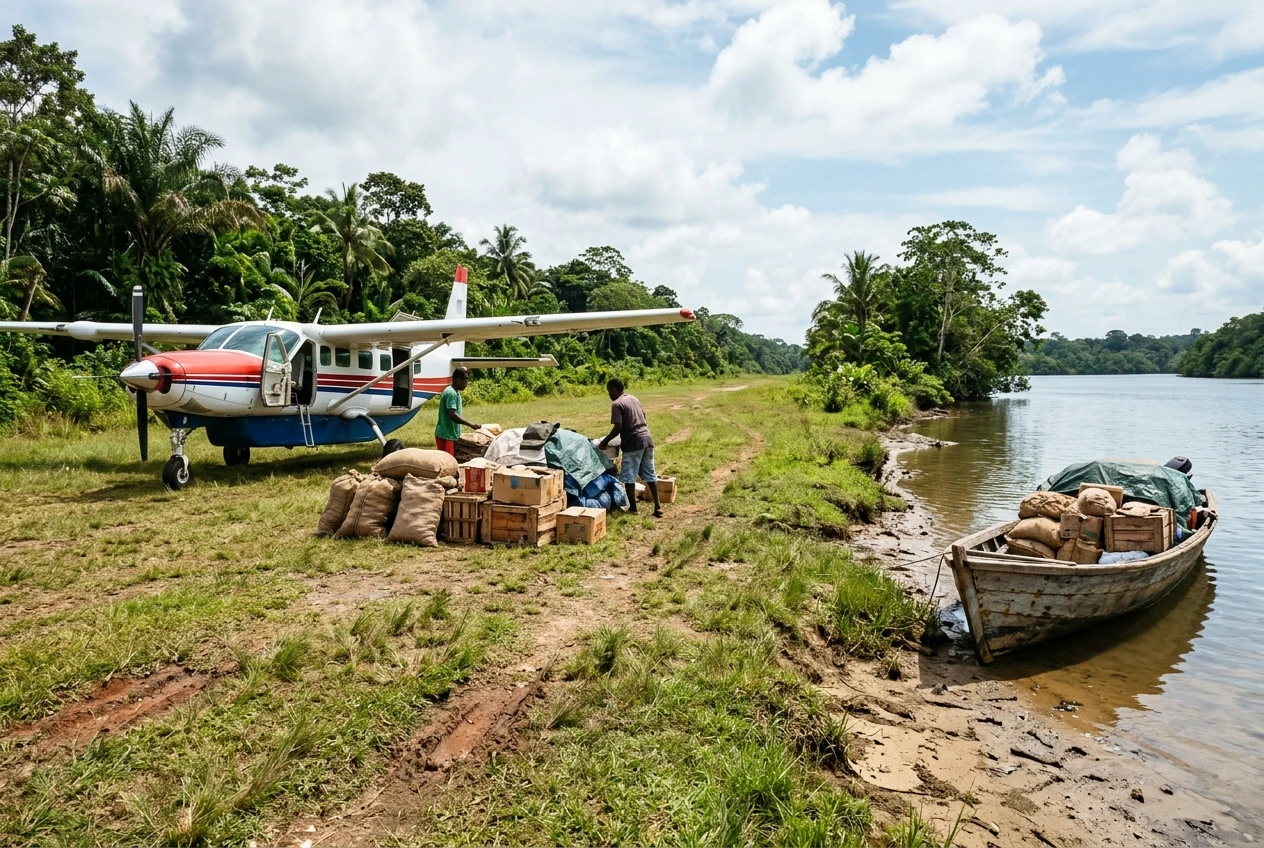
Most standard policies are priced for holidays where a hospital, a taxi and a replacement flight are all within a few hours. Much of Papua New Guinea does not work that way. Port Moresby has no road connection to Lae or the Highlands, so travel between major centres is usually by air. Many villages, lodges and dive sites are reached only by small aircraft from an airstrip, or by boat. You can see how widely the provinces are spread on our map of every province, sorted by region.
This changes what a policy has to do. Port Moresby has private clinics and the best-equipped hospitals in the country. Provincial centres have public hospitals and health facilities with limited capacity. Remote areas may have only an aid post or health centre, and getting from there to anything larger can take days, depending on weather and flights. A serious injury or illness often means moving the patient a long way before treatment can start.
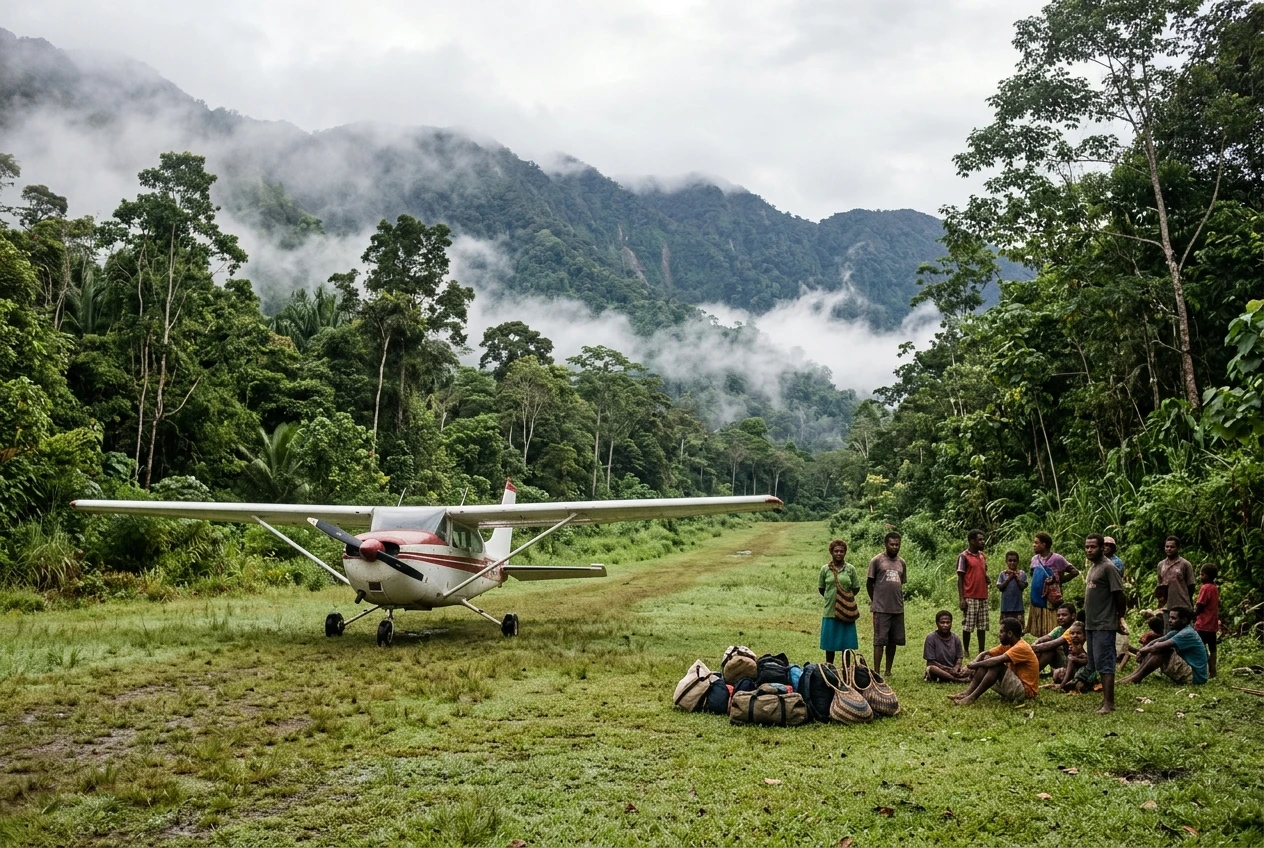
A policy written for a beach resort week may therefore have gaps in exactly the places that matter here:
- Emergency transport may be capped at a figure that does not cover a charter aircraft.
- Trekking may be excluded, or covered only below a set altitude.
- Diving may be covered only to shallow depths or only with a particular certification.
- Cancellation cover may not respond to the kinds of disruption common on domestic routes.
Policy wording varies between insurers and between products from the same insurer. Treat everything below as questions to put to your own policy, not as a statement of what any policy contains.
Medical Evacuation: The Cover That Matters Most Outside Port Moresby
Of everything in a policy, emergency medical transport deserves the most attention. It is also easy to misread, because “evacuation” and “repatriation” are different benefits, and a remote PNG trip may need both.
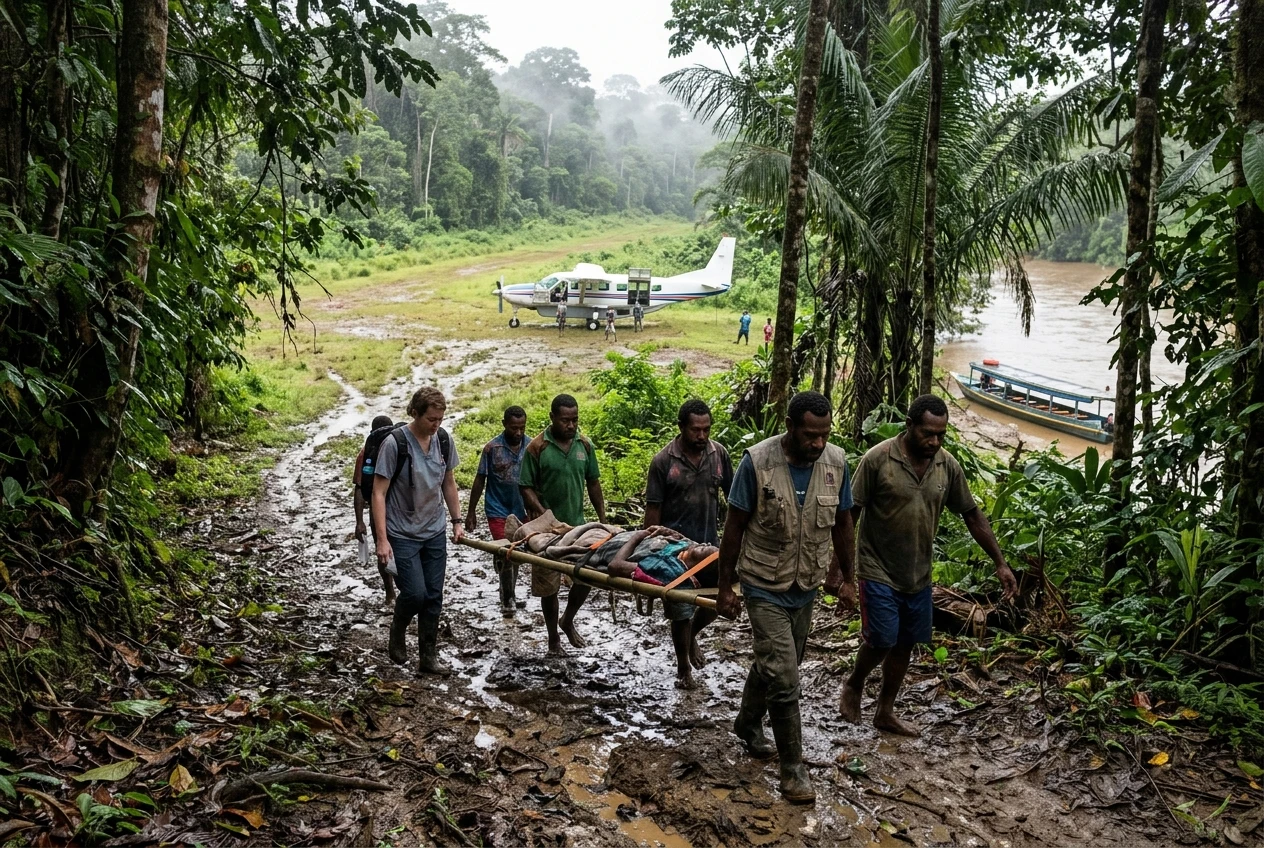
Two kinds of movement
The first is evacuation from where you are to the nearest facility that can treat you. In a remote area that might mean a charter flight or boat to a provincial hospital, or on to Port Moresby. The second is moving you out of the country, often to a larger hospital overseas, or home once you are stable. Serious cases are often moved abroad, and Australia is a common destination from PNG, but your insurer decides where treatment happens, not you.
Check that the policy covers the first kind specifically. Some policies mention only repatriation to your home country and say little about getting a patient from a remote location to a first hospital.
What to look for in the wording
- Is the benefit capped? Charter flights and air ambulances are expensive. A low limit can leave you paying the difference. Ask for the figure in writing.
- Who arranges the transport? Many policies require you to call the insurer’s emergency assistance line first, and they will not reimburse transport you organised yourself. If you cannot call, find out what the policy says about that.
- Who decides it is medically necessary? Policies usually say the insurer’s medical team makes that decision. Read how disputes are handled.
- Does it cover search and rescue? Looking for someone who is overdue on a trek or lost at sea is a separate cost, and not every policy includes it.
- Does it cover the cost of getting to the pickup point? A helicopter or plane may need an airstrip or landing site. Moving an injured person by stretcher or boat to that point can itself be costly.
Communication is part of the plan
Mobile coverage is patchy outside towns and absent in many remote areas. A policy that tells you to ring a 24-hour number is of little use if you have no signal. Ask the insurer how to raise an emergency when out of coverage, and consider whether your trip operator carries a satellite phone or satellite messenger. Save the assistance number somewhere you can read without internet, such as a printed card in your daypack.
Check How Your Policy Defines Trekking, Diving and Other Adventure Activities
“Adventure activities” is a loose phrase. What matters is how your policy defines each activity, and the definitions often turn on small details.
Trekking
Many PNG treks are well known: the Kokoda Track, climbs on Mount Wilhelm (at 4,509 metres the highest peak in the country), and walks into the Highlands for birdwatching. Policies handle these in different ways. Some treat “trekking” or “hiking” as covered up to a maximum altitude. Others require a guide or an organised tour. Some exclude walking that takes you more than a certain distance from a road or a medical facility, which in PNG describes a lot of normal trips.
Ask these questions:
- What is the altitude limit, and is it measured from sea level?
- Does the policy require a registered guide or tour operator?
- Is multi-day trekking in remote terrain covered the same way as a day walk?
- Is a porter-supported trek treated differently from an independent one?
Diving
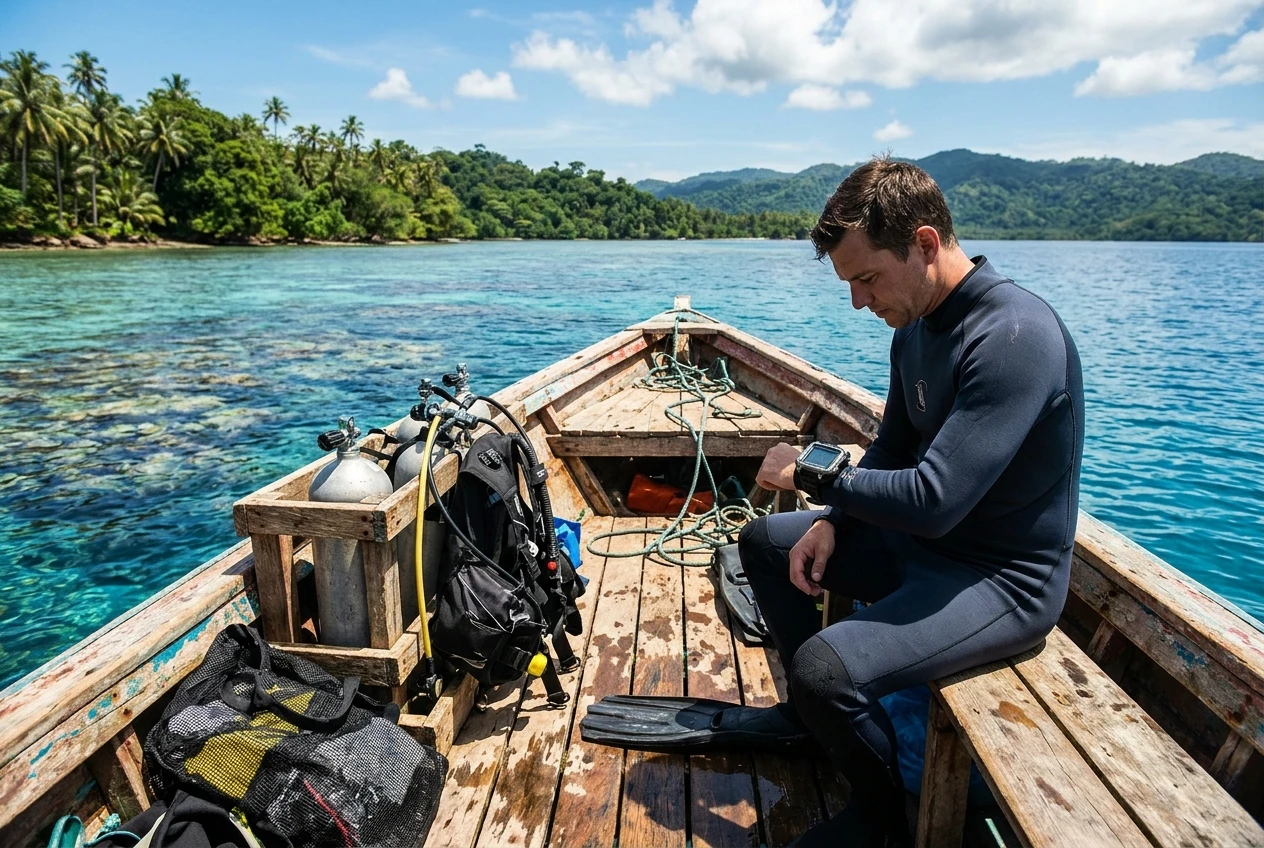
PNG’s reefs and wrecks draw divers from around the world, and diving is one of the activities insurers most often treat separately. Look for:
- Certification: Some policies cover only divers with a recognised qualification, or limit cover to the depth that qualification allows.
- Depth limits: Cover may stop at a set depth. Check whether your planned dives fall inside it.
- Decompression illness: Confirm that treatment is covered, including transport to a recompression chamber. Chambers are few in PNG, so ask where the nearest one is for your dive area and who pays to get you there.
- Dive types: Night, wreck, cave and solo diving are often listed separately. Liveaboard trips may also have their own conditions.
- Flying after diving: Some policies expect you to follow standard surface-interval guidance before a flight, and a claim can be affected if you did not.
Birdwatching, boats and the activities nobody thinks to ask about
Birdwatching itself is usually low-risk, but it often involves early starts, steep forest paths, river crossings and long boat trips. The risks sit in the transport and terrain, not the birdwatching. Ask whether travel in small boats, including dinghies and dugout canoes, is covered, and whether the policy says anything about unlicensed operators. If you plan to snorkel, kayak, or climb a canopy tower, ask about each by name rather than assuming a general adventure clause covers it.
Exclusions That Catch Travellers Out: Altitude, Travel Advisories and Pre-Existing Conditions
Exclusions are where claims fail. They are usually in a section near the back of the policy document, and they are worth reading before you pay rather than after.
Altitude
If your policy caps cover at a certain height, a climb that goes above it can leave you uninsured for the whole trek, or only for the part above the cap. Check the exact figure against your planned route, and ask whether the cap applies to the highest point you reach or to where you sleep.
Government travel advisories
Many policies reduce or void cover if you travel to a place your own government advises against visiting. Advisories can cover specific provinces or regions, not the whole country, and they can change between the day you buy the policy and the day you fly. Ask the insurer what happens if an advisory is issued after you buy, and read your government’s current advice for each province you plan to visit. Also note related exclusions for civil unrest, war and similar events, which are worded differently from policy to policy.
Pre-existing medical conditions
Declare everything the application asks about. A condition you leave off can give the insurer grounds to reject a claim, even one that seems unrelated. Some policies cover stable conditions automatically, some charge extra, and some exclude them. If you take regular medication, confirm that the trip is not rated as too remote for your condition to be covered.
Relatives who are arranging cover from overseas should also check how the policy treats residency and citizenship. A person returning to their country of birth, or travelling on a different passport, may be treated differently from a typical tourist. Confirm that cover applies in Papua New Guinea for that traveller specifically.
Conditions that can void a claim
Other exclusions are easy to miss because they read like ordinary conditions:
- Illness that results from not following recommended precautions, which some policies apply to malaria prevention. Ask what the policy expects.
- Injury while under the influence of alcohol or drugs.
- Activities carried out against local advice or without required permits or licences.
- Losses from leaving belongings unattended.
- Activities with an operator that is not licensed or qualified.
Cancellation, Delays and Lost Gear When Flights and Roads Are Unreliable
Domestic travel in PNG can change at short notice. Flights to small airstrips depend on weather and aircraft availability. Roads can close after landslides or local disruptions. A trip with several connected legs can unravel from one delay.
What cancellation and delay cover usually means
Cancellation cover pays you back for prepaid costs only if the reason for cancelling is on the policy’s list of covered reasons. A flight you simply choose not to take is not covered. A missed connection or delay cover usually applies only after a minimum delay and only if the cause is covered. Ask:
- Does the policy cover delays caused by weather on domestic flights?
- What is the minimum delay before cover starts?
- Does it cover extra accommodation and meals, and up to what amount?
- If a road is closed and you cannot reach your lodge, is that a covered reason?
- Are prepaid tours, lodges and dive packages covered if you cancel for an insured reason?
Build slack into the itinerary regardless. Insurance reimburses costs, but it does not give you the days back. Leave a buffer before your international departure so one cancelled domestic flight does not cost you the connection home.
Gear, baggage and valuables
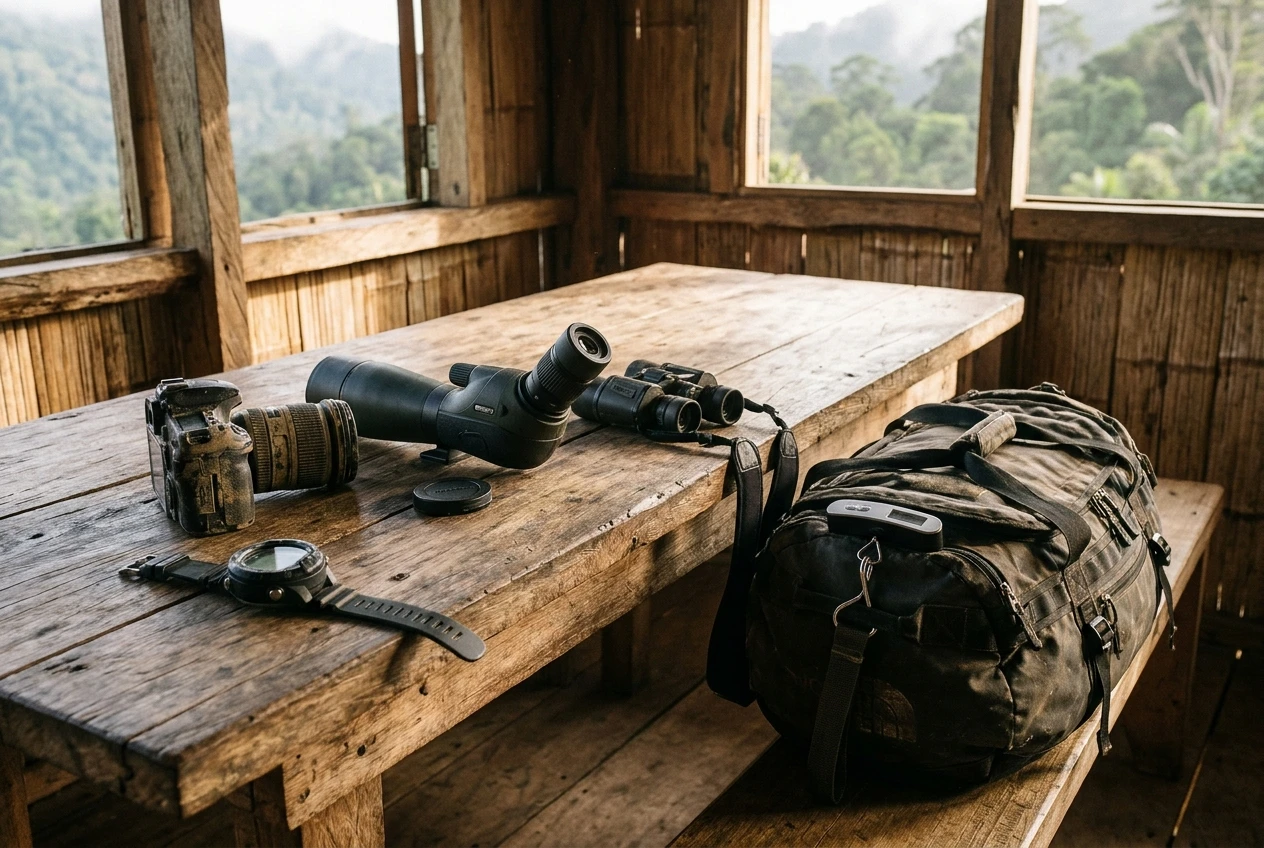
Birdwatchers, photographers and divers carry expensive equipment such as binoculars, spotting scopes, cameras and dive gear. Most policies set a limit per item and a total limit, and the per-item limit is often lower than the replacement cost of a good camera lens or dive computer. Ask whether you can list high-value items separately.
Small aircraft often have strict baggage weight limits, and bags are sometimes sent on a later flight. Check what the policy pays for delayed baggage and whether it covers essentials bought while you wait. For theft, the policy will usually ask for a police report and proof of ownership, so keep serial numbers and receipts for important items.
Questions to Put to an Insurer Before You Pay
Written answers are stronger than a phone call. Send these by email, or find the answers in the policy document and note the page number.
- What is the limit for emergency medical evacuation, and does it include transport from a remote location to the nearest hospital?
- Do I have to contact your assistance line before arranging transport, and what happens if I cannot reach it?
- What is the maximum altitude covered for trekking, and does it apply to the highest point or the sleeping point?
- Is trekking in remote terrain covered without a guide?
- What certification and depth limits apply to diving, and is recompression treatment covered, including transport to a chamber?
- Is travel in small boats covered?
- What happens to my cover if my government issues a travel advisory for a province I will visit after I buy the policy?
- How does the policy treat pre-existing conditions, and what must I declare?
- Which delays and cancellations are covered on domestic flights, and what is the minimum delay?
- What is the single-item limit for cameras, optics and dive equipment?
- How long do I have to notify you of an incident, and how long to submit a claim?
- Does the cover apply to the traveller’s nationality and residency?
If an insurer cannot answer clearly, that is useful information in itself.
How to Compare Quotes Side by Side and Keep the Paperwork a Claim Will Need
The cheapest quote is rarely the one that covers the most. Lower prices often come from lower limits, higher excess amounts and more exclusions, so compare the same features across each quote.
Build a comparison
Set up a simple table with one column per policy and these rows:
- Emergency medical limit
- Evacuation limit and what it covers
- Altitude cap for trekking
- Diving rules and depth limit
- Cancellation limit and covered reasons
- Baggage and single-item limits
- Excess amount for each type of claim
- Pre-existing condition rules
- Claim notification deadline
Fill in the table from the policy documents, not from the marketing summary. The product disclosure or policy wording is the document that governs a claim. Compare at least three policies, and do it in writing so you can go back to it later.
Keep the paperwork a claim will need
Before you leave, save the policy wording, your certificate and the assistance number both on your phone and on paper, because you may have no internet when you need them. During the trip, keep:
- Receipts for medical treatment, transport, accommodation and replacement items
- Medical reports and prescriptions, including the name of the treating doctor or facility
- Police reports for theft or loss
- Airline or boat operator letters confirming delays or cancellations
- Your dive log and certification card, if you are diving
- Booking confirmations and the operator’s details for guides, lodges and tours
- Photographs of damage or the scene, where it is safe to take them
Note the date and time you contacted the insurer, and the name of the person you spoke to. Many claims are delayed because documents are missing, not because the claim is invalid.
Before You Book
Use the checklist to compare at least three policies in writing before you book, and keep your policy wording with you on the trip. Any affiliate links to comparison services will carry a clear disclosure.
Next, read how to attend a cultural festival in PNG respectfully.