A parcel from Port Moresby to a village outside Kundiawa can get three quotes that look nothing alike, and none of them is necessarily wrong. Each provider may be pricing a different thing: a different weight, a different endpoint, a different way of moving the parcel. To compare shipping rates in Papua New Guinea fairly, you first have to make the quotes describe the same job.
This guide gives a method for doing that. Every step can be done by phone or at a counter, so it works if your internet is patchy or you are standing in a depot queue. It contains no price list, because rates change and a list printed here would mislead you within months. Ask each provider for current figures.
Why one parcel can get three very different quotes
Three things move a quote up or down.
- How the weight is counted. Some providers charge on the scale weight, others on the space the parcel takes up, and many charge on whichever is greater.
- Where the service ends. One quote may cover delivery to the recipient’s door, another only to a depot or airport, and a third only to the wharf.
- Which transport carries it. Air, sea and road differ in cost, speed and the number of times the parcel is handled.
Be clear about who you are asking, too. PNG Post is the national postal service. Private couriers are separate companies with their own rates and routes. The Post-Courier is a newspaper. It has nothing to do with parcel delivery, so do not ring it about a lost parcel, and do not treat a search for “PNG Post courier” as a search for the newspaper. Keep the three apart when you note down who said what.
Know your parcel first: weight, size, contents and destination
You cannot get a quote you can compare until you know your own parcel. Before you phone anyone, write down these details.
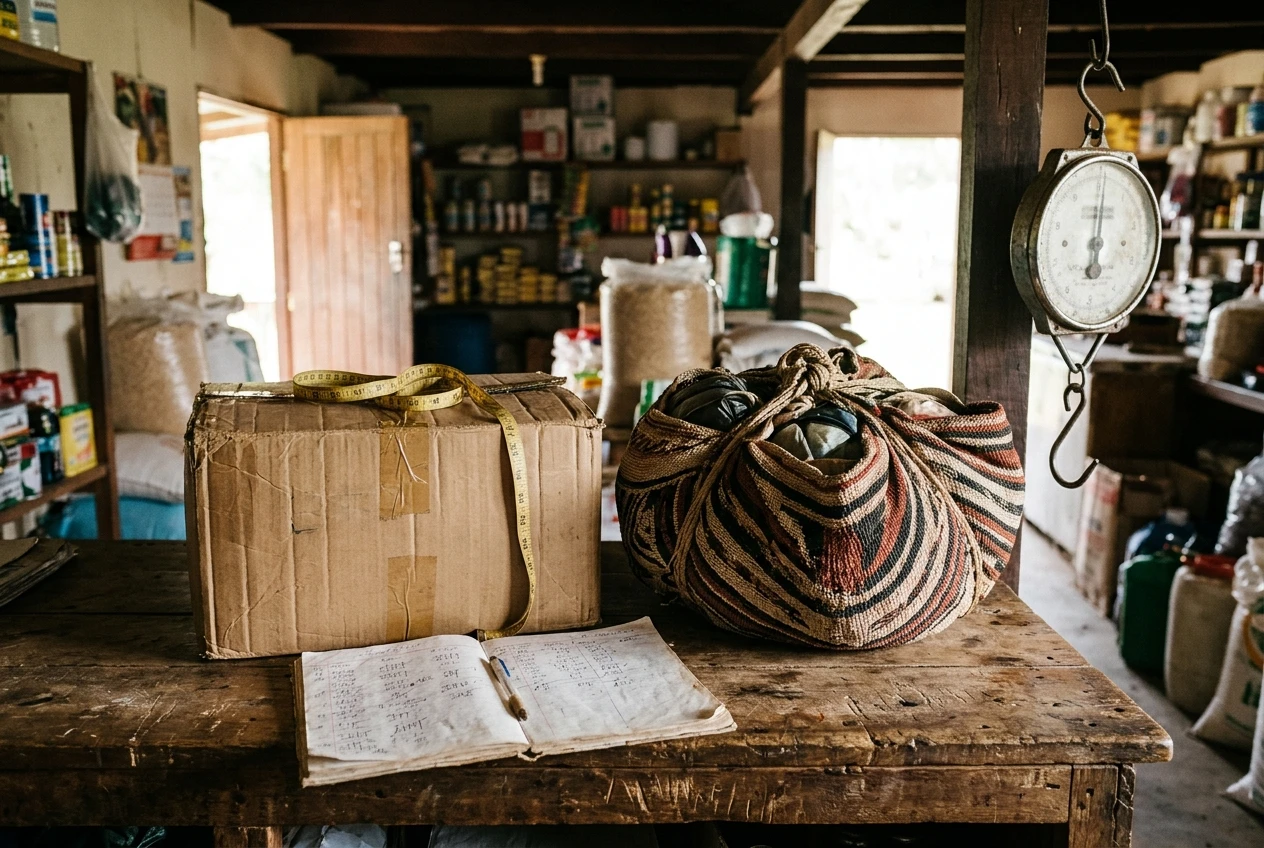
- Actual weight. Use a scale you trust. A bathroom scale, a store scale or the counter at a trade store will do. Weigh the parcel after it is packed, including boxes, tape and wrapping.
- Size. Measure length, width and height in centimetres. A light parcel that is large, such as a bag of dried clothes or a box of woven bilums, takes up space on a plane or truck. Many carriers charge for that space, usually called volumetric or dimensional weight.
- Contents. Write down what is inside and roughly what it is worth. Providers may refuse some items, such as batteries, liquids or food, or handle them under different rules. Say what is inside when you ask, because a surprise at the counter can mean repacking or a higher charge.
- Destination. Write the full name of the village or station, the ward or LLG if you know it, the district and the province. Two places can share a name in different provinces. If you are unsure which province a place belongs to, the provinces map guide lists every province by region.
Keep this note and read the same details to every provider. A quote built on different details cannot be compared with another.
Town to town versus town to village: where the extra cost usually hides
Moving a parcel between two towns, such as Port Moresby to Lae or Lae to Mount Hagen, usually runs on established routes with regular schedules. Providers can quote these quickly because they do them every day.
The village is different. Between a town depot and a village there is often a last leg that the main quote does not include. That leg might be a PMV ride, a banana boat, a charter flight to an airstrip, or a walk. Someone has to pay for it, and someone has to be there to collect the parcel.

Watch for these places where the cost shows up:
- Depot or airport pickup only. The quote is lower because the recipient pays for transport and collection themselves.
- Remote or outstation surcharges. Some providers add a fee for places outside their normal delivery area. Ask whether one applies.
- Storage fees. If a parcel sits at a depot or airport waiting for collection, some providers charge for each day.
- Handoff to another company. The first provider may carry the parcel to a regional point, then pass it to another carrier for the rest of the trip. Ask whether the price includes that second carrier.
When you compare quotes, add the recipient’s cost of getting to the depot and back. A parcel that costs less to send but sits 80 kilometres of bad road from the village may cost the family more overall.
Air, sea and road: what each mode means for price, speed and risk
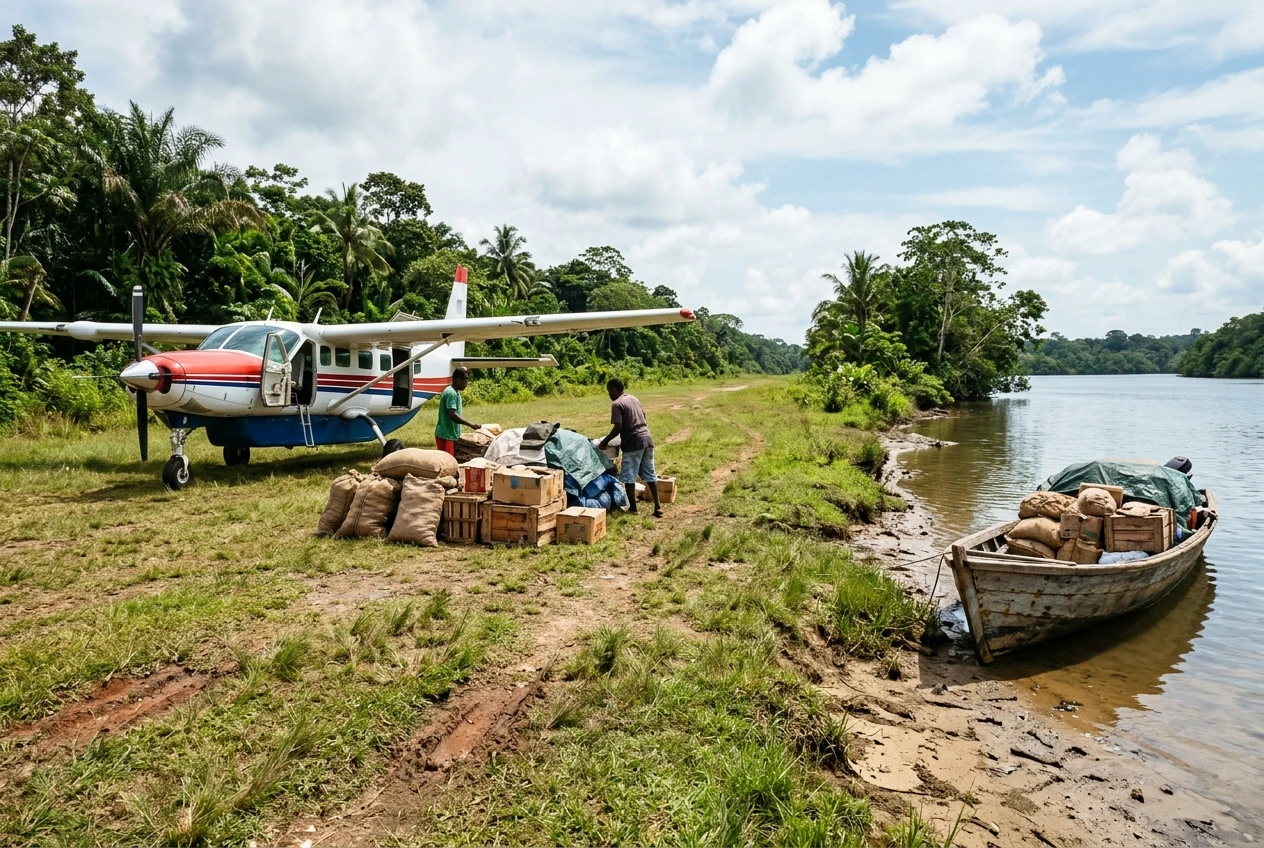
Papua New Guinea’s geography decides which modes are available. Port Moresby has no road connection to Lae or the other major northern towns, so a parcel between them goes by air or sea. The Highlands Highway links Lae with the Highlands towns, so road freight is an option there. Many villages are reachable only by air to an airstrip, by boat, or on foot from the nearest road.
What each mode usually means for you:
- Air. Generally faster, and often the only option to remote airstrips. It tends to cost more per kilogram, and carriers may be strict about weight, size and what they accept. Flights can be cancelled or delayed by weather, which delays the parcel.
- Sea. Generally the cheaper option for heavy or bulky cargo between coastal places, but slower. Sailings may be infrequent, so ask when the next vessel leaves. Handling at wharves and the chance of water damage mean you should pack carefully.
- Road. Practical on connected routes. Journey time depends on road conditions and the weather. Ask who is driving, whether the parcel travels alone or with other goods, and where it is stored overnight.
Always ask which mode the provider will use. If they give a price but cannot say how the parcel travels, that is a sign to ask more questions before paying.
Ask every provider the same seven questions
Asking the same questions of every provider is what makes quotes comparable. Read them out in the same order and write down each answer.
- What weight will you charge me for? Ask whether it is the scale weight, the size-based weight, or the greater of the two, and ask how they calculate the size-based weight.
- Where exactly does your service end? The answer might be the recipient’s door, your nearest depot, an airport, a wharf, or an agent in the district.
- Which transport mode will carry the parcel, and how often does it leave? A cheap quote with one departure a month is not the same as a daily service.
- How long will it take, and how will the recipient be told it has arrived? Ask for a time range, not a promise, and ask who makes the call or sends the message.
- What extra charges could appear? Ask about fuel, handling, packaging, pickup from your location, storage, and remote area fees.
- What happens if the parcel is lost or damaged? Ask whether insurance is included or optional, what value it covers, and how long you have to make a claim.
- What proof do I get? Ask for a receipt and a reference or tracking number, and ask how you can check progress by phone or at a counter.
If a provider will not answer one of these, write that down too. Reluctance to explain extra charges or loss cover is useful information.
How to line up quotes side by side, step by step
You do not need a computer. A page of paper in a notebook is enough.

- Write the parcel details at the top. Put the weight, measurements, contents, estimated value, pickup town and destination.
- Make a column for each provider. Use the company’s name or branch, not just “courier” or “post”.
- Contact at least three. Include PNG Post and two private couriers if you can. Phone them, or visit the counter. Use the same details each time.
- Ask the seven questions and write each answer in the column. Note the name of the person, the date and the time. If you can, ask them to confirm the quote by SMS or in writing.
- Work out the full cost for each. Add the sending price, any pickup or packaging fee, and any extra charge they mentioned. Then add the cost for the recipient to collect the parcel, if the service ends at a depot.
- Compare the full cost with the speed and the risk. A quote that is K20 cheaper but ends 100 kilometres from the village, takes three weeks and has no loss cover may not be the better deal. Mark which quote ends closest to the recipient, which one offers cover, and which one gives a reference number.
- Check the top two by phone once more. Confirm the price, the end point and the departure date before you pay. Prices and schedules change, so ask again on the day you send.
This table is useful again later. If the parcel is late, you will have the name, the date and the promised service on paper.
Cheaper options when the village is far from any depot
Sometimes no provider reaches the village at a price that makes sense. A few ways to reduce the cost:
- Send to the nearest town depot or agent and have someone collect. Agree beforehand who will go, when, and how they will prove they are the right person. Give the sender’s name and the reference number to the person collecting.
- Combine parcels. If several families, or a church group or a small business, send to the same area, one larger shipment can cost less per kilogram than many small ones. Ask the provider whether they offer rates for bulk or combined parcels.
- Choose the slower mode for items that are not urgent. Heavy, bulky goods that can wait are often cheaper by sea or road than by air, where those modes exist for your route.
- Ask about direct cargo at the airstrip or wharf. Some airlines and shipping operators carry cargo themselves. Phone the operator or visit their counter and ask whether they accept parcels for that destination and what they charge.
- Use a person you know who is travelling. Many parcels travel this way. It is informal and carries more risk, with no tracking and no cover if something goes wrong. If you do it, pack well, write the recipient’s name and phone number on the parcel, avoid sending anything valuable, and tell the recipient when to expect it.
For business sellers, include the last-leg cost in the price you tell customers, or tell them clearly that they will collect from a named depot. Surprise charges at pickup damage trust.
What to do when a quote seems too good, or the parcel runs late
A very low quote should make you ask why. Possible reasons include a depot-only end point, a very slow mode, no loss cover, or extra charges added later. Go back through the seven questions. If the provider cannot say where the service ends or how the parcel travels, treat the price as incomplete.
Be careful about paying a stranger. Ask for the provider’s office address and visit if you can. Get a receipt for every payment, and be wary of anyone who asks you to pay the full amount into a personal account without a receipt.
If a parcel is late:
- Find the reference number and receipt. These are the first things staff will ask for.
- Check the promised time. Compare today’s date to the time range you were given when you booked.
- Phone the branch where you sent it. Ask which leg of the trip the parcel is on and when it last moved. “Where is it physically now?” is a better question than “Is it coming?”
- Ask for the next step and a date. Write down the name of the person you speak to, and call again on the date they give.
- Escalate to the branch manager if nothing changes. Show your notes, including who quoted what and when.
- Ask about a claim. If the parcel is lost or damaged, find out how the provider handles claims and how long you have. This is why question six matters before you pay.
Keep contacting the provider that carried the parcel. The Post-Courier will not trace it, and PNG Post cannot trace a parcel sent by a private courier.
Share your route and what happened
Prices change, depots move and services come and go, so the best checks come from people who have just sent a parcel. If you have sent something between towns or out to a village, tell us which route you used, which carrier carried it, and how it went, including what it was like when the parcel arrived or ran late. Send your experience through the contact page, and we will add verified reader experiences to future shipping guides.