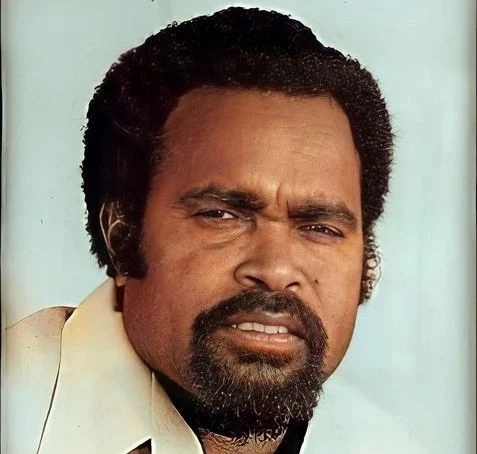
Few names are as closely tied to Papua New Guinea’s nationhood as Grand Chief Sir Michael Thomas Somare. Born in Rabaul on 9 April 1936, he died on 26 February 2021 at the age of 84 and is remembered as the founding father of the Independent State of Papua New Guinea. He was Chief Minister from 1972 to 1975, became the first Prime Minister at independence, and held the office again in 1982 to 1985 and from 2002 to 2011, roughly 17 years in total.
Before independence came self-government, and before self-government came a long argument over why Papua New Guineans should run their own affairs. This article sets out the reasons Somare and the Pangu Pati gave for home rule, drawing on writer Gerard Ivalaoa’s reflections of 12 February 2025 and on the historical record. For the wider sequence of events, see the Papua New Guinea history timeline.
From Legislative Council to House of Assembly
Before 1964, the territory was governed with a Legislative Council in which elected Papua New Guinean voices were few. After a United Nations mission in 1962, Australia replaced that council with a 64-member House of Assembly: 54 elected members and 10 official members appointed by the Administration. To prepare for the 1964 election, field officers visited more than 12,000 villages to build the first territory-wide electoral roll.
The election was a milestone. Of 299 candidates, 238 were Papua New Guineans, and indigenous candidates won 38 of the 44 open seats. For many voters it was their first formal ballot.
Real authority, however, stayed outside Port Moresby. The book Prelude to Self-Government records that ordinances passed by the House still needed approval from the Administrator or the Governor-General, who acted on advice from Australia’s Minister for External Territories. Major policy was shaped in Canberra and debated in Port Moresby. The same source notes that the public service was built to carry out policies decided elsewhere, not to support ministerial government by Papua New Guineans.
The home rule argument grew out of this gap between representation and real decision-making power.
The Birth of Pangu Pati
In 1967, Somare and a group of young, educated Papua New Guineans, many of them public servants, teachers and broadcasters, formed Pangu Pati (Papua and New Guinea Union Party). It is widely recognised as the country’s first locally initiated political party, and it grew out of an informal discussion circle known as the “Bully Beef Club”.
Its early demand was modest by today’s standards: self-government within a reasonable time. At the 1968 election for the second House of Assembly, Somare won the East Sepik Regional seat. Pangu finished with around ten members and sat in opposition, with Somare as leader. Independence still seemed distant, and many communities, particularly in the populous Highlands, were cautious about moving too fast.
Reason One: Political Participation Without Preparation
Ivalaoa points out that many of PNG’s first elected leaders had little or no formal schooling. Debates and question time were often conducted in Tok Pisin, and the Administration ran a seminar after the 1964 election to train new members in parliamentary procedure. (For how that language spread, see the history of Tok Pisin.)
Many of these members were respected community figures with deep local knowledge. The gap lay in access to education: few Papua New Guineans had been given the chance to study beyond the basics. For Somare and Pangu, a country could not govern itself well if its people had been kept from the training needed to draft laws, run departments and negotiate with foreign governments.
Reason Two: Lessons from Africa and the United States
Somare’s overseas travel shaped his thinking. In his autobiography Sana, he recalled that on a visit to Africa it became clear to him that the British had trained far more Africans than Australia had trained Papua New Guineans (Sana, p. 75).
On his first trip to the United States, he saw large numbers of African students at American institutions, many of whom went home to lead their nations. He wrote that Australia had spent many years in PNG “without any real plan to educate Papua New Guineans” (Sana, p. 80).
The historical record gives context to this view. Formal tertiary education arrived late in the colonial period:
- Papua New Guinean medical students were sent to the Fiji School of Medicine from the 1950s.
- The Papuan Medical College opened in Port Moresby in 1962.
- The University of Papua New Guinea (UPNG) was established by ordinance in 1965, following the Curried Commission on higher education.
- The institution that became the PNG University of Technology was founded the same year and gained university status in 1973.
These were real investments, but they came barely a decade before independence and left a very small pool of graduates to take over government.
Reason Three: Dignity and Respect
Home rule was also about dignity. Ivalaoa notes that many elders were treated in demeaning ways during the colonial era, including being addressed as “boy”. Somare experienced this himself: in 1967, as the only Papua New Guinean in a media party travelling the newly opened Highlands Highway, he was refused entry to a planter’s home on racial grounds.
For Pangu’s founders, self-government meant more than a change in administration. It affirmed that Papua New Guineans were capable adults entitled to make decisions about their own land, people and future.
Reason Four: Building Human Resources for the Nation
Ivalaoa summarises Somare’s fight for home rule as a fight to develop PNG’s human resources. Political control would let a PNG government set its own priorities in education, training and the localisation of the public service.
He recounts a well-known moment at an open forum in Wabag, where someone asked Somare where PNG’s engineers, doctors, pilots and teachers would come from. Somare reportedly pointed to the mothers in the crowd and said the children they would raise would gain the knowledge to run the country. It expressed confidence in the next generation, and it treated nation-building as work that takes decades.
From Chief Minister to Self-Government
The 1972 election shifted the balance of power. On 17 April 1972, Somare formed a coalition government and became Chief Minister, the first and only person to hold that title while PNG was still an Australian-administered territory. In December 1972 the Australian Labor government of Sough Whitlam took office, and the pace toward constitutional change quickened.
Somare’s government acted on several fronts:
- The Eight Aims (December 1972): a national development statement covering goals such as greater Papua New Guinean control of the economy, more equal distribution of benefits, decentralisation and self-reliance.
- The Constitutional Planning Committee: set up soon after he took office to draft what Somare called a “home-grown” constitution.
- Transfer of powers: a legal team in the Chief Minister’s Office worked on moving functions from the Territory Administration to PNG ministers.
On 1 December 1973, Papua New Guinea became self-governing. Somare later reflected that it took months to have the self-government date approved by the House, but only 45 minutes to set the date for independence. On 16 September 1975, Papua New Guinea became an independent nation, with Somare as its first Prime Minister.
A Balanced View of the Legacy
Somare’s record is debated. Admirers credit him with holding together a country of hundreds of language groups and setting a precedent for peaceful changes of government. Critics have questioned parts of his policy record and his later years in office. Historians also point out that the Australian Administration did establish key institutions in the decade before independence, including the House of Assembly, UPNG and technical colleges, even if many Papua New Guineans felt this came too late.
What is broadly agreed is that home rule gave Papua New Guineans the authority to set their own direction.
Why This History Matters Today
Fifty-one years after independence, the questions Somare raised are still live. At independence PNG had two universities, UPNG and PNG Unitech. Today the network also includes the University of Goroka, the University of Natural Resources and Environment, Divine Word University, Pacific Adventist University and newer institutions such as the Innovative University of Enga and the Western Pacific University. In 2025, more than 38,000 Grade 12 students sat their final examinations, but a Development Policy Centre review of tertiary education notes that places still fall well short of demand, and many graduates face unemployment or underemployment.
The Wabag question, where will our engineers, doctors, pilots and teachers come from, is still being answered. Somare’s generation won the right for Papua New Guineans to answer it themselves. Families weighing the next step can start with how to choose a university in Papua New Guinea.
Key Dates at a Glance
Year Event 1936 Michael Somare born in Rabaul, 9 April 1964 First House of Assembly elected (64 members, 54 elected) 1965 University of Papua New Guinea established 1967 Pangu Pati formed 1968 Somare elected for East Sepik Regional; leads Pangu in opposition 1972 Somare becomes Chief Minister (17 April); Eight Aims issued (December) 1973 Self-government, 1 December 1975 Independence, 16 September; Somare becomes first Prime Minister 2021 Grand Chief Sir Michael Somare dies, 26 February, aged 84
Sources
- Gerard Ivalaoa, “The Vision of Grand Chief Sir Michael Somare: Why Home Rule?” (12 February 2025)
- Michael Somare, Sana: An Autobiography of Michael Somare (1975)
- Prelude to Self-Government (as cited by Ivalaoa)
- The Conversation / Obituaries Australia: obituary of Sir Michael Somare (2021)
- The Canberra Times: “Somare: the controversial father of PNG” (2021)
- The National (PNG): history of the 1964 House of Assembly election
- EMTV: tribute recounting the 1972 coalition and 1 December 1973 self-government
- Development Policy Centre: “Tertiary education in PNG: a critical review” (2026)
- Medical Journal of Australia: medical education in PNG (2004)