

Sending a parcel in Papua New Guinea is usually straightforward. Knowing where it is afterwards is the hard part. If you have ever searched for how to track PNG Post courier packages and landed on newspaper headlines, this guide is for you. It covers how to send a parcel through PNG Post, what to keep so you can follow it, and what to do when it runs late, including for readers who live far from Port Moresby and Lae and have little data.
One note before we start. Prices, service names, delivery times and tracking options change. Confirm every detail below with PNG Post’s official channels, meaning the counter staff, their official website and their official social media pages, before you rely on it.
PNG Post or Post-Courier? Sorting out the name mix-up first
PNG Post is the postal service that handles mail and parcels. The Post-Courier is a newspaper. They share the words “Post” and “Courier”, and search engines mix them up, so a search for “PNG Post Courier” often returns news stories instead of parcel information.
The newspaper cannot tell you where your parcel is. If you want news, search the Post-Courier by name. If you want your parcel, deal with the company named on your receipt.
Other courier companies operate in PNG too, and a reference number from one company will not work in another company’s system. Look at the name printed on your receipt before you start searching.
Be careful with messages or social media pages that claim to be a parcel company and ask you to pay to “release” or “trace” a parcel. Contact PNG Post through its official channels to confirm anything like that.
What to prepare before you go to the counter
A little preparation at home saves a second trip, which matters if the post office is a long way from where you live.
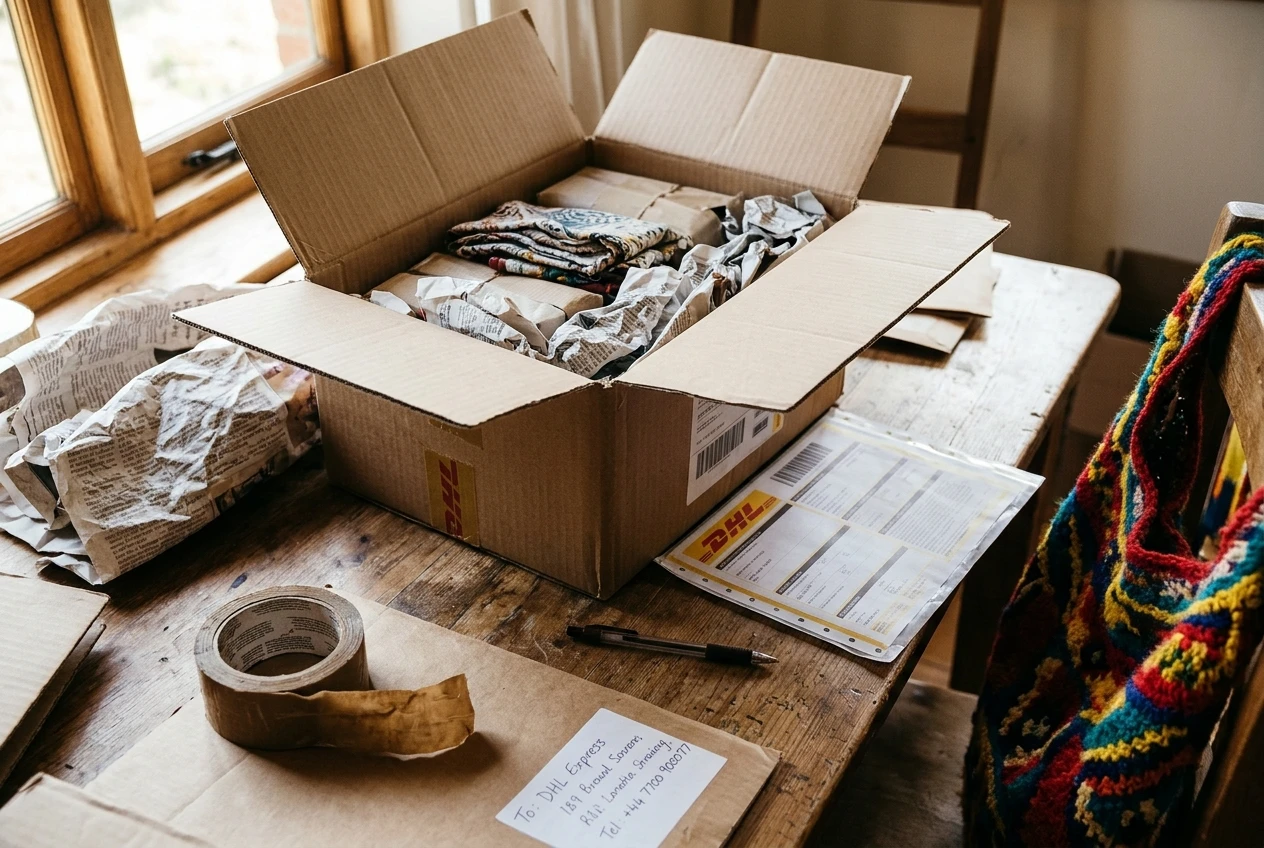
- A sturdy box or bag. Use packaging that survives rough handling, and fill empty space with paper or cloth so items do not shift. Seal every edge with tape.
- The full delivery address. Write the recipient’s full name, village or suburb, district, province and a phone number. Many addresses in PNG use a PO Box, so ask the counter whether your parcel should go to a box or to the office for collection.
- Your own contact details. Put your name and phone number on the parcel, or a sender address if you have one.
- A list of what is inside. Write down the items and their approximate value. You will need this if you ever make a claim.
- Photos. Photograph the contents and the sealed parcel before you leave home.
- Your ID and a way to pay. Ask beforehand which payment methods the office accepts, because not every branch handles every method.
Ask what you are not allowed to send. Some items are restricted, and the rules differ between domestic and international parcels. Counter staff can tell you before you pack.
Sending your parcel step by step
- Ask which services go to your destination. Services differ in speed, cost, tracking and compensation. Ask which one suits your parcel and whether it gives you a trackable reference number.
- Have the parcel weighed. Price usually depends on weight, and sometimes size. Ask for the total and what it includes.
- Check the address with the staff member. Read the delivery address aloud and confirm it is written clearly. A smudged or incomplete address causes many delays.
- Ask about insurance or compensation. Find out what happens if the parcel is lost or damaged and whether you can declare its value. Ask this before you pay, because the answer may depend on the service you choose.
- Pay and collect your receipt. Do not leave without it.
- Ask where to check progress. Ask whether your service has tracking, where to look it up, and how long a typical delivery to your destination takes.
- Tell the recipient. Message or call them with the date, the service used and the reference number.
If you are sending to a small business customer, ask the counter for realistic timeframes before promising a delivery date. Give your buyer the staff member’s estimate, not a guess.
Keeping your receipt and reference number safe, and why it matters
The reference number is how PNG Post’s staff identify your parcel. Without it, a query is much harder. A parcel that is late, delivered to the wrong place or lost cannot be pursued properly without the receipt as proof that you sent it.
Treat the receipt like a document:
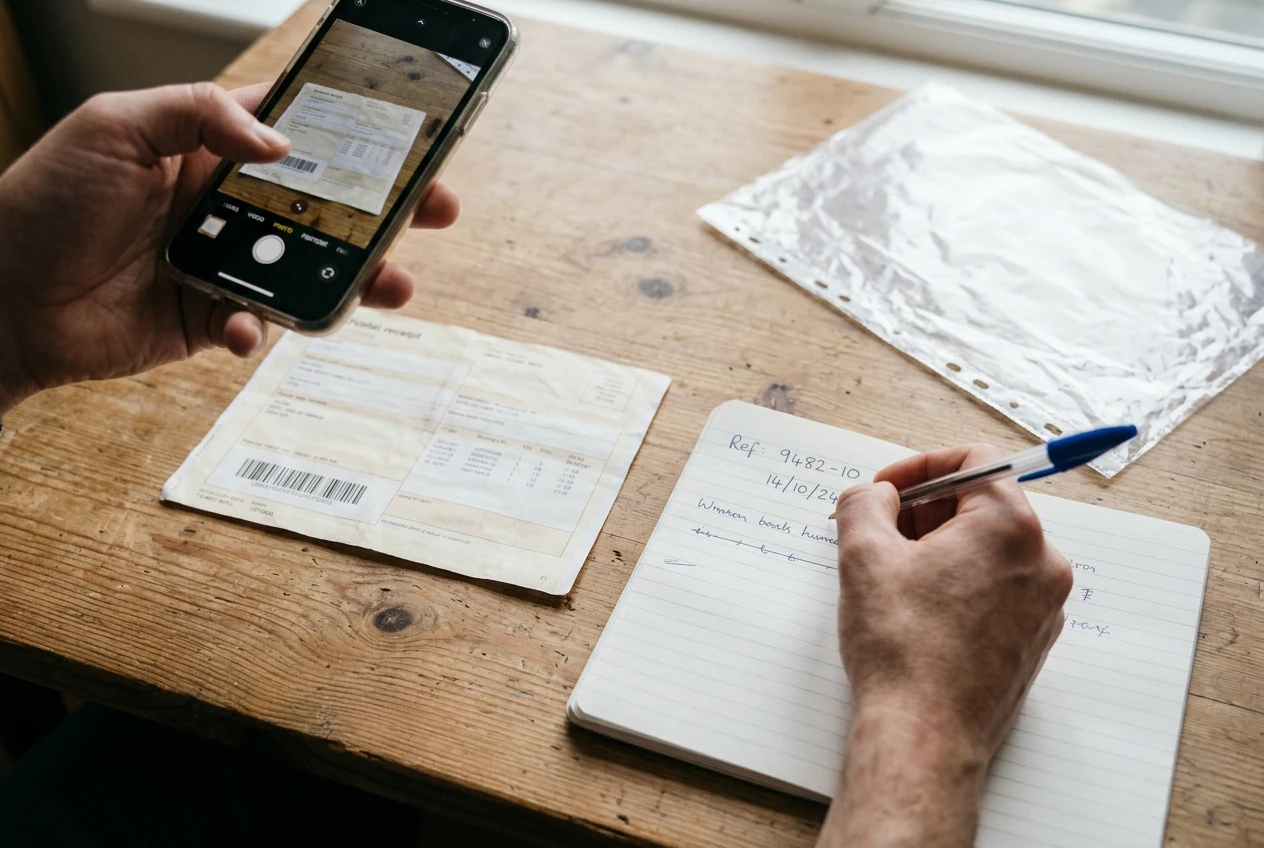
- Photograph it as soon as you get it.
- Send the photo to a family member or to yourself, so a copy exists if the paper is lost.
- Write the reference number in a notebook with the date, the destination and the recipient’s name.
- Keep the paper receipt somewhere dry. Some printed receipts fade with heat and handling, so the photo matters.
If your receipt has no reference number, go back to the counter the same day and ask for one. Bring the receipt and say the date, time and destination of your parcel.
For Papua New Guineans overseas, send the receipt photo and number to the relative who will receive the parcel. They can then ask at their local office, and both of you hold the same information.
How to check where your parcel is, online and without the internet
If your service includes tracking, ask the counter staff exactly where to enter the reference number. Use PNG Post’s official channels only. Do not enter your details on a site that asks for payment to show your parcel’s status.
Tracking only shows an update when the parcel is recorded at a point on its journey, so you may see gaps between updates. Ask staff what is normal for your route. Checking once or twice a day gives you the same information as checking every hour and uses less data.
Without internet, or when your service has no online tracking, you still have options:
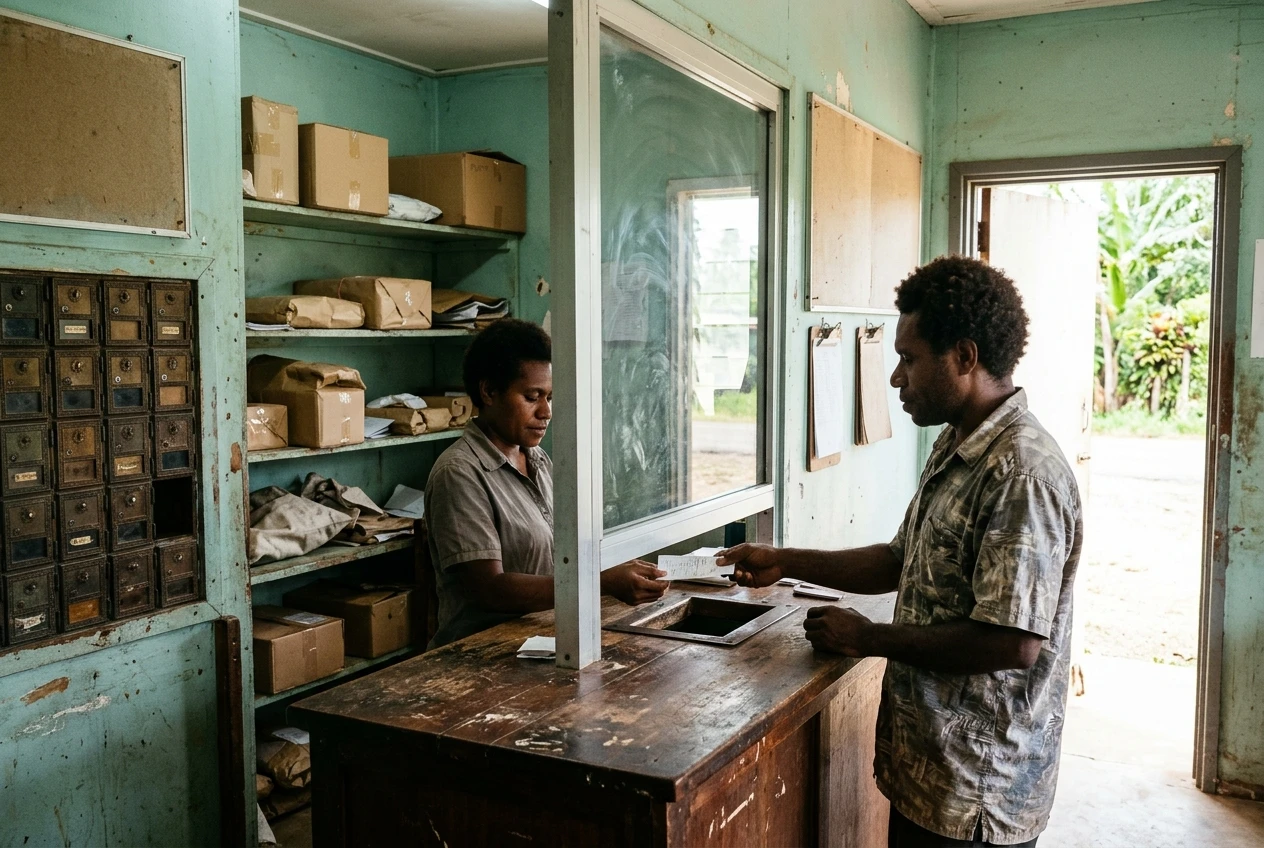
- Visit or phone the office where you sent it. Have your reference number and receipt ready. Get the number from an official source, not from a random post.
- Ask the recipient to enquire at their nearest PNG Post office. The parcel may already be waiting there for collection.
- Ask a trusted person in town to enquire for you if you live far from a branch. Give them a photo or written copy of the receipt details.
Whichever way you check, note the date, the staff member’s name and what they told you. A written record is useful if the parcel runs late.
What to do if your parcel is delayed or goes missing
First, compare the delay against the timeframe you were given when you sent it. If the date has not passed, wait. If it has, work through these steps in order.
- Check the address and phone number. Confirm the recipient’s details were written correctly on the parcel and on the receipt.
- Ask the recipient to check their local office. Parcels sometimes arrive and wait for collection without the recipient knowing. Remind them to bring ID and the reference number.
- Contact the office where you sent it. Bring or send the receipt and give the reference number, date, destination and a description of the parcel.
- Raise the problem through PNG Post’s official channels. If the sending office cannot help, ask which channel or contact handles complaints, and use that one.
- Ask about compensation. Whether you can claim depends on the service and any value you declared when sending. Ask staff what proof they need, and use your photos and contents list.
- Keep a log. Write down each date, who you spoke to and what they said.
The Post-Courier newspaper is not a complaint channel for your parcel. Take the problem to PNG Post itself.
If you sell online, tell your buyer promptly that the parcel is delayed and what you are doing about it. Buyers tend to forgive delays that are explained, and a clear record also protects you.
Sending to the provinces and remote areas: what to plan for
Many places in PNG are not connected by road, so a parcel may travel by air, sea or a mix of routes. Ask the counter how your parcel will travel and how that affects the timing. A parcel to a provincial town and one to a remote station may take very different amounts of time.

Plan around these points:
- Where it will be collected. Ask whether the destination has a PNG Post office or a collection point, and who holds the parcel there.
- The recipient’s trip. The recipient may need to travel to collect it. Tell them early, and remind them what to bring.
- Extra time. Add a buffer, especially if a parcel is needed for school fees, an event or a business order.
- What you send. Avoid sending anything that spoils or breaks easily when the route is long.
- Alternatives. If PNG Post does not serve a place well, ask other providers, such as airline cargo services, what they offer and how they handle tracking. Check their terms directly, as they differ from PNG Post’s.
If you are unsure which province or region a village belongs to when writing the address, the guide to every province on the Papua New Guinea map lists them by region.
A quick checklist to keep with your shipping receipts
- The company name on the receipt is the one you are contacting.
- Reference number written down and photographed.
- Date sent, destination and service used noted.
- Recipient’s full name, address and phone number recorded.
- Contents list and photos of the packed parcel saved.
- Expected delivery timeframe noted, with the name of the staff member who gave it.
- Insurance or compensation terms asked about and written down.
- Recipient told the reference number and what ID to bring.
- Official PNG Post contact details saved from an official source.
- Log of every enquiry: date, person, answer.
Share your experience
Your parcel story can help other readers. Tell us about your PNG Post experience, whether it was a smooth delivery or a delay, and which province it was in. With your help we can build a reader-supported picture of how parcels really move across the country. You can reach us through the Contact page.