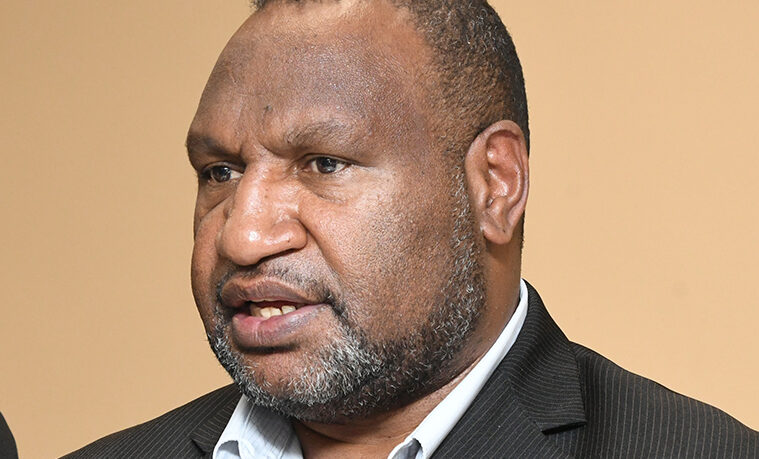
Former Prime Minister and Ialibu-Pangia MP Peter O’Neill has used the floor of Parliament to challenge Prime Minister James Marape’s account of Papua New Guinea’s national debt, which O’Neill says now stands at more than K53 billion.
In his response to the Prime Minister, O’Neill accused the government of misleading the nation on how much debt it inherited, how much it has borrowed since, and what that borrowing has delivered for ordinary Papua New Guineans.
His speech covered the IMF programme, the 2020 Paris Club debt suspension, the cost of sovereign bonds, the awarding of infrastructure contracts, and a job market that he says has not kept pace with record government spending. He closed with a call for spending cuts and reform rather than political point-scoring.
This article sets out what each side says, what the published figures show, and which questions the public can reasonably put to both.
A battle over the numbers
The first dispute is about the debt the Marape government inherited in 2019. O’Neill rejected claims that his government left behind about K28 billion in debt, arguing that IMF and central bank figures tell a different story.
The official record shows the debt was already above the legal limit when Marape took office. The 2019 supplementary budget put total public debt at K31.9 billion, or about 39.8 per cent of GDP. That was above the 35 per cent ceiling in the Fiscal Responsibility Act, and Parliament raised the ceiling to 45 per cent at the same sitting.
O’Neill has made the debt a central theme of his criticism. In September 2024 he told Parliament that public debt had grown from under 35 per cent of GDP in May 2019 to over 52 per cent, passing K53 billion. His starting figure is lower than the 39.8 per cent in the supplementary budget, so readers should treat the two numbers as a point of disagreement and not as one agreed baseline.
Shadow Treasurer Bryan Kramer has blamed both governments. He says debt rose from K7.5 billion to K33.7 billion under O’Neill, and is projected to reach K66.5 billion by the end of 2026 under Marape.
Why the figures do not match
A reader comparing K28 billion, K31.9 billion, K33.7 billion and K53 billion could conclude that someone is simply wrong. Some of the gap comes from the different dates and sources behind each number. A figure quoted for the end of one year will differ from a figure quoted for the middle of another, and the kina value of foreign-currency loans moves as the exchange rate moves.
Debt is also reported in two ways. One is the total in kina. The other is a percentage of GDP, which shows the size of the debt relative to the economy. The 35, 39.8, 45 and 52 per cent figures in this debate are all of the second kind, while the K28 billion, K31.9 billion and K53 billion figures are of the first.
When you read a claim about the debt, check three things:
- Which year or month the figure refers to.
- Whether it is a kina amount or a share of GDP.
- Which source it comes from, such as a budget document, the IMF or a speech in Parliament.
The IMF programme and the cost of borrowing
O’Neill described the K3.225 billion IMF package as a bailout that limits the government’s choices. In March 2023 the IMF approved US$918 million for PNG under its Extended Credit Facility and Extended Fund Facility, a 38-month arrangement worth about K3.23 billion.
The IMF said the programme would focus on debt sustainability, easing foreign exchange shortages, and strengthening governance and anti-corruption measures. Critics, O’Neill among them, argue it has also brought a weaker kina and higher living costs.
In the speech, O’Neill also pointed to the 2020 suspension of Paris Club loan repayments during the COVID-19 period, and to the high interest rates PNG pays on its sovereign bonds. He argued that expensive borrowing leaves less money for health, education and services. The reasoning is simple: every kina paid in interest is a kina the budget cannot spend on a clinic, a school or a road.
Questions about how public money is controlled are not new in Parliament. Our earlier report on concerns over PNG’s financial controls covers a related debate about Treasury reform.
Spending, contracts and the jobs gap
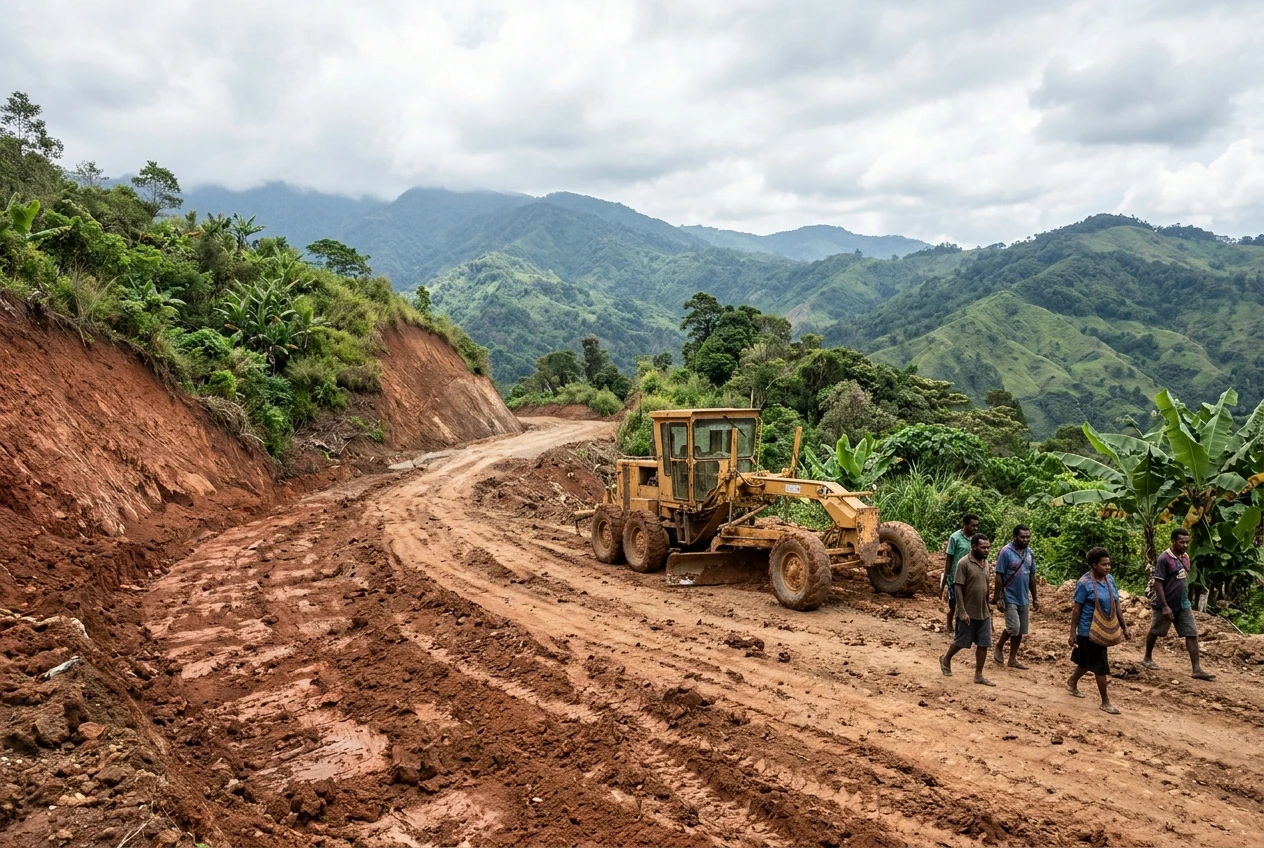
O’Neill questioned how contracts have been awarded under the road and connectivity programme he referred to as “Papua New Guinea Link”. He asked whether the money spent has delivered value to the provinces and districts it was meant to serve.
He contrasted record government spending with a job market he says is struggling. Independent analysts raise a similar concern: a Lowy Institute review noted that formal employment has been falling since 2013, even as GDP has grown.
That gap matters because GDP growth does not by itself put wages in anyone’s pocket. If the economy grows mainly through sectors that employ few people, a family in a town or on a rural outstation may see little change in income while prices rise.
What it means for families
Debt figures reach households through prices, services and jobs. A weaker kina raises the cost of imported goods such as rice, fuel and medicine. Shortages of basic medicines at health centres, and the cost of getting goods to a village, are where fiscal choices show up in daily life.
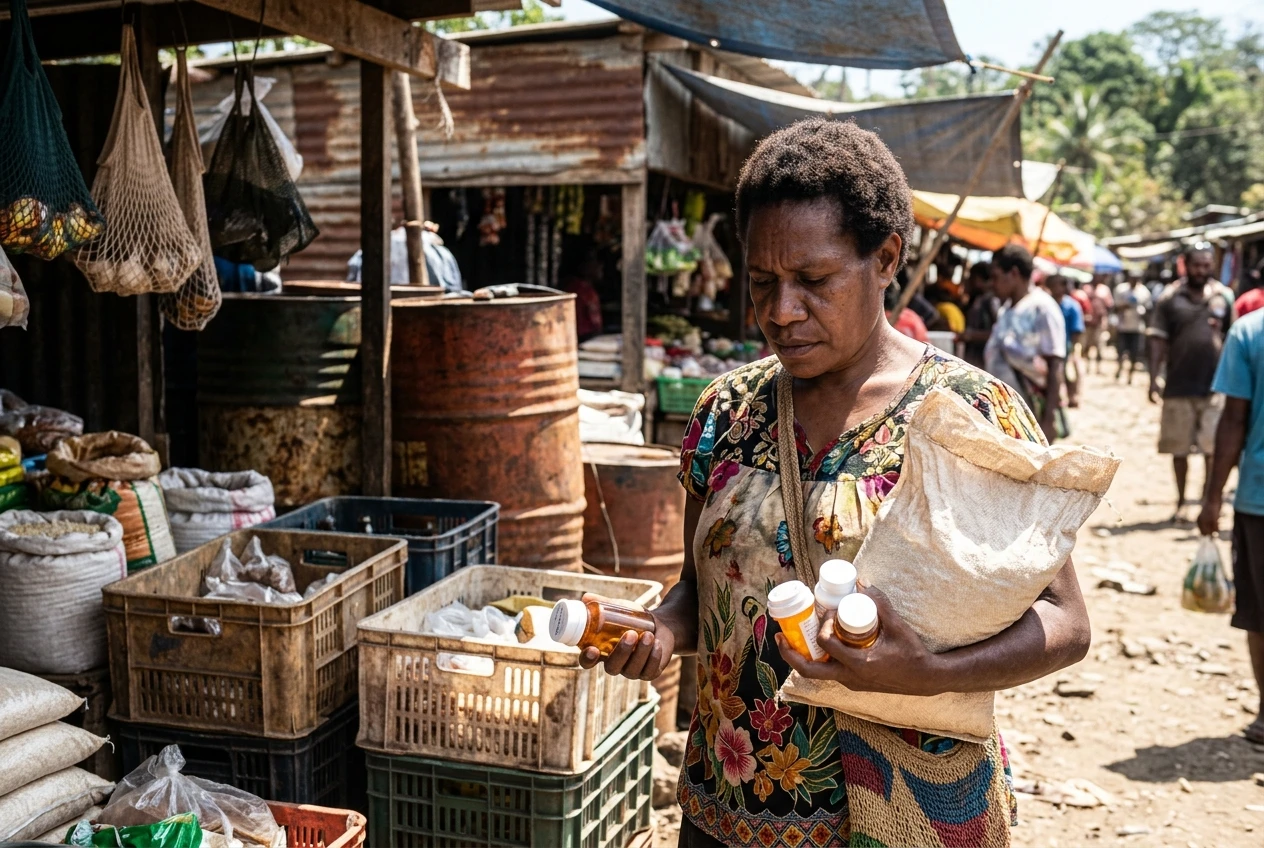
This is the standard O’Neill’s speech invites readers to apply to any government. Borrowing is not a problem if it pays for roads, power, schools and health services that raise incomes and can be paid back. It becomes a problem when repayments grow faster than the economy and crowd out spending that people rely on.
The government’s case
The Marape government says the economy is on the mend. Its 2026 National Budget projects a deficit of 1.1 per cent of GDP, and forecasts debt falling from 48.4 per cent of GDP in 2025 to 45.5 per cent in 2026.
The Prime Minister has described the budget as part of a 13-year Budget Repair Plan aimed at reducing debt and moving towards a balanced budget by 2027.
The IMF has also struck a positive note. Its country head, Sohrab Rafiq, said in 2025 that growth was improving, inflation had eased and access to foreign currency had improved sharply since the programme began.
The government’s projection of 48.4 per cent of GDP for 2025 is lower than the 52 per cent O’Neill gave in 2024. A fall in the ratio would be a real change, but it is a forecast, and the ceiling Parliament set in 2019 is 45 per cent. The 2026 target of 45.5 per cent sits just above that limit.
Both men share part of the record. Debt was already above the legal ceiling before 2019, and O’Neill has often noted that Marape was his Finance Minister during those years. The two leaders have also traded sharp words before, as in our report on the opposition leader’s criticism of the Prime Minister.
Questions for both sides
Whatever the final figure turns out to be, a few questions apply to the government and the opposition alike:
- What was each loan spent on, and what did it deliver in the provinces?
- How much of the budget now goes to interest, compared with health and education?
- How were large infrastructure contracts awarded, and who checked the value for money?
- What would the spending cuts O’Neill calls for look like, and who would feel them first?
- What happens to the Budget Repair Plan if revenue falls short of forecasts?
Clear public answers to these would tell readers more than the competing totals do.
Watch the full speech
The speech is useful viewing for anyone following PNG politics, the national debt and the IMF’s role in the Pacific. Watch O’Neill’s full parliamentary speech on YouTube and compare what he says with the budget documents and IMF statements linked above.
Times are tight for many families. If you are looking for ways to stretch your income further, explore practical budgeting and money-management tools that can help households plan through tough economic times.
For more in-depth coverage of Papua New Guinea news, politics, the economy and community voices, keep reading PAPUANIUGINI.ORG, where we cover the issues that matter most to our nation.
What do you think about the debt situation and the reforms on the table? Share your thoughts in the comments, and share this article if you believe honest debate is vital for PNG’s future.