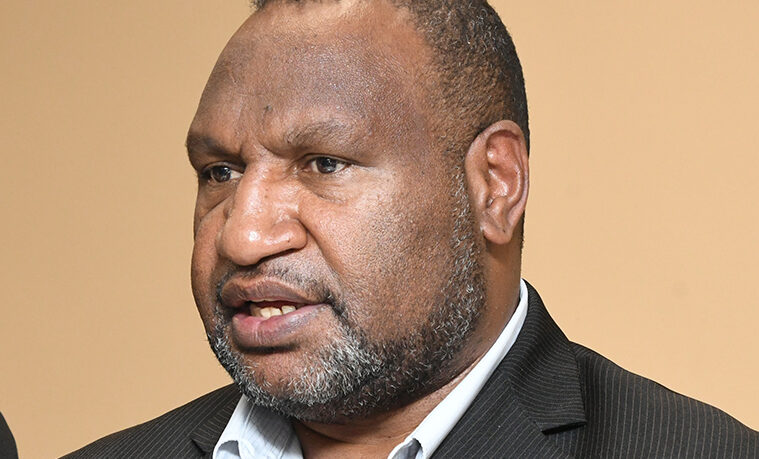
Opposition Leader Hon. James Nomane has accused the Prime Minister of a lack of accountability and leadership. He made the criticism at an opposition press conference, where he said the government is failing to address several national problems: currency devaluation, rising inflation, unemployment and the greylisting of Papua New Guinea by the Financial Action Task Force (FATF). He also asked why the Prime Minister keeps travelling overseas instead of dealing with these problems at home.
The opposition frames this as a PNG political crisis, and the charges are serious. They are also one side of a political argument. This article sets out what Nomane said, what each issue means in everyday terms, and how readers can check the claims against public sources.
What Nomane said at the press conference
Nomane’s central charge is that the Prime Minister has not been accountable for the state of the economy. He named four problems the government has not dealt with: the weakening of the kina, rising prices, joblessness and FATF greylisting. He argued that the country needs stronger leadership and that the government should act immediately.
He also raised the Prime Minister’s overseas trips. His question was whether time spent abroad is the best use of the Prime Minister’s attention while these issues remain open at home.
Those are the points reported from the press conference. No specific figures, dates or policy proposals were reported alongside them, so this article does not add any. Where it explains the issues below, it does so in general terms.
Currency devaluation and what it does to prices
A currency is devalued, or loses value, when it buys less foreign money than before. For a country that imports a large share of its fuel, machinery, rice and manufactured goods, a weaker kina raises the kina price of those goods. A trader who pays for stock in US dollars or Australian dollars needs more kina to settle the same invoice.
That cost usually reaches the shelf. A shop owner in Lae or Mount Hagen who pays more for imported stock either raises prices or buys less. Businesses that depend on imported equipment or spare parts face the same squeeze, and the costs of running a transport business, a workshop or a small factory go up with them.
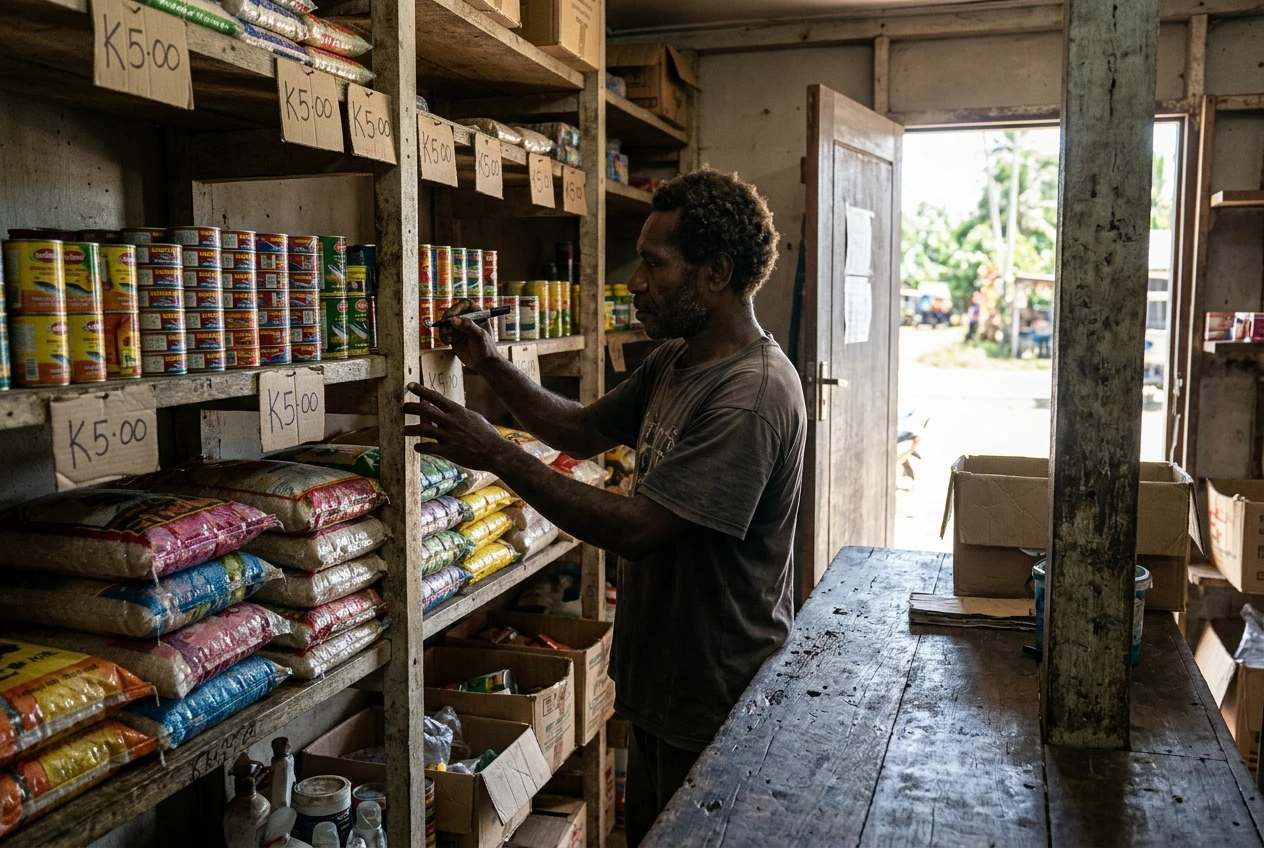
The effect is uneven. Households and businesses that earn foreign currency, such as exporters, can come out better when the kina weakens, because their foreign earnings convert into more kina. Families on a fixed kina wage who buy imported food and goods carry most of the burden. This is why Nomane’s point about the currency matters to ordinary readers and not only to economists.
Inflation and household budgets
Inflation is the general rise in prices over time. When it is high, the same wage buys less each month. Families respond by cutting purchases, buying cheaper alternatives, or drawing on savings and relatives for support.
In Papua New Guinea, the pressure is felt differently in town and in the village. A salaried worker in Port Moresby pays rent, transport and store-bought food at current prices. A village household that grows much of its own food is less exposed to price changes in staples, though it still pays for fuel, salt, soap, school fees and medicine. Families who sell garden produce or coffee at the market also depend on what buyers can afford to pay.
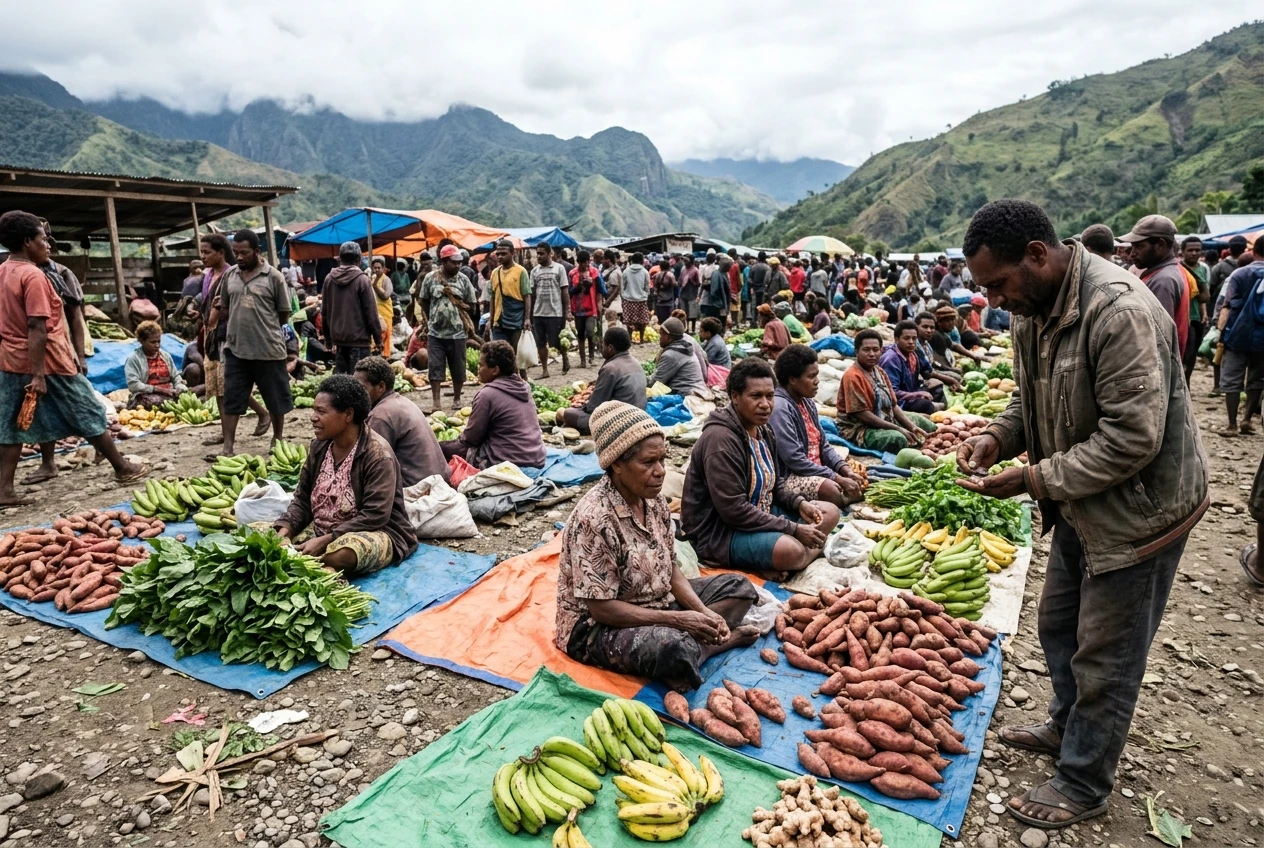
Inflation and a weaker currency are linked, since import costs feed into the prices people see. That does not mean one explains the other completely. Local supply problems, transport costs and government spending can all play a part, and a fair assessment of the government’s record should look at all of them.
Unemployment and the pressure on young people
Unemployment was the third issue Nomane named. Each year, school leavers and graduates enter a labour market where formal jobs are limited. Many end up in informal work, in family businesses or in the village while they wait for an opening.
This is a topic Nomane has spoken about before. His message to graduates facing unemployment is covered in our report on his call for graduates to build their own door.
The link between the economy and jobs is direct. When businesses face higher import costs and weaker demand, they hire less. When household incomes are squeezed, small traders and service providers sell less. A government that wants to reduce unemployment usually has to address those conditions as well as run training programs.
FATF greylisting explained
The Financial Action Task Force is an international body that sets standards against money laundering and the financing of terrorism. It publishes lists of countries that are under increased monitoring because it found weaknesses in their systems. The shorthand for being on the main monitoring list is “greylisting.”
Greylisting does not mean sanctions. It does mean that foreign banks and investors may take extra care when dealing with a listed country. That can lead to more paperwork, slower international payments and higher compliance costs for banks, which can pass on to businesses and customers. A country on the list commits to an action plan and is reviewed on its progress.
For readers in Papua New Guinea, the practical questions are these. How easily can businesses and individuals send and receive money across borders? Does greylisting affect the cost of banking services? What steps is the government taking to meet the action plan, and by when? Nomane’s charge is that the government is not dealing with the issue. Whether that is accurate depends on the progress reports, which are public.
The question about overseas travel
Nomane questioned why the Prime Minister keeps travelling overseas. Leaders of every country travel for diplomacy, trade talks, regional meetings and investor discussions, and PNG’s economy depends heavily on relationships with other countries. The opposition’s question is about priorities and results, not about whether travel is ever justified.

Readers can ask their own questions of any leader’s travel:
- What was the purpose of each trip?
- Who paid for it, and what did it cost?
- What agreements, investments or other outcomes came from it?
- Was it reported to Parliament or the public afterwards?
The government is in the best position to answer these questions, and a clear public account of its trips would settle much of the argument one way or the other.
What the government says
The report of the press conference contains the opposition’s claims. It does not include a response from the Prime Minister or the government, and we have not confirmed any of the opposition’s assertions independently. In a parliamentary system, criticising the government is the opposition’s role, and it is normal for the two sides to describe the same economy very differently.
A fair reading keeps the claims separate from the evidence. “Lack of accountability” is a judgement. The exchange rate, the price index, the unemployment picture and the FATF status are things that can be checked. If the government publishes a reply, readers should weigh it in the same way, asking what evidence is offered and whether it addresses the specific points raised.
How to check the claims yourself
Several public sources are available, and readers do not need to rely on either side’s summary.
- The Bank of Papua New Guinea publishes exchange rate information and its statements on monetary policy and the economy.
- The National Statistical Office publishes the consumer price index, which tracks how prices change over time.
- The FATF publishes its lists of jurisdictions under increased monitoring, with the reasons and the status of each country’s action plan.
- The National Parliament records the questions members ask and the answers ministers give.
- The national budget documents show what the government plans to spend and what it expects the economy to do.
When you read a figure in a speech or a headline, look for the same figure in one of these sources, and note the date, because economic numbers change from one reporting period to the next.
Why this debate matters to readers
The four issues Nomane listed affect people in different ways: what a bag of rice costs, whether a graduate finds a job, how easily a business pays a foreign supplier, and how much the country’s financial system is trusted abroad. They are also connected, which is why a debate about them quickly becomes a debate about government leadership.
For background on the sector that earns much of PNG’s foreign income, our guide to how mining shapes PNG explains the mines, the money and the rules. Our earlier report on Nomane’s criticism of the government’s economic management covers related ground.
As more information comes out, whether through a government reply, new economic data or an update from the FATF, we will report it with the source and the date, so that readers can follow this debate on the evidence.