The papua new guinea mining industry is easy to see and hard to explain in one piece. Gold comes out of Lihir Island and Porgera, copper and gold from Ok Tedi in Western Province, and nickel and cobalt from the Ramu operation in Madang Province. Most readers meet these places separately: a news story about a landowner dispute, a job advertisement, a company report, a line in a school textbook.
This guide puts them together. It covers how the major mines came about, what mining adds to the national economy and to landowners, how the Mining Act 1992 and the State’s equity option work, and what the costs have been. It also shows where to check current facts. Where figures change often or differ between sources, we point you to the official source and do not repeat numbers we cannot verify.
Why mining matters in Papua New Guinea
Papua New Guinea sits where two of the earth’s tectonic plates meet, and that geology produced large deposits of gold and copper, along with nickel and other minerals. Together with oil and gas, minerals make up the largest share of the country’s export earnings. That is why mining shows up in national budgets, in provincial politics and in the way landowners talk about their future.
Mining matters at three different levels:
- National: export income, taxes, royalties and dividends from State shareholdings, and the foreign exchange the country needs to import goods.
- Provincial and district: the host province and local-level governments receive a share of benefits, and mines often bring roads, airstrips, power and health services to places that had few of them.
- Village and clan: landowners receive compensation, royalties and sometimes equity, and they also live next to the pits, tailings and waste dumps.
Most Papua New Guineans still live from subsistence and small-scale agriculture, so a mine employs only a small part of the workforce directly. Its wider effect comes through government spending, contractors, landowner companies and the services that grow around a mine.
One point of scope before we go on. Oil and gas, including the PNG LNG project, are governed by a separate law, the Oil and Gas Act 1998. This article covers minerals under the Mining Act 1992.
From gold rushes to Panguna: a short history of PNG mining
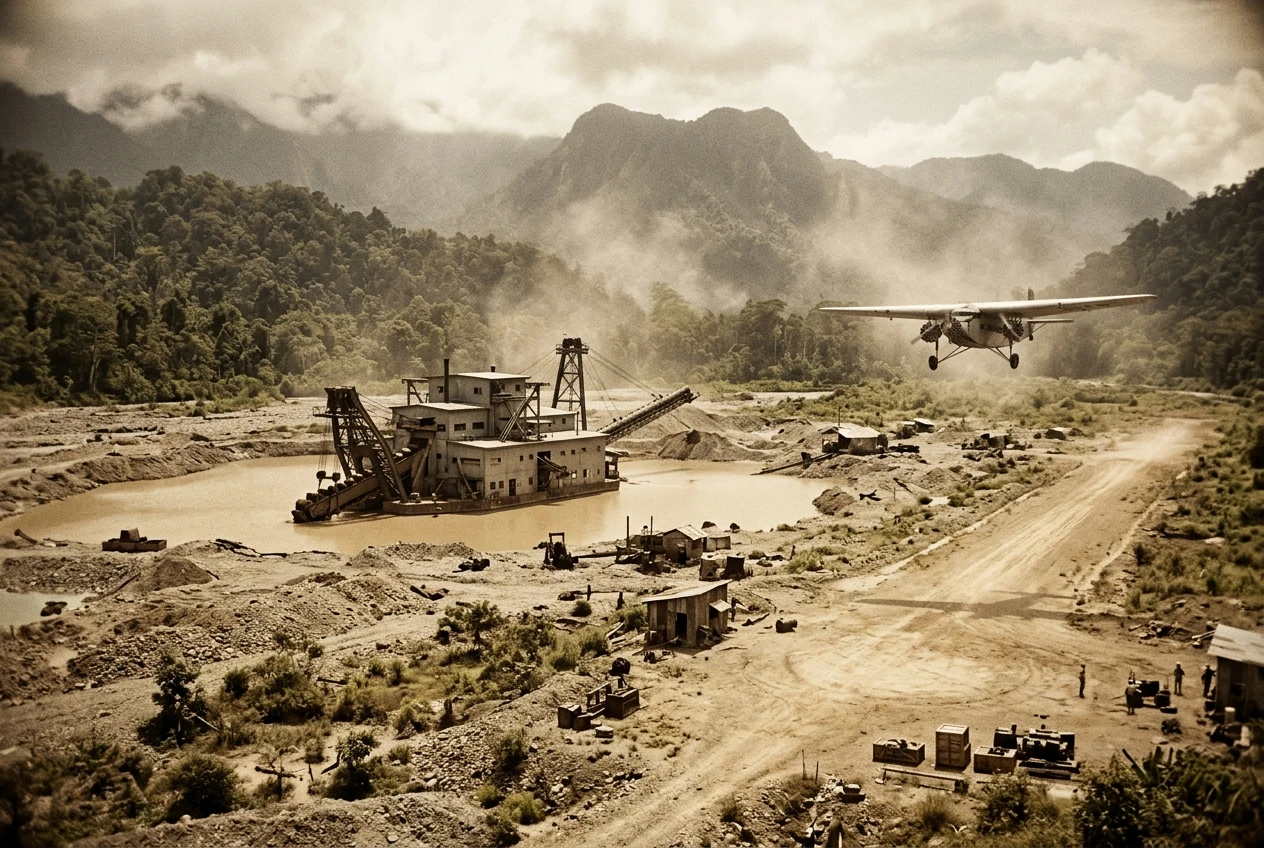
Gold drew the first outsiders to look at the ground seriously. In the late 1800s, prospectors worked alluvial gold on islands such as Misima and Woodlark in what is now Milne Bay Province. In 1926, the discovery of gold at Edie Creek near Wau in Morobe set off a larger rush. Through the 1930s, companies working in the Bulolo valley used dredges, and the heavy equipment was flown in by aircraft because there was no road to carry it.
The scale changed in the 1960s and 1970s, when the colonial administration approved large-scale copper mining at Panguna on Bougainville. Conzinc Riotinto of Australia, known as CRA, explored the area, and the Bougainville Copper Agreement was made in 1967. Production at Panguna began in 1972, three years before independence. For years it was a very large source of export earnings and government revenue.
Many landowners around Panguna felt the arrangement was unfair. Their complaints covered how little of the income reached them, damage to rivers and land, and the arrival of large numbers of outside workers. Landowner anger, led by younger members of the community and organised through a landowners’ association, turned into violence in 1988. The mine closed in 1989. A conflict between the national government, the Bougainville Revolutionary Army and other groups followed. It lasted until the late 1990s and cost many lives, though estimates vary.
The Bougainville Peace Agreement of 2001 created the Autonomous Bougainville Government and provided for a referendum on Bougainvillea’s political future. That referendum was held in late 2019, and an overwhelming majority voted for independence. The result still has to go through a political process with the National Government. For the current position, check the Autonomous Bougainville Government and the National Government directly. Panguna has not reopened, and Bougainvillea’s own mining law gives customary landowners a central role in any decision about it.
Panguna shaped what came after. Later projects were negotiated with more attention to landowner consultation and benefit sharing, and the Mining Act 1992 reflects some of those lessons.
The major mines at a glance: Ok Tedi, Lihir, Porgera, Ramu and others
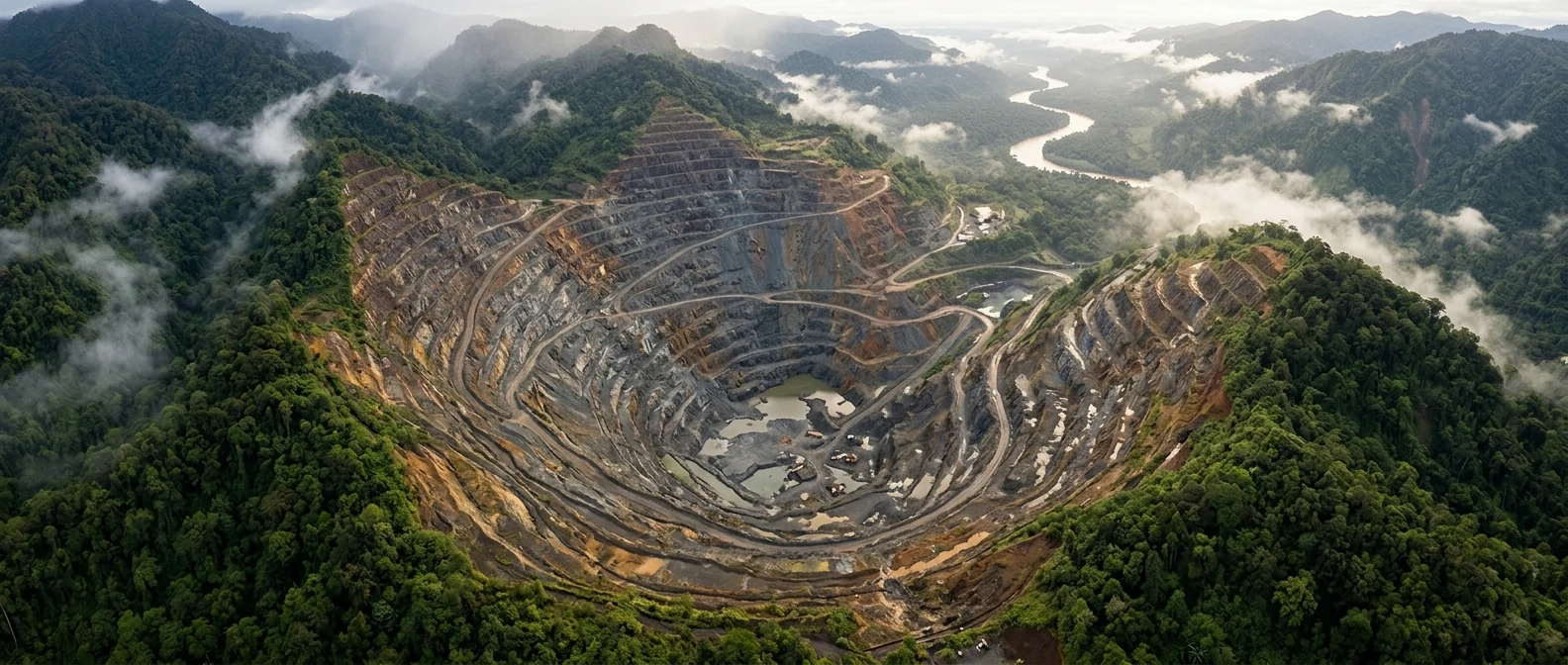
Ok Tedi (Western Province). Ok Tedi is a copper and gold mine in the Star Mountains, centred on Mount Fubilan. Production began in the 1980s under a company led by BHP. A planned tailings dam could not be built safely, so tailings and waste rock went into the Ok Tedi and Fly River system, with lasting effects on river life, forests and gardens downstream. Landowners sued BHP in the 1990s and the case was settled. BHP later left the project, and the State now holds the controlling interest through its mining holding company, Kumul Mineral Holdings. Ok Tedi Mining Limited runs the operation, and mine-life extensions have been agreed more than once, so check its current plans on its own website.
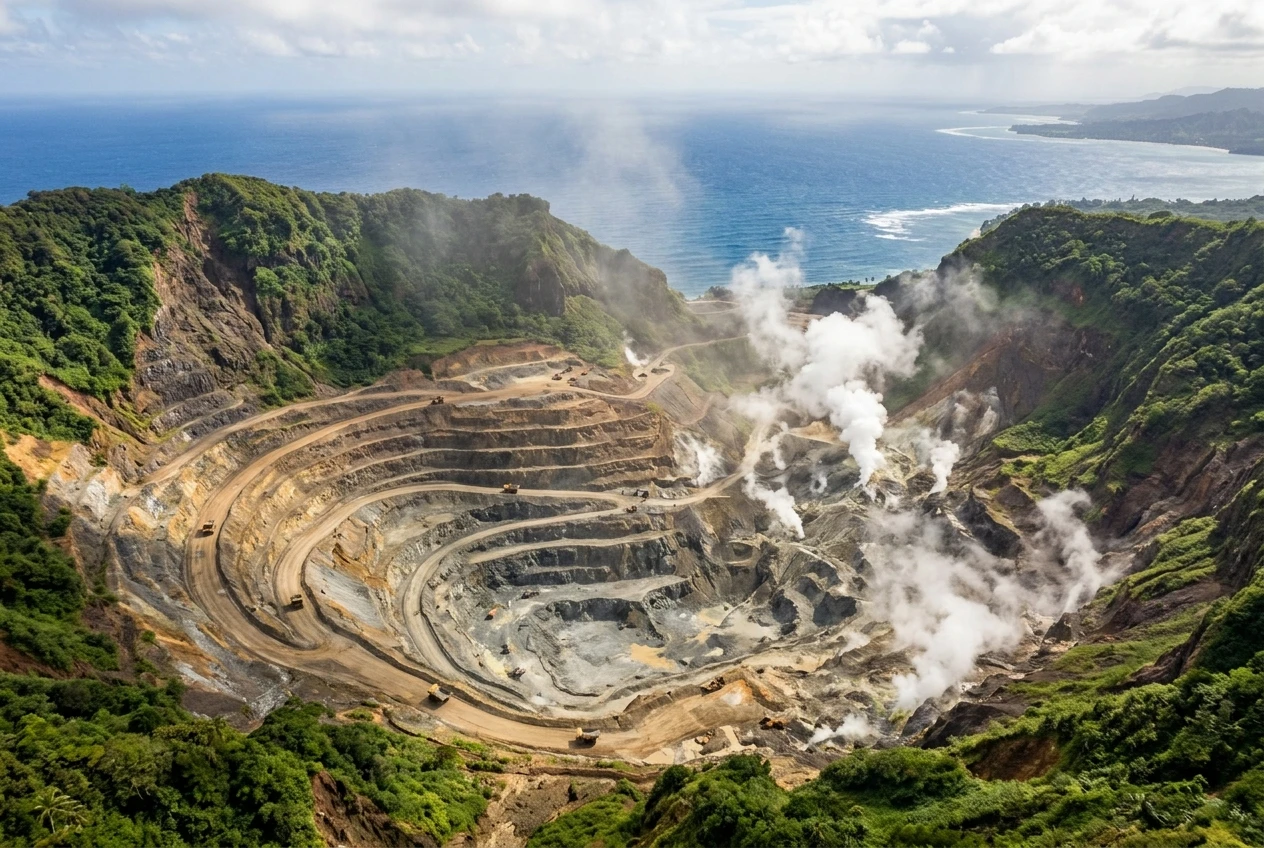
Lihir (New Ireland Province). Lihir is a large gold mine on Lihir Island, built in the crater of an extinct volcano. The ground there is hot, and the operation uses geothermal energy for part of its power. Production began in 1997 under Lihir Gold Limited. Newcrest acquired that company in 2010, and Newmont acquired Newcrest in 2023, so Lihir is now part of Newmont. Older articles still use the names Lihir Gold and Newcrest.
Porgera (Enga Province). Porgera is a gold mine in the highlands, run by the Porgera Joint Venture. It went through several owners, including Placer Dome and then Barrick, which later shared the operation with China’s Zijin Mining Group. In 2020, the government declined to renew the mine’s special mining lease and the mine went into care and maintenance. After negotiations, it restarted under a new ownership arrangement that gave PNG interests (the State, Enga stakeholders and landowners) the majority, with Barrick as operator.
Ramu nickel and cobalt (Madang Province). The Ramu NiCo project mines nickel and cobalt in the Ramu valley and sends the ore through a long slurry pipeline to a processing plant at Basamuk Bay on the coast. A Chinese state-owned company, Metallurgical Corporation of China, operates it. Production began in the early 2010s. The project has been contested over its disposal of waste into the sea, and incidents of spills and discharge have been reported. Landowners and environmental groups have raised these concerns.
Other operations and projects. Hidden Valley in Morobe Province is a gold and silver mine. Kainantu in the Eastern Highlands is operated by K92 Mining. Misima, once a major gold mine, closed in 2004. Several large projects are in development or under negotiation, including Wafi-Golpu in Morobe, a proposed large copper-gold project, and Frieda River in Sandaun Province. Their status can change with each negotiation, so check the Mineral Resources Authority and the companies for the latest.
What mining contributes: government revenue, exports, jobs and landowner payments
Mining brings money into the country in several ways:
- Export earnings. Gold, copper and nickel are sold overseas, and the payments bring in foreign currency.
- Taxes and royalties. Companies pay taxes to the government, and a royalty is paid on the value of minerals exported.
- Dividends. Where the State holds shares, it receives part of the profit.
- Jobs and contracts. Mines employ their own workers and also use contractors for catering, transport, construction and security.
- Landowner and provincial benefits. These are set out in agreements made before a mine is approved.
The size of these contributions changes from year to year. Commodity prices rise and fall, and mines produce different amounts as ore grades change. The State’s actual take depends on the tax and royalty terms in each project’s agreements. There is a long-running public debate about whether the State and landowners receive a fair share of the value taken from the ground. Reasonable people disagree, and the figures differ by source and year.
For that reason, we recommend taking figures from official sources and not from social media posts. The Bank of Papua New Guinea, the Treasury, the National Statistical Office and the Mineral Resources Authority all publish data. A figure that appears without a source and a year should not be repeated.
For employment, the main thing to understand is the difference between direct and indirect jobs. A mine’s own payroll is only part of the picture. Contractors, landowner companies and suppliers employ many more people, and those jobs depend on the mine staying open. When a mine closes or pauses, as at Porgera in 2020, nearby businesses and workers feel it quickly.
Landowner payments come in several forms: compensation for the use of land, royalties, dividends where landowners hold equity, and business opportunities for landowner companies. How these payments are split between individuals, clans and community projects is often settled by agreement, and it is also a frequent cause of disputes.
Who owns what: how company names and ownership have changed
Mining company names change often, which confuses readers. A search for “Newcrest Mining PNG” may bring up a company that no longer exists under that name. The table below shows how the names on the major mines have changed.
Mine Earlier name or owner Later or current arrangement Panguna (Bougainville) CRA, then Rio Tinto, through Bougainville Copper Limited Rio Tinto gave up its shares in 2016, and they went to the Bougainville and national governments. The mine is closed. Ok Tedi (Western Province) BHP-led company Ok Tedi Mining Limited, with the State as controlling owner through Kumul Mineral Holdings Lihir (New Ireland) Lihir Gold Limited, then Newcrest Newmont, which acquired Newcrest in 2023 Porgera (Enga) Placer Dome, then Barrick, later Barrick and Zijin Porgera Joint Venture, with PNG interests holding the majority and Barrick as operator Ramu (Madang) Early partners included Highlands Pacific Operated by Metallurgical Corporation of China
Ownership can change again, so treat the table as a guide and not a final record. To confirm who owns or operates a mine today, check the company’s own website, its filings with stock exchanges, the Mineral Resources Authority and the Investment Promotion Authority’s company records.
Names matter for a practical reason. A job advertisement, a landowner agreement or an investment claim that uses the wrong company name may refer to a different legal entity from the one that actually holds the lenience.
How the rules work: the Mining Act 1992, the State’s equity option and landowner benefits
Who owns the minerals
Under the Mining Act 1992, minerals in the ground belong to the State. Customary landowners own their land under PNG’s customary land system, but not the minerals beneath it. That split is the source of many disputes. A clan can hold the surface and still have no legal right to the gold or copper under it, which is why the law includes compensation, royalties and negotiated benefits.
Licences and approvals
A company needs a lenience from the State before it explores or mines. The Act sets out different types, including exploration licences for searching, and mining leases and special mining leases for development. Large projects usually need a special mining lease. The Mineral Resources Authority regulates the sector, and environmental permits come under separate laws, including the Environment Act 2000, administered by the Conservation and Environment Protection Authority.
The Development Forum and the agreements
Before a large project goes ahead, a statutory meeting called a Development Forum brings together the developer, the State, the provincial government and the landowners. The forum is meant to agree on how benefits will be shared and how the project will be managed. Its results are written into agreements, including a memorandum of agreement with the parties and a mining development contract. Those documents set out the real terms of a project, so a landowner or investor who has not read them does not know the actual arrangements.
The State’s equity option
The Act gives the State the right to take up to 30 percent equity in a mining project. The State can then offer part of that share to the provincial government and to landowners, so that they hold an interest in the project and not only a right to compensation. In practice, ownership shares are negotiated project by project. The Porgera restart is an example of a deal in which PNG interests together secured the majority.
Landowner benefits
Landowners can receive several kinds of benefit under the Act and the project agreements:
- compensation for loss of land use and for damage;
- a share of royalties, paid out under the agreements;
- equity, where the State passes part of its shareholding to landowners;
- infrastructure and services, such as roads, schools and health clinics, agreed in the project documents.
Landowner groups are usually registered as incorporated land groups under PNG’s land law, and identifying which group counts as the landowner for a mine is itself a frequent source of dispute.
A law under review
The Mining Act 1992 has been amended several times, and the government has been reviewing the law and the wider mining policy. Rules can change, so check the current text of the Act and any new legislation with the Department of Mining, the Mineral Resources Authority or the Papua New Guinea Legal Information Institute before you rely on a description of the law, including this one.
The costs and the disputes: environment, Bougainville and community concerns
A balanced account of the papua new guinea mining industry has to include the costs, because they are part of why the rules were written the way they were.
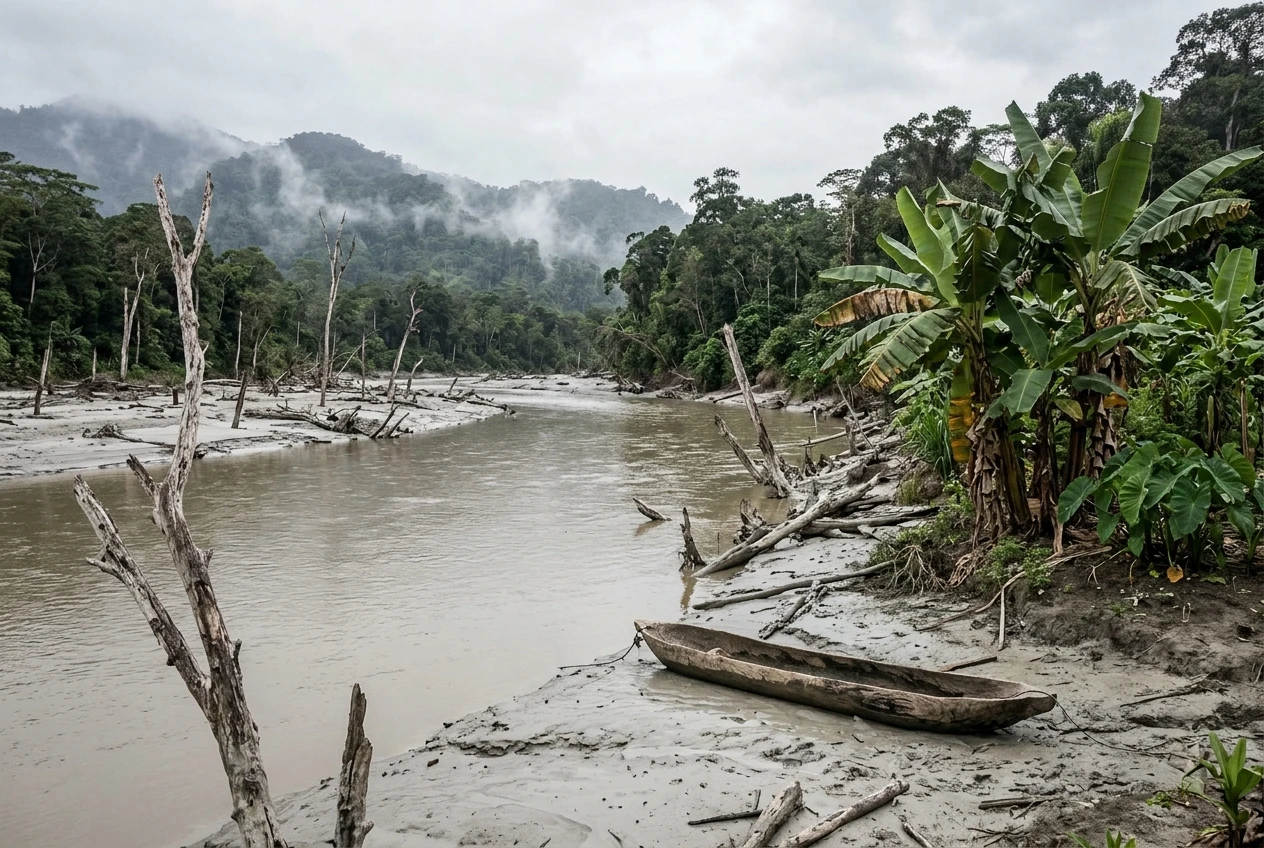
Environmental impact. Large mines move huge amounts of rock and produce tailings, which are the finely ground waste left after the metal is extracted. Where tailings go matters a great deal. At Ok Tedi, tailings and waste rock entered the river system and affected river life and the gardens and forests of people living downstream. At Ramu, the disposal of waste in the sea has been disputed by landowners and environmental groups. The companies and the regulator say operations are monitored. Independent reports and local testimony have at times told a different story, and readers should look at both.
Bougainville. Panguna’s legacy is the clearest example of what can go wrong when landowners feel excluded. Damaged land and rivers, abandoned infrastructure and the losses of the conflict remain real concerns for Bougainville communities. An independent assessment of the legacy impacts of the mine was commissioned after communities raised the issue with Rio Tinto. Its reports are available through the Autonomous Bougainville Government and Rio Tinto.
Landowner disputes. Disputes over who counts as a landowner, how royalties are divided between individuals and the wider community, and whether agreements were properly explained are common across mining areas. Compensation can create conflict inside families and clans as well as with companies.
Social change. Mining areas often see rapid population growth, higher living costs and pressure on local services. Women and young people do not always have an equal voice in how benefits are used. Security around mines has also been a concern. At Porgera, for example, international groups raised allegations of violence involving security forces, and the operator set up a remedy program.
Benefits remain real. Roads, power, schools, health services and jobs in mining areas are real gains, and many families have a better income because of them. The point of looking at costs is to ask whether the benefits are shared fairly and whether the damage is repaired, not to argue that mining should never happen. Different people in the same province will reasonably weigh these things differently.
What it means for job seekers, landowners and investors, and where to check the facts
Job seekers
Mining careers cover many fields: engineering, geology, trades, heavy equipment operation, environmental science, health and safety, finance, logistics and administration. Many operators run graduate programs and apprenticeships, though their availability changes. General career information is useful for planning, but a current vacancy is a separate matter. Apply only through the employer’s own careers page or its published official channels.
Treat any request for payment in exchange for a job as a warning sign. A genuine employer does not charge applicants to apply. Be careful with job notices on social media, and confirm them against the company’s own website before you send documents or money.
Landowners
If you are part of a landowner group, the agreements matter more than any summary. Ask for copies of the agreements that affect your land, check that your incorporated land group is properly registered, and get independent legal advice where you can. Know what benefits were promised, who receives them and how disputes are to be settled.

Investors and international readers
Read the Mining Act and the project agreements, not just company presentations. The record shows that terms have been renegotiated, as with Ok Tedi’s ownership change and the Porgera lease decision, so treat the regulatory position as something to monitor. Check ownership structures against company filings and the Investment Promotion Authority’s records.
Where to check the facts
- Mineral Resources Authority and the Department of Mining: licences, regulation and policy.
- Conservation and Environment Protection Authority: environmental permits and compliance.
- Bank of Papua New Guinea, Treasury and the National Statistical Office: economic data and budget documents.
- Papua New Guinea Legal Information Institute: the text of the Mining Act and related laws.
- Company websites and stock exchange filings: ownership, operations, production and official job vacancies.
- Autonomous Bougainville Government: the current position on Bougainville and Panguna.
- Investment Promotion Authority: company registration records.
Every figure, date and ownership claim in an article like this one can change, so use these sources to confirm anything you plan to act on.
Ready to go further? Read our upcoming guides on PNG mining jobs and mining company profiles, and join the PAPUANIUGINI.ORG newsletter so you get each new article on mining, jobs and national development as soon as it is published.