

Three scenes will be familiar to many Papua New Guineans. A congregation is asked for a final offering so that God will multiply it. A woman hands her savings to an investment group that promises to double them in a month. A crowd welcomes a candidate with a prayer and a Bible reading, hoping a gift follows. The settings differ, but each rests on the same expectation: wealth arrives from outside, through the right words or the right person, and is not built locally.
Anthropologists call the oldest form of this idea the cargo cult. This article looks at where it came from, how it relates to the prosperity gospel, election-time handouts and pyramid schemes in Papua New Guinea, and why “laziness” explains it poorly.
Where the cargo idea came from
“Cargo cult” is the name given to movements in Melanesia whose followers expected manufactured goods to arrive through ritual, prayer or the return of ancestors. In Tok Pisin the goods are kago. One of the earliest well-documented cases is the Vailala Madness in the Gulf of Papua, reported from around 1919. Followers expected ships carrying goods and the spirits of the dead.
After the Second World War, movements appeared in other parts of the country. One of the best known was led by Yali, who came from the Madang region and had served with Australian forces.
The reasoning behind these movements was not irrational. Europeans arrived with steel axes, cloth, tinned food, ships and aircraft, in quantities no village could produce. Papua New Guineans saw the goods arrive but saw little of the factories and farms behind them. They were also largely shut out of paid skilled work and ownership under colonial rule. Some followers concluded that the Europeans held a ritual or spiritual secret about wealth, and that it had been kept from them.

Early colonial officials often described the movements as madness. Many later scholars see them as attempts to explain a changed world, and as protests against an unequal one. The original draft of this piece called them a “social disease”. The evidence supports a different reading: people were trying to make sense of a situation that really was unfair.
Why “laziness” is the wrong explanation
Papua New Guineans have a long record of organised work. The Whagi Valley Early Agricultural Site in the Western Highlands, inscribed as a UNESCO World Heritage Site in 2008, shows drainage and cultivation of wetland gardens going back thousands of years. Coastal peoples built trading networks too, such as the Hiri voyages of the Mots from the Port Moresby area and the Kula exchange in the Milne Bay islands. None of this was built by people waiting for goods to appear.
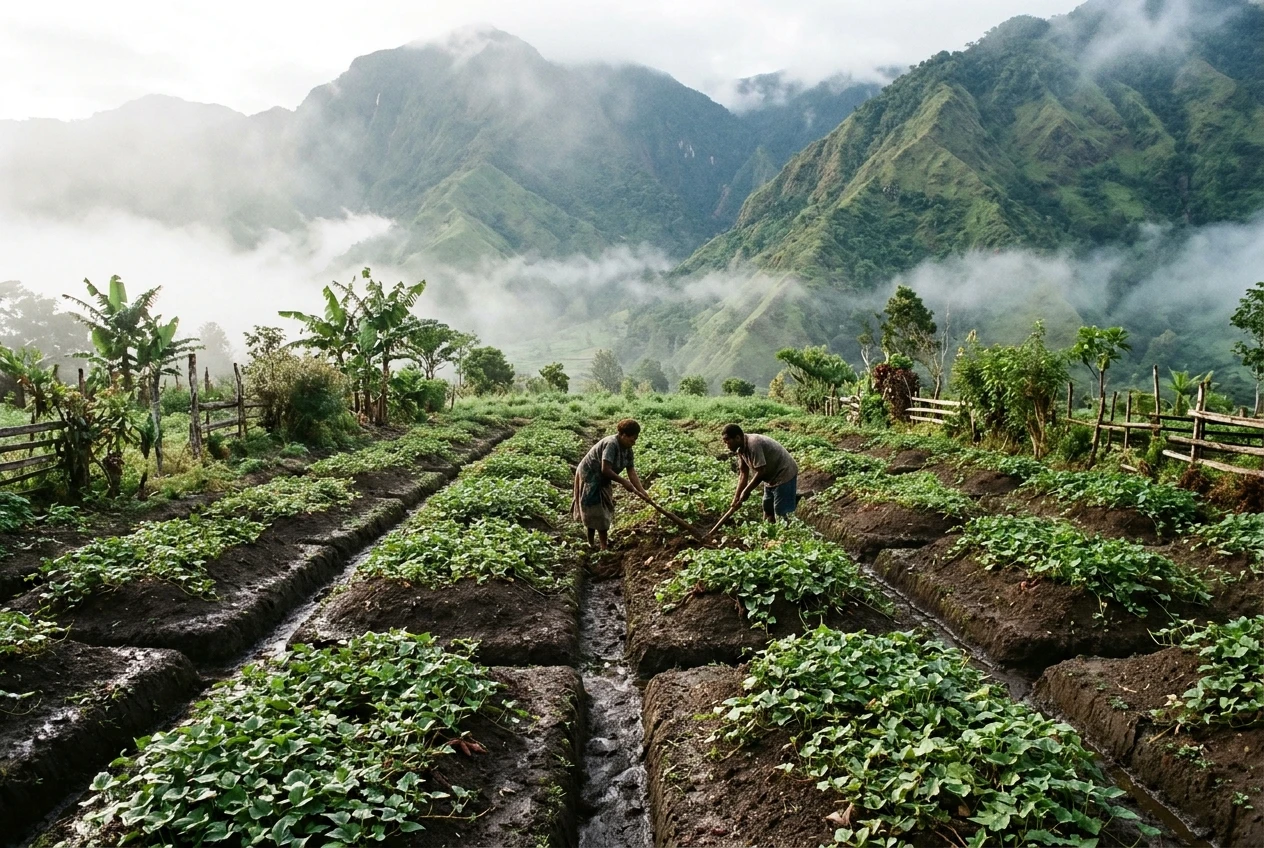
The same period that produced cargo movements also produced movements built on work and organisation. The Paliau Movement in Anus pushed for village councils and economic reform. Tommy Kabu in the Gulf of Papua promoted village business. These movements are often cited by scholars as the practical counterpart to the cargo idea.
Today most Papua New Guineans live in rural areas and feed their families through gardens, small trade and informal work. A charge of general laziness does not describe that reality, and it repeats the old colonial habit of explaining inequality by blaming the character of the people who were shut out.
What does exist is a narrower habit: expecting rescue from a source outside one’s own control, whether a pastor, a politician or an investment group. The question to ask is where people place their hope, and whether the source can actually deliver.
Cargo thinking in the prosperity gospel
The prosperity gospel teaches that faith and financial giving lead to material wealth. It spread worldwide from charismatic and Pentecostal circles, and Christians in many denominations dispute it. Many churches in Papua New Guinea teach differently, and churches have built schools, health services and community programs across the country.
The resemblance to cargo belief is in the structure. A ritual input, such as a prayer, a “seed offering” or a vow, is expected to produce a material output. The mechanism is again hidden from the believer, and a leader claims to know how it works.
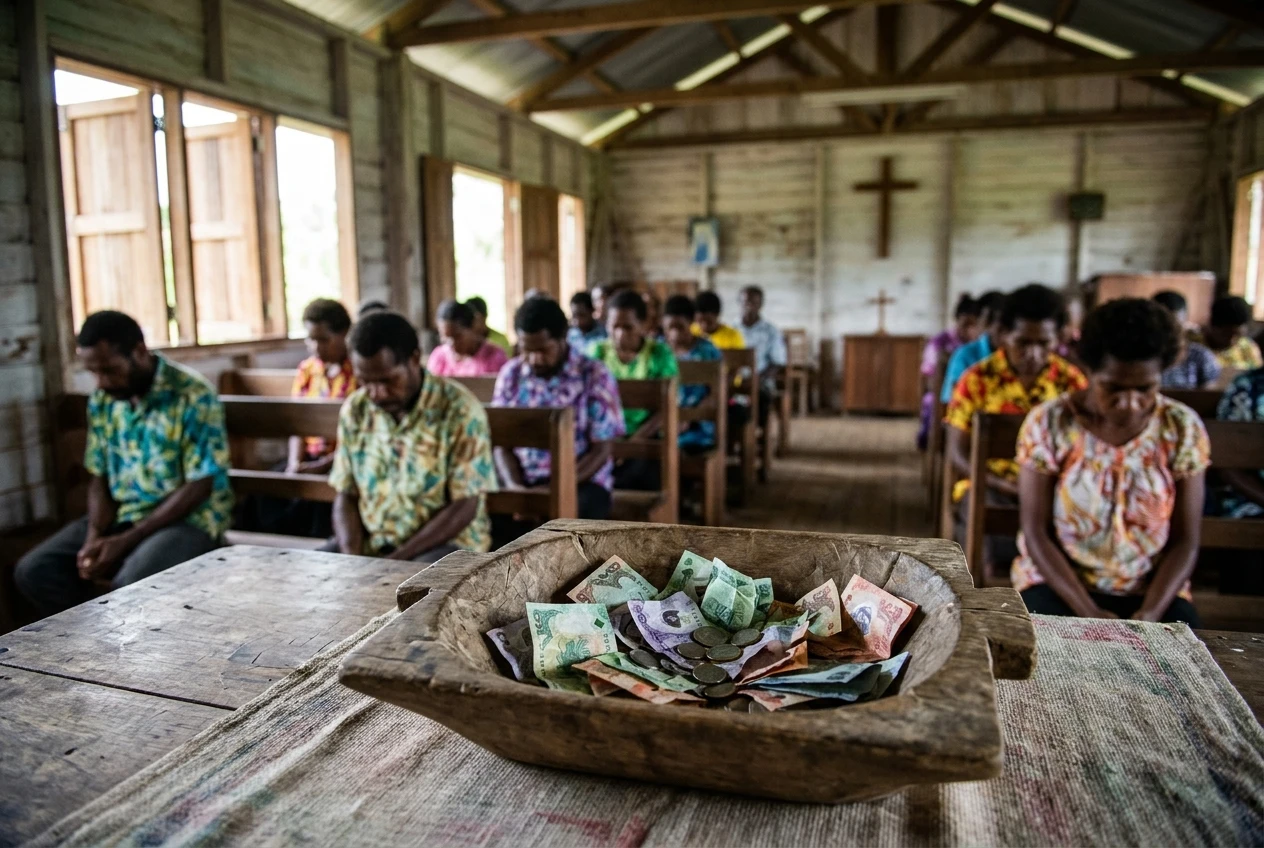
Giving to a church is a long and respected tradition, and the problem begins only when giving is presented as a guaranteed investment. Four questions help a member judge whether a church’s money teaching is sound:
- Does the teaching promise a specific financial return for a specific gift?
- Are the church’s accounts open to members?
- Is anyone asked to give money needed for food, rent or school fees?
- Do the leaders live from the same offerings they ask others to multiply?
A church that welcomes these questions is behaving very differently from one that treats them as a lack of faith.
Politics and the expectation of gifts
Papua New Guinea has been independent since 16 September 1975. Many communities still wait a long time for roads, clinics and schools to reach them. Where public services arrive unevenly, personal access to a politician becomes a practical route to school fees, a funeral contribution or a job. That is why a politician can be given the best seat, a blessing and a reading from scripture before addressing a church.
The scene is understandable, but it puts a hope for money where a demand for services should be. A blessing does not make a politician accountable. Voters get more from asking specific questions: what is in the district’s budget, who approved it, and what has been built with it so far.
This applies to every party and candidate. The point is the relationship between voter and representative, and it does not depend on who holds office.
Requests for money and the wantok system
Many readers will recognise a further scene: a relative who sends a Bible verse and then, a few messages later, a request for money, or a group of visitors who hold a long prayer service and list their financial problems at the end. The wantok system is a real strength, because it gives families a way to look after each other where formal social security barely exists.
The strain arrives when one salary supports many people and requests keep coming. Giving within the family is a value, but a person who gives everything away has nothing left to invest in a business, a garden or a child’s education. Setting a limit, and explaining it kindly, protects the person who can help and keeps them able to go on helping.
Pyramid schemes: the same hope in a different form
A pyramid scheme pays earlier members with money collected from newer members. No product or business creates the returns. The scheme works only while recruitment grows, and it must collapse, because each level needs more people than the one before it. The arithmetic is unavoidable.
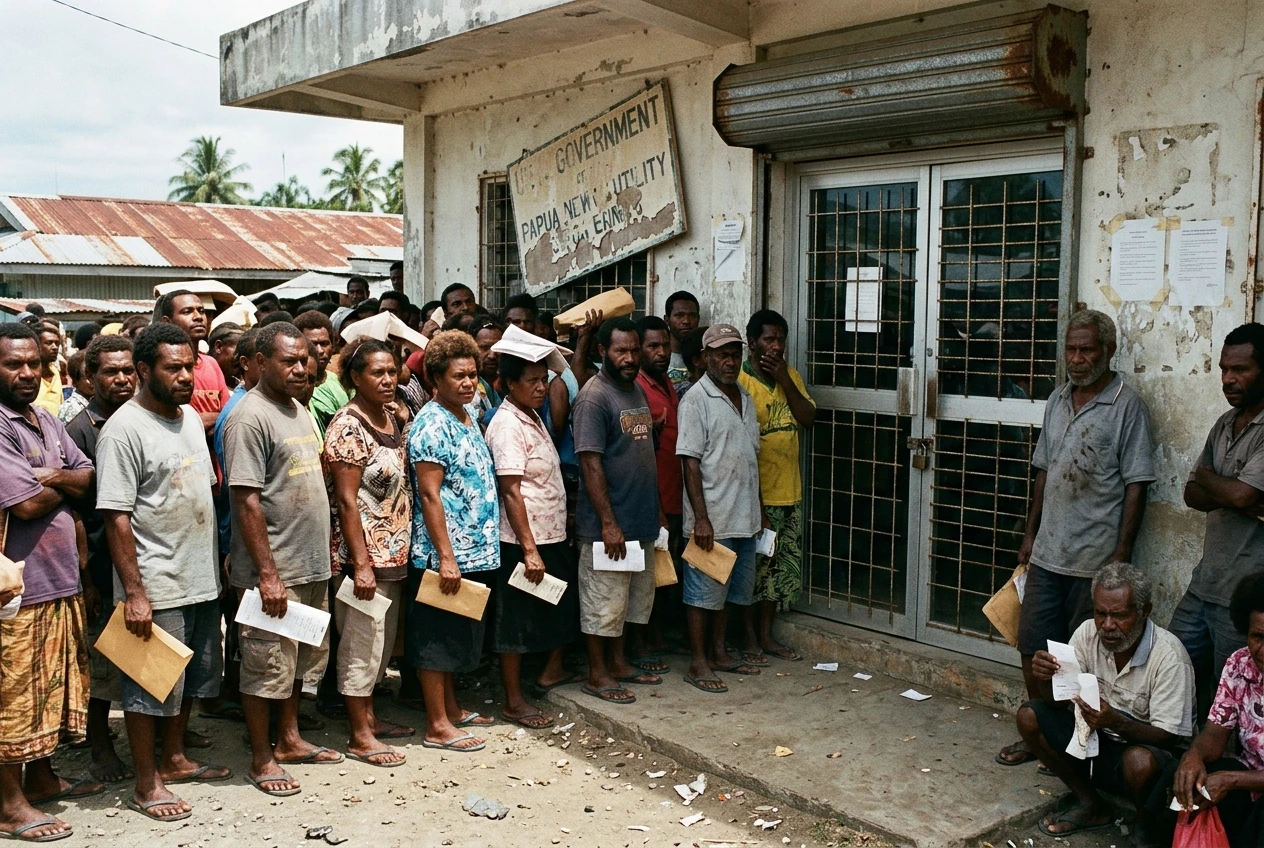
The appeal is strong where formal jobs are scarce and a quick return seems to be the only route to school fees or capital. The scheme also borrows the cargo pattern: put in a payment now, wait, and goods or money appear. This site has reported on investors gathering outside offices across the country to demand their money back from Faith-G.
Five checks before putting money into any investment group:
- Ask where the returns come from. If the answer is “new members”, it is a pyramid.
- Be wary of any promise of a fixed, very high return in a short time.
- Ask whether the group is licensed to take investments, and confirm that with the regulator instead of relying on the group’s own word.
- Notice whether you are paid for bringing in friends and relatives.
- Never invest money you cannot afford to lose, and never borrow to join.
What builds wealth
The alternative to waiting is slower and less exciting. It means a small business with a plain record of what comes in and goes out, a skill that employers or customers will pay for, a garden that feeds the family and sells at the market, and savings placed with a regulated institution. These routes depend on effort and time, and neither is controlled by a leader who claims special access.
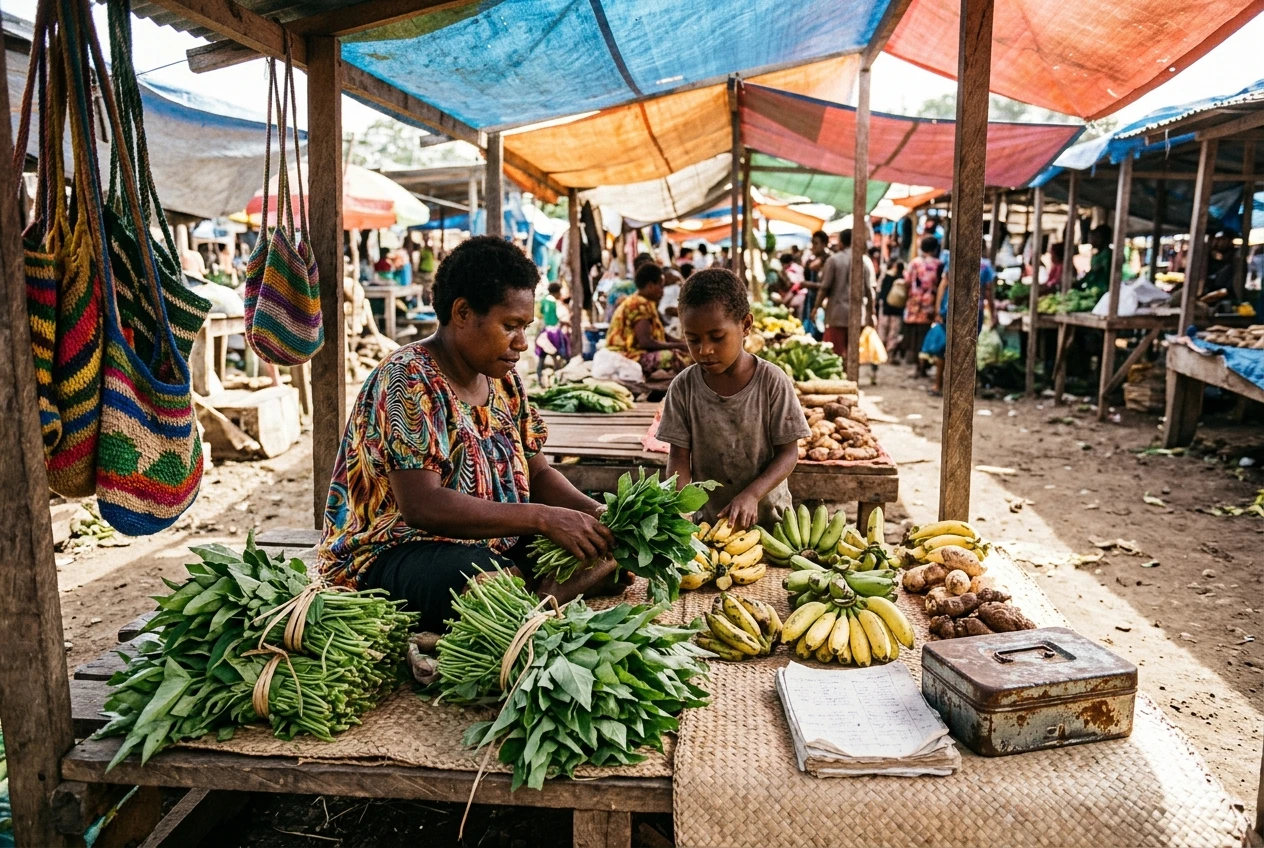
The same message was addressed to graduates facing unemployment by Opposition Leader James Nomane, who urged them to “build your own door”. Whatever one thinks of the politics around it, the advice matches what the history above suggests: the Papua New Guineans who organised their own work, from Kuk to Kabu, are the better model.
Prayer, a good church and a generous family all remain valuable. The test to apply before giving money or trust is simple: what does this person or group actually produce, and who can see the books?
