

Papua New Guinea History Timeline: The Key Dates From the First Settlers to Independence and After.
Papua New Guinea’s written record is short, but the history of its people is long. People have lived on the island for at least 40,000 years, and the modern state is only a little over 50 years old. This Papua New Guinea history timeline sets the key dates in order, from the first settlers to independence and the years since. Each entry says what happened and why it still matters.
For a broader narrative of the country, read What You Need To Know About Papua New Guinea. This page is built for quick reference: school assignments, revision, or checking a date.
Why a timeline of PNG history needs more than one starting point
Many school timelines begin in 1884, when Britain and Germany claimed parts of the island. That date marks the start of colonial rule, and it leaves out nearly all of the country’s history. Papua New Guineans had been farming, trading, building canoes and speaking hundreds of languages for tens of thousands of years before any foreign flag arrived.
This timeline therefore has several starting points. Settlement and early farming come first. Colonial rule follows, then the Pacific War, then the move to self-government and independence. The last section covers the decades after 1975.
Two features of PNG’s past explain why one story cannot cover it. The country was split into separate colonial territories, Papua in the south and New Guinea in the north, run by different powers under different rules. And most communities kept their own languages, leadership and land systems throughout.
Where historians or official sources disagree on a date or a figure, the entry says so and gives the range.
Before contact: tens of thousands of years of settlement, farming and trade
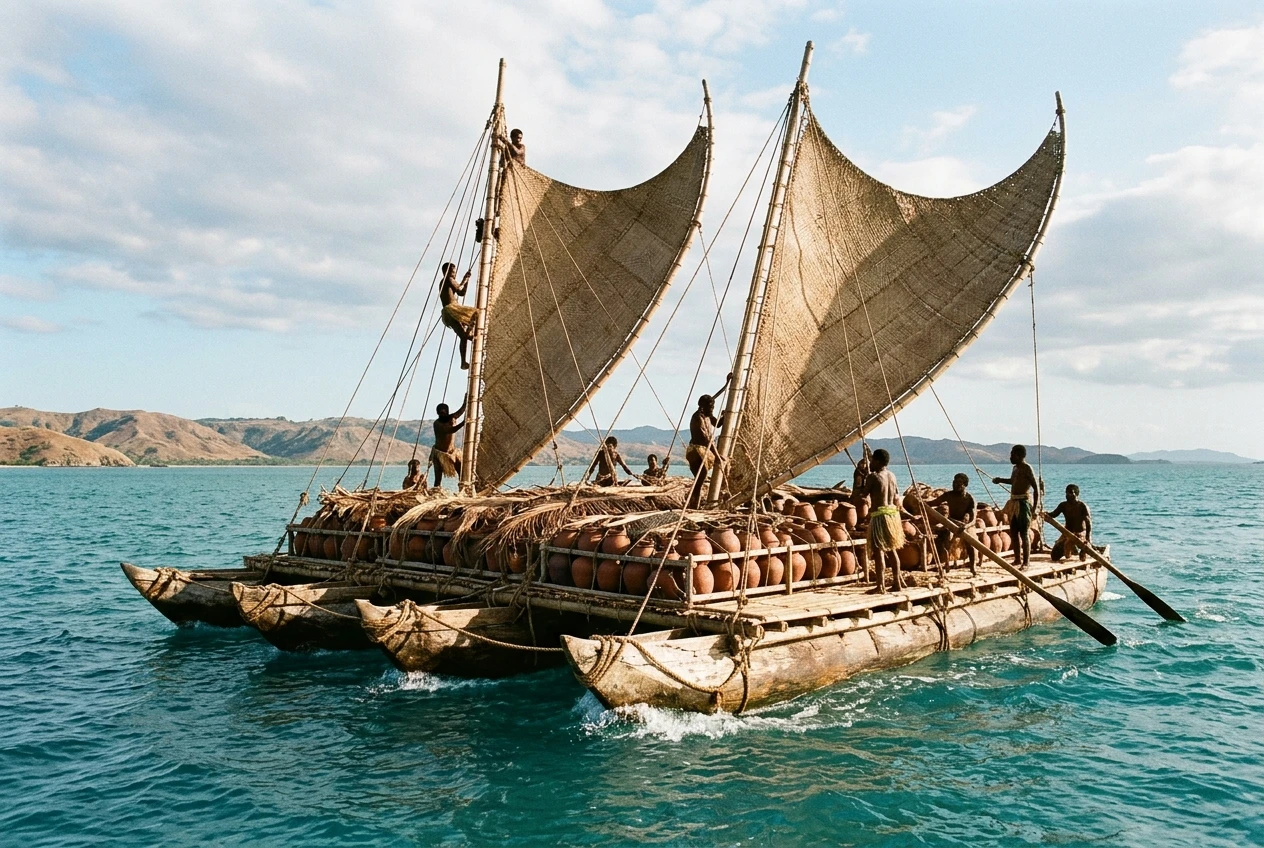
- About 50,000 to 40,000 years ago: first settlers. People reached the landmass that joined New Guinea and Australia, probably by crossing the sea from Southeast Asia. Excavations in the Ivane Valley (Kosipe area) in the Owen Stanley Range, and cave sites on New Ireland such as Matenkupkum, show occupation of this age. Sources differ: estimates for the earliest dated sites range from about 40,000 to 50,000 years, and new excavations can shift them. This matters because it makes Papua New Guineans the descendants of one of the oldest continuous human populations outside Africa.
- At least 7,000 years ago, possibly about 10,000: agriculture in the Highlands. Drainage ditches and planting areas at Kuk Swamp in the Wahgi Valley, Western Highlands, record some of the earliest farming anywhere in the world. UNESCO listed Kuk as a World Heritage Site in 2008. Sources differ: evidence for gardening there goes back about 10,000 years, while the clearest drainage systems are dated to roughly 7,000 years ago. It matters because it shows that New Guinea was an independent centre of plant domestication, with taro, bananas and sugarcane among the crops usually linked to the island’s early farming.
- About 3,500 to 3,000 years ago: Lapita seafarers. Austronesian-speaking peoples arrived in the Bismarck Archipelago, bringing a distinctive decorated pottery and ocean-going canoes. Many languages along the coasts and islands descend from this period, and Lapita sites mark the beginning of settlement that later reached the remote Pacific. The coastal peoples of PNG are part of that wider Pacific story.
- Long before 1800: trade networks. Obsidian from the Talasea area of West New Britain travelled long distances by sea. The Motu of the Port Moresby coast sailed in lakatoi canoes to the Gulf coast to trade pots for sago. Exact start dates for these networks are uncertain, and sources differ on how old each one is. They matter because clan alliances, marriage links and exchange partnerships still shape relationships between communities today.
- Over many centuries: the sweet potato. The sweet potato became the staple of the Highlands, and the dense populations of the valleys depended on it. Sources differ: researchers disagree on when it arrived, with most placing it within the last few hundred years. It matters because it is a reminder that Highlands society kept changing long before outsiders walked in.
- Throughout: language and law. PNG has more than 800 languages. Ethnologue-style counts give a figure of about 840, but a count depends on how you separate a language from a dialect. Customary land ownership, which still covers most of the country’s land, grew out of this period.
Early European contact and the splitting of the island into colonial territories
- 1526 to 1527: first recorded European sighting. Portuguese navigator Jorge de Meneses is usually credited with reaching the island and using the name “Ilhas dos Papuas”. Sources differ on the exact year and landing, and the details come from later accounts.
- 1545: the name New Guinea. Spanish navigator Yñigo Ortiz de Retes sailed along the north coast and named it Nueva Guinea, because the people reminded him of those on the Guinea coast of Africa. The name was imposed by a visitor, but it is still part of the country’s name. In Tok Pisin the country is Papua Niugini.
- 1606: Torres Strait. Luis Váez de Torres sailed through the strait that now carries his name. The strait is still the sea border between PNG and Australia.
- 1828 and 1895: the Dutch half. The Netherlands claimed the western half of the island in 1828 and agreed borders with Britain and Germany in the 1890s. That western half is now part of Indonesia, which explains why the island of New Guinea holds two countries.
- 1871 to 1886: missions arrive. The London Missionary Society established itself in the Torres Strait in 1871, and Lutheran missionary Johann Flierl began work near Finschhafen in 1886. Catholic and other missions followed. Churches became providers of schools and clinics, which is one reason Christianity is so central to community life today.
- 1884: the island is split. Britain declared a protectorate over the south-east, and Germany claimed the north-east and the Bismarck Archipelago, both in late 1884. These two zones became the basis of Papua and New Guinea, and the division shaped the country’s administration for the next 90 years.
Papua and New Guinea under Britain, Germany and then Australia
- 1888: British New Guinea. The protectorate became a Crown colony, with its capital at Port Moresby.
- 1899: Germany takes over directly. The Neu Guinea Compagnie had administered German New Guinea since 1885. The German imperial government assumed control in 1899, with plantations on the islands and the north coast. The Gazelle Peninsula and Rabaul grew from this period.
- 1906: Papua passes to Australia. Australia took over British New Guinea and renamed it the Territory of Papua. Hubert Murray served as Lieutenant-Governor from 1908 until his death in 1940. This is why Papua’s legal and administrative system differed from that of New Guinea for decades.
- 1914: Australia occupies German New Guinea. Australian forces took the territory early in the First World War, after a short fight at Bita Paka in September 1914.
- 1920 to 1921: a League of Nations mandate. Australia was given a mandate to govern the Territory of New Guinea. Sources differ: some give 1920, when the mandate was confirmed, and others 1921, when civil administration began. The mandate meant Australia answered to an international body for the welfare of the people, a principle later carried into the United Nations trusteeship system.
- 1920s and 1930s: gold and the Highlands. Gold found around Edie Creek and Bulolo drew prospectors and aircraft into the interior. In the early 1930s, patrols including those of the Leahy brothers and Jim Taylor reached the densely settled Highlands valleys. Many people there had not known that the coast was occupied by outsiders, and the number of people living in the valleys surprised the patrols. Sources differ on the Highlands population at the time, though figures near one million are often given. Many people who are elders today were alive at that first contact, and some family histories still describe it directly.
- 1919 onward: the first cargo movements. The Vailala Madness in the Gulf area was one of the first recorded movements that tried to explain Western goods and wealth in local terms. For its origins, read Where the Cargo Cult Idea in Papua New Guinea Came From.
The Pacific War in PNG: Kokoda, the coast and the Highlands
- January 1942: Rabaul falls. Japanese forces invaded New Britain on 23 January 1942 and took Rabaul. More than 1,000 Australian prisoners and civilians died when the ship Montevideo Maru was sunk on 1 July 1942. Sources differ slightly on the total.
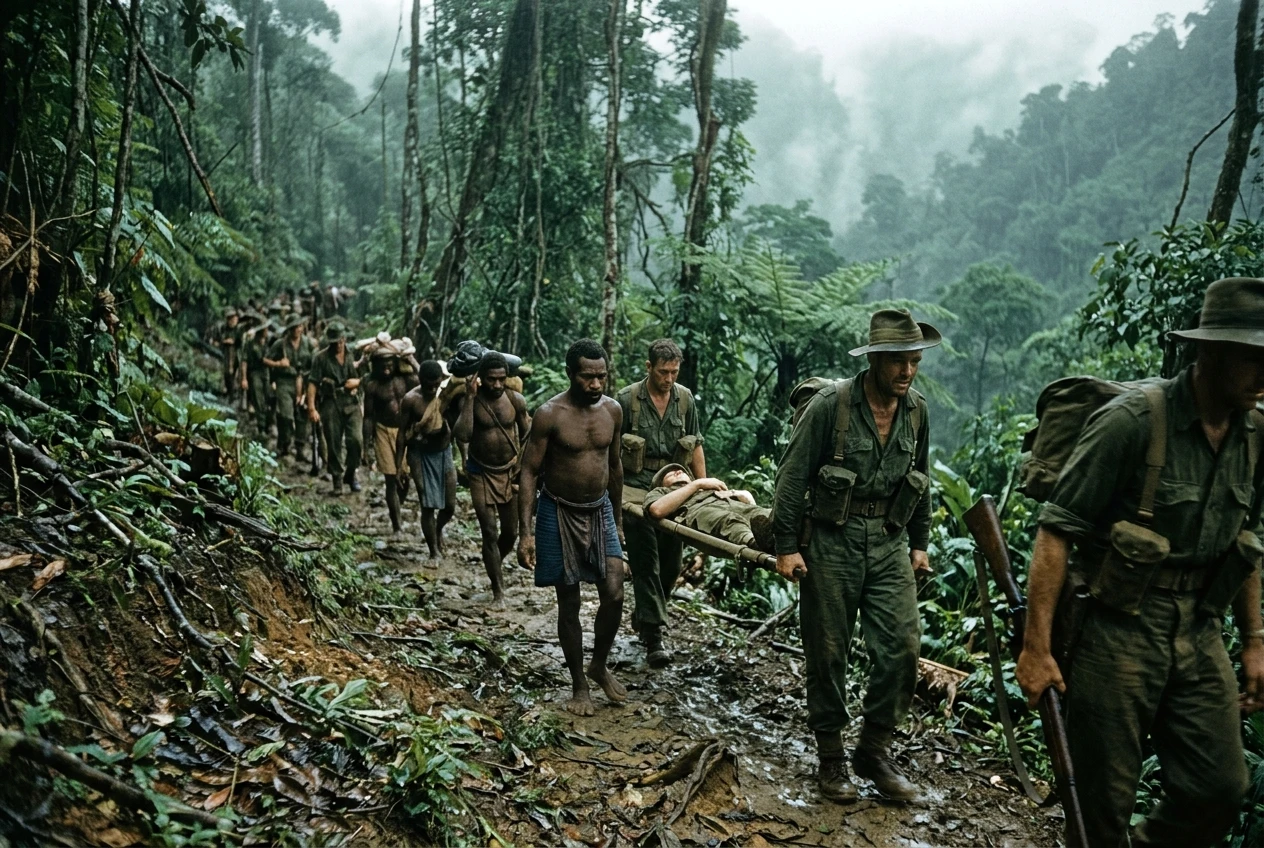
- July to November 1942: the Kokoda Track campaign. Japanese forces landed on the north coast near Buna and Gona and advanced over the Owen Stanley Range towards Port Moresby. Australian troops, backed by Papua New Guinean carriers, stretcher-bearers and members of the Papuan Infantry Battalion, fought a withdrawing battle and then pushed the Japanese back. The advance was halted in September, near Ioribaiwa, within reach of Port Moresby. Sources differ on casualty figures, depending on which units and dates are counted. The carriers’ work, often called the “Fuzzy Wuzzy Angels” in Australian accounts, is central to how Papua New Guineans remember Kokoda.
- 25 August to 7 September 1942: Milne Bay. Allied forces defeated a Japanese landing at the eastern tip of Papua. It is generally described as the first land defeat of Japanese forces in the Pacific War.
- November 1942 to January 1943: Buna and Gona. Allied forces took the Japanese coastal positions after heavy fighting.
- 1943: Wau, Salamaua and Lae. Fighting moved along the Huon Gulf coast and into the Morobe hinterland. The Allies took Lae in September 1943.
- 1945: surrender. Rabaul was bypassed rather than recaptured, and Japanese forces in the area formally surrendered in September 1945.
The Highlands saw little of the fighting itself, because the front was on the coast and the islands. The war’s impact there came through new airstrips, the movement of labour and the first sustained outside contact for many communities. Across the country, villages were damaged, people were displaced and thousands of Papua New Guineans served as carriers, labourers and soldiers. Many who saw Allied pay, equipment and treatment came away with new expectations of the administration. This is one of the roots of the political changes of the 1950s and 1960s.
From Australian administration to self-government
- 1949: Papua and New Guinea are administered together. The Papua and New Guinea Act combined the two territories into one administrative unit, though Papua remained legally distinct in some respects. Many provincial and regional identities in the north and south still reflect the older split.
- 1951: the Legislative Council. The first body with Papua New Guinean members was established, though they were nominated and had little power.
- 1964: the first House of Assembly elections. For the first time, a majority of members were Papua New Guineans elected by voters. Women and men could vote, though the process was uneven in remote areas.
- 1971: the name changes. The Territory of Papua and New Guinea became Papua New Guinea, and a national flag was adopted.
- 1972: a Pangu government. Michael Somare, leader of the Pangu Pati, became Chief Minister after elections in 1972 and led the push towards self-rule.
- 1 December 1973: self-government. Papua New Guinea took control of its internal affairs while Australia kept defence and foreign affairs. It matters because the country’s institutions were built in the two years that followed, including the Constitution drafted by a Constituent Assembly.
Independence and the first decades of nationhood
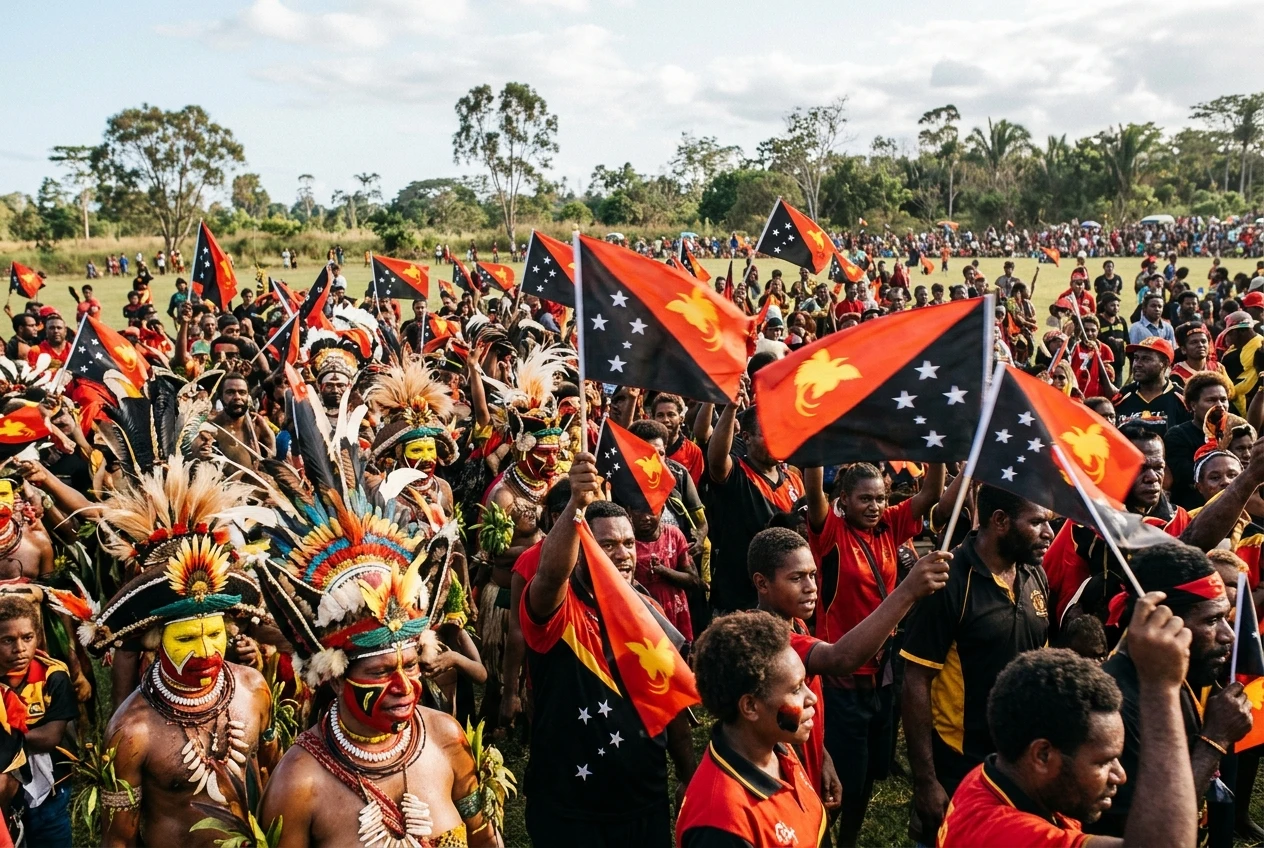
- 16 September 1975: independence. Papua New Guinea became an independent state, with Michael Somare as the first Prime Minister and Sir John Guise as Governor-General. The country is a constitutional monarchy within the Commonwealth. The kina, which replaced the Australian dollar earlier in 1975, became the national currency. Independence Day remains the main national holiday, and in 2025 the country marked 50 years.
- 1 September 1975: Bougainville’s declaration. Leaders in what was then the North Solomons announced a Republic of North Solomons. It was not recognised, but it shows that questions about the country’s shape began before independence itself. The next section returns to Bougainville.
- 1977: provincial government. The first Organic Law on Provincial Governments gave provinces their own assemblies. A reformed system, the Organic Law on Provincial and Local-level Governments, replaced it in 1995. Provincial boundaries and powers still affect budgets and services, and the provinces map shows where each one sits.
- 1992: the Mining Act. The act set the framework for exploration and mining licences, and it sits behind how landowners, companies and government deal with each other today.
- 1997: the Sandline affair. Prime Minister Julius Chan’s government hired foreign mercenaries to end the Bougainville conflict. The army commander, Jerry Singirok, opposed the plan, and Chan stepped aside during the crisis. The episode confirmed that the military answers to civilian government.
- 17 July 1998: the Aitape tsunami. A tsunami struck the north-west coast and killed more than 2,000 people. Sources differ on the exact toll. It is still the country’s best-known natural disaster of that scale.
- 2007: limited preferential voting. This system replaced first-past-the-post at the national election, so voters rank up to three candidates.
- 2011 to 2012: two rival governments. A dispute over Prime Minister Somare’s long absence abroad for medical treatment led to competing claimants to the prime ministership, until the Supreme Court ruled in 2012.
- 2012: Hela and Jiwaka. Two new provinces were created, bringing the number of provinces to 20, alongside the National Capital District and the Autonomous Region of Bougainville.
- 2014: LNG exports. The PNG LNG project began shipping cargoes. It changed the national budget and the debate over resource revenue.
- 2021: Somare dies. The nation’s first Prime Minister, often called the Grand Chief, died in February 2021. His role in the independence movement is part of every school account of 1975.
- 2024: the Enga landslide. A landslide in Enga Province in May 2024 buried a village. Sources differ widely on the number of people killed, with estimates ranging from several hundred to more than 2,000.
Bougainville, mining and other turning points that shaped modern PNG
Several events from this period are not captured by dates on a national calendar, because they changed how Papua New Guineans think about land, resources and who controls them.
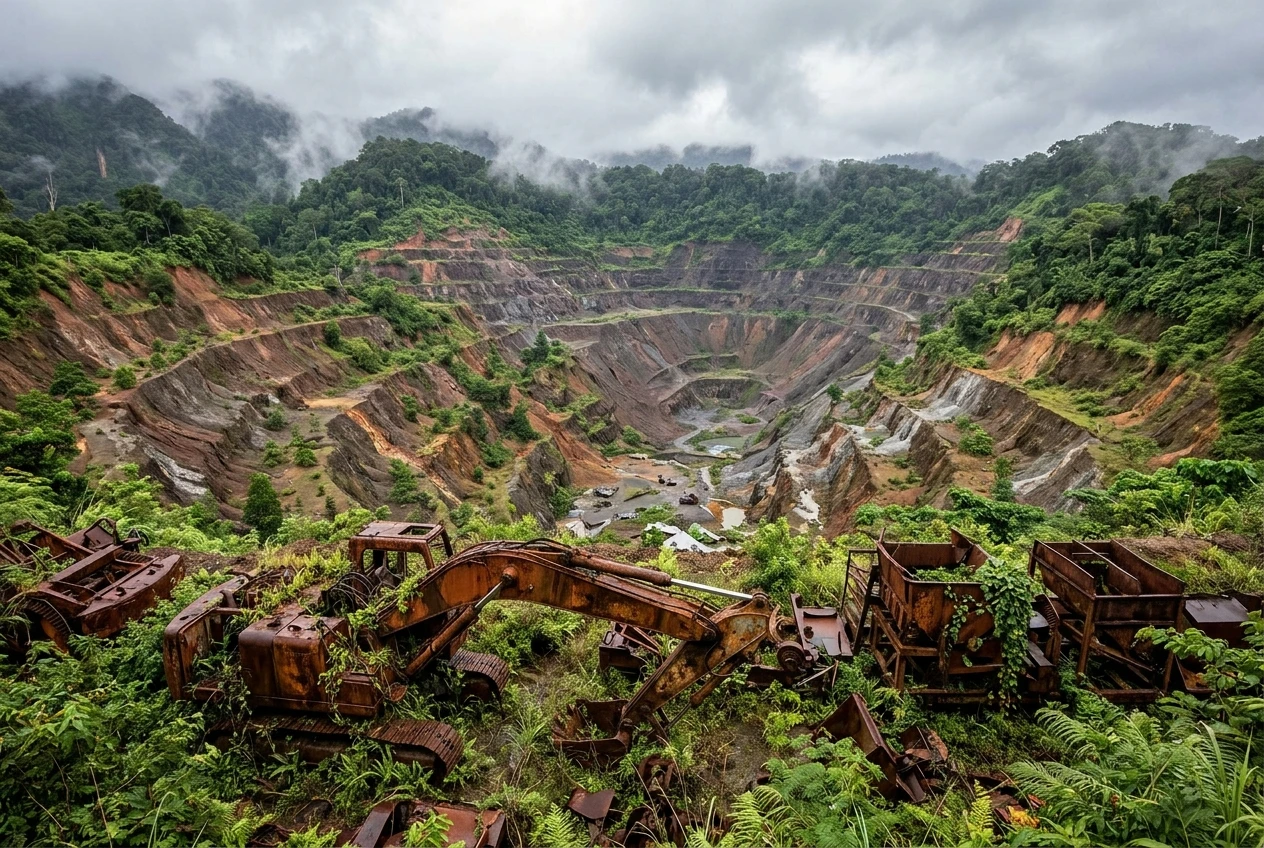
- 1964 to 1972: Panguna. Copper was found in central Bougainville in the mid-1960s, and the Panguna mine began production in 1972. It produced a large share of PNG’s export income. Landowners later argued that compensation was unfair and environmental damage serious.
- 1988 to 1998: the Bougainville conflict. Landowner anger at Panguna led to sabotage, and the Bougainville Revolutionary Army, led by Francis Ona, fought the national government. Panguna closed in 1989. Sources differ on how many people died, and estimates of 15,000 to 20,000 are commonly quoted, though some researchers give lower figures. The conflict is why Bougainville has its own government today.
- 1998 to 2001: the peace process. A ceasefire in 1998 was followed by the Bougainville Peace Agreement, signed in August 2001. It set out autonomy, weapons disposal and a future referendum.
- 2005: the Autonomous Bougainville Government. Elections formed the government, with Joseph Kabui as its first president.
- 23 November to 7 December 2019: the referendum. About 97.7 percent of voters chose independence over greater autonomy. The result is not binding, and the PNG Parliament has to ratify it. Talks on how and when to proceed are continuing, so readers should check current news.
- 1984: Ok Tedi. The mine in Western Province started producing in 1984. Tailings released into the river system caused lasting environmental damage, and BHP withdrew from the project in 2002. What Ok Tedi Mining Means for Western Province and PNG covers the mine’s history and its place in the provincial economy.
- 1990 to 2012: more mines. The Porgera gold mine began in 1990, Lihir in 1997 and the Ramu nickel project in 2012. Together with oil, gas and Ok Tedi, they make resources central to government revenue.
Where dates and numbers differ between sources, and how to cite this timeline
A few patterns explain most of the disagreements you will find.
- Prehistoric dates come from radiocarbon and other dating. They are revised as new sites are excavated, so expect ranges rather than single years.
- Casualty counts for the Pacific War, Bougainville, the Aitape tsunami and the Enga landslide vary because records were incomplete or the events happened in remote places. Where this page gives a figure, it is a commonly cited estimate, not a verified total.
- Colonial dates can differ by a year depending on whether a source uses the date of a proclamation, a treaty or the start of administration. The 1920 and 1921 mandate dates are an example.
- Population and language counts depend on definitions, such as what counts as a separate language.
When you cite this timeline for school work, give the site name, the page title and the date you read it, for example: PAPUANIUGINI.ORG, “Papua New Guinea History Timeline”, accessed 24 October 2026. For anything that carries marks, check the date or figure in a primary or academic source, and cite that source alongside this page. Your teacher may have a preferred referencing style, so follow it.
Go deeper: the cargo cult idea, the chiefs symbol, the provinces map and the mines
Each era above connects to a fuller article on the site.
- Colonial contact and belief: Where the Cargo Cult Idea in Papua New Guinea Came From explains how communities interpreted the arrival of foreign goods and wealth.
- National symbols: The PNG Chiefs Identity looks at the symbol and what it represents.
- Provinces and regions: Every Province on the Papua New Guinea Map, Sorted by Region shows how the country is divided today.
- Mining and resources: How Mining Shapes PNG: The Mines, the Money and the Rules covers the industry that grew out of the events above.
Add the history your village or family holds
National timelines record the events that reached the record books. They leave out most of what happened in individual villages, clans and districts: when a road reached a valley, when a school or mission station opened, what happened in your area during the war, how a land boundary was settled.
If you hold a family, village or provincial history story you can stand behind, send it to us through the contact page. Include names, places and dates, and say who told you the story or where the record comes from. We will check it and, where it checks out, add it to the site’s history, so the record of Papua New Guinea includes the places national timelines leave out.

