

Papua New Guinea (PNG) occupies the eastern half of the island of New Guinea, along with many offshore islands in Melanesia, the part of the southwestern Pacific north of Australia. Its capital, Port Moresby, sits on the southeastern coast. With an area of 462,840 square kilometres (178,700 square miles), it is the world’s third largest island country.
The country is best known for its diversity. It has 851 known languages, 11 of which no longer have any known speakers. As of 2019 it was also the most rural country in the world, with only 13.25% of its people living in urban centres. This guide covers the basics of PNG: its name, its history, how it is governed, and its place in the region.
Who lives in Papua New Guinea
More than 8 million people live in PNG, and most of them live in customary communities that are as varied as the country’s languages. Nearly 40% of the population lives a self-sustaining life based on subsistence farming, with little or no access to global capital. The International Monetary Fund classifies PNG as a developing economy.
Traditional social groups remain central to daily life, and they sit alongside modern institutions such as schools and churches. The Constitution recognises this directly. It expresses the wish for “traditional villages and communities to remain as viable units of Papua New Guinean society” and protects their continuing role in local and national life.
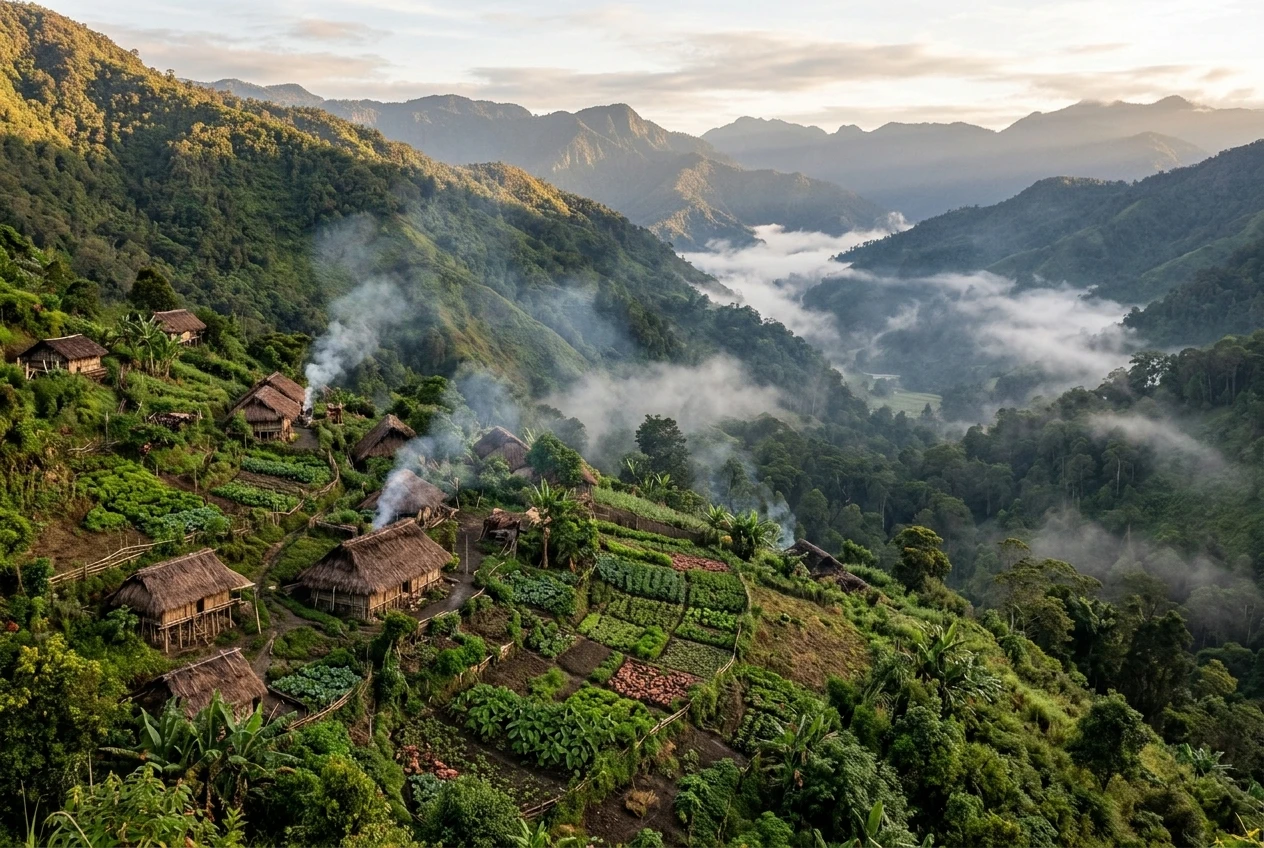
Large parts of the interior remain among the least explored places on earth, both geographically and culturally. Some groups are believed to be uncontacted, and researchers think many plant and animal species there are still undescribed.
To see how the country divides into regions and provinces, read every province on the Papua New Guinea map, sorted by region.
Where the name Papua New Guinea comes from
“Papua” comes from an old local term whose origin is uncertain. “New Guinea” (Nueva Guinea) was coined by the Spanish explorer Yñigo Ortiz de Retez, who in 1545 noted that the people he met looked like those he had seen on the Guinea coast of Africa. The word Guinea itself comes from the Portuguese word Guiné.
The two-part name also reflects the country’s administrative history. Papua and New Guinea were governed separately for decades and were only joined after the Second World War.
Early history: people, gardens and trade
Archaeological evidence shows that people first reached the land that is now PNG about 42,000 to 45,000 years ago, in one of the early waves of human migration out of Africa.
Around 7000 BC, people in the New Guinea highlands developed agriculture on their own. Very few places in the world can claim an independent origin of farming, and the highlands are one of them.
About 500 BC, Austronesian-speaking peoples migrated to the coastal regions. Their arrival is linked to the appearance of pottery, pigs and certain fishing techniques.
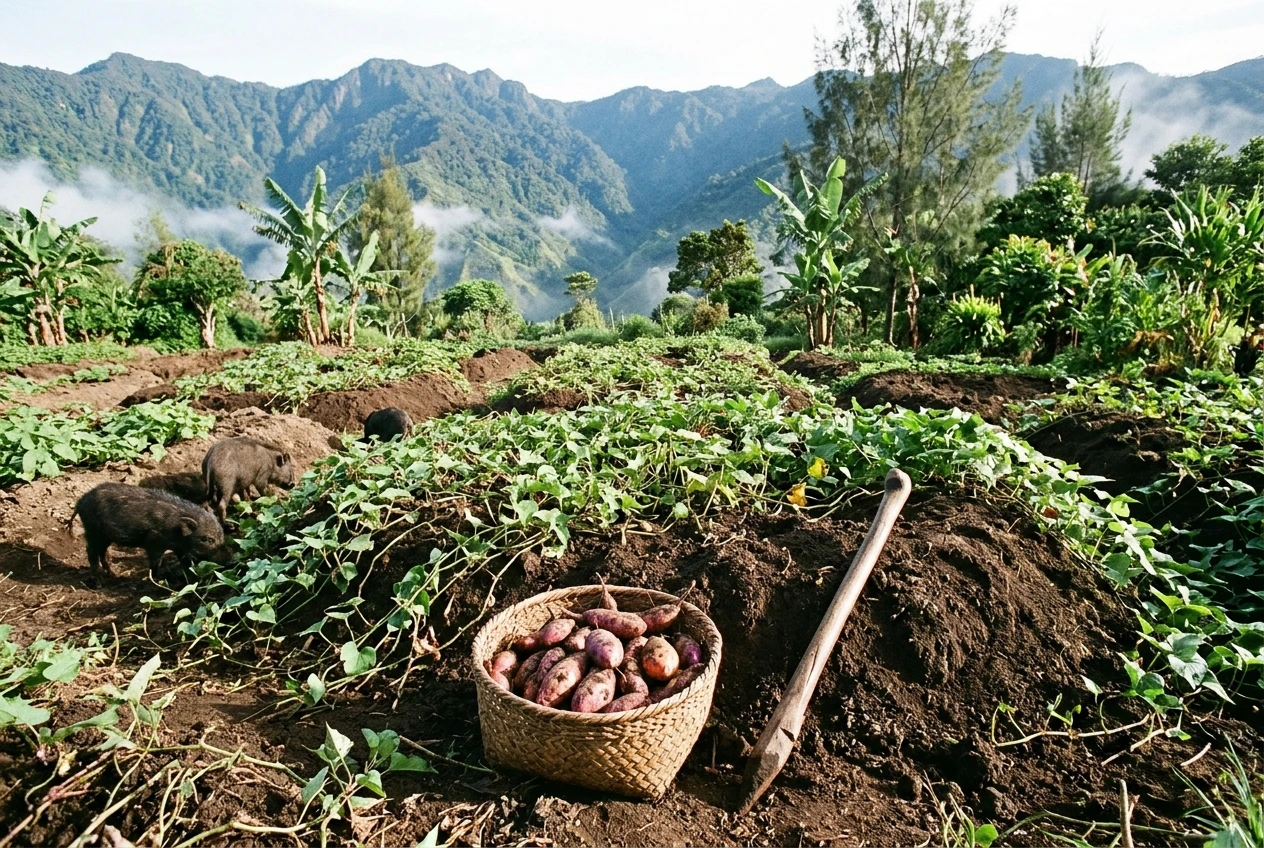
The sweet potato arrived in the 18th century. Portuguese traders had obtained it from South America and taken it to the Moluccas, and it reached New Guinea from there. Sweet potato gardens produced far higher yields, and the crop largely replaced taro as the staple food. The result was a significant rise in the highland population.
Outside contact is also old. Traders from Southeast Asia had been visiting New Guinea for about 5,000 years to collect bird-of-paradise plumes. Portuguese and Spanish explorers, including Dom Jorge de Menezes and Yñigo Ortiz de Retez, reached the island in the 16th century, but Europe knew little about it until the 19th century.
Colonial rule and the two territories
PNG was ruled by three external powers between 1884 and independence. In 1884 Germany took the northern part of the country and ran it as German New Guinea. In the same year the southern part became a British protectorate, and in 1888 Britain annexed it, with some adjacent islands, as British New Guinea.
In 1902 Papua was transferred to the authority of the new Australian Commonwealth. The Papua Act 1905 renamed the area the Territory of Papua, and Australian administration became formal in 1906.
When the First World War began in 1914, Australian forces captured German New Guinea and occupied it for the rest of the war. The League of Nations then authorised Australia to administer it as a mandate territory, the Territory of New Guinea.
The two territories had different legal status. Papua remained a possession of the Australian Commonwealth and, in law, a British one. The New Guinea territory was a League of Nations mandate. Because of this, Papua and New Guinea had entirely separate administrations, both controlled by Australia, until 1949. This split later complicated the task of building a legal system for an independent country.
The Second World War and independence
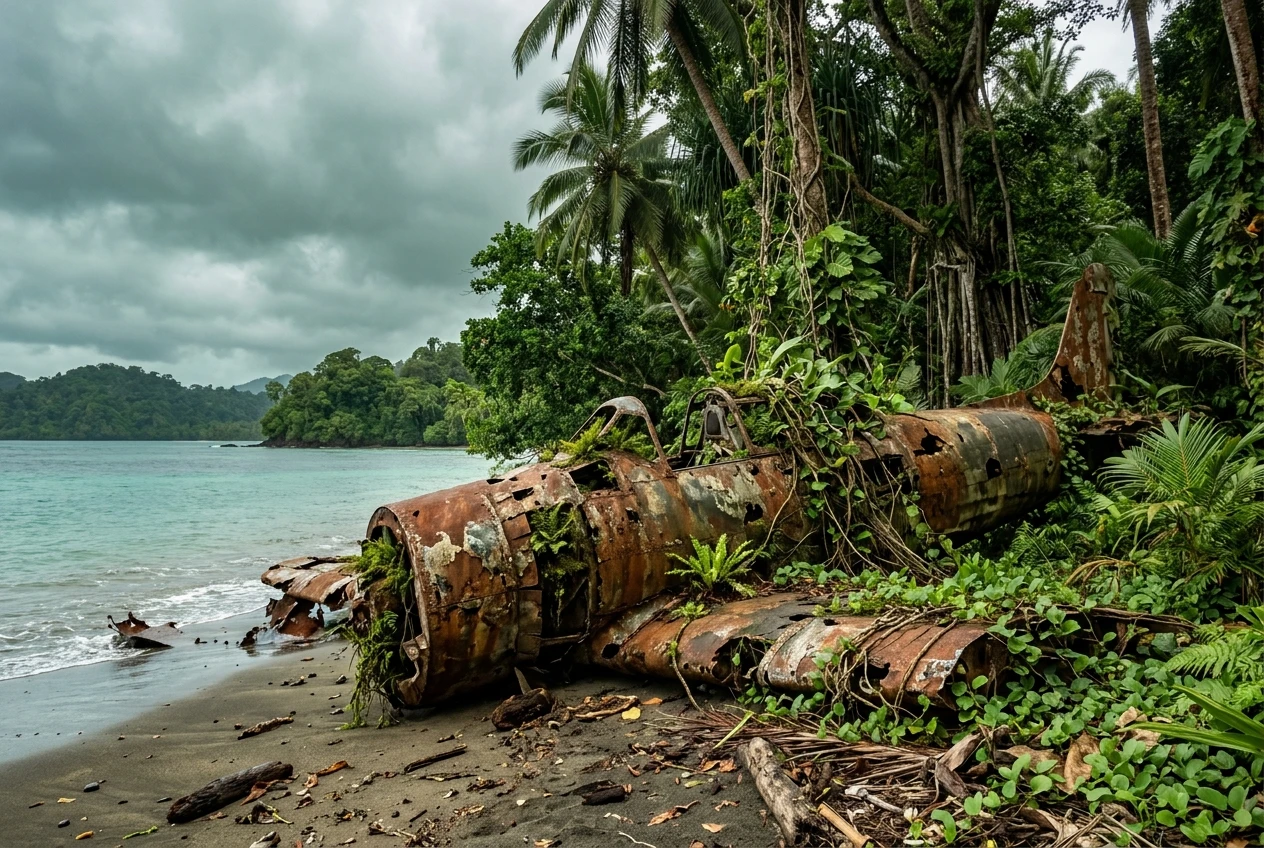
The New Guinea campaign of 1942 to 1945 was one of the major military campaigns between Japan and the Allies. About 216,000 Japanese, Australian and U.S. servicemen died. After the war the two territories were combined as the Territory of Papua and New Guinea, which is the origin of the name Papua New Guinea.
PNG became independent from Australia on 16 September 1975, after nearly 60 years of Australian administration that began during the First World War. It became a Commonwealth realm, sharing its head of state with the United Kingdom and other realms, and a member of the Commonwealth of Nations in its own right. It joined the United Nations on 10 October 1975. Australia has remained close to PNG since independence and has continued to be its largest aid donor.
Bougainville: mining, conflict and a referendum
Bougainville was the center of one of the most serious crises in the country’s modern history. A secessionist revolt in 1975 and 1976 led to a last-minute change to the draft Constitution, giving Bougainville and the other eighteen districts quasi-federal status as provinces.
A renewed uprising began in 1988 and claimed about 20,000 lives before it was resolved in 1997. Bougainville was then the country’s main mining region and generated about 40% of the national budget. Local people said they bore the environmental damage, because mining contaminated their land, water and air, while they did not receive a fair share of the profits. For more on how mining affects the country today, see how mining shapes PNG: the mines, the money and the rules.
The peace agreement created the Bougainville Autonomous District and Province. Joseph Kabui was elected president in 2005 and served until his death in 2008. James Tanis won the election to fill the remaining term in December 2008, and John Momis won the 2010 election.
As part of the peace settlement, a non-binding independence referendum ran from 23 November to 7 December 2019. Voters chose between greater autonomy within PNG and full independence, and 98.31% voted for independence.
How Papua New Guinea is governed
PNG is a Commonwealth realm with a parliamentary system. The monarch is represented by a governor-general. PNG and Solomon Islands are unusual among Commonwealth realms because the legislature elects the governor-general, rather than the executive choosing one. The drafters of the Constitution and Australia had expected PNG to become a republic, but the founders chose to keep the monarchy.
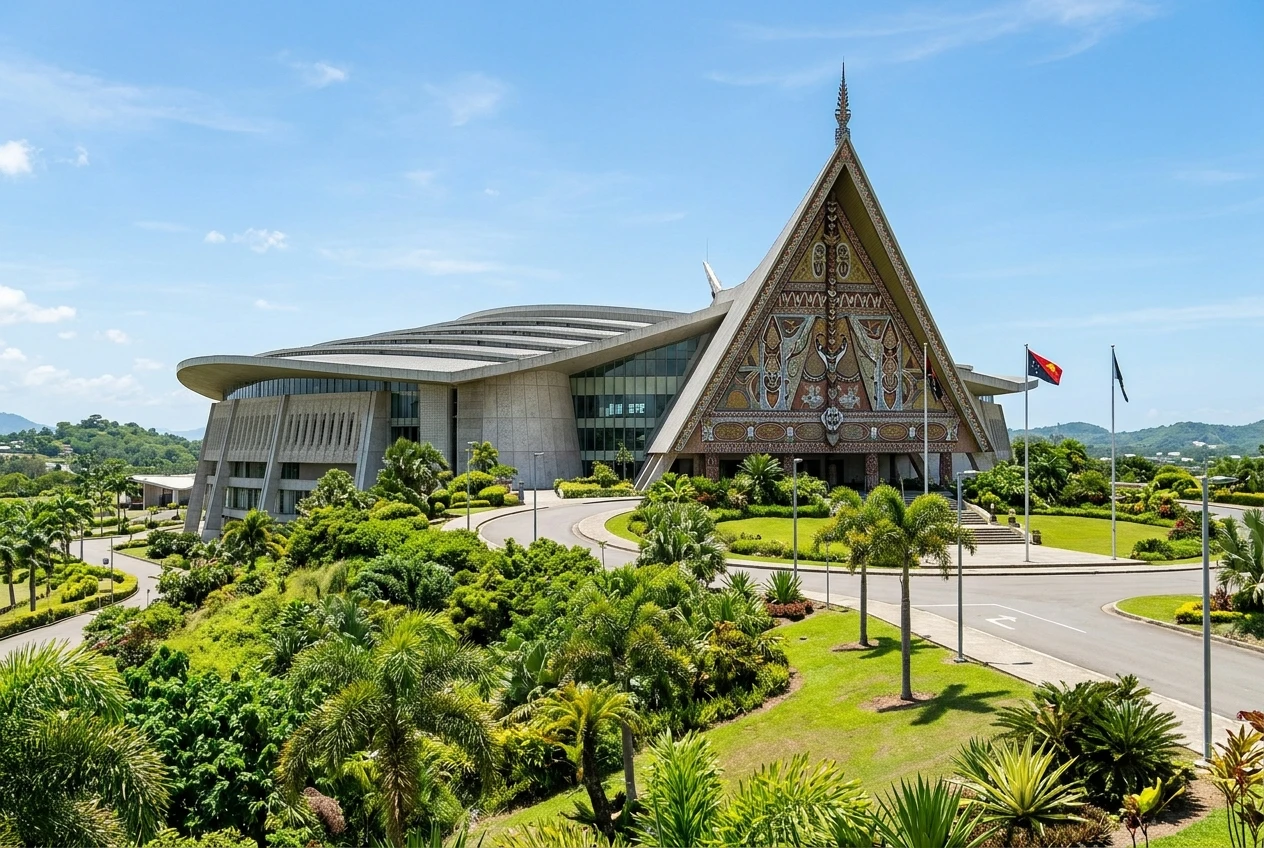
The prime minister heads a cabinet of members of Parliament drawn from the ruling coalition. The National Parliament has a single chamber with 111 seats. Twenty-two of those seats are held by the governors of the 22 provinces, including the National Capital District. An election must be held within five years of the previous one.
Voting rules have changed over time. After independence, members were elected by the first-past-the-post system, and winners often took less than 15% of the vote. Electoral reforms in 2001 introduced the Limited Preferential Vote (LPV), a version of the alternative vote, and the 2007 general election was the first to use it. Under a 2002 amendment, the governor-general invites the leader of the party with the most seats to form a government, provided that leader can win a majority in Parliament. Because parties are not strongly divided by ideology, forming a coalition usually involves hard bargaining until the last moment.
In the early years of independence, votes of no confidence were frequent and governments changed often. Later governments passed laws that prevent such votes within 18 months after an election and within 12 months before the next one. This has arguably brought more stability, though perhaps at the cost of some accountability of the executive.
The political clash of 2011 and 2012 tested the system. Peter O’Neill had been voted prime minister by a large majority of MPs, while the Supreme Court held that Sir Michael Somare remained in office. The standoff lasted until the July 2012 national elections, and the elections went ahead on time. In May 2019 O’Neill resigned and Parliament voted James Marape into office. Anyone looking for the current holders of these offices should check a recent, reliable news source, since they change.
Law and the courts
Parliament passes laws in the Westminster manner. The cabinet agrees on policy, and the relevant minister introduces a bill, though backbenchers can also introduce bills. A bill becomes law when the Speaker certifies that Parliament has passed it under section 110.1 of the Constitution. There is no royal assent.
Every ordinary statute must be consistent with the Constitution, and the courts can rule on whether it is. The judiciary has stayed remarkably independent for a developing country, and successive governments have respected its authority.
The “underlying law” is PNG’s own common law. It consists of the English common law and equity as they stood on 16 September 1975, plus the decisions of PNG’s own courts since then. The Constitution and the Underlying Law Act direct the courts to take account of the “custom” of traditional communities and to decide which customs apply across the whole country. In practice this has proved difficult and has been largely neglected. Most statutes are adapted from Australia and England.
Town and city courts are supported by a village court system in more remote areas, and village courts apply customary law.
PNG in the region and the world
PNG belongs to the Commonwealth of Nations, the Pacific Community, the Pacific Islands Forum and the Melanesian Spearhead Group. It is also a member of APEC and, as an ACP country, is associated with the European Union. It became an observer in ASEAN in 1976 and received special observer status in 1981, and it has applied for full membership.
Communities that shape modern PNG
PNG’s population includes many communities beyond its customary groups. Chinese people have lived and worked in the country and built Chinese-majority communities. In May 2009, anti-Chinese rioting involving tens of thousands of people broke out. It began with a fight between ethnic Chinese and local workers at a nickel factory under construction by a Chinese company. Local resentment of Chinese ownership of many small businesses fed the unrest.
There is also a community of Africans who live and work in PNG, and the country is part of the African, Caribbean and Pacific (ACP) forum.
Where to go next
PNG’s festivals offer a good view of its cultural variety, and these cultural festivals are a place to start. If you are planning a visit, essential travel tips before you visit Papua New Guinea covers the practical side.

