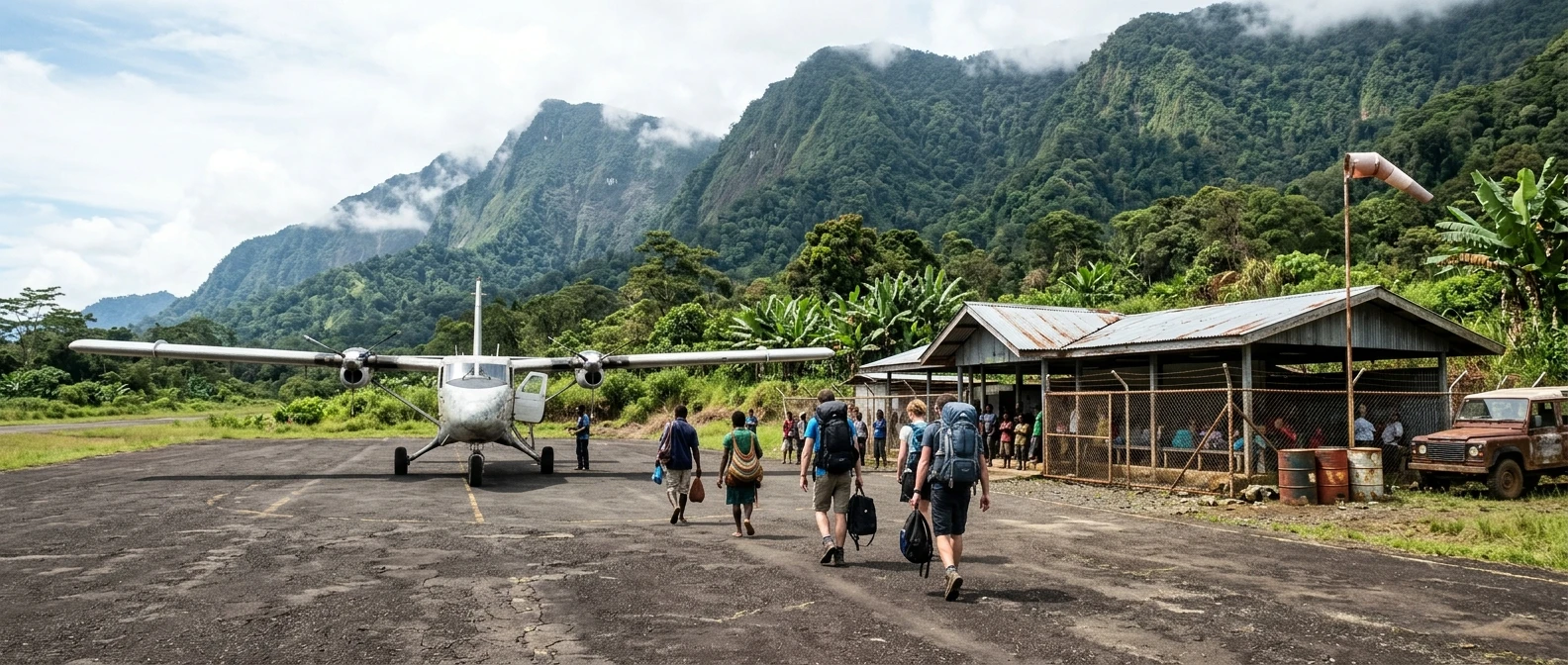
Papua New Guinea rewards visitors who come prepared. The country combines some of the world’s most dramatic scenery and cultural diversity with infrastructure, health, and logistics realities that catch many first-time travelers off guard. Before you look at beaches or birdwatching routes, it helps to sort out the practical groundwork: entry requirements, money, transport, health precautions, and a realistic sense of what daily life on the ground involves. This guide focuses on that groundwork, covering the essentials you need to plan responsibly for a trip to PNG.
Do You Need a Visa to Visit Papua New Guinea?
Most international visitors need a visa to enter Papua New Guinea, and requirements vary by nationality and purpose of travel. Citizens of a number of countries can apply for a visa on arrival at Jacksons International Airport in Port Moresby for short tourist stays, while others need to apply in advance through a PNG diplomatic mission or the online e-visa system.
Visa rules change, and processing times depend on your nationality and the time of year, so check directly with the PNG Immigration and Citizenship Authority or your nearest PNG embassy or consulate well before you book flights. Confirm the exact documents required, including passport validity (most entry rules require at least six months remaining), proof of onward travel, and sometimes evidence of accommodation. Apply with enough lead time that a delay or request for extra paperwork does not threaten your travel dates.
Money, Costs and Paying for Things in PNG
The currency is the Papua New Guinea kina (PGK). Carrying a mix of cash and cards is the practical approach: card acceptance is reasonably common in hotels, airlines, and larger shops in Port Moresby, Lae, and other urban centers, but it drops off quickly once you move into smaller towns and rural areas, where cash is often the only option.
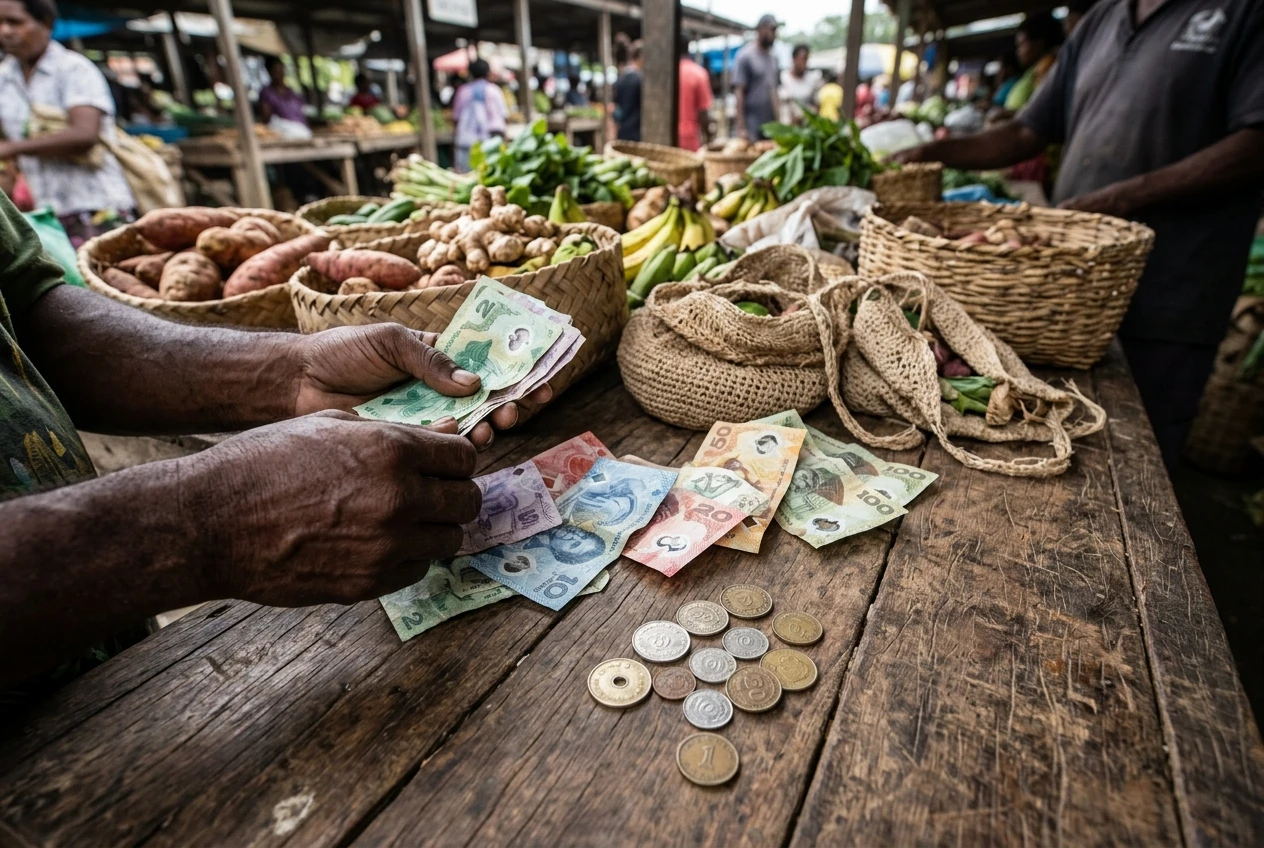
ATMs exist in major towns but are not guaranteed to work reliably, and they are scarce or absent outside urban centers. Withdraw kina in the towns where you land rather than assuming you will find a machine later. Notify your bank of your travel dates beforehand, since international card flags can lock an account at an inconvenient moment.
Exchange your money at banks or authorized foreign exchange counters rather than informal sources, and keep some smaller denomination notes on hand for markets, local transport, and village stays where change can be limited. Budget for the fact that imported goods, flights between provinces, and tourist-oriented accommodation in PNG tend to be more expensive than visitors from Southeast Asia or the Pacific often expect.
Getting Around: Flights, PMVs and Road Conditions
Papua New Guinea’s terrain, mountains, dense forest, and scattered islands, makes road travel between regions slow or impossible in many cases, which is why domestic flights are the backbone of long-distance travel for visitors. Air Niugini and PNG Air operate the main domestic routes, connecting Port Moresby to the Highlands, Momase, and the islands region. Book domestic flights ahead of time, since schedules can be limited and seats fill up, and build buffer days into any itinerary that depends on connecting flights, since weather and operational delays are common.

Public Motor Vehicles, known locally as PMVs, are the main form of local transport in towns and between nearby communities. They are inexpensive and a genuine way to see how people get around day to day, but they run on informal schedules, can be crowded, and are not the most comfortable or fastest option for visitors unfamiliar with the routes. Road conditions outside major towns range from adequate to very rough, and many rural roads are unsealed and affected by weather, so journeys that look short on a map can take much longer than expected.
For visitors without local experience, arranging transport through a reputable tour operator, hotel, or trusted local contact is a more reliable way to move between destinations than relying on independent PMV travel, particularly outside Port Moresby.
Staying Healthy: Vaccinations, Malaria and Water Safety
Speak with a travel health clinic or doctor well in advance of your trip, since recommended vaccinations for Papua New Guinea typically include hepatitis A and B, typhoid, and routine immunizations, with additional vaccines sometimes advised depending on your itinerary and length of stay. Requirements and recommendations change, so a clinic that specializes in travel medicine will give you guidance based on current advice rather than general assumptions.
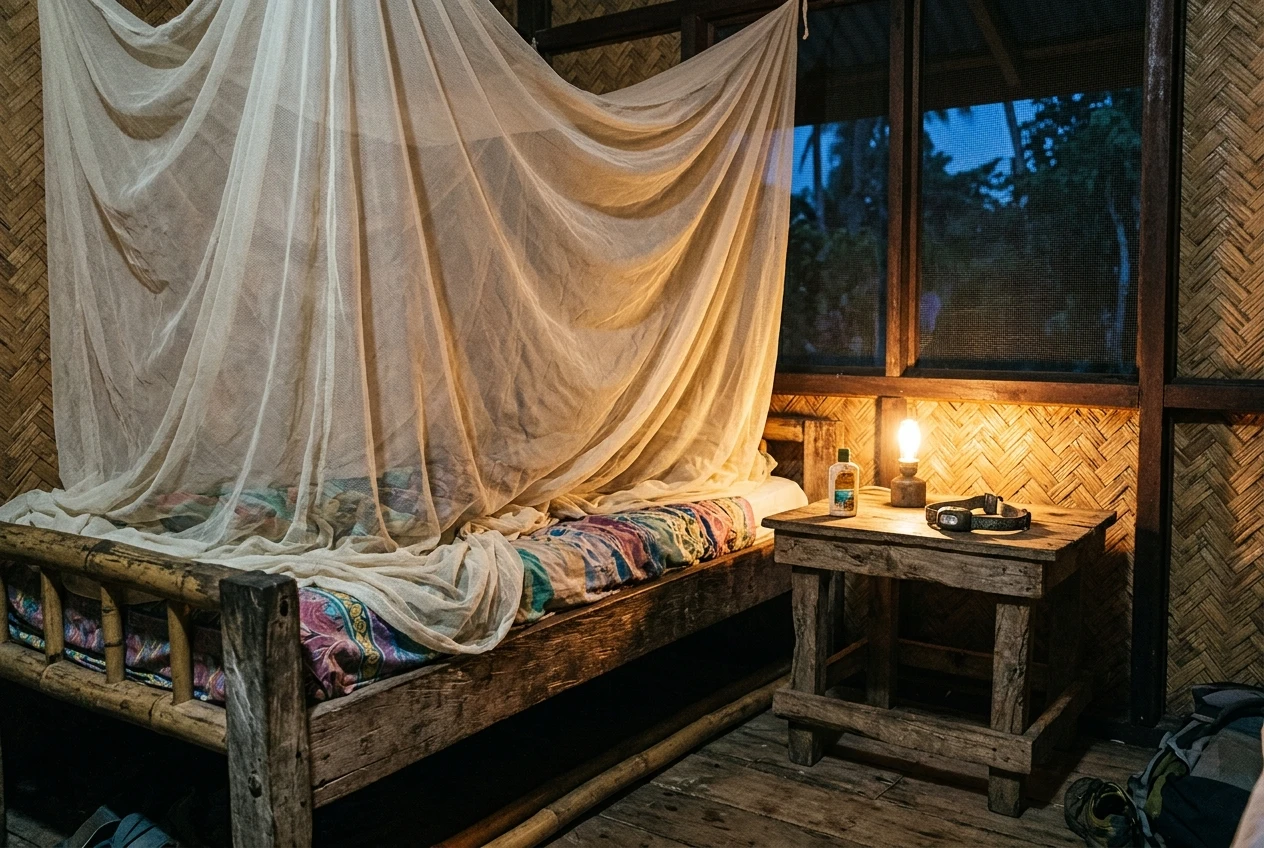
Malaria is present across much of Papua New Guinea, including lowland and coastal areas, and antimalarial medication is commonly recommended for visitors. Discuss the right option for your trip with a doctor, since the choice depends on the areas you plan to visit and your own medical history. Mosquito protection matters as much as medication: cover up in the evenings, use repellent, and sleep under a net or in a screened room where mosquitoes are a concern.
Tap water is not reliably safe to drink in most of the country. Stick to bottled or properly treated water, including for brushing your teeth, and be cautious with ice in drinks outside established hotels and restaurants. Travel insurance that covers medical evacuation is worth taking seriously given the distances involved and the limited medical facilities outside Port Moresby and a handful of larger towns.
Mobile Networks, Internet Access and Staying Connected
Digicel and Telikom PNG are the main mobile network providers, and coverage is solid in Port Moresby and other urban centers but thins out considerably in rural and remote areas. A local SIM card is straightforward to buy on arrival and worth getting if you plan to use data, arrange transport, or stay in touch with accommodation and tour operators during your trip.
As with any SIM registration process, bring your passport, since registration requirements apply when buying a local SIM in PNG. The country has also been moving its SIM card system toward linking with the national SevisPass digital identity, part of a wider effort to tighten SIM card registration rules, so check current requirements with your provider when you buy a SIM.
Internet speeds in Port Moresby and other towns are workable for messaging and basic browsing but can be slow and inconsistent by international standards, and connectivity in rural areas and outer islands is often minimal or absent. If you need to stay reachable for work or emergencies, do not assume you will have reliable internet once you leave the main towns, and let people at home know that gaps in contact are normal rather than a sign something has gone wrong.
Safety Precautions in Port Moresby and Rural Areas
Port Moresby has a reputation for crime that visitors should take seriously without letting it dominate trip planning. Avoid walking alone at night, keep valuables out of sight, use trusted transport arranged through your hotel rather than hailing vehicles on the street, and ask locally about which areas are fine to walk around and which are better avoided.
Many government travel advisories recommend heightened caution in Port Moresby and some other urban areas, and it is worth checking your own government’s current travel advisory for Papua New Guinea before you go, since conditions and guidance are updated periodically.
Rural and village areas generally present a different picture, with visitors often finding genuine hospitality and lower crime risk than in the capital, though isolation brings its own safety considerations: medical help can be hours or days away, and local knowledge matters more than it would in a city. Traveling with a local guide, tour operator, or host who knows the area is the most effective safety measure available to a first-time visitor in both urban and rural settings.
Packing for PNG’s Climate and Cultural Norms
Papua New Guinea’s climate is tropical, hot and humid in lowland and coastal areas year-round, with cooler temperatures in the Highlands, particularly at night, so pack layers if your itinerary includes a trip to higher altitude areas like Mount Hagen or Goroka. Lightweight, breathable clothing works for most of the country, along with a rain jacket, since humidity and rainfall are consistent features of the climate in many regions.
Dress modestly in villages and rural communities: covering shoulders and knees is a sensible default for both men and women, and swimwear is appropriate at beaches and resorts but not elsewhere. Sturdy, closed shoes are worth packing if you plan any walking on uneven ground, and a basic first aid kit, sunscreen, insect repellent, and any personal medication you need are worth bringing since they are not always easy to find outside major towns.
Respecting Local Customs and Asking Permission on Customary Land
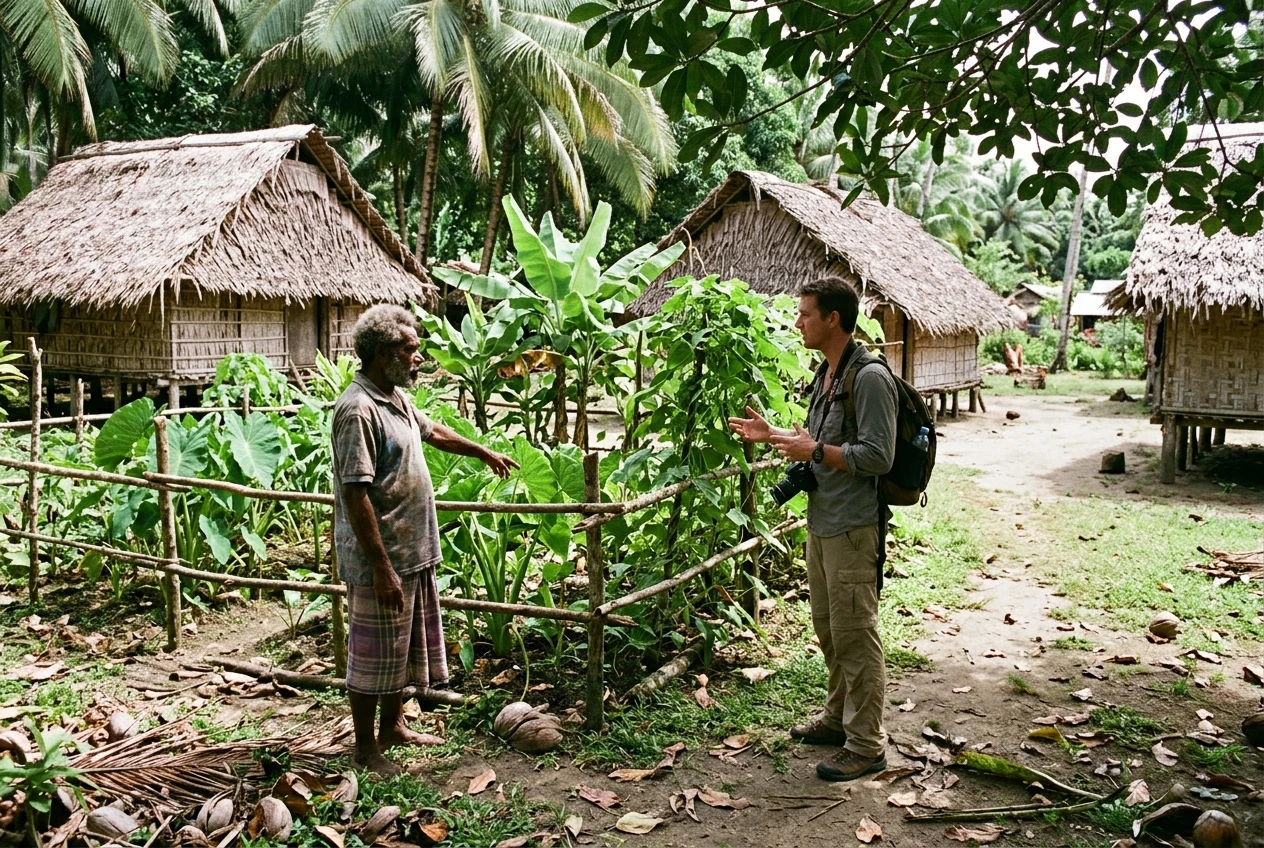
Most land in Papua New Guinea is customary land, owned and managed by local clans and communities rather than the state, and this shapes how visitors should approach almost every destination outside a formal hotel or resort. Asking permission before entering a village, taking photographs of people, or visiting a cultural or natural site is not a formality, it is the expected and respectful way to engage with land that belongs to someone.
Papua New Guinea is home to hundreds of distinct languages and cultural traditions, and customs vary significantly between regions, so what is appropriate in one community may not be in another. A local guide or community contact can help you understand expectations around dress, behavior, photography, and any fees or courtesies associated with visiting a particular area, and that guidance is worth seeking out before you arrive rather than figuring it out on the spot.
Showing genuine interest, asking rather than assuming, and accepting that some areas or ceremonies are not open to outside visitors will do more for a good experience than any amount of pre-trip research into etiquette rules.
If you are planning a trip to Papua New Guinea, send in your questions or share your own travel experiences. Your questions and stories may be featured in future PAPUANIUGINI.ORG travel guides, helping other visitors prepare for the trip with information drawn from people who have actually made it.