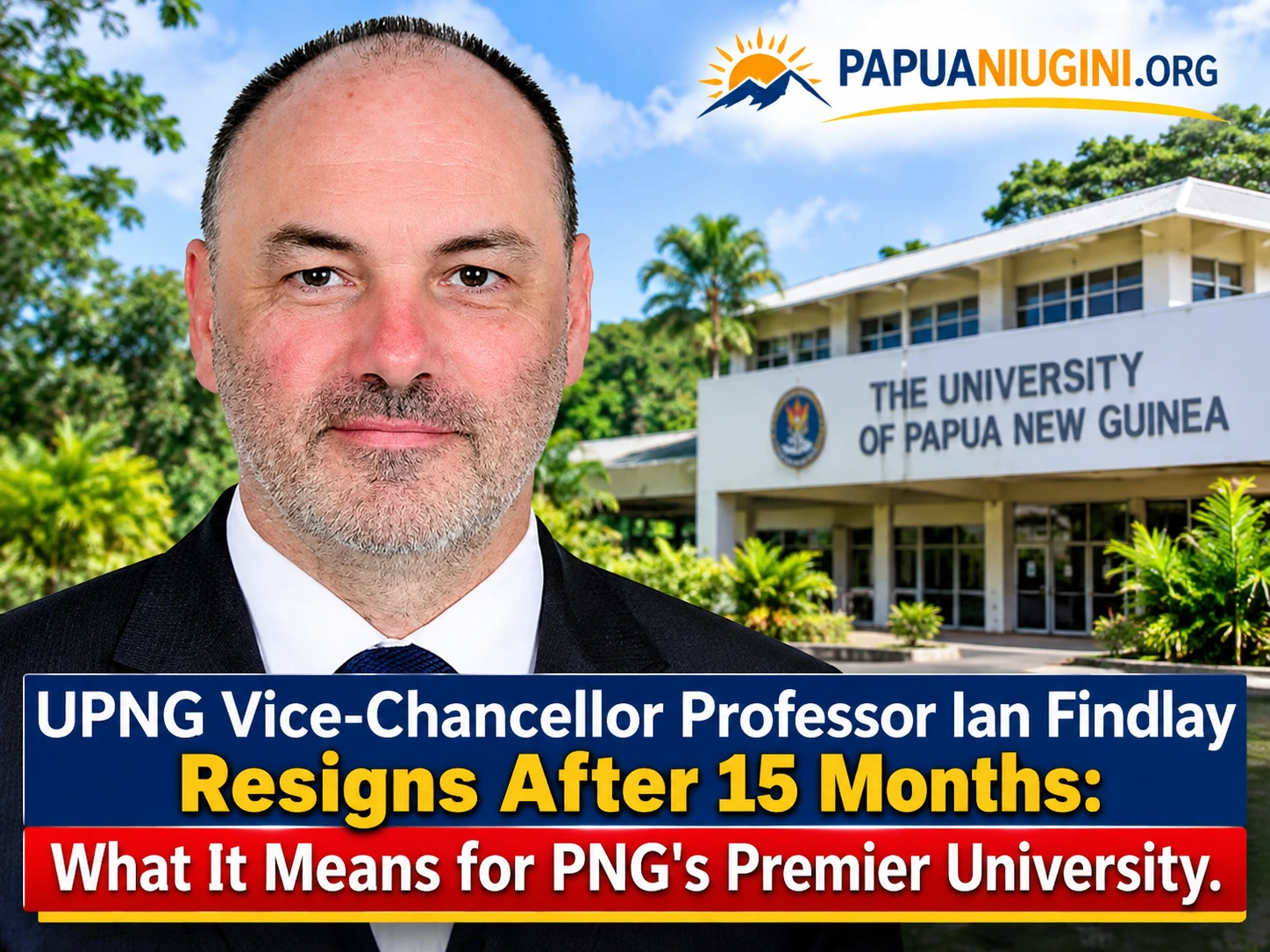
The University of Papua New Guinea (UPNG) has no substantive Vice-Chancellor again. UPNG Vice-Chancellor Professor Ian Findlay resigned after 15 months of a six-year appointment, with immediate effect on Monday, 2 November 2026. His resignation letter points to a breakdown in his working relationship with the university’s Chancellor, Sir Robert Igara.
Within hours, Prime Minister James Marape issued a public statement calling on the Chancellor to step aside as well. A leadership change at the country’s oldest and largest university has become a national question about how it is governed.
What Happened
Professor Findlay’s resignation letter is dated 2 November 2026. According to the Prime Minister’s statement and reports by The National, EMTV and The PNG Sun, the letter gave these reasons:
- Alleged bullying and disrespect. Professor Findlay described persistent bullying, belittling and disrespect, which he attributed to the Chancellor.
- Governance differences. He cited irreconcilable differences with Sir Robert over how the university should be governed.
- Personal safety. He reported threats to his personal safety.
- Conduct at a council meeting. He said the relationship had deteriorated over time, ending in what he described as unacceptable conduct at a Special Council Meeting on 28 October 2026.
He wrote that, under the existing arrangements, he saw no viable basis to continue in the role.
These are Professor Findlay’s account and allegations as relayed publicly. Sir Robert Igara told NBC News he would issue an official statement after a council meeting on Tuesday, 3 November. At the time of writing, Papuaniugini.org had not seen that statement, and this article will be updated when the Chancellor’s response is published.
The Prime Minister’s Response
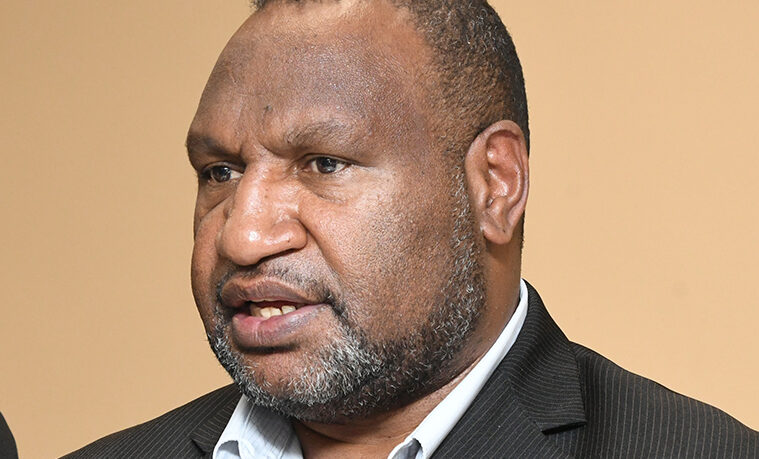
Prime Minister Marape described the circumstances of the resignation as deeply disturbing and a serious setback for the university. He called on Sir Robert to “do the honourable thing and resign.”
He said he made the call reluctantly. He acknowledged Sir Robert as a distinguished Papua New Guinean who has served the nation for decades, including as a former Chief Secretary to Government and as a diplomat. He also said the Government would examine UPNG’s governance arrangements, including the University Council and the administration, with a view to reforms carried out in accordance with the law.
He stressed that the Council, Chancellor, Vice-Chancellor and management each need to understand and respect their separate roles, adding that “UPNG belongs to the people of Papua New Guinea.”
Professor Findlay’s Tenure at a Glance
Appointment. The UPNG Council unanimously resolved to offer Professor Findlay the position at a Special Council Meeting on 22 May 2025, after he was ranked first of three shortlisted candidates. He took office on 1 August 2025 as the university’s 13th Vice-Chancellor since its founding in 1965. The appointment was made under Section 28(1) of the University of Papua New Guinea Act 1983. The role carries the duties of Chief Executive Officer of the university and Chair of the Academic Senate.
Background. Scottish-born and a British-Australian citizen, Professor Findlay holds a Bachelor of Science from the University of Glasgow and a doctorate from the University of Leeds in the genetic diagnosis of single cells. He received the Australian Medical Association’s Bancroft Medal in 2005 and has more than 50 research publications. Before UPNG, he served from 2018 as President and Vice-Chancellor of the University of Puthisastra in Cambodia, and earlier held senior roles in health education.
Reported achievements. In his resignation letter, Professor Findlay listed financial reforms, stronger academic governance, improved audit compliance, new international university partnerships, expanded internet capacity and the development of new academic programmes. The Prime Minister cited a July 2026 post-audit report by the Department of Higher Education, Research, Science and Technology (DHERST) that recognised substantial improvements at UPNG. He also cited an independent 12-month performance review that rated Professor Findlay as exceeding expectations. Papuaniugini.org has not independently reviewed these documents.
Predecessors. Professor Findlay succeeded Professor Cecilia Nembou, who served as Acting Vice-Chancellor for about 17 months from 1 March 2024, after Professor Frank Griffin resigned in February 2024.
Who Appoints the Next Vice-Chancellor?
It is often said that “the Government” will find a replacement. Under the law, the Vice-Chancellor is appointed by the UPNG Council under Section 28(1) of the UPNG Act 1983. The Government’s influence comes through policy, funding, DHERST oversight and, at times, direct intervention.
That intervention has precedent. In early 2019, the then Higher Education Minister dissolved the UPNG Council, appointed an interim council and installed his own choice of Vice-Chancellor. This caused a crisis on campus before Cabinet resolved the matter. The Prime Minister’s announced review of UPNG’s governance will be watched for how it balances the need for reform with the university’s legal independence.
In the short term, past practice suggests the Council will appoint an Acting Vice-Chancellor while a formal search is carried out. As of this writing, no acting appointment had been publicly confirmed.
The Recruitment Challenge
Finding the right Vice-Chancellor is difficult. The role requires senior academic standing, usually a doctorate and professorial rank, together with proven executive experience in finance, people management, stakeholder relations and institutional reform.
UPNG’s last search shows the scale of the task. The university engaged a PNG recruitment firm, Vanguard International, to search locally and internationally. According to the university, it received 39 applications, of which five came from PNG citizens. That points to a small pool of Papua New Guinean applicants at this level.
The record does not support the claim that Papua New Guinea has no one capable of leading a university. Papua New Guineans have led and acted in UPNG’s top job before. Professor Cecilia Nembou, a former President of Divine Word University, led UPNG for 17 months and oversaw two graduations. Comprehensive public data on how many PNG nationals hold professorial rank is limited, so conclusions about the size of the domestic talent pool should be treated with caution.
The better-supported concerns are the depth of the leadership pipeline and the stability of the environment a new Vice-Chancellor takes over. Leadership turnover has recurred in PNG’s universities. In 2018, the Vice-Chancellor of the University of Natural Resources and Environment left his post after threats of legal action, and the Vice-Chancellor of the PNG University of Technology was arrested shortly after resigning. More recently, Dr Teng Waninga resigned as University of Goroka vice-chancellor after six years. Frequent disputes at the top make the position harder to fill, whether candidates come from home or abroad.
Why This Matters for Students, Staff and the Nation
UPNG, established in 1965, enrols around 15,000 students across its Waigani main campus and the Taurama medical campus. It hosts the country’s only law school and has trained many of the nation’s political leaders, public servants, doctors and professionals. Instability at its head affects more than one institution.
For students: day-to-day teaching and assessment are run by faculties, schools and the registry, so classes and examinations should continue. The larger risk is to long-term commitments such as new programmes, infrastructure upgrades and partnerships, which depend on steady leadership.
For staff: a vacancy at the top can slow decisions on recruitment, promotions, research funding and conditions of service.
For the nation: a credible, well-run national university is central to producing the skilled workforce PNG needs. How this dispute is handled will shape public and donor confidence in the higher education sector.
What to Watch Next
- The Chancellor’s response: Sir Robert Igara’s official statement and whether he remains in office.
- An acting appointment: who the Council names as Acting Vice-Chancellor, and how quickly.
- The Government’s governance review: its scope, its timeline and whether it proposes changes to the UPNG Act or the Council structure.
- The recruitment process: whether the next search is open, transparent and merit-based.
- Campus voices: responses from the Student Representative Council and the National Academic Staff Association.
Professor Findlay’s serious claims have not yet been answered publicly by the Chancellor, and both sides deserve to be heard before final judgments are made. Two questions will decide what comes next for UPNG: whether the Council and management can agree on their separate roles, and whether the next search is fair and transparent enough to attract capable candidates, Papua New Guinean or international.
Papuaniugini.org will keep following this story and update readers as new facts are confirmed.
Sources
- PM Marape calls on UPNG Chancellor Sir Robert Igara to resign (PMNEC)
- UPNG heads clash (The National)
- PM Marape calls on UPNG Chancellor to resign (EMTV)
- PM Marape calls on UPNG Chancellor Sir Robert to resign over Vice-Chancellor’s exit (The PNG Sun)
- NBC PNG News
- New University Vice-Chancellor Appointed Effective Today (UPNG)
- Findlay is new UPNG vice-chancellor (The National)
- Nembou named as acting VC (The National)
- The University of Papua New Guinea in crisis (Devpolicy Blog)
- Papua New Guinea loses another Vice Chancellor (Devpolicy Blog)