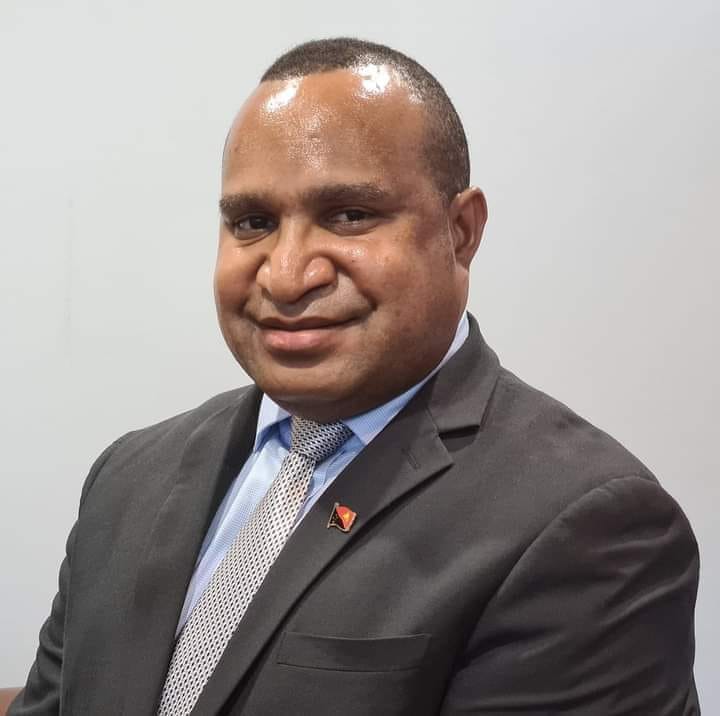
The University of Goroka (UOG) is entering a leadership transition after Vice-Chancellor Dr Teng Waninga resigned. According to The National, Dr Waninga has stepped down after six years in leadership to pursue other opportunities to serve Papua New Guinea. When a university vice-chancellor resigns, staff, students and parents want to know who is in charge next, and that matters more at an institution with UOG’s role in teacher education.
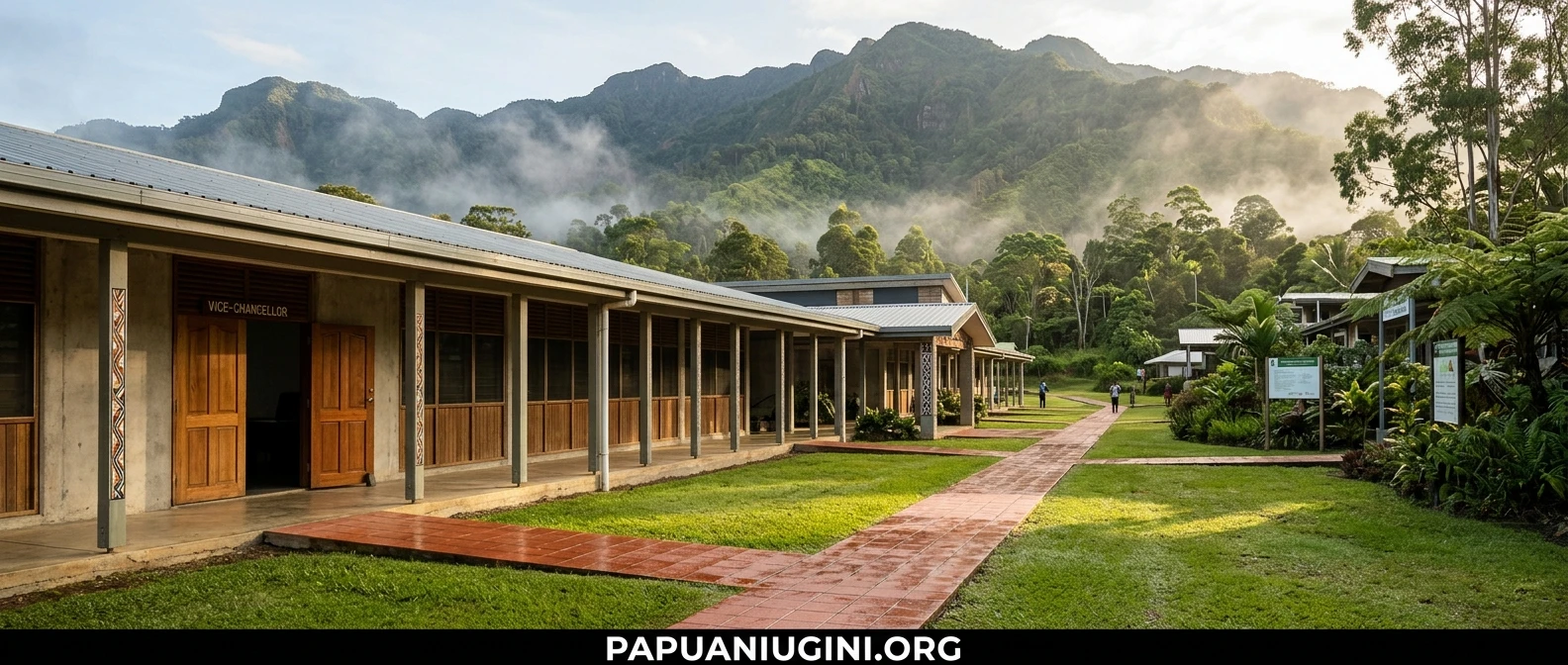
This article sets out what has been reported, what has not, and why the change matters beyond the Goroka campus.
“I am leaving a satisfied man”
In comments reported by The National, Dr Waninga described the move as the start of a new chapter:
“After serving UOG in its highest position I wanted to move on to a new chapter of my life, I am leaving a satisfied man confident to serve the country in other capacities,” he said.
He also thanked those who had supported and influenced his professional career.
What a vice-chancellor does and why the vacancy matters
At a public university in Papua New Guinea, the vice-chancellor is the chief executive and academic head. The University Council is the governing body and is responsible for appointing the person who fills the post. A vacancy at the top affects decisions on budgets, staffing, academic programmes and agreements with partner institutions.
For students, the effects are usually indirect but real: enrolment decisions, the academic calendar, and how quickly management responds to problems all depend on stable leadership. For staff, a transition raises questions about continuity in projects that were started under the outgoing vice-chancellor.
A leadership that began amid uncertainty
Dr Waninga’s time at the top of UOG began during one of the more contested periods in the university’s governance history.
Before becoming Vice-Chancellor, he held senior executive office. The National has previously reported him as a former Pro-Vice-Chancellor, Academic and Research.
In 2021, then Higher Education Minister Wesley Raminai appointed Joe Wemin as chancellor in place of Joseph Sukwianomb. He also named Dr Waninga acting vice-chancellor in place of Professor Musawe Sinebare, alongside a new interim council. The appointments were disputed in court. Following a court decision, Raminai said Dr Waninga could proceed in his role as acting vice-chancellor, and he urged staff, lecturers, students and parents to work with him. This account comes from The National‘s reporting on the court decision.
Leadership disputes were not new to the institution. In 2006, two individuals claimed the vice-chancellor’s post at the same time, according to RNZ. In 2015, then Vice-Chancellor Dr Gairo Onagi was suspended and the university’s governing council revoked following student protests, as recorded by Pacific Media Watch.
Against that history, the reported reason for this departure is different. The National describes it as Dr Waninga’s own decision to move on, and the report does not mention a dispute.
International partnerships during his tenure
One visible area of activity under Dr Waninga was international academic cooperation. In May 2025, a senior UOG delegation visited the University of New England (UNE) in Armidale, Australia, to formalise a partnership on academic cooperation and research. The visit included a ceremonial welcome and the signing of a memorandum of understanding, according to UNE.
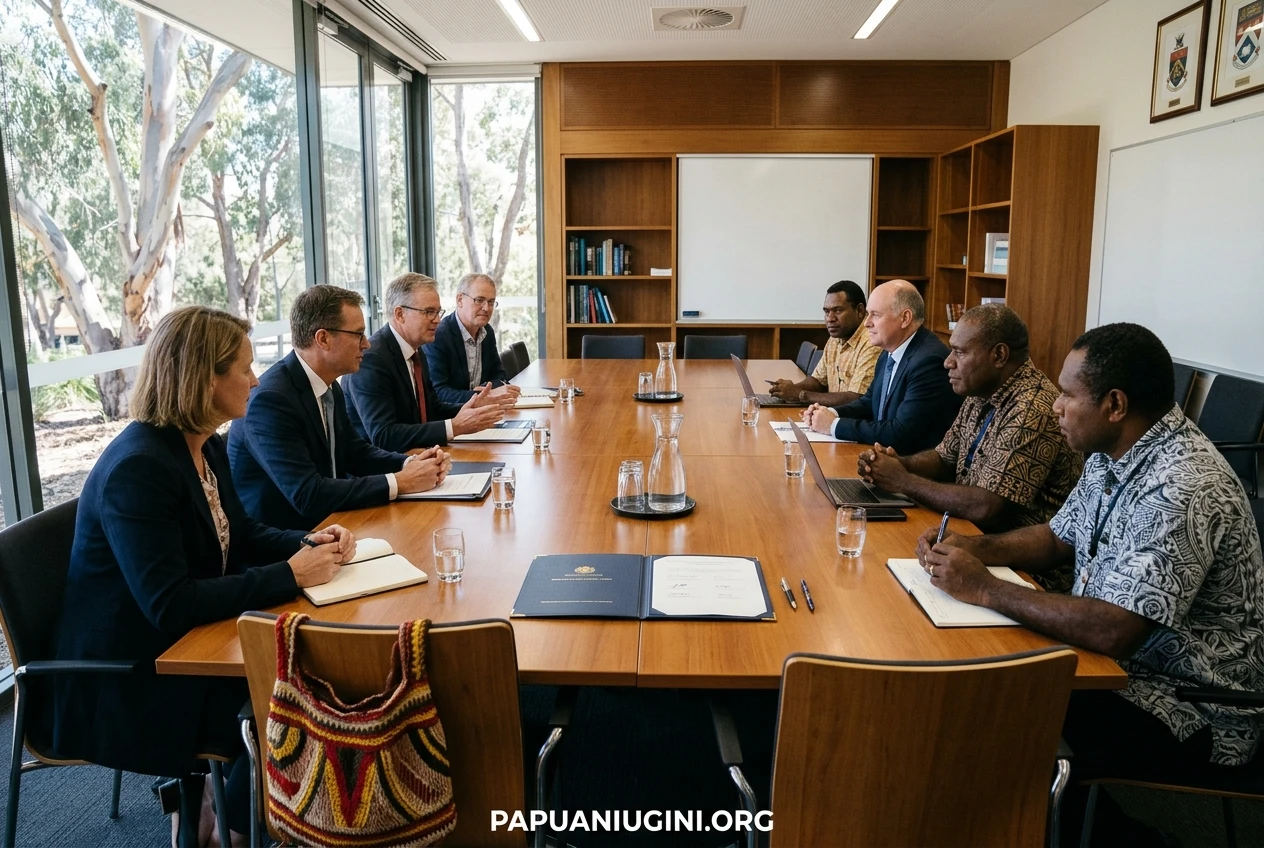
The link was also personal. UNE says Dr Waninga is one of its alumni and completed all of his higher education there, from undergraduate study through to his research degree.
A memorandum of understanding sets out the areas in which two institutions intend to cooperate. It is not by itself a funded programme, and what comes of it depends on follow-up work. Agreements of this kind can support staff exchanges, joint research projects and further study for PNG academics. Whether the UNE agreement produces those results will depend partly on how the next vice-chancellor and the council handle it.
Why UOG matters to Papua New Guinea
The University of Goroka has a distinct place in the country’s education system. It began in 1965 as a primary teachers’ college, and it took its present form in 1997 through the merger of the Goroka Teachers’ College and the University of Papua New Guinea’s Faculty of Education, according to Wikipedia and UNE.
UNE describes UOG today as PNG’s third-largest university and its leading institution for teacher education, with an enrolment of more than 5,700 students.
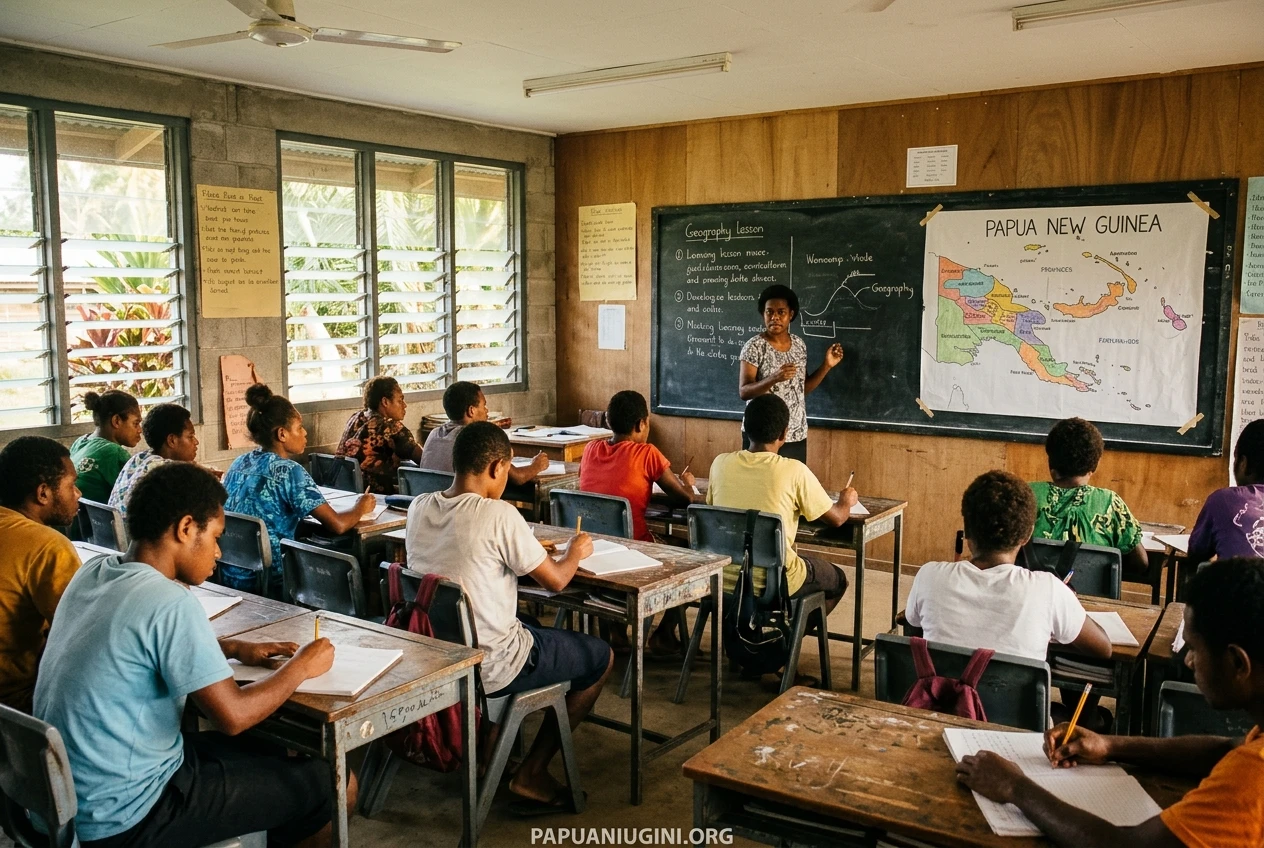
That is why the choice of its next leader draws attention outside Goroka. Teachers who qualify through teacher education programmes work in urban schools and in remote communities, where one teacher may carry several classes. Readers who want to understand that side of the profession can read our article on what it takes to teach in a remote PNG school. The stability of the institution that prepares those teachers bears on the quality of that workforce over time.
What comes next
With Dr Waninga’s departure, attention turns to the University Council and the process for appointing his successor. Key questions for staff, students and stakeholders include:
- Interim leadership: Who will act as Vice-Chancellor while a substantive appointment is made, and from what date?
- Recruitment process: Whether the council will run an open, merit-based search, and whether it will publish the selection criteria and timeline.
- Continuity: How existing programmes and partnerships, including the UNE agreement, will be carried forward.
- Communication: How the university will inform students and staff about any changes to academic or administrative arrangements during the transition.
Given UOG’s history of contested leadership changes, a transparent and orderly succession process would help maintain confidence among students, parents, staff and development partners. Announcements from the council and the university administration are the sources to rely on for confirmed information.
Summary of what is confirmed
The National reports that Dr Teng Waninga has resigned from the University of Goroka after six years in its top leadership. He describes himself as satisfied with his service and ready to contribute to Papua New Guinea in other capacities.
The effective date, the interim arrangements and his next role have not been reported. His tenure began with a court-tested appointment in 2021 and included the 2025 agreement with the University of New England.
PAPUANIUGINI.ORG will follow the story and report when the University of Goroka announces its interim and permanent leadership arrangements.
Sources
- The National, report on Dr Waninga’s resignation
- The National, “Court in favour with Raminai’s uni appointments” (https://www.thenational.com.pg/court-in-favour-with-raminais-uni-appointments/)
- The National, “Court orders former university staff to remain on property” (https://www.thenational.com.pg/court-orders-former-university-staff-to-remain-on-property/)
- UNE, “UNE and University of Goroka sign MOU” (https://blog.une.edu.au/une-international/2025/05/27/une-and-university-of-goroka-sign-mou-to-strengthen-academic-collaboration)
- RNZ, “Staff trouble continues at University of Goroka” (2006) (https://amp.rnz.co.nz/article/7ec03750-b9ac-4d12-bbcc-73275c06f84f)
- Pacific Media Watch, “Goroka VC suspended” (2015) (https://pmcarchive.aut.ac.nz/node/3729.html)
- Wikipedia, “University of Goroka” (https://en.wikipedia.org/wiki/University_of_Goroka)