

How to transport goods in rural Papua New Guinea: Getting a bag of coffee, a box of fish or a carton of store stock out of a village is rarely a single journey. It is a chain of short ones: a carry to the roadside, a seat on a truck, a wait at a wharf, a place on a small plane. Knowing how to transport goods in rural Papua New Guinea means deciding, for each product, which of those links you will use, what each costs, and what can go wrong at each one.
This guide is for farmers, fishers, craft makers, store owners and community groups who sell beyond their village. It does not assume reliable internet, electricity or a vehicle of your own. It covers the first stretch out of the village. Parcel tracking and courier comparisons belong to separate guides.
Why the first mile costs more than the long haul in rural PNG
Once goods reach a town with a port or a main highway, they usually travel in bulk. Many bags share one truck or one container, so the cost of each bag is spread out. In the village, each seller has a small load, the road is slow, and vehicles wear out faster on rough surfaces. A driver or boat owner has to charge for fuel, repairs and the time spent waiting for a full load.
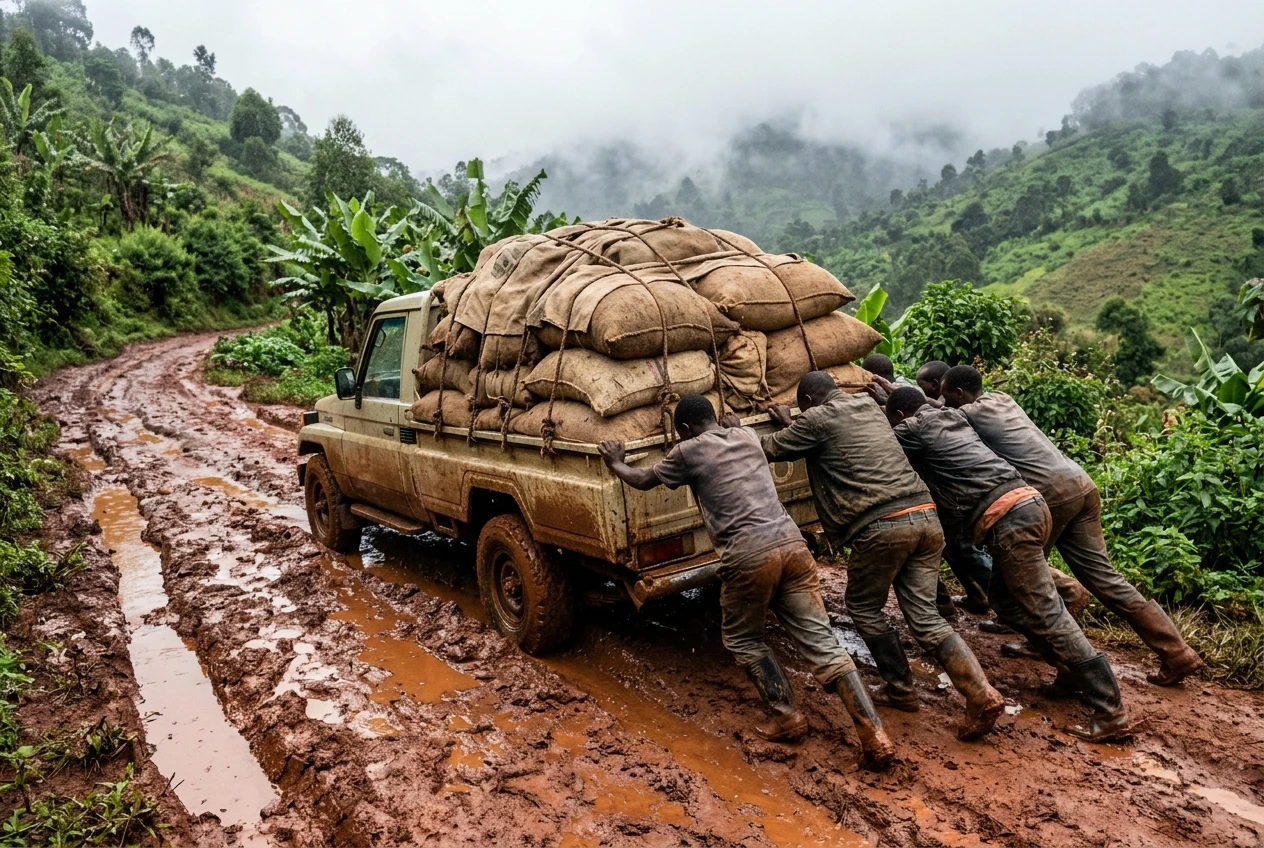
That is why a small seller can pay more per bag to move goods thirty kilometres than a trading company pays to move them hundreds. Small and scattered loads are expensive to collect. The sections below deal with that directly: choosing the right route for the product, joining loads with others, and timing each trip so you do not pay for waiting.
Start with your product: what spoils, what breaks, what can wait
Before you ask what a trip costs, ask what your goods can survive. Sort everything you sell into three groups.
- Spoils fast: fresh fish, leafy greens, soft fruit, cooked food. These lose value by the hour in tropical heat and need the shortest, most dependable route, or processing before they travel.
- Breaks or crushes: carvings, woven goods with delicate parts, glass bottles, eggs, store stock in cartons. These need padding and careful loading more than speed.
- Can wait: properly dried coffee, dried cocoa beans, cured vanilla, smoked fish, dry store goods. These can sit for days if they are kept dry, so you can choose the cheapest route and wait for a full load.
Processing changes which group a product belongs to. Dried beans can be stored and moved when the transport is ready, while the same crop sold fresh must move at once. Smoking or drying fish makes it far easier to carry than fresh fish, though you should ask your buyer what condition they will accept. Moisture is the main enemy of anything that can wait, because damp bags can mould in storage or on a truck, and a mouldy load may be rejected or priced down.
Write your list on paper and mark each product with its group. It will decide most of what follows.
Your four routes out: PMV and trucks, coastal boats, small aircraft, and walking and carrying
Most rural sellers use one or more of these four. Each suits different goods.
PMV and trucks
Where a road reaches your area, public motor vehicles and trucks are often the cheapest way to move goods in volume. Passengers and cargo usually share space, so a bulky load may be charged separately or be refused when the vehicle is full. Agree the price for your bags before loading, and ask where the vehicle will stop and unload.
Road trips fail for ordinary reasons: a washed-out section, a breakdown, a bridge repair, a driver who leaves only when the truck is full. Allow for a delay on every trip, and never send goods that spoil fast on a road you cannot rely on.
Coastal boats
Along the coast and between islands, boats carry cargo where there is no road at all. Small boats with outboard motors serve short runs, while larger vessels and ships serve longer ones. Sea travel can be cheap per bag but depends on weather, tides and the timetable of the owner, which may be irregular.
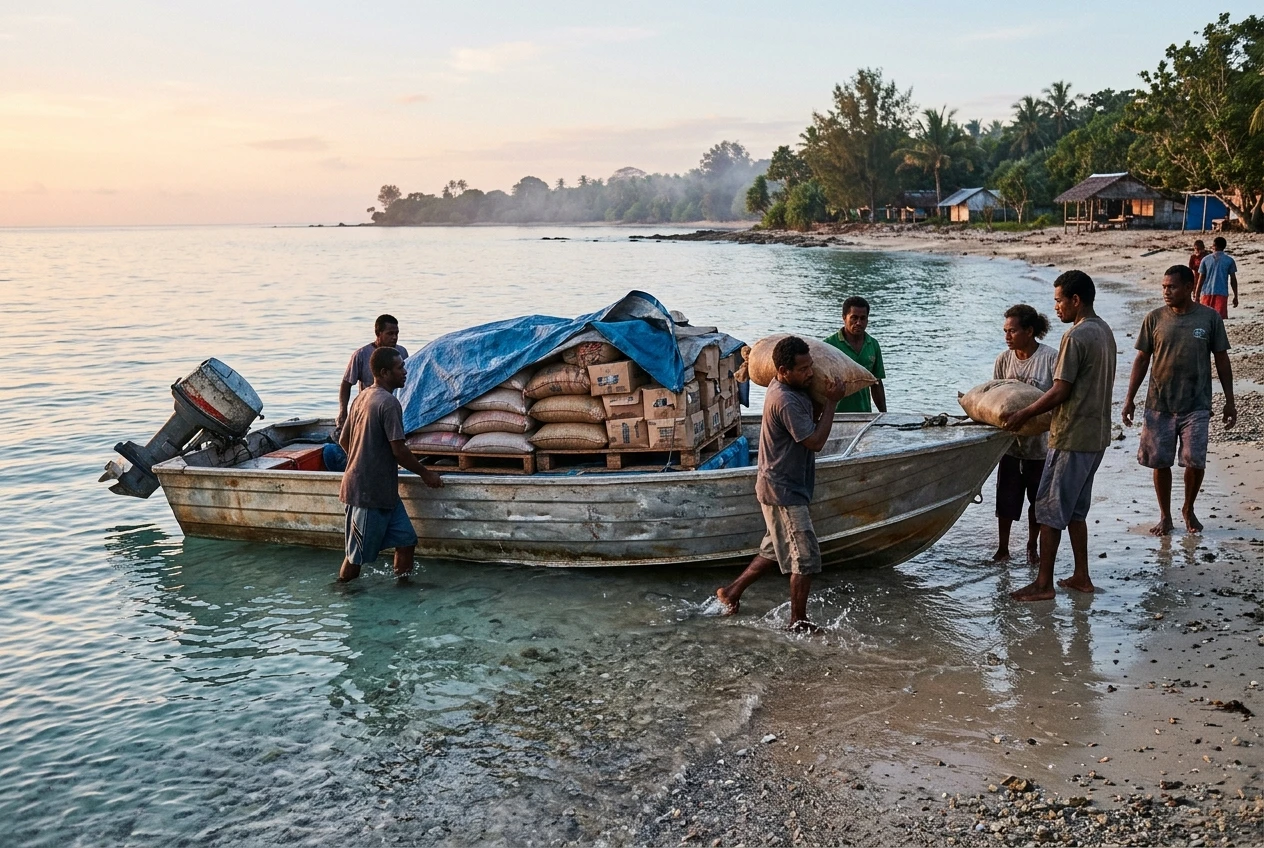
Goods on open boats need protection from spray and rain. Use waterproof covers, sealed bags and a raised surface so that bilge water does not reach your cargo. Ask whether the boat stops at a wharf or beaches near a landing, because that changes how the goods are unloaded and who carries them.
Small aircraft
Where the nearest road is a long way off, a small aircraft from the local airstrip may be the only dependable link. Air freight is generally the most expensive per kilogram and the strictest about weight, but it is fast and keeps fragile and perishable goods safe from long delays. It suits high-value, low-weight products such as cured vanilla or fine crafts, or a shipment of fresh goods that must arrive quickly.
Ask the operator or the airstrip agent for the weight limit, the rate per kilogram, how far ahead to book, and what happens if the flight is cancelled. Passengers and freight compete for the same limited space, and bookings can shift when weather or loading changes.
Walking and carrying
For many villages, the first part of every trip is on foot, by bicycle, wheelbarrow or with a bilum on the back. This is the route you control completely, so it is the one worth organising well. Carry goods in loads that one person can manage safely. Keep them wrapped against rain and river crossings, and choose the time of day with the least heat for produce.
If many sellers walk to the same roadside, a shared collection point where goods are weighed and counted can save every seller a separate trip.
Matching products to routes
Product Main concern Route to consider first Dried coffee, dried cocoa Keep dry, can wait Truck or boat in full loads Cured vanilla High value, light, theft risk Air, or a trusted buyer collecting Fresh produce Spoils in days Nearest road and the earliest vehicle Fresh fish Spoils in hours Direct sale, or process before travel Smoked or dried fish Moisture, crushing Boat or truck in sealed containers Crafts Breakage Padded cartons, air or a careful driver Store stock Volume, damage Truck or boat, shared with other stores
Treat the table as a starting point. Your local roads, boats and airstrips decide what is actually available to you.
Pool your loads: how groups, cooperatives and buyers cut the cost per bag
A truck, boat or aircraft costs roughly the same to run whether it is full or half full. A group that fills the vehicle splits that cost, so each person pays less per bag than a single seller would.
There are practical ways to do this without any formal structure.
- Agree a collection day. Everyone brings their goods to one point on a set day, and one person arranges transport for the whole group.
- Share one carrier. Negotiate a rate for the group instead of each seller bargaining separately. Carriers often give better terms for a guaranteed full load.
- Rotate the organiser. The person who handles the booking, counting and payment changes each trip, so the work and the trust are shared.
- Work with the buyer. Some buyers collect from the village or send their own vehicle when the volume is large enough. Ask what quantity makes a pickup worthwhile for them.
Keep a simple written record of who sent how many bags, and who paid what share of the transport. Disputes are common when the cost is divided from memory. Church groups, women’s groups and clan or community organisations often already have the trust and meeting routines needed to do this, so you may not need to create anything new.
Plan around seasons, tides and airstrip days, not around your wish date
The date you want to ship and the date you can ship are often different. Rain can close roads and rivers, tides can limit where a boat can land, and an airstrip can be too soft or wet for planes to use. Flights and boats may run only on certain days of the week.
Work backwards from your buyer’s deadline. If goods must reach town by a certain date, subtract the travel time, then add a buffer for a delay. For products that cannot wait, the buffer matters most. For dried goods, leave extra time and store them dry in the meantime.
Learn the pattern of your own area. Ask older drivers, boat owners and the people at the airstrip when the road is usually worst, which weeks the boat runs, and which days planes call. Write it down and share it, because this local knowledge rarely appears anywhere else. If you want a picture of how regions and provinces connect, the guide to every province on the Papua New Guinea map shows how far apart some of these places are.
Packing, labelling and proof of handover that protect you when things go wrong
Most losses come from poor packing and unclear handover, and both are within your control.
Packing
- Use strong, clean, dry bags or cartons that suit the product, and fill them evenly so they do not split.
- Keep every bag off the ground and off wet surfaces during storage and loading.
- Pad fragile goods well, and mark cartons that must stay upright.
- Cover everything against rain, sun and spray for the whole journey.
Labelling
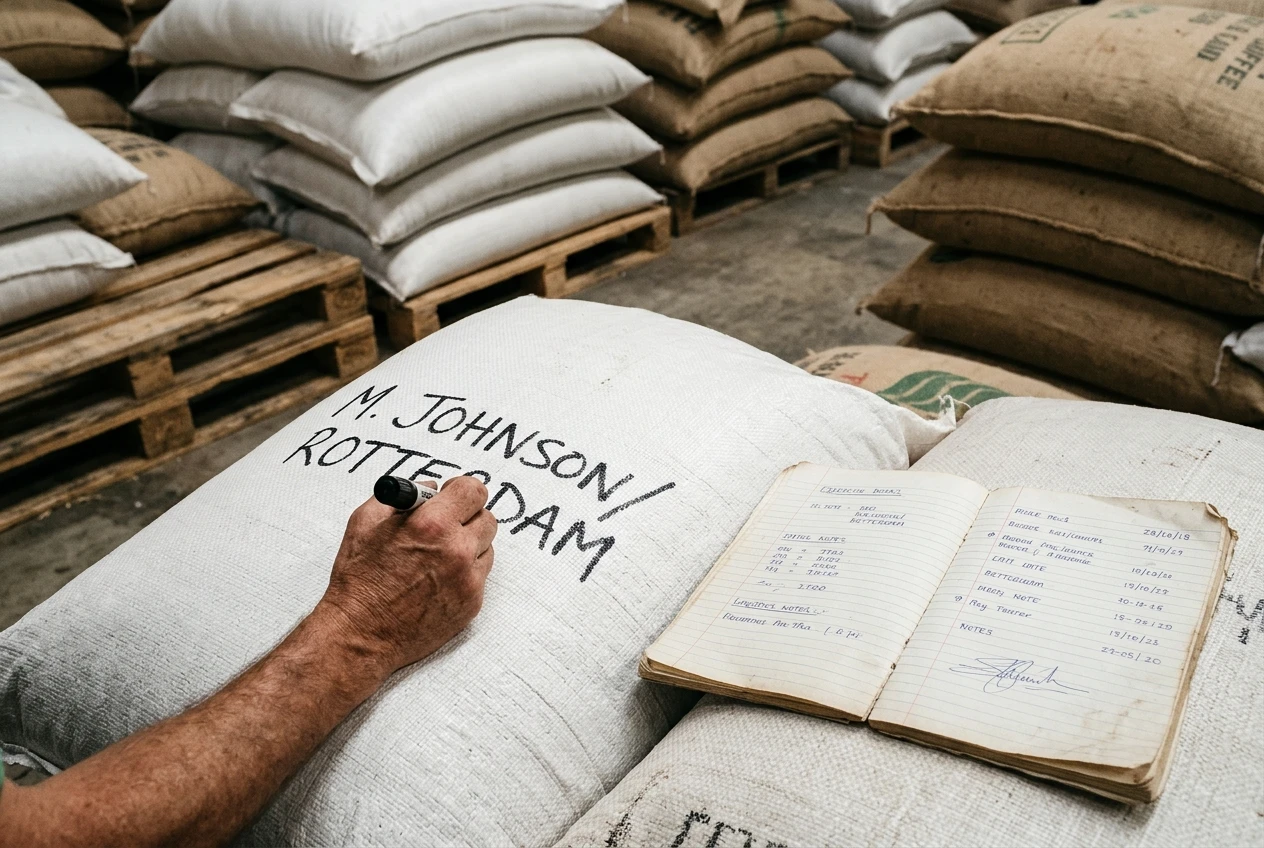
Mark every bag or carton with your name, your village or phone contact where possible, the buyer’s name and the destination. Use a marker that does not run in the rain. If the mark rubs off, a second label inside the bag helps.
Proof of handover
Each time the goods change hands, record it. A short note in an exercise book is enough: date, product, number of bags or total weight, the carrier’s name and vehicle or boat, and the signature or mark of the person receiving them. Ask the carrier or buyer to sign, and keep a copy. Where there is mobile coverage, a photo of the loaded goods and of the signed note gives you extra evidence, but paper alone works when there is no signal.
If goods arrive short, damaged or late, a record like this lets you show what left the village and in what condition. Without it, the argument comes down to memory.
Getting paid: agreeing terms with buyers and carriers before the goods leave
Many problems with money start before the goods move. Agree the following in plain terms, and write them down.
- With the buyer: the price or how it will be set, the quality the buyer will accept, who pays for transport, when payment is made, and what happens if goods are rejected.
- With the carrier: the total charge, whether it is paid before or after delivery, the pickup and drop-off points, and who is responsible for loss or damage on the way.
Be careful with arrangements where you hand over goods and wait for payment with nothing in writing. If you do not know a buyer, send a small first load and see how they pay before sending a large one. A buyer who pays on time for small loads gives you a better reason to trust them with larger ones.
For carriers, avoid paying the full amount in advance when you can. A common arrangement is a deposit before departure and the balance on safe delivery. Payment for rejected or damaged goods is easiest to settle when the quality standard was agreed in writing before the trip.
If a family member overseas is helping to fund a business, a shared notebook or a regular phone call with the same simple record of costs and sales keeps everyone informed, and it lets them see where the money goes.
Checking services before you rely on them, and what to do when a route fails
Do not trust one route with your whole harvest. Before you depend on a truck, boat or flight, check three things: that it actually runs on the days you need, what it charges now, and whether the operator has a record of getting cargo through. Ask other sellers who used it recently, because their experience is more current than anyone’s advice, including this article’s. Rates, schedules and conditions change, so confirm them each season.
Send a trial load first when you try a new carrier or route. A small test shows you the real time, cost and condition on arrival before you risk a full shipment.
When a route fails, have a second option ready.
- Protect the goods. Move them to dry, shaded storage. Dried goods can wait if kept dry, while fresh goods may need to be sold locally or processed.
- Tell the buyer early. A buyer who hears about a delay in advance is far easier to deal with than one who finds out when the goods are missing.
- Try the alternative. If the road is closed, ask whether a boat or the airstrip can take a smaller, higher-value part of the load.
- Record what happened. Note the date, the cause and the cost, so you can plan better next time and, if needed, claim from the carrier.
Where mobile coverage is weak, use whatever reliable channels exist in your area: the airstrip agent, the boat owner, a church or community contact, or a person travelling to town who can carry a message.
If you move goods out of a rural area, we would like to hear from you. Tell us your route, what works and what fails, and we will look at verifying and featuring real provincial logistics stories on PAPUANIUGINI.ORG.
