

A provincial budget can list money for health while the shelf at the nearest aid post holds no medicine. Rural healthcare funding in Papua New Guinea passes through several offices before it becomes drugs, wages and fuel, and the delay or loss can happen at any of them. Where a clinic sits in that chain shapes what it receives.
The same province can show both outcomes. One haus sik may get its supplies, staff and patrol fuel while another two hours away gets none. Which offices hold the money, and who answers for it, explains most of that gap.
Why a funded budget line can still mean an empty shelf

A budget is a plan to spend. Parliament or a provincial assembly approves a figure, but approval is not release, and release is not delivery. Money can be voted, held at the national level, released late to a province, spent on other priorities there, or paid out in a form that never reaches a health facility.
Medicine is a separate problem. Drugs and medical supplies are largely bought and distributed on a national system before they reach provincial stores and then individual facilities. A kina figure for health can be fully spent while the right medicine is not at the right place. A shortage can come from the money, the ordering, the transport or the stock record, and each has a different office responsible.
For a family walking to a clinic, these causes look identical. For a community trying to fix the problem, they are not. Asking “where did our health money go?” gets vague answers. Asking “was our facility’s grant released, and when?” gets one a provincial officer can check.
The chain of command: who decides, who releases and who spends
The system has several layers, and responsibility for health was deliberately spread across them.
- National Government. Parliament passes the national budget. The National Department of Health sets national policy and plans, and buys and distributes much of the medical supply. Treasury and the Department of Finance control when cash is released.
- Provincial governments. Under the decentralised system set up in the 1990s, provinces carry much of the responsibility for running health services. They receive national grants and have their own provincial budgets, passed by the provincial assembly.
- Provincial Health Authorities. In provinces that have set one up, this body runs both hospital and rural health services (see the next section).
- Districts. District Development Authorities manage district funds. These are separate from the health system, though they often get asked to pay for health needs.
- Church health agencies. These run many rural facilities and receive government support alongside their own funding.
A health worker at an aid post usually sits at the end of this chain. They may report to a district health manager, who reports to a provincial health office or authority, which depends on money released from Waigani. A delay at any link stops what comes after it.

Provincial Health Authorities: what they were meant to fix
The Provincial Health Authorities Act 2007 allowed provinces to bring hospitals and rural health services under one authority with its own board and management. Before this, a provincial hospital and the rural health network in the same province could be managed and funded separately. The hospital often took the larger share of attention and money, while health centres and aid posts competed for what remained.
The idea was a single body that plans and budgets for hospital and rural services together, so rural facilities are not treated as an afterthought. Provinces adopted the model at different times, so the arrangement is not identical everywhere. Check the current set-up in your own province rather than assuming.
Concerns commonly raised about how authorities work in practice, from health workers and in news coverage, include:
- Unclear boundaries between the authority and the provincial administration over who controls money and staff.
- Funds reaching the authority late, which holds up supplies and patrols.
- Boards and management teams with uneven capacity to plan, report and manage budgets.
Experience differs from province to province, and these concerns do not describe every authority equally. An authority with a working board, regular reports and timely releases can deliver better rural services than one without. The practical question for a community is whether its own authority publishes or shares its plans, budgets and results.
Where district and provincial funds meet health needs
District funds and provincial funds follow different rules, and neither is built mainly around health.
The District Services Improvement Program and the Provincial Services Improvement Program give districts and provinces money to spend on local priorities. Each district decides its own priorities through its District Development Authority, which the local MP chairs. Health is one claim among roads, schools, water supply, transport and community projects.
This can help a clinic. A district may pay for a repaired roof, a staff house, a solar panel or a vehicle that the health system would not have funded quickly. It can also pull in a different direction. Funds may go to a building that looks good at an opening but has no staff, drugs or running budget, or to a project in one ward while another ward’s clinic goes without. Capital items such as buildings and vehicles are easy to see, while a recurrent need such as drug stock or fuel is harder to put in a photograph.

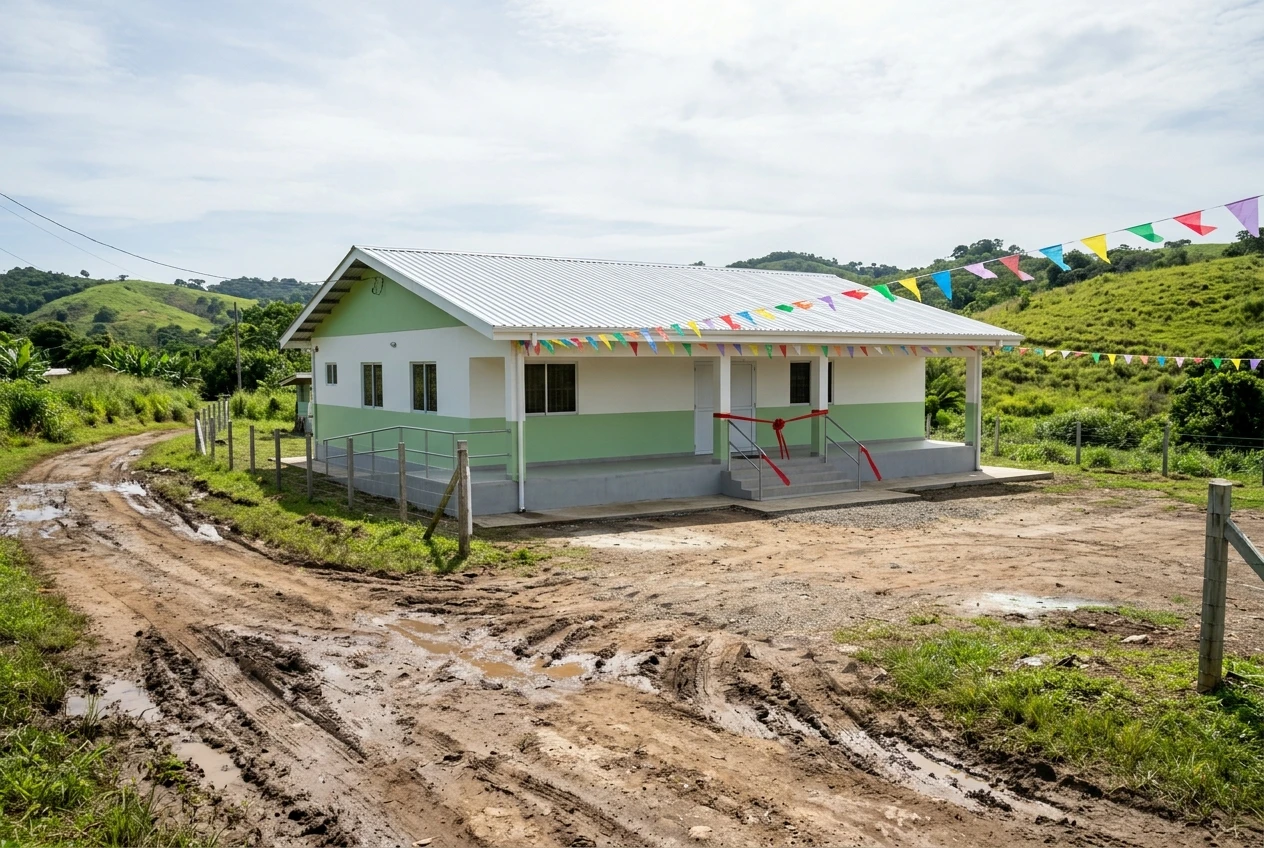
Our piece on who looks after PNG’s new roads, bridges and clinics once the ribbon is cut covers that gap between building a facility and keeping it running. A clinic building paid for by one fund still needs another fund to keep it staffed and supplied.
Provincial and district health plans may not match each other. A provincial health plan may prioritise one area, while the district puts its money elsewhere. Neither is necessarily wrong, but no one is making sure the two fit.
Church health services: the partner carrying much of the rural load
Church agencies run a large share of rural health facilities in Papua New Guinea. Estimates of the share vary by source and by year, but the point is widely made that in many areas the nearest clinic or hospital is a church one, and in some areas it is the only one. Kudjip Hospital in Jiwaka, covered in our piece on the Kudjip Hospital funding crisis, is an example of that church role.
Church services work under agreements with government. Government support commonly includes grants and, in many cases, the salaries of church health workers. The churches add their own funds, overseas partner support and, in many cases, fees and donations. The money from government usually passes through the provincial government or the Provincial Health Authority before it reaches the church facility.
That route matters. When the province or authority releases funds late, a church facility often has to cover costs from its own resources: paying casual staff, buying fuel, keeping the generator running or buying drugs. Those resources are limited, and a long delay can cut services or push charges up. So a church hospital in difficulty may be showing a failure further up the chain, not a failure of its own management.
Church and government facilities in the same area also depend on each other. A patient referred from an aid post may go to a church health centre, and a church facility may rely on government supplies. When one stops working, the other takes the extra load.
What delays and gaps look like on the ground
Funding failures show up as ordinary problems at the facility. The main ones to look for are these.
Staffing. A facility can have a position on paper and no worker in it. A worker may be posted but not on the payroll, or paid late, or without the allowances that make a remote posting workable. Housing is part of staffing: a nurse or community health worker cannot stay at a post with no safe place to live. Staff who leave are not always replaced quickly.
Drug supplies. A facility orders from a provincial store, the store waits on national supply, and the supply waits on money or transport. A facility may receive some items and not others, or items close to expiry. Stock records, kept at the facility and the store, show what was ordered, what arrived and what was used.
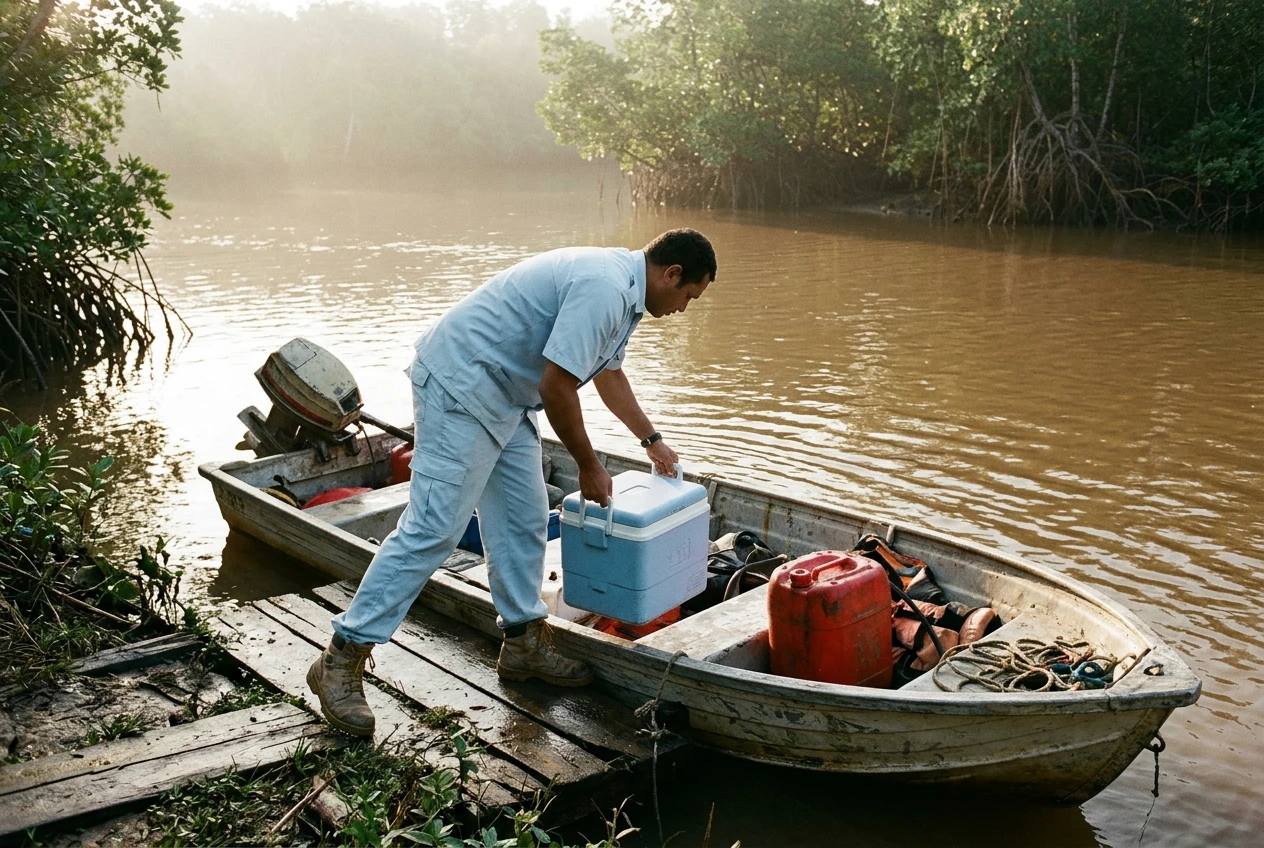
Transport and fuel. Reaching patients, and getting patients out, depends on fuel. This covers a vehicle for patrols and emergency referrals, an outboard motor and fuel in coastal and river areas, and in remote places a charter flight. Without operating funds a vehicle sits idle. Even where fuel is bought, vehicles and boats need repairs, and these costs rarely have their own budget line.
Vaccines and the cold chain. Vaccines need refrigeration. A fridge that runs on kerosene, gas or solar power stops working when the fuel runs out or a part fails, and the vaccines are lost or cannot be given.
Fees and income. When a national policy removes patient fees at primary facilities, the facility loses a source of small income and depends more heavily on grants arriving on time. The effect of that policy differs between facilities, depending on how reliably grants reach them.
None of these problems is unique to one province, but each has a specific cause that a specific office can check.
Questions any community can ask
A community can ask three offices about health money: the provincial health office or authority, the local MP’s District Development Authority, and the facility’s own health centre committee. Written questions are better than verbal ones, and keeping copies of letters and replies helps if there is a dispute later.
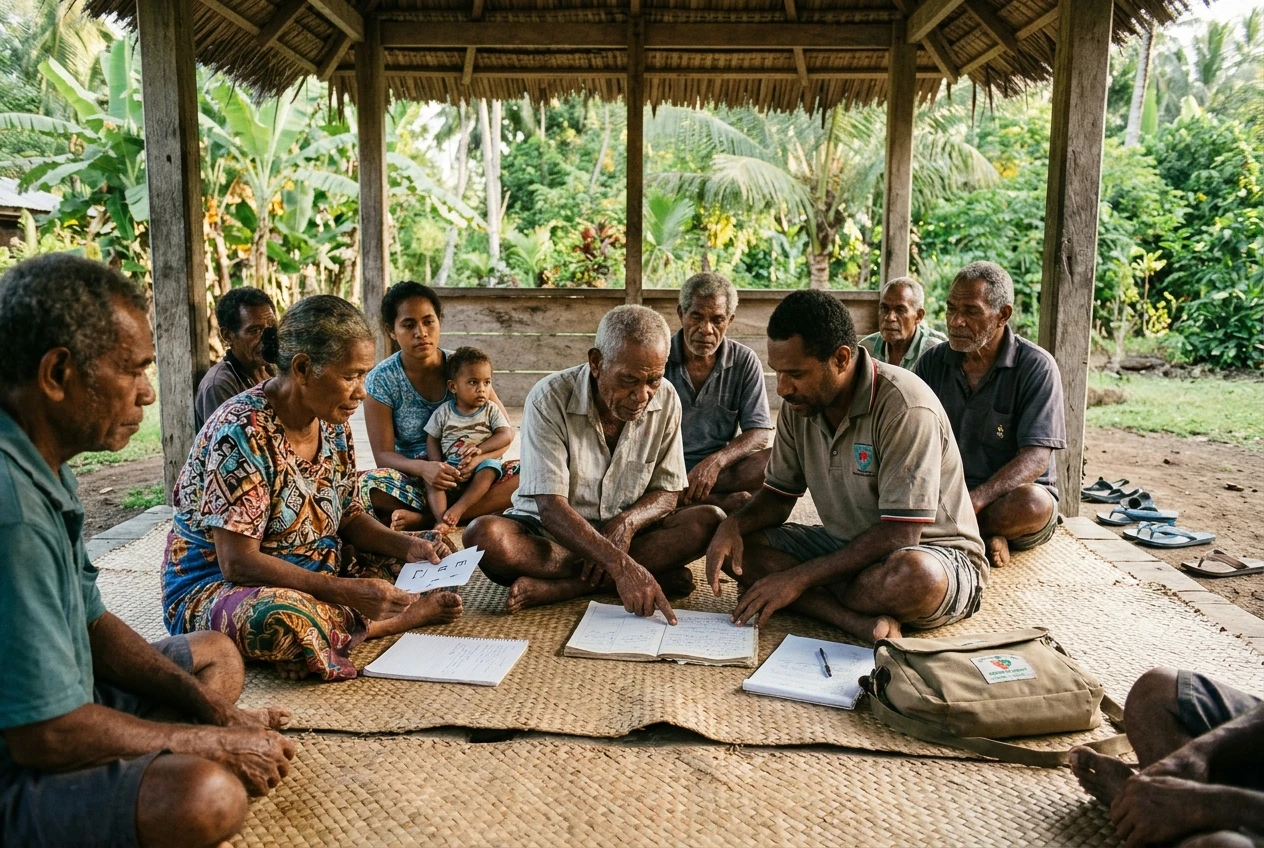
To the provincial health office or Provincial Health Authority
- How much did our facility receive this year in operating funds, and when was each payment made?
- What drugs and supplies were ordered for us, and what was delivered?
- How many staff positions does the facility have, and how many are filled and paid?
- What is the provincial health plan for our district, and is it published?
To the MP and the District Development Authority
- How much of the district’s service improvement funds was allocated to health this year?
- Which health projects were funded, and how will each one be staffed and kept running after completion?
- Can the District Development Authority’s budget and meeting records be shared?
To the health centre committee and facility staff
- What is in the monthly drug stock record, and what ran out?
- What is the fuel and transport situation for patrols and referrals?
- What repairs are outstanding, and who is responsible for them?
Several sources can be used to check the answers. National budget documents are published by Treasury, and the National Department of Health produces plans and annual reports. The Auditor-General’s reports, which Parliament receives, cover how public money was handled. A Provincial Health Authority or provincial government should be able to supply its own budget and reports on request. Facilities send routine reports into the national health information system, so a facility’s own records often show more than a general statement does. Arrangements and rules change over time, so confirm the current position with the relevant office before relying on any figure or process.
If you work in or depend on a rural health facility in your province, we want to hear from you. Send us your verified account, including what the clinic receives and what it lacks, so we can feature stories from outside the main towns.

