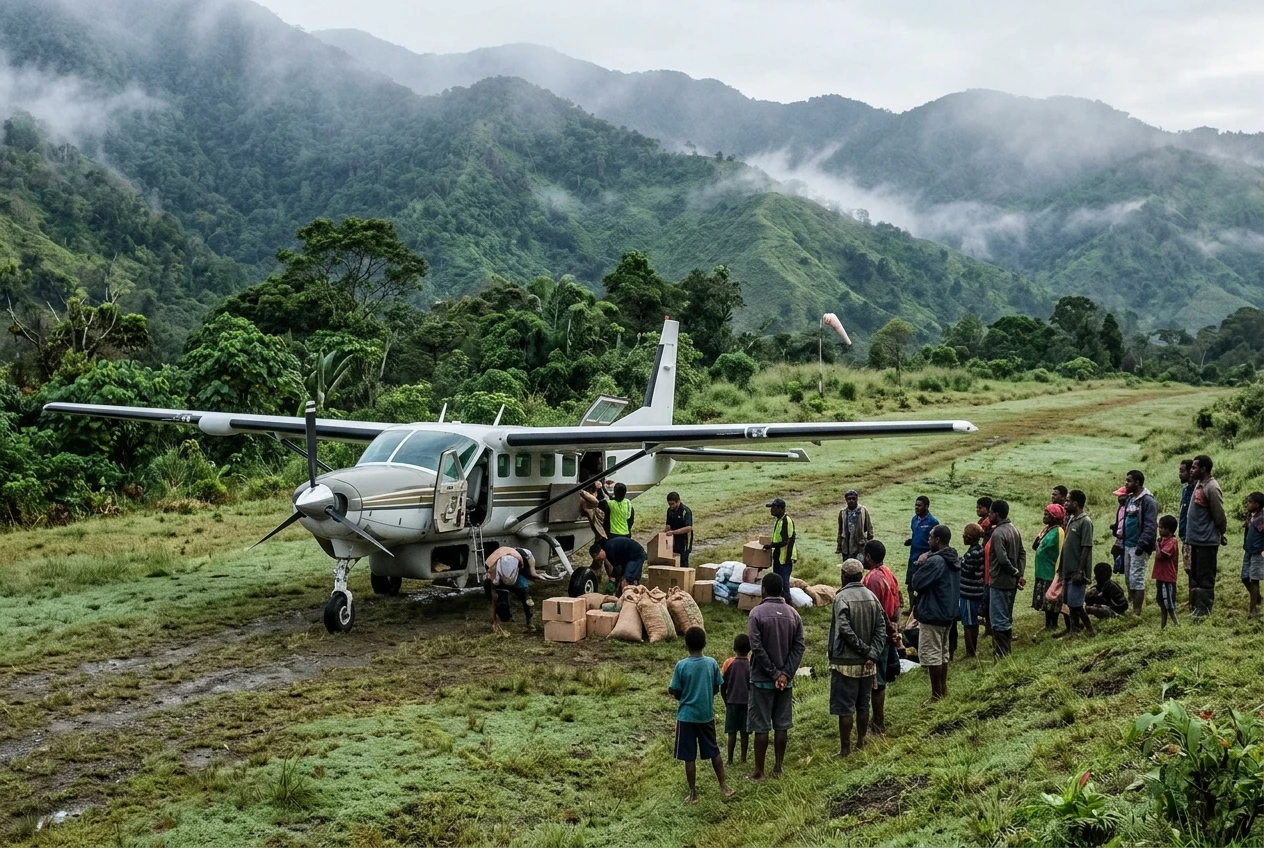
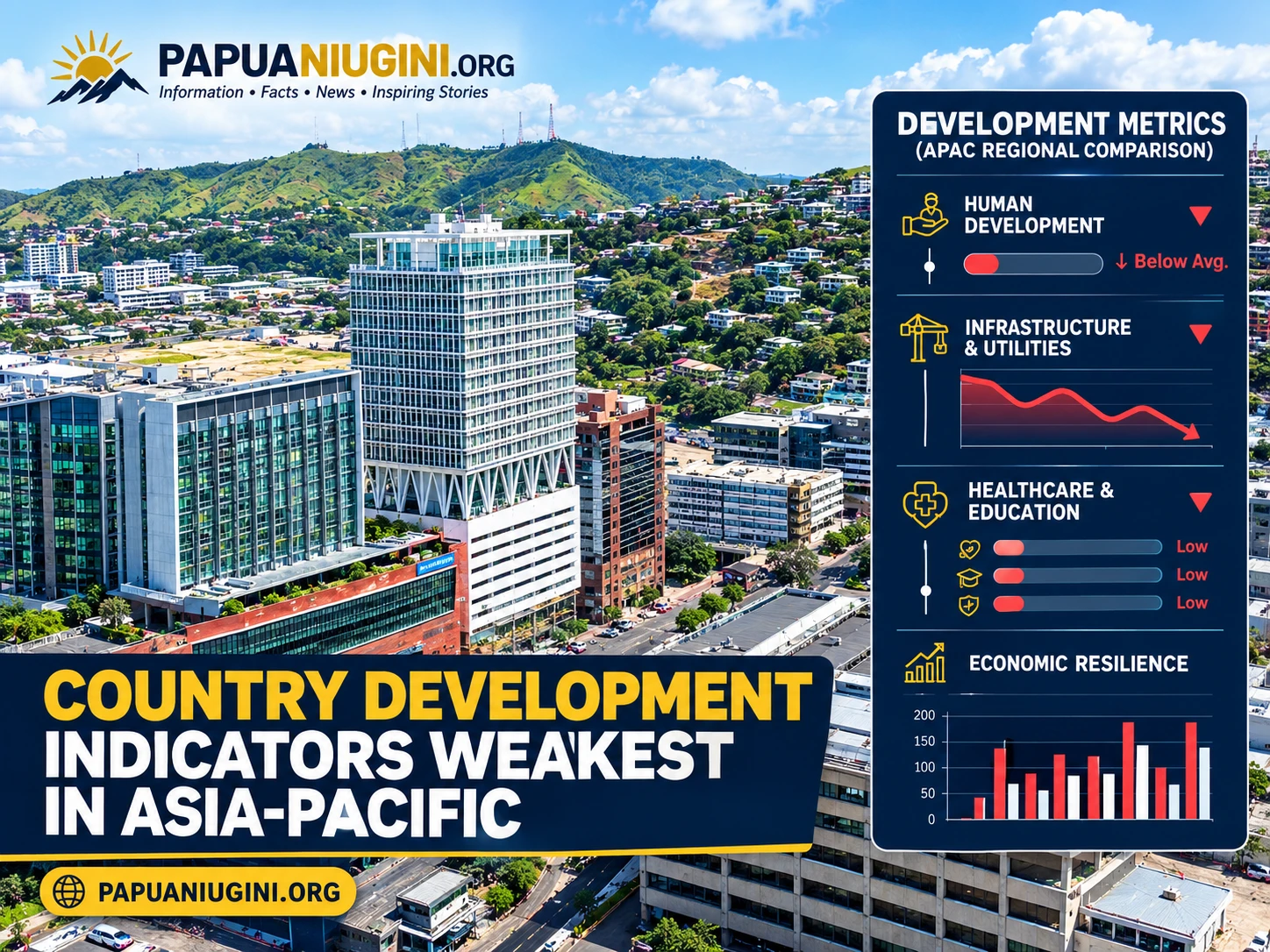
When a new road, bridge or clinic opens in Papua New Guinea, the speeches, the ribbon and the photographs get the coverage. What happens in the following five or ten years usually gets none, yet that period decides whether the project is worth what was spent on it. PNG infrastructure maintenance is the part of development that rarely makes the news, and it is where most public assets are either kept in service or lost.
This article gives readers a way to examine any asset in their own province: who is responsible for it, what it needs, how the upkeep is funded, which signs show it is failing, and where to check. It does not cover how infrastructure money is raised or how contracts are awarded. For that, see our reports on Education Department contract allegations. The subject here is what happens after the work is finished.
Why the opening day tells you so little about a project
An opening day shows an asset at its best. The road surface is new, the drains are clean, the clinic roof has no leaks, and officials have every reason to make sure it looks good. The day cannot show you how the structure will cope with its first wet season, or whether anyone has been assigned and paid to look after it.
Most infrastructure fails slowly. A blocked culvert sends rainwater across the road instead of under it, and the water cuts into the surface. A small pothole fills with water, traffic breaks the edges, and within a season a repairable defect has become a section that needs rebuilding. Repairing the culvert early costs very little compared with rebuilding the road.
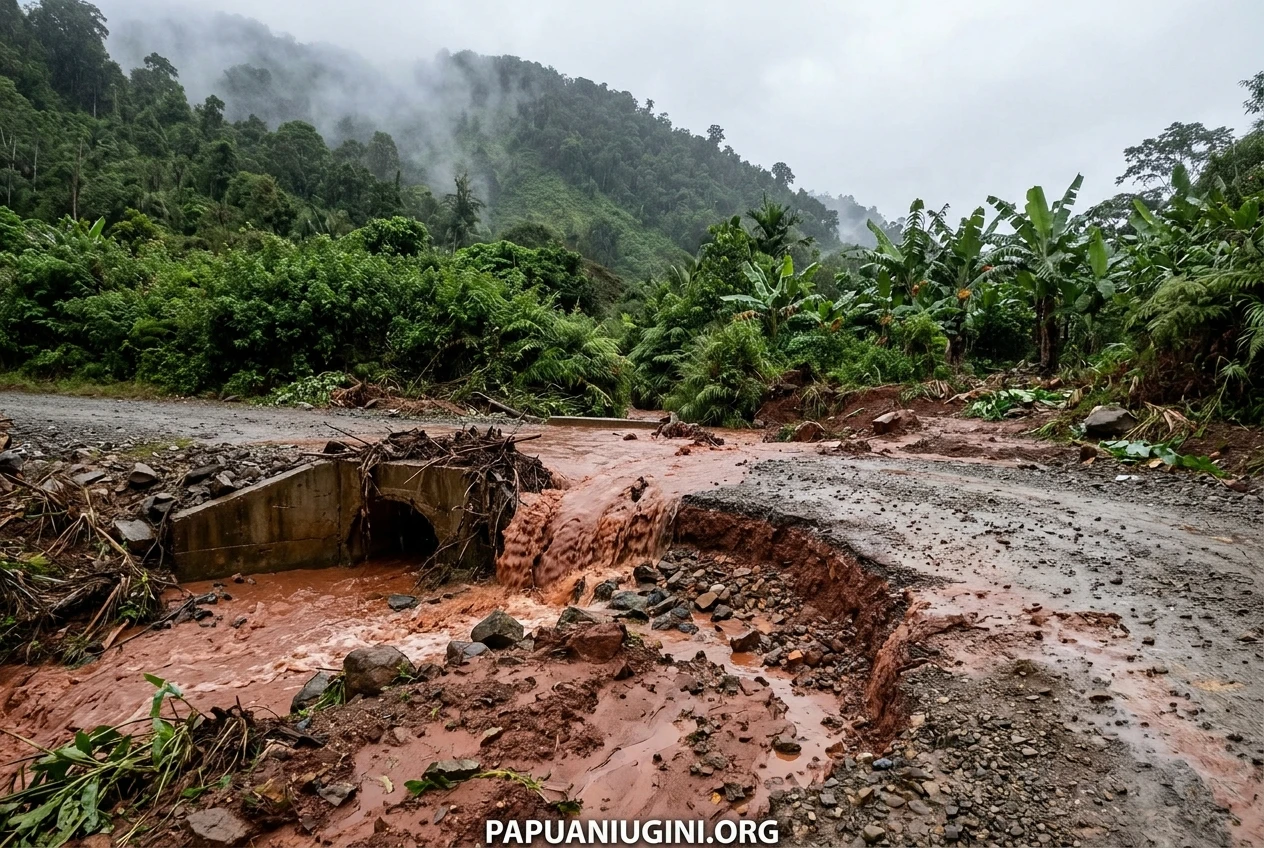
Papua New Guinea makes this worse than many places. Heavy rainfall in much of the country, steep terrain, landslides in the mountains, and soft or flood-prone ground on the coast all speed up damage to roads, bridges and wharves. A project that would last in a dry, flat country can need regular attention here from its first year.
So the useful questions about a project are practical ones. Who has the job of keeping it working? Is there a budget line for that job? Can anyone show it was done last year?
Who is actually responsible for maintenance
Responsibility depends on the type of asset and who owns it. Agency names and mandates change, so check the current position with the relevant office or the latest budget papers. The usual pattern is as follows.
National agencies. National roads and the bridges on them have historically been the job of the Department of Works and Highways, and a statutory road authority may carry some of that role. Major commercial ports are run by the National Ports Corporation, which is a state-owned company rather than a government department. National referral hospitals answer to the National Department of Health.
Provincial governments and provincial health authorities. Provincial roads, many provincial bridges and provincial government buildings fall to the provincial administration. Hospitals and many health services are run through provincial health authorities, which were created under the Provincial Health Authorities Act 2007. A provincial administration’s works division should be able to say which roads it is responsible for.
Districts and local-level governments. District Development Authorities and local-level governments handle smaller roads, footbridges, markets and local facilities. They receive funds through channels such as the District Services Improvement Program and Provincial Services Improvement Program, and those funds are also expected to cover new projects. Maintenance competes with new construction for the same money.
Churches, school boards and communities. Church agencies run a large number of rural health facilities and schools, and school boards of management have a role in looking after school grounds and buildings. Villages often maintain feeder tracks and small bridges through community work. These arrangements work well in some places and poorly in others, because they depend on the strength of local organisation and on money arriving from higher levels.
Landowners. Land under a road, wharf or clinic may be customary land. Access, compensation disputes and boundary arguments can stop repair work entirely. A road crew cannot clear a drain or repair a retaining wall if the landowners have blocked the road over unpaid compensation. When a project fails, it is worth asking whether a land issue was ever settled.
Many failures come from unclear ownership. A bridge on a provincial road that serves a district may be claimed by neither the province nor the district, and in that case nobody budgets for it.
What a road, a bridge, a wharf and a clinic each need
Each type of asset breaks down in its own way, and knowing the common failure points tells you what to look for.
Roads
A road needs water kept off it. That means clear side drains, working culverts and a surface that sheds water. Gravel roads need regular grading and fresh gravel, and sealed roads need patching and eventually resealing. Vegetation must be cut back from the edges so the road dries and drivers can see. Landslides and washouts need clearing quickly, because a closed road may be the only link between a community and its market or health centre.
Bridges
Bridges need regular inspection. The parts that most often fail are the foundations and the approaches. Fast rivers can wash away soil from around the supports, a process called scour, and the approaches can erode until vehicles hit a step at the bridge end. Timber decking rots, steel corrodes, and bolts and bearings loosen. Debris caught against the piers after a flood adds force to the structure and has to be removed. A bridge can look sound from the road while its foundations are being undermined, so inspection by an engineer matters.

Wharves
A wharf needs its piles, deck and fenders checked, because sea water corrodes steel and damages timber and concrete. Fenders protect the structure from the hulls of ships and wear out with use. The water beside a wharf can silt up and need dredging, and lighting, cranes or loading equipment need servicing. A wharf that cannot take its intended vessels safely will be used less, and the nearby economy suffers accordingly. In remote locations a damaged wharf can cut a community off from shipping altogether.
Clinics and health facilities
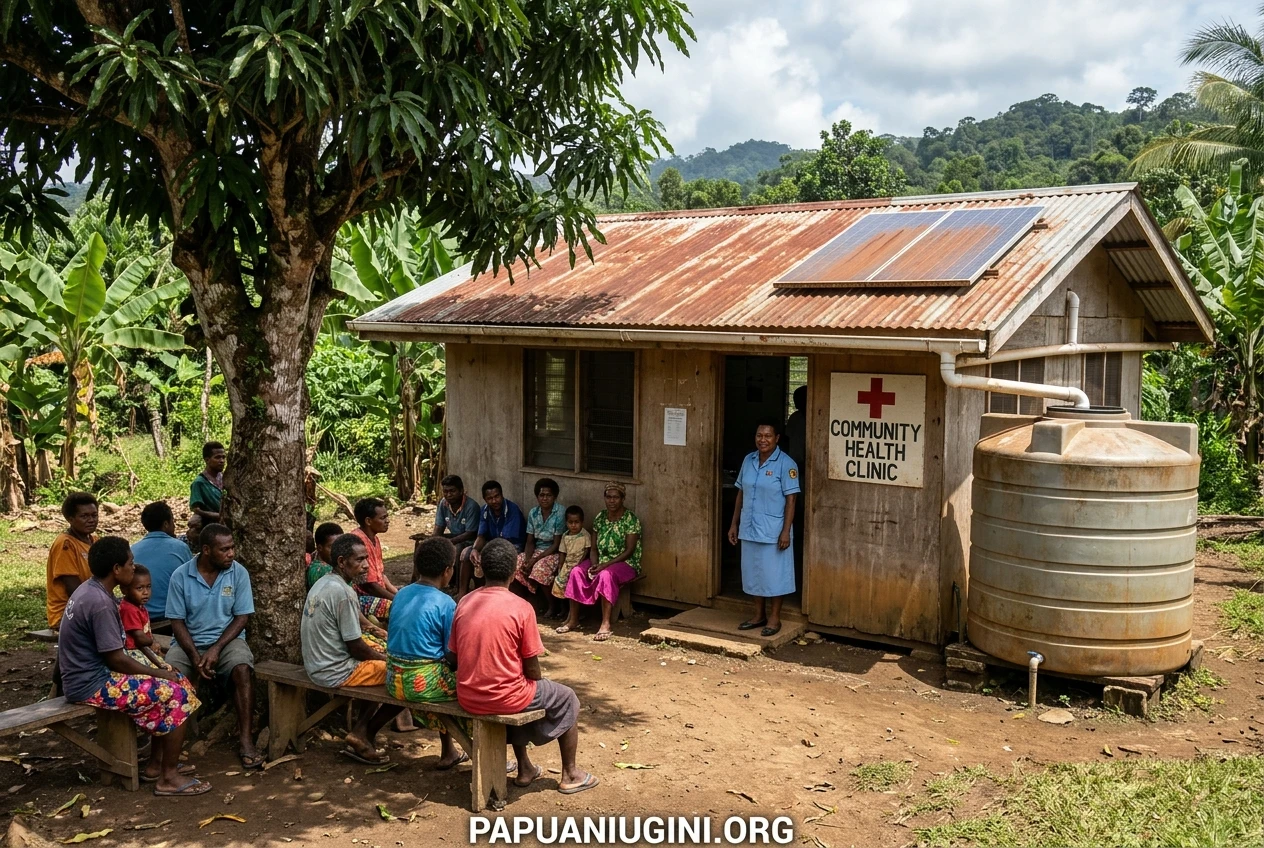
A clinic needs more than a building. It needs a roof that does not leak, a reliable water supply, working toilets, and power for lights and a vaccine refrigerator. Solar panels need batteries replaced and panels kept clean. It also needs staff, medicines and supplies, and a way for patients to reach it. A health facility with a perfect building and no nurse is not delivering healthcare. When assessing a clinic, check the staffing and supplies as well as the structure.
How maintenance gets funded, and why it is the first thing cut
Maintenance competes for money against things that are more visible. A new road can be announced, named, opened and credited to a minister or a member. Repairing an old drain gives nobody an opening ceremony. When budgets tighten, spending that produces no visible result is easiest to postpone, since nothing seems to go wrong in the short term.
The delay has a cost. Deferred repairs get more expensive as damage spreads. A road that could have been kept up with regular grading and drain clearing may later need full reconstruction, which costs far more, and that reconstruction may be announced as a fresh project.
Several features of public budgets add to this:
- Capital budgets for new works and recurrent budgets for running and upkeep are often separate. A new asset can be funded without any provision for its running costs.
- Donor and loan-funded projects frequently cover construction and a short defects period, and leave later maintenance to the government’s own budget.
- Funds that reach districts and provinces late, or in reduced amounts, can be used up on urgent needs before maintenance is considered.
- Pressure on the national budget from other commitments, including debt, can squeeze what is left for upkeep. Our report on the national debt debate covers that wider pressure.
This should be read as a general pattern, not a finding about any single project. To test it for a particular asset, find out whether the original project documents said who would pay for maintenance and from which budget line. If they say nothing, that is an early warning.
Reading the signs of a project that is failing
You do not need technical training to spot trouble. Most of the signs are visible to anyone who uses the asset regularly, and most can be checked against records.
What to look for on the ground:
- Potholes, edge breaks and washed-out sections on a road, especially where water crosses it.
- Drains and culverts blocked with soil, grass or rubbish.
- Bridge approaches that have sunk or eroded, loose or missing decking, rusted metal, and weight or speed limits that have been added or ignored.
- Wharf decking with holes, damaged fenders, or restrictions on which vessels may berth.
- Clinic roofs with leaks, empty water tanks, broken toilets, dead solar systems, and stock-outs of basic medicines.
- Detours and workarounds that people have created for themselves, such as a track beside a bridge that residents no longer trust.
What to check in the records:
- Provincial and national budget documents show whether money was allocated for maintenance of a given road or facility, and whether it matches what was announced.
- Reports of the Auditor-General to Parliament sometimes raise problems with how public funds for works were managed. Parliamentary committee proceedings can also include evidence on the condition of public assets.
- Provincial administration and works division offices can tell you which agency is responsible and what repairs are scheduled.
- Local newspapers, radio and community social media often report road closures, bridge failures and clinic shortages before official records do.
- Dated photographs from the same spot, taken over several years by different people, are strong evidence. Historical satellite imagery available online can show whether a road has narrowed, washed out or been overgrown.
Treat any single report with care. A road that is bad after a major flood may be recovering normally, while one that has been bad for three dry seasons has a maintenance problem. Dates matter, so always record when each observation was made. Where records and community accounts disagree, say so rather than choosing one.
What a road that keeps working means for farmers, health access and school attendance

Health access follows the same logic. A pregnant woman, an injured worker or a child with a high fever needs to reach a clinic or hospital quickly. A road washed out for two weeks removes that option, however good the clinic at the other end. Outreach patrols that carry vaccines and supplies to remote communities depend on usable roads, airstrips or river transport.
The value of a well-maintained road shows up in ordinary daily decisions. A farmer who can count on a passable road can bring coffee, vegetables or cocoa to market on a planned day. Where the road becomes unreliable, the farmer may carry a smaller load, sell to a buyer who comes to the village at a lower price, or let part of the harvest spoil.
School attendance is affected as well. Children who walk to school across a broken bridge or through a flooded crossing will miss days in wet weather, and teachers posted to remote schools also need to reach their posts. For more on what that posting involves, read our piece on what it takes to teach in a remote PNG school.
Costs shift too. When a road deteriorates, transport operators charge more to cover vehicle damage and slower trips, and that raises the price of goods in the village store. A road that works keeps those costs lower for everyone along it. This is why the condition of a project years after it opened is the real measure of what it delivered.
Questions any community can ask, and where to take them
A community does not need to accuse anyone to ask for information. Plain questions, asked politely and in writing where possible, tend to get better answers and leave a record.
- Which agency owns this asset, and who is the named officer responsible for it?
- When was it last inspected, and what did the inspection find?
- What maintenance is planned this year, and which budget line pays for it?
- Was a maintenance plan part of the original project, and who agreed to fund it?
- If repairs have been promised, what is the date, and who will confirm the work is complete?
- For a bridge or wharf, are there load limits, and who decides when it is safe to use?
- For a clinic or school, who keeps the building in order, and who is responsible for staff and supplies?
Where to take the questions depends on the asset. Start with the ward councillor or local-level government president, who can raise them through the local-level government. The district administrator and the District Development Authority are the next level for district assets, and the provincial works division and provincial administrator cover provincial roads and bridges. For health facilities, ask the clinic’s in-charge, the church health agency if there is one, and the provincial health authority. Your member of Parliament can raise issues in the district and in Parliament, and the Auditor-General’s office and parliamentary committees accept information on public spending.
Keep your own record as well. Write down what you asked, who you asked, the date, and what was said. Take dated photographs, and ask neighbours to confirm what they have seen. A clear record of a bad road or a leaking clinic roof is much harder to dismiss than a general complaint.
If you know a road, bridge, school or health facility in your province that is still serving people, or has been left to decay, send us what you know, with dates and details we can verify, and it may inform a future report. You can also subscribe to the PAPUANIUGINI.ORG newsletter for new features.