In 1925, my parents worked for the Government in Canberra helping to build the new Parliament House. Daddy was an architect and my mother was a draftswoman. He was a Scot and she was a Tasmanian.
In 1927 they asked for a transfer to New Britain mainly because my father was interested in the German architecture there, which was quite startling. I was born in 1929 and three brothers followed over the next ten years. Our schooling was mainly in the swimming pool with its springboard.
Our old teachers which Dian
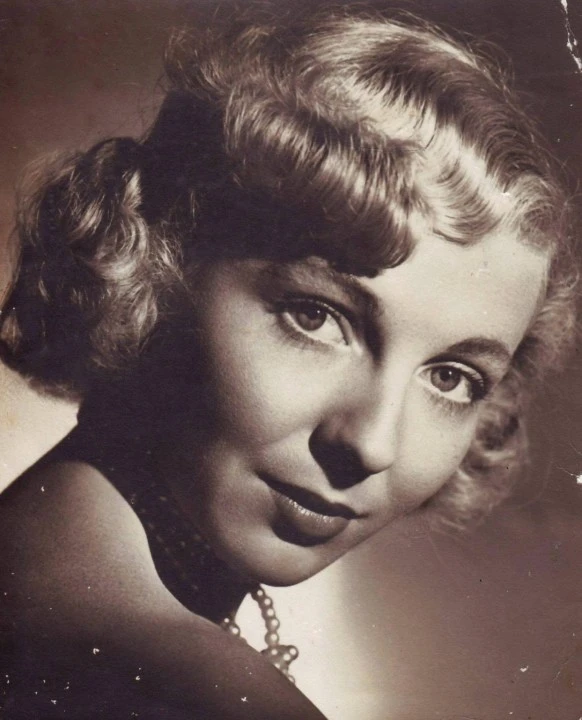
“ME MERI TOLAI” – BORN IN RABAUL IN 1929, OWNED ARAU COFFEE PLANTATION AND FOUNDED EASTERN HIGHLAND CULTURAL CENTRE IN PAPUA NEW GUINEA -Muriel Larner
Coote Martell, Doreen (Crawley MacGowan) and myself, all here today, remember Peggy Byron, an English lady who taught us children such very Pommy accents. As Diana will remember we learnt to sing ‘Land of Hope and Glory’.
I learnt the piano 2 until the Sisters told my father that they thought it was a waste of money, and then he bought me a violin because I was loosing my hearing. He thought that maybe I could hear a violin better than a piano. But that didn’t work either because we left it behind when the evacuation came, much to my pleasure.
We were on leave in Tasmania in 1937 when Rabaul blew up. My father was still in Rabaul, but my mother, brother and I were on a ship sailing back towards Rabaul. When we got to Rabaul, it was just like it was going across land.
The Pumice stones must have been many feet thick and we just went across it without a ship’s wake that they usually made. Tidal waves occurred shortly after we arrived back. We had to wear masks and dampened handkerchiefs around our faces and sun glasses because of the dust flying around.
Swimming – we used to go down to the swimming pool every morning we’d be dropped off, with some sweetened condensed milk because I didn’t drink milk but I did eat the sweetened condensed milk. We had to write our names on the bottom of the pool, that is the Rabaul pool where the dust had settled during the night and we would write our names on the bottom of the pool before the swimmers disturbed it.
My brother Kenneth was born in 1939. Shortly after he was born we had another eruption which was quite severe and we were evacuated out to Kokopo again. Vunapope’s Catholic Sisters there looked after the people very well.
In 1940 we were on leave and returning via Melbourne on a ship where they loaded all these young Army fellows who I believe were the Militia and the Lark Force going up to Rabaul in 1940 because the war was advancing towards us.
They didn’t know where they were going and went up to Mother and Father asking ‘Where is this ship going?’ And my Mother and Father realised that they must keep quiet. So they waited until the gangplank came up and told them.
They said ‘Where’s that?’ Nearly every one of those lads lost their lives. Christmas 1941 we were on board BPs Macdhui being evacuated from Rabaul – women and children, Diana, Doreen and myself.
Somebody – I think it might have been Diana’s mother – organised for the RSL and BPs to give us a Christmas present each which was a water pistol. So you can imagine when all children got a water pistol each! We were fighting.
The only person who didn’t get one was Diana as they were one short. She and my brother Douglas, who eventually married Doreen, got into a dreadful fight. Douglas had his water pistol and Diana wanted it.
She had his bottom lip in a tight grip and he had a handful of her hair. I do not remember who ended up with the water pistol. Anyway we arrived in Sydney and then we departed in different directions.
Of the English women with their children had no where to go and took jobs looking after boarding houses, so that they had accommodation, a job and were able to look after their children. Dianne’s mother settled in Sydney, Doreen’s mother in Tassie, and mine in Adelaide.
During the war years we kept in touch. Diana – Not long after we started out, a couple of days out, and someone said that the ropes of the lifeboats had been cut. Now that stuck in my mind.
Why would I think of it, even if I was only a child? There was a hush-hush and little talk about it. I don’t remember who told me. We were sitting at the table having a meal downstairs and I heard that someone had said they had been cut and looked at the kids and looked away.
3 Muriel – Yes I asked someone later on who knew something about sailing and all that and they said that probably what happened was there might have been a bit of a scare or an alert. Quick evacuation is where they prepare by cutting the ropes.
Under darkness we set out from Rabaul expecting to be back in a couple of weeks Diana – I hadn’t even said goodbye to Dad (Philip Coote – Burns Philp’s Manager in Rabaul). I didn’t even kiss him. Muriel – We settled down during the war years.
When we arrived in Adelaide family, we were like fish-out-of-water. My younger brother couldn’t even speak English. We couldn’t catch trams or trains or anything like that. It was dreadful actually.
Then my hearing deteriorated. That was the end of my formal education, so I had to go on to art school and ballet etc. My brothers and I excelled at swimming and diving. We won all of the swimming contests for our school.
Our father eventually escaped by walking down the coast of New Britain and came to Adelaide with a bank loan for a house with a business – a poultry business. When we got there it was 500 chickens.
So we joined the egg board, only to find that they were all roosters. My brother Ian who was going to be a surgeon cut all their heads off. My brother Douglas and I plucked them. Kenneth was too young so he was to daily collect the eggs from the few hens we had.
He gave a bowl of eggs to our mother saying ‘I’ll never eat eggs again.’ My mother said ‘You love eggs!’ and Ken replied ‘Not any more, I just saw where they came from.’ Christmas 1946, I received a Christmas present, a plane ticket to go to Port Moresby, as the war had ended, and for what was thought to be just for the school holidays.
My intentions were not to leave again. I was going to stay there. My mother and brothers were still in Adelaide. The boys were still only little. When I got to Moresby, in those days, it was all American Air Force, Army, Navy and everybody was having a good time, and I had a job.
My first job was to unpack all these Court records for the Public Library. I found that very difficult, to keep my nose out of those books and papers. My father didn’t realise that I was staying and didn’t know that I was a good cook. I could cook dehydrated potatoes and onions, tin meat and fish etc.
Then I got a permanent job with the Oil Search Company – APC – The Australasian Petroleum Company – as a draftswoman.
There I met my husband to-be who was a labour recruiting officer. He decided I was too young and fickle and stuck up his nose and looked the other way. He enlisted and went off for 15 months to Korea. On his return we became engaged and later on we were married. We had our first baby, Bronwyn, in 1953.
We saw that movie ‘Elephants Walk’ and when we left that theatre we were going to become planters. We looked for a block of land, applied for it, and we got it – Arau plantation outside Kainantu in the Eastern Highlands.
My husband went ahead while I went to Australia to have the next baby. He went ahead to build a nursery and a hut for us. Somebody said to him ‘How did you know anything about coffee?’ He said ‘I don’t know anything about coffee.
If they had given me a thistle, we would have been the first commercial thistle growers!’ So we started planting coffee, cardamom and pyrethrum out of Kainantu.
I can remember my first pay in 1946 from the Oil Search Company that was £25 for a month’s work. I went home and said to my father ‘Here Daddy, here’s £5 of my pay for my keep’ and he said ‘How much did you get?’ I said £25 and he said ‘I’ll swap 4 you mate – you keep the five and I’ll take the twenty.’ Briefly, I was heart-broken, but I didn’t have anything to spend my money on anyway.
In 1957 when we flew in by this little chartered Cessna on Kainantu’s dirt airstrip, we were in uncontrolled territory with hundreds of chanting villagers on the airstrip. We had nothing on our plantation but for the kunai house that my husband had built for us. I arrived with a four-year old Bronwyn and a two-weeks old baby girl Rosalie.
It was quite an adventure. I had half of a 44-gallon drum as a stove, a pulley shower and a thunder box and all the usual things, though no electricity. Ah, it was beautiful. I loved it. It was four years of development before we had communication with anyone or a road.
Our first transport was a tractor which of course we had to carry ourselves and everything else on. I’d sit on the battery box with the baby Rosalie. Bronwyn sat beside me, with the rotor blades out the back trimming down the road. That was about it.
We had plane supplies about once a month when food supplies and mail would be thrown out of the aircraft, or if it landed, it would pick up the veggies we would supply to the veggies shops in Lae.
Then the time came for correspondence School to start – teaching your own children, I don’t recommend it. Eventually we chartered a larger DC3 aircraft once a month. It landed at Arona – Arona Cattle Station in the next valley.
We got a Land Cruiser, and we got a generator, and we got a fridge, a kerosene fridge – great excitement when we got the fridge. But then the day came and my husband decided to go down to Lae and buy electrical appliances which we did not have.
I had trained house staff and they were really bushies. They were startled to see a hot water jug – to boil water in a jug – they just couldn’t believe it. Looking underneath trying to see an egg cooking in a frying pan – well.
And we had a toaster which my husband said ‘Now there’s a man in that toaster, and when the toast is cooked it will shoot it out’. And out came two slices of burnt toast. We had not noticed a button saying (light or dark). Our haus-cook boy stuck his nose up and said ‘I’m better than he is’.
In 1967 my husband passed away on the plantation and then the coffee flush came in. I was very busy and didn’t have time to feel sorry for myself. Two years later I had to send the children to boarding school because I just couldn’t cope any longer.
In 1969 digging toilet pits and drains, I found clay, first class clay. So I began to play around with that on weekends and the native children started to get interested in what I was doing I taught them pottery, then I taught them how to do screen printing and then to sew by hand.
That was the very beginning of what became the Eastern Highlands Cultural Centre. It started to grow to such an extent that the Government came to me and asked me if I would move into Kainantu.
I carried on for a little while until I could get a manager to come. A gentleman, an exIndia tea planter, arrived with a monocle in one eye, boots up to the knees, toupee hat, pipe etc. His name was Mansoor.
He used to meet me every night at the shower bathroom door with a glass of Scotch. I used to say ‘I don’t drink Scotch in the shower’ and he would say ‘Oh who’s ever heard of a woman who doesn’t drink Scotch in the shower?’
Eventually I handed it all over to him but still stayed on there for a bit longer before I moved into Kainantu.
I bought four houses in Kainantu ready to move. He used to think it was a great joke for a woman, and this used to upset me a little bit until one day I said to him ‘Don’t touch the generator. I have got to have 260 coming from the 5 generator to get 240 up at the house because I had bought a kiln by then and advanced with my pottery.
He wouldn’t listen to me. One day he set it to 240 for which I got 200 up at the house. So I went down and upped it to 260 as before. He came to me and said ‘I want you to accept my resignation’. I said ‘Well that’s fine. The vehicle’s outside and ready to go’. And that was the end of him.
We always stayed friends. People would ask me ‘Were you ever scared?’ and you know the greatest thing I was ever scared of was if I stood up to speak when taking a labour line role, only to find that my fly was undone.
There was this funny old man and he decided that he was going to look after me and be my guard. He used to walk around with a big machete, a beautiful sharp knife, a thong on one foot and a boot on the other foot, and he’d salute me every time I’d walk out the door with the foot with the boot hitting the foot with the thong and would nearly trip over himself.
One Saturday, I said to everybody, because every Saturday they’d come up to the door with a finger chopped off, or their pig died etc. This particular Saturday, I said ‘Don’t anyone come to the door this afternoon’. So I went and lay down. I got up, and there was this little man sitting at my dining room table writing letters, ‘Venturian Scrip’!
I thought ‘What do I do now?’ And here’s this big sharp knife lying there on the table. He was such a little man that his feet didn’t touch the floor under his chair. I fed him a cigarette, walked over and sat beside him. He just ignored me and after a while I picked him up off the seat, stood him on his feet, took him to the front door and let him out.
When I opened the door, there were all of my staff who had seen him come in and were wondering how I was going to cope with it. Anyway he walked off seeming quite happy with himself. I have no idea of his age but he was old.
I learned how to do lots of things I learned how to put Golden Syrup on the belting, because we had run out of belt dressing.
From the exhaust pipe on the generator, I could put some starter fluid on a cloth to assist getting the generator to spark. One day it sucked in the piece of cloth. And when it back fired we were covered in black soot.
One day I couldn’t get any power from the generator at all, so I called a friend of mine in Lae, Laurie Crowley. I don’t know if any of you know Laurie but he ran Crowley Airways. He said to me ‘Now if you get any trouble just call me, any time.’
So I called him up and I said ‘Laurie, I can get the generator going but there is no electricity being sent out.’ He said ‘Listen to me. Now do this. Get some Wet and Dry. Go down to the factory and get someone to crank the handle and rub the Wet and Dry up and down the exciter’.
So I did what I thought he meant. I called Laurie again on the 1.30 sked. He said to me ‘Now tell me exactly what you did’ I said ‘I went and got half a bale of newspaper, took it down to the factory, tore it into strips, put half of it into a bucket of water and kept the other half dry, had a fellow turn the crank handle while I alternated with first the wet newspaper and then the dry ‘.
You should have heard everybody from Kainantu to Lae on their radios. They were saying for years ‘Do you know what Wet and Dry is?’
The only visitors we had in the old days were the kiaps, the diddymen, the lik-lik doctors etc. They were lonely young fellows and we would always put them up, as well as anthropologists and archeologists too.
When school holidays would come the children would come home for Christmas and once we got bogged way out in the bush. I was well and truly able to get myself out most times, but this time I was well 6 and truly stuck. It was getting dark and wet and rainy and in the back of the Land Cruiser, we had to fish into the Christmas presents and shopping – chocolates, rum, brandy. We had a lovely meal and then the next day my staff came looking for us. With my tree walla jack they pulled us through.
Another time I had a visitor. I took him to Kainantu for a game of golf. I hit a ball off the tee right into my caddie’s eye knocking him unconscious. To make matters worse, he was a Kukukuku, a very stout little fellow from a tribe south of Kainantu. We took him to the hospital from which he absconded. Police were out looking through the town for him when they found him up a yar tree. I had to pay him to go back to the hospital, for both out sakes, he survived the blow.
The elephant – remember the elephant coming? When the elephant came in 1973 it was sponsored by SP Brewery. When it arrived it weighted five tons. When it got diarrhoea, it lost one ton – one ton less. When the elephant came, my staff had been working very hard, and were very loyal to me, and as a treat I gave them the day off. The younger ones walked to Kassam Pass, and the older ones I took in the back of the Land Cruiser. We get to the top of the Pass and there thousands and thousands of people like ants crawling around waiting for the ‘bik pela pik’
We waited and waited and nothing happened, so I thought I’d drive down. When we got to the bottom of the Pass, there was the ‘bik pela pik’ grazing there. The truck carrying him had broken down and they were waiting for someone to come from Lae to fix the truck up so that it could get going again. Eventually they got it going again, but while waiting they gave me a ride on it. But you should have seen and heard the people shouting ‘Mama bilong mipela raid im bik pela pik’.
It was too late by the time it arrived in town to proceed to the plantation that night, so we all booked into the hotel. The trainer had the elephant chained up outside my bedroom window and all night long I heard ‘clang clang clang clang …’ as it moved about.’ People were so fascinated when it went and opened a tap and had a drink. I thought it was wonderful.
All this time I was developing the Cultural Centre which was built by the Provincial Government, plus running the plantation. Then I had to take on a manager when I moved into town permanently.
In 1982 the Cultural Centre was officially opened. I had employed a manager and his wife who settled onto the plantation for the next four years. In 1986, the coffee prices dropped so I again returned to running the plantation again, so back and forth. Then I sold Arau in 1993.
I left it and went into Kainantu permanently and a month later the house on Arau collapsed in a guria. There was nothing left of the home I had built and loved so much. I stayed on the plantation and in Kainantu for 50 years.
I’ve never been back to Kainantu though I have been back to Lae and Madang. I came to Australia twelve years ago (1997) and moved straight away into the Retirement Village where I still live.
I did not marry again. I was greatly honoured to receive an MBE from the Queen in 1983. Thank you for listening to my story.
“ME MERI TOLAI” By Muriel Larner. An address by Muriel MacGowan Larner MBE Born in Rabaul. Fifty years in Kainantu Toowong Library, Brisbane, 22 September 2009