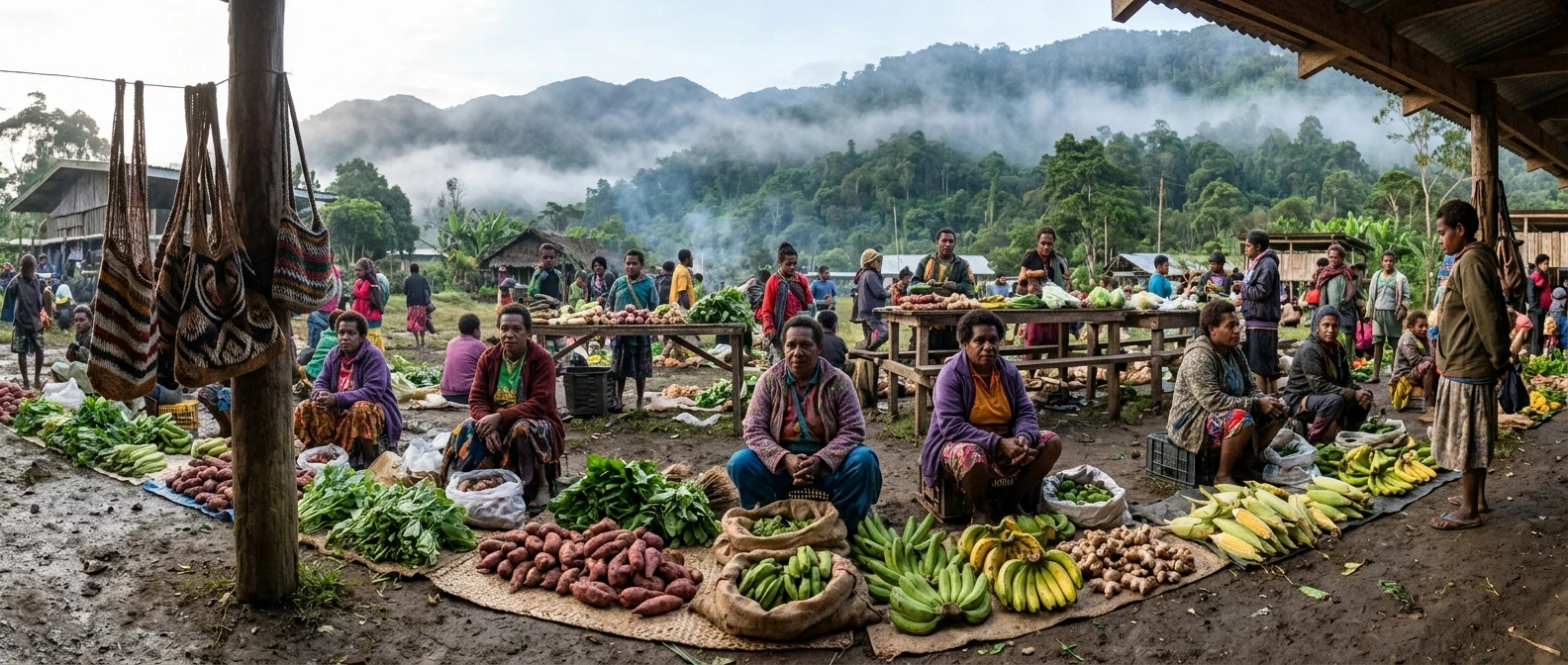
Walk through a produce market in Lae, Goroka, Mt. Hagen or Kokopo and many of the people behind the tables are women selling food they grew themselves. Some of them also run a trade store, a sewing machine or a cooked-food stall, and the income pays for school fees, food, medicine and the next season’s seed. These women are the main subject of the research on women entrepreneurs in Papua New Guinea that we want to discuss .
Why the work of PNG women is so often told in a single line
Most coverage reduces a woman’s work to a sentence: she sells vegetables, she leads a women’s group, she weaves bilums. The sentence is accurate and tells a reader almost nothing.
It leaves out how she found the money to start, how she gets her goods to a buyer, who looks after the children while she is at the market, and what she did when something went wrong. Those details are what a student, a woman in another province or a reader overseas can use. They are also what separates a real story from a tribute.
A good profile answers a short list of plain questions:
- What did she build, and how big is it?
- Where did the starting money come from?
- How do her goods or services reach customers?
- Who else depends on it, as employees, suppliers or family?
- What nearly stopped it, and what did she do about that?
A woman with a stall of betel nut and cooked food and a woman running a village savings group both qualify. What matters is that the story shows the actual work and the actual cost.
Women running the stalls, shops and small businesses households depend on
Small business in PNG covers a wide range: fresh produce, cooked food, bilums and other crafts, trade stores, tailoring, hair and beauty services, and market resale. Much of it is cash business. Money comes in daily in small amounts, and that same money has to restock the table, pay for transport and feed the household.
That makes the margin between a good week and a bad one very thin. A single failed delivery, a spoiled batch of produce or a family emergency can use up the stock money. Where a market charges a fee for a table or space, that fee comes out of the same small pool.
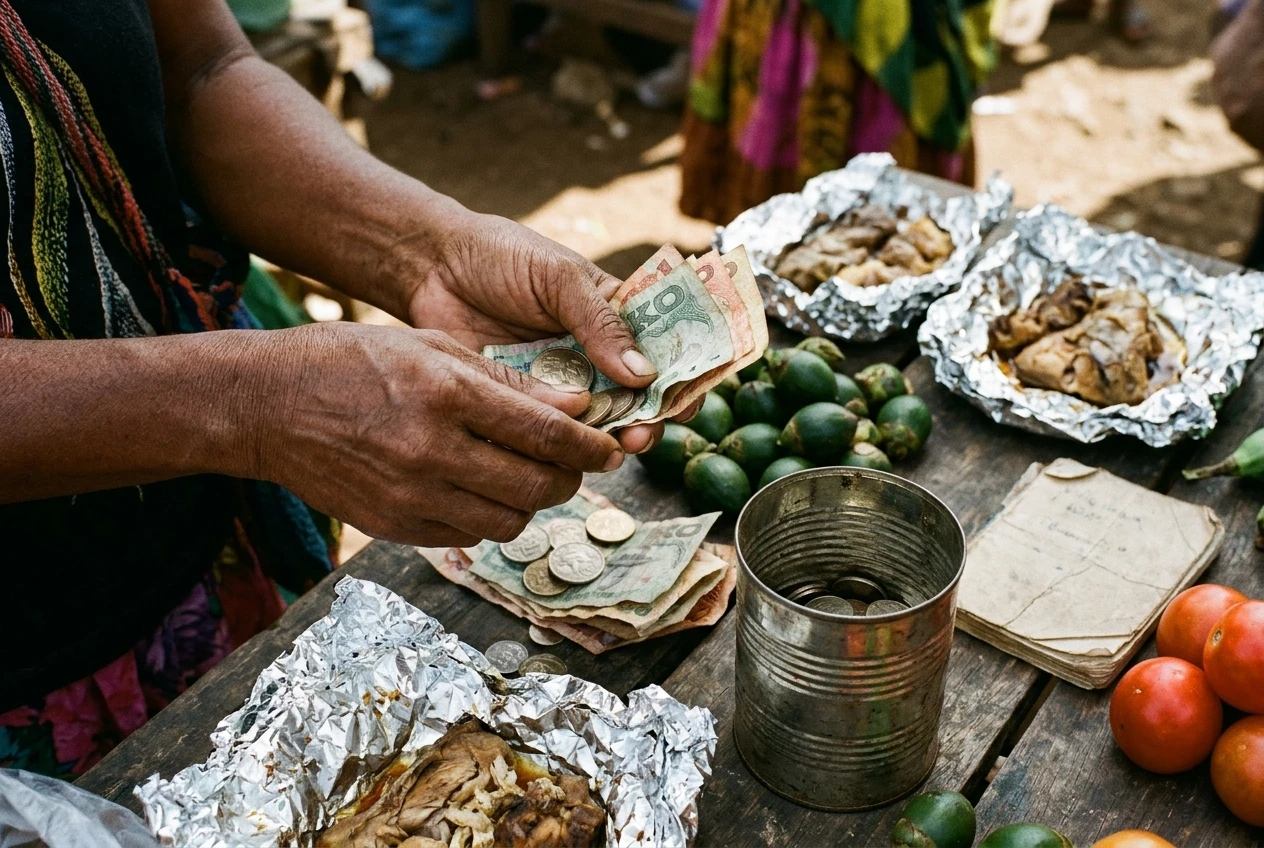
This is why a profile of a stallholder needs numbers that make sense to the woman herself: how she buys stock, how she decides what to sell, how she keeps track of what she is owed. Those habits are where a business survives or fails, and they are worth recording in her own words.
Some women move from one table to a shop, or from selling for others to supplying them. Those steps are the stories we most want to document, because they show that growth is possible and what it required.
From garden to income: women in farming, coffee and cooperatives
For many households the garden is the first business. Food crops feed the family, and surplus goes to market. Cash crops such as coffee are grown by smallholder families in the Highlands, and in many households women do a large share of the planting, weeding and harvest work.
Who receives the money is a separate question. When a cash crop is sold in one lump, payment can go to whoever carries it to the buyer, which is not always the person who did most of the labour. Profiles of farming women should say plainly who sells, who is paid, and who decides how the money is spent. Households answer this differently, and it should be reported as each woman describes it.
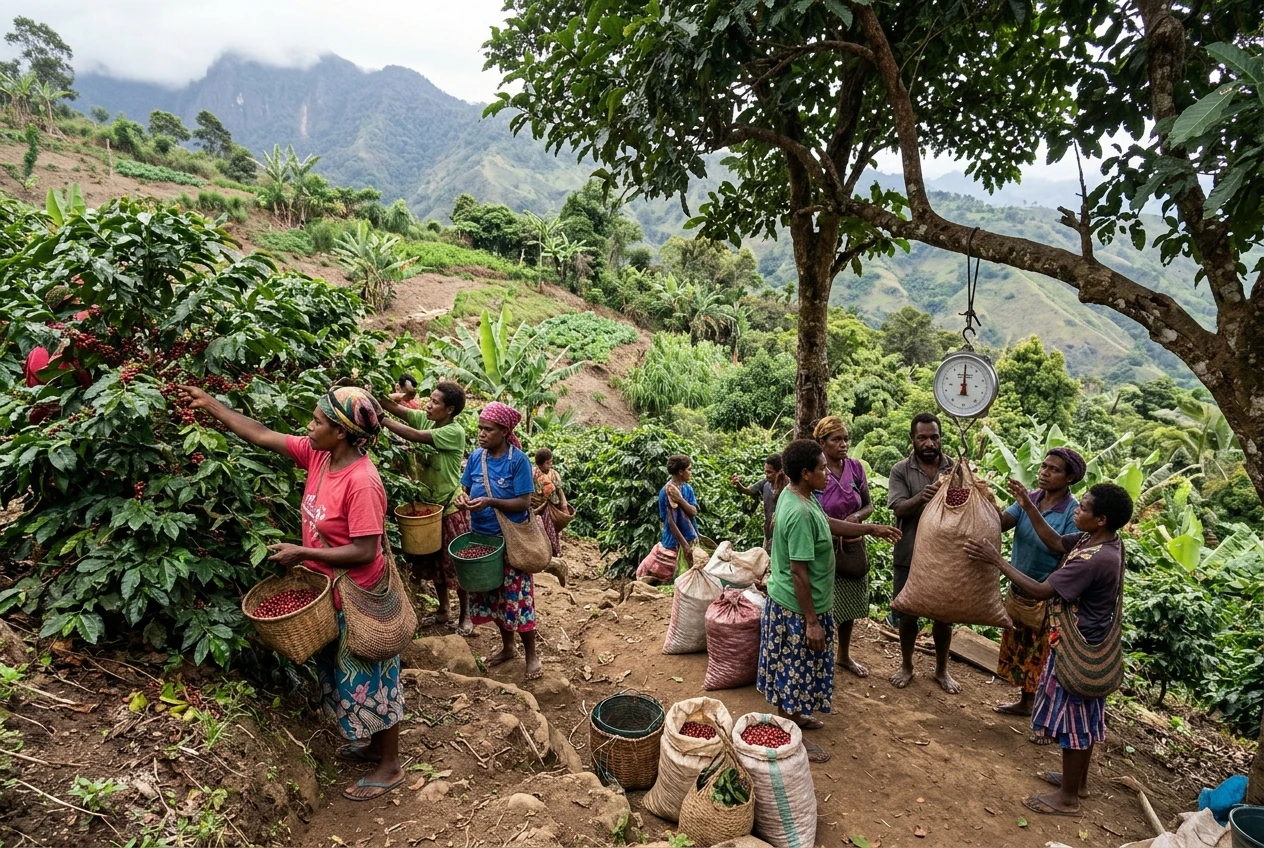
Cooperatives and producer groups are another route. Members pool their produce so a buyer will collect a larger quantity, and a group can sometimes get a better price or a more reliable pickup than one family selling alone. A cooperative also depends on trust: someone holds the account, someone records who delivered what, and someone answers when payment is late. When we profile a woman in a cooperative, we will ask who holds those roles and how members settle disagreements.
Women holding village health, school and church work together
A lot of local development work is unpaid, and much of it falls to women. Church women’s groups organise visits to the sick, collect contributions, prepare meals for gatherings and support families going through a loss. Women serve on school committees, help maintain classrooms and make sure a school has what it needs to keep running. Where health services are far away, women often act as the first helper when someone in the village falls ill.
This work rarely appears in business coverage, but it supports business. A village with a functioning school and a nearby health post is a village where a woman can spend a day at the market without worrying about who is looking after the children.
The work also connects to the stories we have already told. Teaching in a remote area depends on parents and community members who keep the school running, as we describe in what it takes to teach in a remote PNG school. Who gets a voice in community decisions is covered in our piece on traditional leadership in Papua New Guinea. Women’s roles sit inside both of those systems, and a profile should say where a woman’s work fits within her own community’s way of making decisions.
The obstacles they work around: money, transport, safety and time
These four barriers shape nearly every story we expect to document. We name them here so each profile can say how a specific woman deals with them, rather than treating them as background.
Money
Starting a business takes capital, and getting a loan is hard for many people. Because most land in PNG is held under custom, it is often difficult to use as security for a bank loan. Bank branches can be far from villages, and a woman who cannot reach one easily may keep her money at home. Some women pool savings in a group and lend to members in turn. Such a group is a practical answer to a real gap, and it is worth explaining in detail when a woman uses one.
Transport
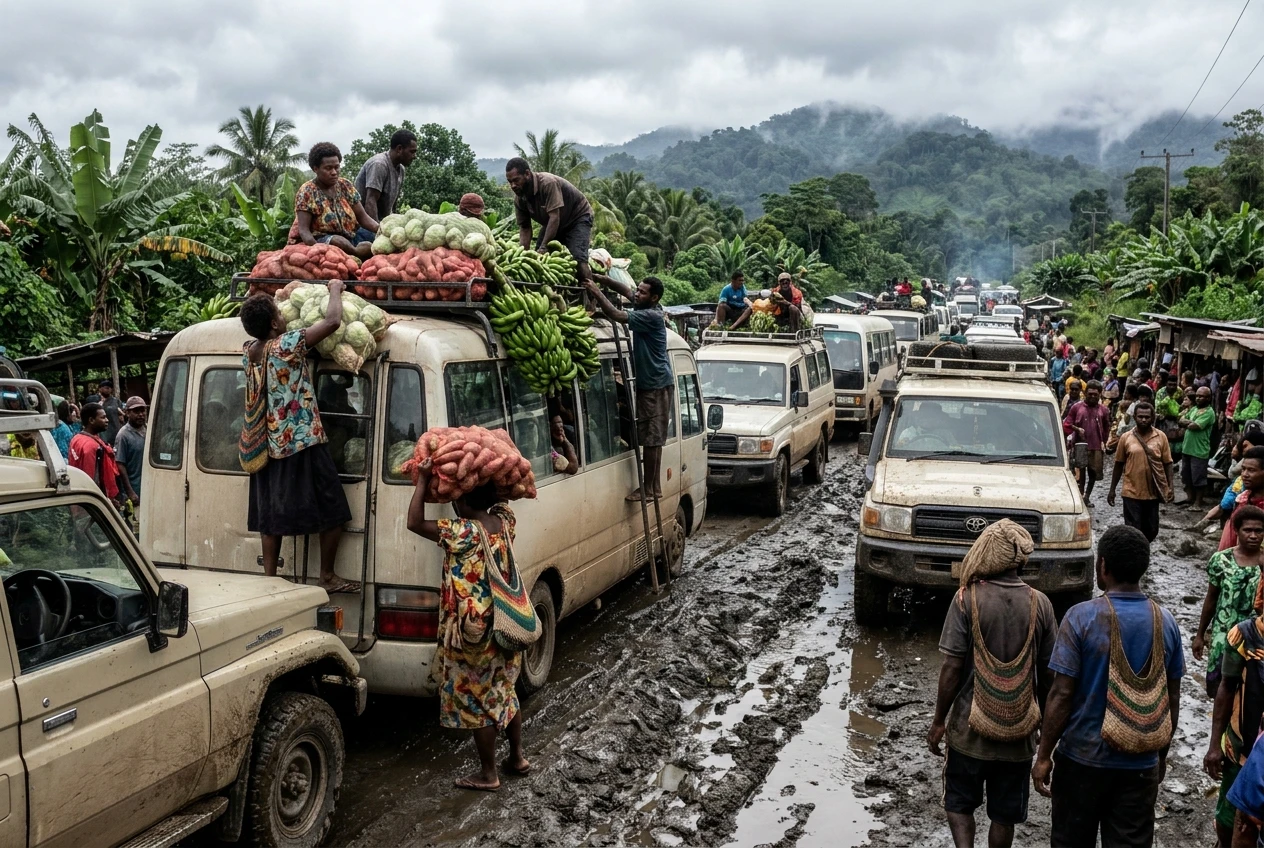
Goods that cannot reach a market on time lose value. Road conditions, the cost of a PMV seat or a boat passage for both the woman and her produce, and the limited number of services in some areas all add cost and risk. Fresh produce is especially exposed, because a delayed trip can mean a spoiled load.
Safety
Travelling to and from markets, and working in busy public places, carries real risks for women. We will report this honestly when a woman raises it, and we will take care not to publish details, such as a daily route or an exact stall location, that could put her at greater risk. How she protects herself, for example by travelling with others or choosing her hours, is useful for other women to read, as long as she is comfortable sharing it.
Time
Women running businesses usually carry the household work as well: cooking, gardens, childcare and caring for relatives. Time is a cost that does not show up in any account book. A profile that leaves it out gives a false picture of how hard the business is to run.
None of these barriers defines the women we write about. They are conditions each woman has had to plan around, and the plans are the part of the story readers can learn from.
What we checked, who gave permission, and how we told these stories
Every profile on PAPUANIUGINI.ORG must meet the same standard before it is published.
Permission comes first. A woman is featured only if she agrees. She also decides whether her full name, her village or district, and her photograph are published. If she agrees to the story but not the photograph, the story runs without one.
The business or project must be real and described accurately. We confirm what she does with more than one source where possible, such as a customer, a supplier, a church or community leader, or an official record if the business is registered. We do not publish a claim about size, income or employees that we cannot support.
Quotations are her own words. We use direct quotes only when she actually said them, and attribute them to her. We do not invent a quotation, tidy it into something she did not mean, or attach a lesson to her experience that she did not draw herself.
Her account is checked with her before it goes live. A profile gets facts wrong if the woman it describes has not read it. She can ask for corrections, and if a mistake appears after publication, we correct it openly.
Photographs are used only with permission. A photo of a woman at her stall requires her agreement, and photographs of other people in the frame, especially children, need theirs or a parent’s.
Respect shapes the telling. We write about what a woman built and how, not about her hardship as a spectacle. Where Tok Pisin words come from her, such as meri (woman), wantok (a member of one’s extended group, often those who share a language or origin) or bilum (the traditional woven bag), we keep them and explain them for readers who do not speak the language.
Know a woman making a difference in your province? How to nominate her
Women doing this work exist in every province, and a site that covers only Port Moresby and the main towns would miss most of them. Readers know who is running the busy stall, the cooperative or the women’s group that keeps a village going. We cannot find these stories from a desk.
If you want to nominate someone, send us what you know. The most useful nominations include:
- Her name, and the province, district or village where she works. If you are unsure of the province or region, our guide to every province on the Papua New Guinea map, sorted by region can help.
- What she does and roughly how long she has been doing it.
- Who else could confirm it, such as a customer, a church leader or a community member.
- Whether she knows you are nominating her, and whether she is willing to be featured.
- Whether she is comfortable with a photograph being taken or sent.
- The best way for us to reach her, or to reach you if you are acting on her behalf.
You can also nominate a woman who is not in business in the usual sense. A woman who organises a village health roster or runs a literacy class counts as much as one who sells at a market.
Know a woman in your province who is building a business or improving her community? Send us her story through our contact page, with her permission to be featured, and we will verify it and consider it for a future profile.