Ok Tedi mining is the copper and gold operation at Mount Fubilan in the Star Mountains of Western Province, with the mine town of Tabubil beside it. It has produced since 1984, and few projects in Papua New Guinea have been argued over as long or as hard. For a worker in Tabubil, a village family on the Fly River and a Treasury official in Port Moresby, the same mine means three very different things.
This article takes those three views in turn: workers and job seekers, communities along the river system, and the national economy. It does not quote figures that need an official report behind them. Where a number matters, it names the source to check, so you can read the original and not rely on a summary, including this one. For the wider picture of PNG’s mines, see our overview, How Mining Shapes PNG: The Mines, the Money and the Rules.
Ok Tedi in plain terms: where it is, what it mines and why it matters
The mine is in the far west of the country, in the upper catchment of the Fly River. It is an open-pit operation: rock is blasted and hauled from a large pit on Mount Fubilan, crushed, and processed into a copper-rich concentrate that also carries gold. The concentrate is the product that is sold. The mine does not produce finished copper or gold bars on site.
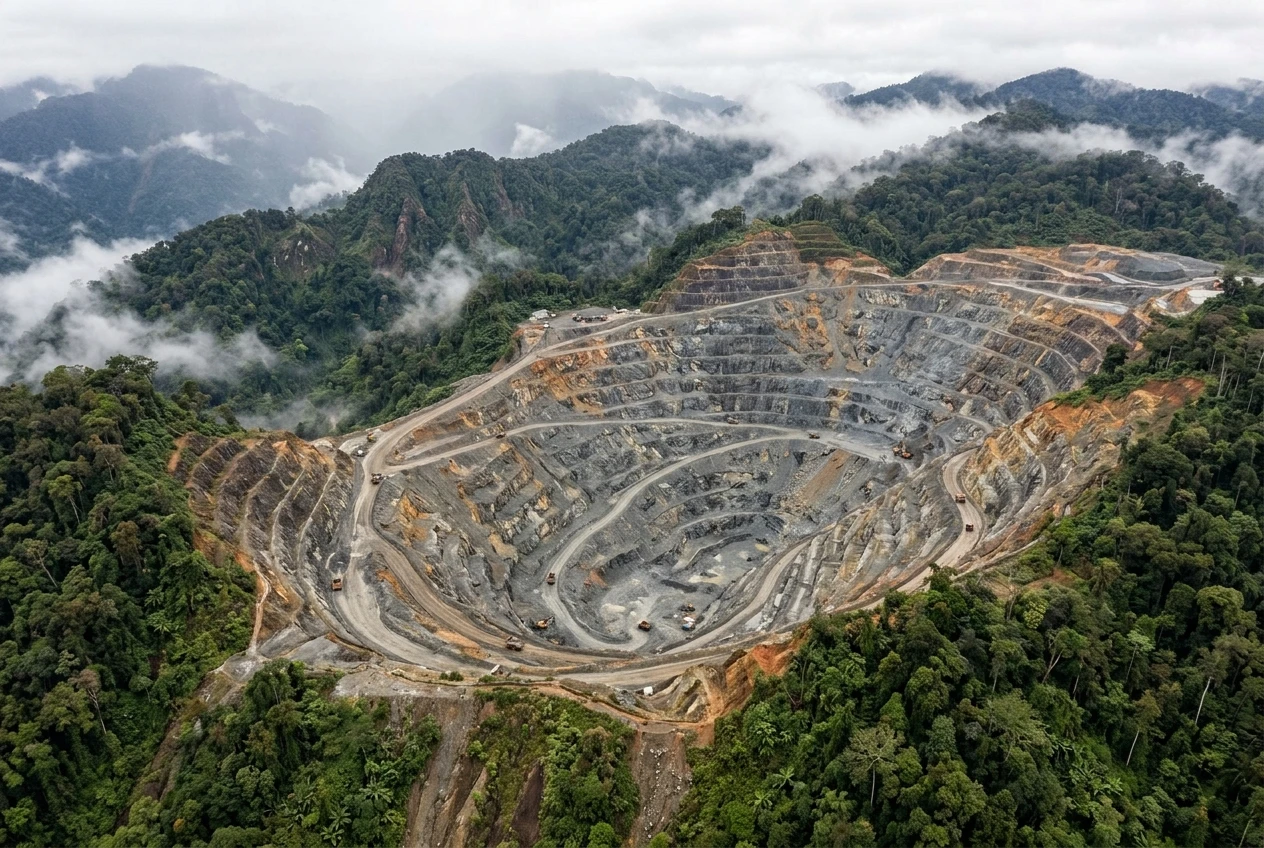
Tabubil is the operation’s town, and Kiunga on the Fly River is its river port and supply link. The mine is remote, so the road, the town and the river are all part of how it works. That remoteness matters later in this article, because the river that carries supplies is the same river system that carries the mine’s waste.
Ok Tedi matters for three reasons:
- It is a major employer in a province with few other formal jobs.
- It pays taxes, royalties and other amounts to government at national and provincial level.
- Its waste handling has changed the river environment for communities who live far below the mine.
All three belong in any honest account, and no single one tells the whole story.
Who has owned and run Ok Tedi: past names versus the present arrangement
Readers searching for ok tedi mining often meet old names in old articles, and that causes confusion. The mine was developed in the early 1980s by a consortium led by the Australian company BHP, which was also the operator. Older reports, court papers and books refer to the mine in those terms.
BHP withdrew in 2002. Its shareholding in Ok Tedi Mining Limited (OTML) was transferred to the PNG Sustainable Development Program (PNGSDP), a long-term fund set up to use mine income for development in Western Province and elsewhere in the country. Much that was written between 2002 and 2013 describes this arrangement.
In 2013 the PNG Parliament passed legislation that moved the PNGSDP shareholding to the state. That led to a legal dispute outside PNG, involving the Singapore-based PNGSDP. Today OTML is a PNG company, with the state’s mining holding company as its principal shareholder and Western Province interests holding a stake.
Because shareholdings have changed through legislation, agreements and court processes, do not rely on a percentage you read in a news story or social media post. The reliable places to confirm the current position are:
- OTML’s own website and annual or sustainability reports, which state who the shareholders are.
- The Mineral Resources Authority and the Department of Treasury for government statements on the state’s interest.
- The published judgments of the relevant courts for the legal disputes, not commentary about them.
The practical rule for any article, including this one: check the date. A page written in 2005 describes a different owner from a page written after 2013.
What the mine brings: jobs, training, contracts and government revenue
A large mine creates several kinds of benefit, and each one reaches different people.
Jobs and training
A mine of this kind employs people directly and also through contractors. The direct workforce typically includes heavy equipment operators, mechanics and fitters, electricians, geologists, engineers, environmental and laboratory staff, safety officers, community relations staff, and finance and administration people. Contractor companies employ cooks, drivers, security staff, builders and suppliers’ workers, so the workforce at a mine town is larger than the company’s own payroll.
Training is part of this. Mining companies in PNG generally run apprenticeships, trades training and graduate programmes, because skilled people are hard to hire in remote places. What OTML offers in any given year, and the entry requirements, should be read from its own careers pages, since programmes open and close.
Contracts and business opportunities
Supplying the mine and the town creates work for landowner and local businesses: catering, transport, construction, cleaning, equipment hire and many others. Whether those contracts reach ordinary families or a small circle depends on how contract rules, landowner company registers and company procurement are run. That is a reasonable question to ask in any mine community.
Government revenue
Revenue to government comes through several channels: company tax, royalties set under the Mining Act 1992, and dividends where the state is a shareholder. How much, in which year, and how it was shared between national and provincial government are questions with documented answers. The places to look are OTML’s published reports, the national budget documents from the Department of Treasury, and the reports of the PNG Extractive Industries Transparency Initiative, which exist to show what companies pay and what governments receive.
A word of caution on any single headline figure: revenue changes with metal prices, production levels and the tax and dividend arrangements in force at the time. A number from one year says little about another.
Life downstream: the environmental record and what communities have lived through
This is the part of the Ok Tedi story that the mine’s economic benefits cannot cancel.
When the mine was built, a tailings dam was planned to hold the fine waste left after processing. Unstable ground at the site, including a landslide in 1984, meant the dam could not be completed. Without it, tailings and waste rock went into the Ok Tedi river and on into the Fly River system. This was a decision with long consequences, and it is well documented in company, government and independent research.
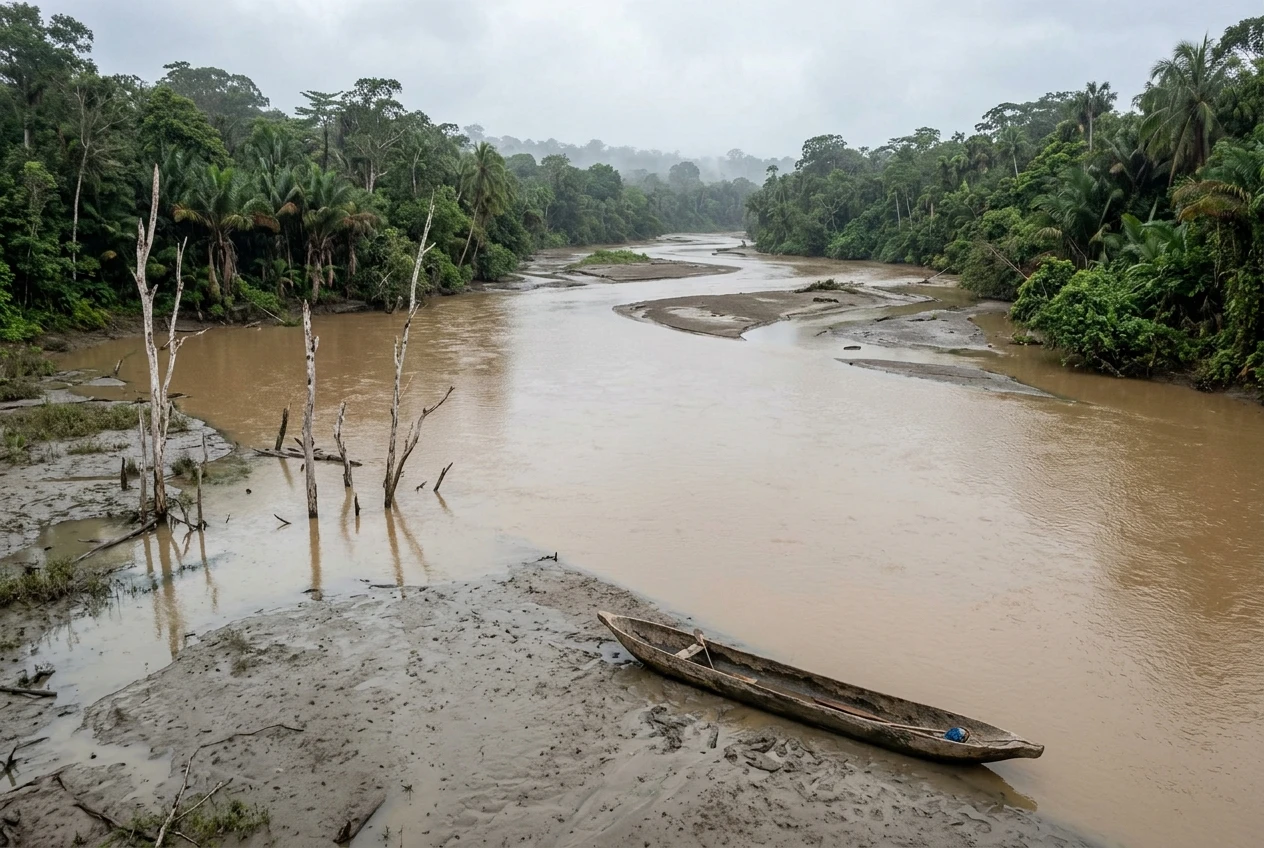
The effects people describe, and that researchers have studied, include:
- Sediment building up in river beds, which raises water levels and increases flooding along the banks.
- Dieback of forest in areas that the flooding and sediment reached.
- Changes to fish populations and to the gardens and food sources that river families depended on.
- Disruption to travel, because river transport is how many villages move people and goods.
Communities took legal action. In the mid-1990s, landowners brought claims against BHP in the Victorian Supreme Court in Australia, and those claims were settled in 1996. A later phase of agreements followed, and dredging of the lower Ok Tedi river began in the early 2000s to take sediment out of the river channel. Dredging reduces the problem at certain points but does not return the river to its earlier condition.
It is fair to say the mine’s environmental history has been criticised heavily by communities, researchers and, at times, by companies that were involved with it. It is also fair to say that the company, the government and community groups have since negotiated compensation and management arrangements. Both statements are true, and a reader serving Western Province communities should hold them together.
What is still contested, and what only the sources can settle, includes how far the damage extends, how long it will last, how much of it is repaired by present measures, and whether compensation matched the harm. For those questions, read OTML’s environmental monitoring reports alongside independent research and the court records, and note who produced each document.
How benefits reach communities: agreements, development funds and who decides
Money and services reach communities through several channels. They are not the same thing and are not governed by the same people.
Royalties and landowner benefits under the Mining Act. The Mining Act 1992 sets out how mineral royalties are shared between the national government, the provincial government and landowners. Landowner groups are identified through a process of registration, and the share reaches families through landowner companies or trusts.
Mine continuation and community agreements. Over time, Ok Tedi has been covered by agreements between the company, the state and communities. These agreements generally sort communities into groups according to how close they are to the mine or how directly the river affects them, and they set out compensation and development payments for each group. Community trusts were set up to hold and spend some of those funds.
Development funds. The PNG Sustainable Development Program was created to channel income into long-term development, which is why who controls it, and the 2013 legislation, drew so much attention. Provincial and local-level governments also receive money tied to the mine, and what they spend it on appears, or should appear, in provincial budgets and audit reports.
Questions that a community member can reasonably ask about any of these:
- Which agreement covers my village, and where can I read it?
- Who sits on the trust or landowner company board, and how are they chosen?
- Are the accounts audited, and who is entitled to see the audit?
- Which projects were paid for, and were they completed?
A landowner or village leader may be entitled to copies of agreements and trust accounts. If you are unsure of your rights, the Mineral Resources Authority, the provincial administration and legal aid organisations are places to start asking.
Working at Ok Tedi: skills, training pathways and where to find official vacancies
For a student or job seeker, the first practical point is where jobs are advertised. Check the careers page on OTML’s official website, and treat that as the primary source. Vacancies that are real are published there, and genuine recruitment through contractors is also named by the contractor itself.
Fake job advertisements circulate widely on social media and messaging apps around well-known companies. Some ask applicants to pay a “registration fee”, a “medical fee” or a “processing fee”. As a rule, a legitimate employer does not charge an applicant to apply. If an advertisement asks for money, does not name the hiring company, or sends you to a personal email address, check it against the official site before you reply. Our approach on this site is to link to official recruitment channels and to separate verified vacancies from general career information. This article is career information only. It does not list any vacancy.
Skills that mines of this type generally hire for, and that a student can start building now:
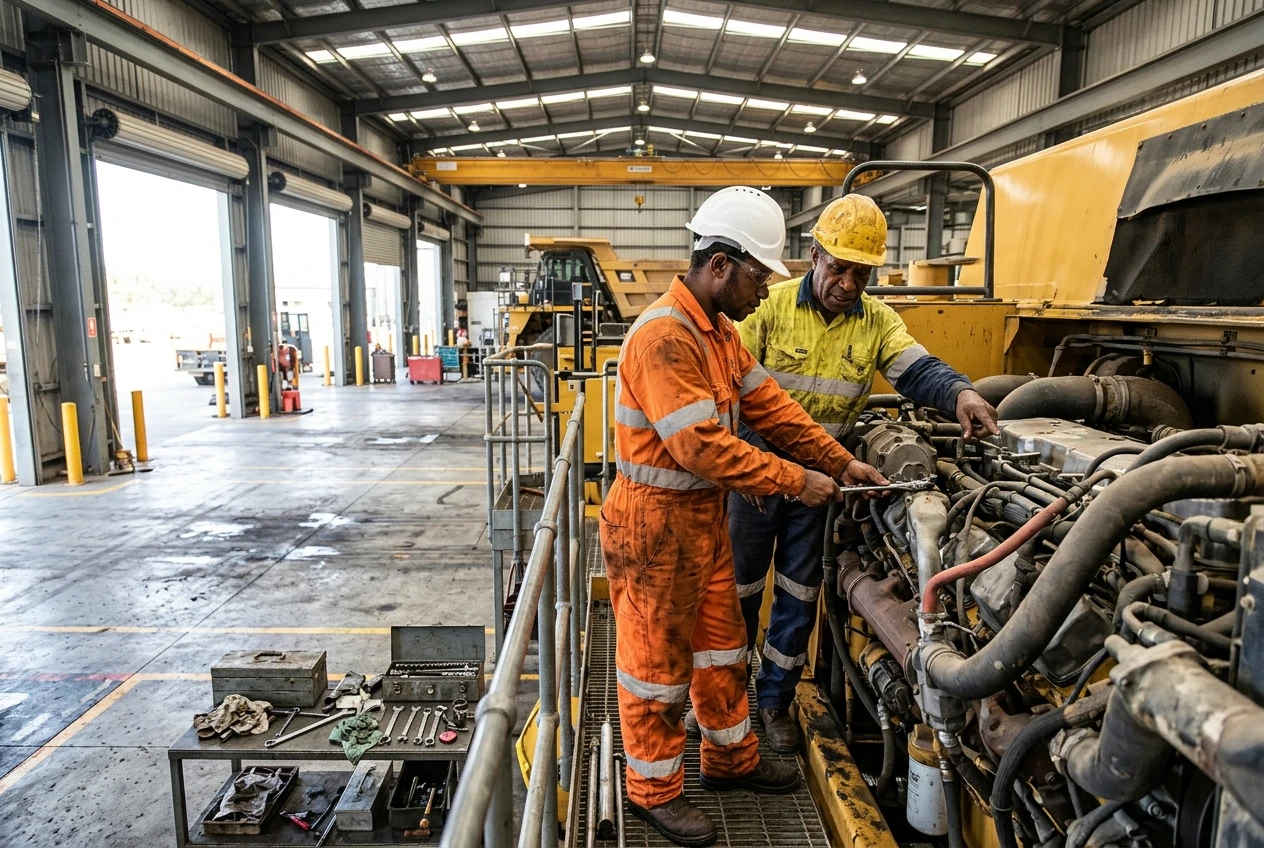
- Trades: heavy diesel mechanics, electrical, boilermaking, fitting and machining. These usually start with an apprenticeship or a technical college qualification.
- Operations: truck, loader and plant operators, who are typically trained on site after a basic selection process.
- Professional roles: engineering, geology, surveying, metallurgy, environmental science, accounting and human resources. These need a relevant university degree.
- Support roles: safety, health, community relations, supply and logistics.
For applications, keep your certified copies of school and trade certificates ready, along with an up-to-date CV and a valid ID. Many remote-area applicants can apply only when they have a working phone and email, so it helps to set up a stable email address before applications open. If internet access is poor where you live, ask the nearest provincial labour office or training institution how they pass on vacancy information.
Questions worth asking about Ok Tedi’s future and mine closure
Every mine closes eventually, and the date for Ok Tedi has moved more than once as the company and government extended the mine’s life. The current planned end date is stated in OTML’s own documents, and readers should read that rather than rely on a figure repeated from older articles.
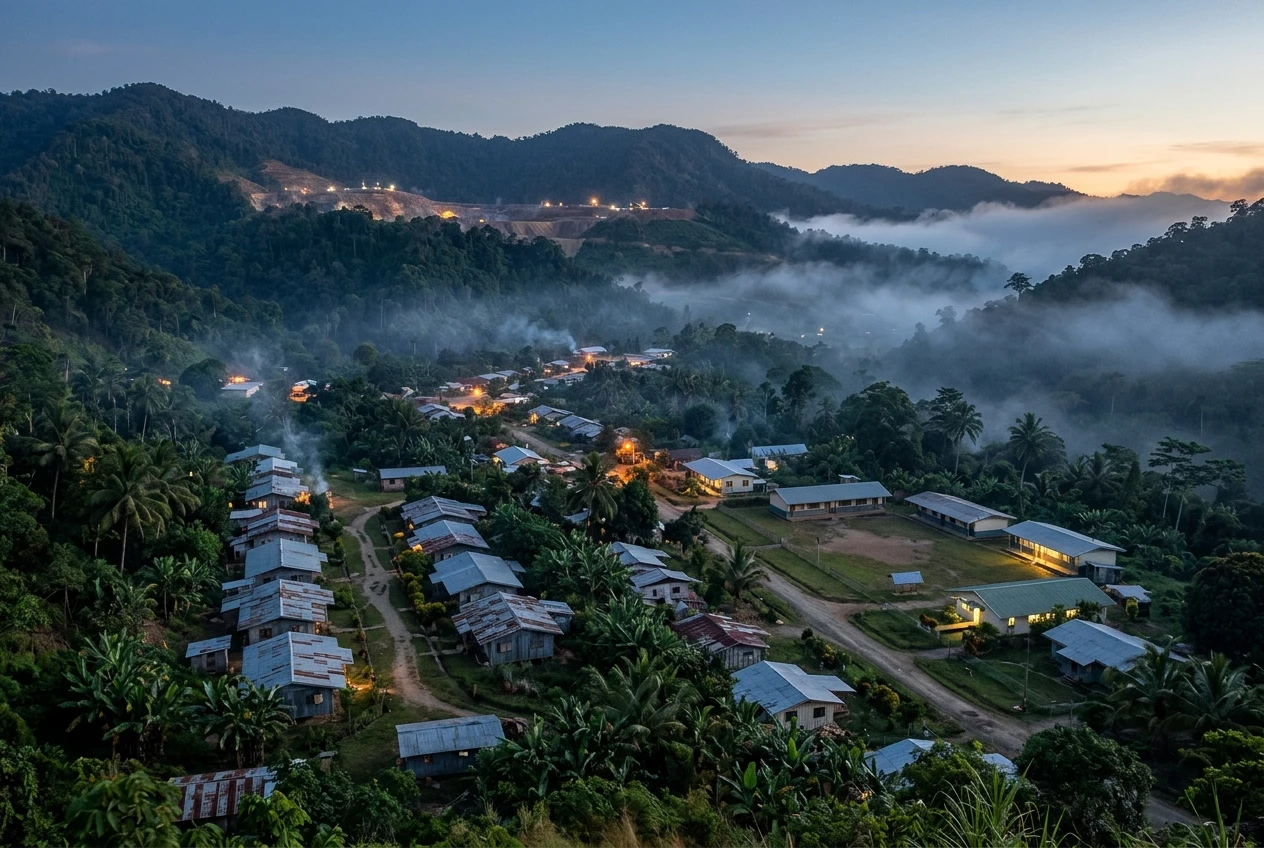
Closure planning matters most to the people who will be there afterwards. Some questions worth putting to the company, the government and community leaders:
- What is the closure plan, and who has seen it? Mine closure plans normally cover what happens to the pit, waste rock, tailings and infrastructure, and who pays for it.
- Who funds the long-term costs? Environmental care continues after the last ore is processed. The question is whether money is set aside in advance and who controls it.
- What happens to Tabubil? A town built for a mine needs a plan for its schools, health services, housing and utilities once the mine’s payroll is gone.
- What will the river system look like? Sediment and tailings already in the system do not leave when the mine stops. Monitoring and management have to continue, and someone has to be accountable for them.
- What will replace the jobs? Western Province has few other large employers. Training, business development and development funds are the tools for building alternatives, and their results can be checked while the mine is still operating.
- Are benefits reaching the places most affected? Communities along the river, not only those near the pit, are part of the answer to who benefits.
These questions apply to every mine in PNG, and the answers for Ok Tedi will be a test of how the country handles the end of a major project.
Live or work in Western Province, or know someone with a verified Ok Tedi story? Get in touch through our contact page to share a story, a correction or local information.