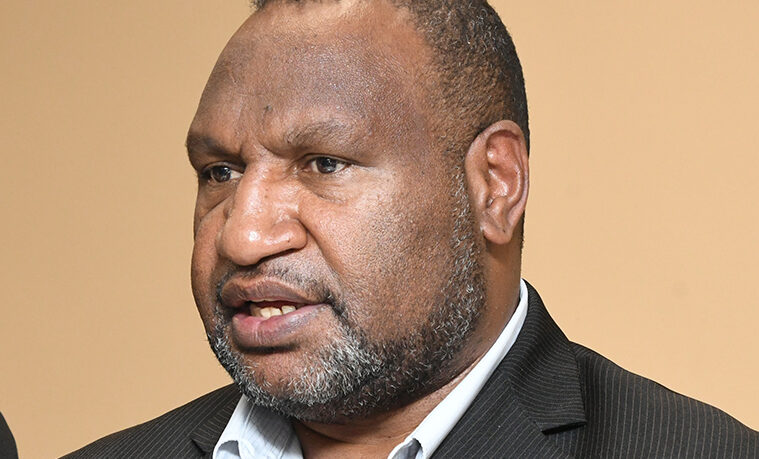
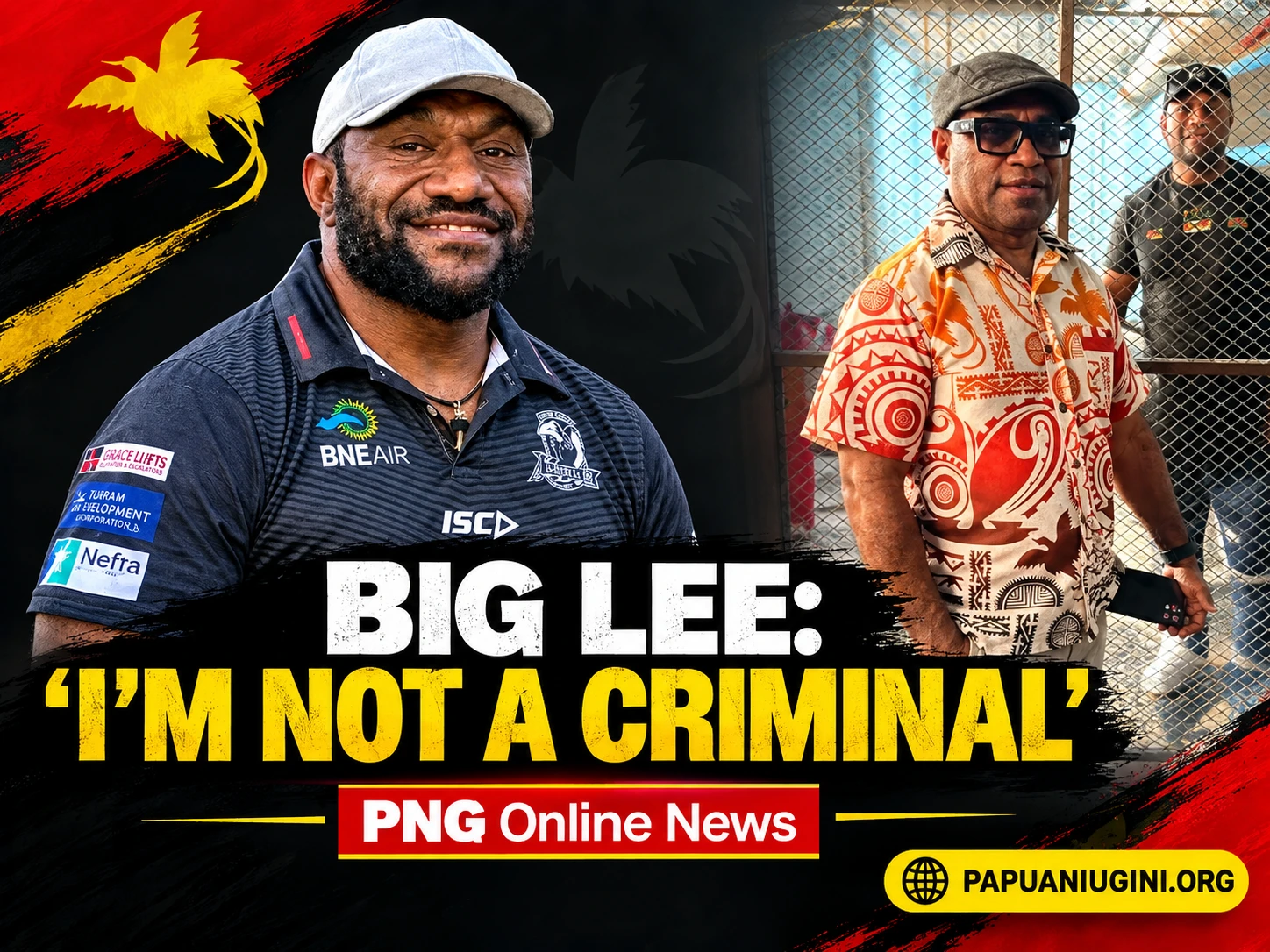
Supporters of popular PNG social media commentator Big Lee say he has been arrested, and they are calling for transparency, a fair hearing and respect for freedom of expression. This article sets out what is known about the reported Big Lee arrest, what is not, and what PNG law says about arrest, bail and online speech.
What we know so far
This week, posts and videos circulating on Facebook reported that Big Lee, one of Papua New Guinea’s best-known online commentators, had been taken into police custody. One supporter publicly announced plans to post bail for him as soon as police formally charged him, and asked the public to contribute towards it.
As of publication on Friday, 30 October 2026, PAPUANIUGINI.ORG has not been able to independently confirm the arrest, the specific charges, the identity of any complainant, or an official statement from the Royal Papua New Guinea Constabulary (RPNGC). This article will be updated when verified information becomes available. Until then, treat social media claims from any side with care.
Who is Big Lee?
Big Lee is the name behind a widely followed PNG social media presence known for commentary on governance, leadership and community issues. In July 2025, when a popular “Big Lee” page was shut down, a letter published in The National argued that the page had been an important platform for critical voices and that its removal was a blow to free expression online.
More recently, Big Lee was among the community voices who publicly criticised NCD Governor Powes Parkop over the 9 Mile evictions in Port Moresby.
What supporters are calling for
A statement shared widely under the banner “PNG IS WATCHING” sets out the position of Big Lee’s supporters. In summary, it argues that:
- Police are law enforcers whose duty is to uphold the law, protect citizens and respect individual rights.
- Questioning police conduct or public officials should not automatically be treated as an offence.
- If Big Lee has been arrested, the public deserves a clear explanation of the legal grounds.
- Every citizen is entitled to due process, legal representation and a fair hearing.
The statement says explicitly that it is not a call for violence. Its five demands are freedom of expression, respect for human rights, transparency in law enforcement, accountability from public officials, and equal justice for every Papua New Guinean. Supporters also pointed to South Africa’s struggle against apartheid to argue that no nation should let fear or intimidation silence its people. The statement closes with the national rallying line: One People. One Nation. One Future.
What the Constitution says
Several of these demands correspond to rights written into PNG’s supreme law.
Freedom of expression (Section 46). The Constitution gives every person the right to freedom of expression and publication, including the freedom to hold opinions and to receive and communicate ideas and information. The right is qualified: a law that meets the requirements of Section 38 can regulate or restrict it. In short, a restriction must be reasonably justifiable in a democratic society.
Liberty of the person (Section 42). A person who is arrested or detained must be told promptly, in a language they understand, the reasons for the arrest and any charge against them. They must also be allowed, whenever practicable, to contact a family member or friend and to consult a lawyer of their choice. Section 42 also generally entitles a person charged with an offence (other than treason or wilful murder) to bail, unless the interests of justice require otherwise.
The supporters’ call for “a clear explanation of the legal grounds” for an arrest therefore asks for something every Papua New Guinean is already entitled to.
The law that often applies to online speech
It is not yet known what Big Lee may be charged with. In recent years, however, many arrests linked to social media posts in PNG have been made under the Cybercrime Code Act 2016, particularly Section 21(2), defamatory publication.
Key facts about that law:
- Defences exist. Section 21(5) provides defences, including that the published material was true or was for the public benefit.
- The courts have upheld it. PNG’s Supreme Court ruled that although Section 21(2) restricts freedom of expression, it complies with Section 38 and is therefore a permissible restriction under the Constitution.
- Penalties are heavy. The CIVICUS Monitor has reported maximum penalties of up to 25 years’ imprisonment or a fine of up to K1 million.
Recent cases show how the law has been used:
- Eddie Tanago, campaign manager for the environmental group ACT NOW!, was arrested and charged under Section 21(2) in December 2024 over a social media post relating to the PNG Forest Authority. ACT NOW! described the charge as an overreach intended to intimidate.
- Hennah Joku, a journalist and gender activist, was detained and charged under the Act in November 2024 following defamation complaints.
- Jonathan Kami, 27, of Madang Province, was arrested in April 2025 for allegedly making defamatory comments about police officers on Facebook. Madang’s provincial police chief used the case to urge responsible use of social media.
These cases are read in opposite ways. Civil society groups see a pattern of the law being used against critics. Police and complainants point out that defamation, harassment and misinformation cause real harm, and that people who are defamed are also entitled to the protection of the law.
Sponsored: Keeping independent PNG commentary online takes resources. Check out today’s featured offer from our sponsor and help support PAPUANIUGINI.ORG.
The bigger picture: online freedom in PNG
Whatever the details of Big Lee’s case turn out to be, it comes in a country already debating how far the state should go in regulating online speech.
- The 2025 Facebook shutdown. In March 2025, Facebook was blocked nationwide in what officials described as a “test” aimed at hate speech, misinformation and pornography. Researchers at the Development Policy Centre noted it was the first time since Independence in 1975 that any form of media had been shut down in PNG, affecting an estimated 1.4 to 1.6 million users.
- International scrutiny. In its 2026 submission to the United Nations Universal Periodic Review, Transparency International PNG recommended ending the use of the Cybercrime Code Act to arrest, detain and prosecute people for peaceful expression online.
- Trust in policing. Police Commissioner David Manning has acknowledged discipline problems in the force. In early 2025 he stated that more than 400 officers had been dismissed over an 18-month period as part of a crackdown on misconduct. Public trust in the police depends heavily on how they handle high-profile, politically sensitive arrests.
Balancing rights and responsibilities
Several things are true at once:
- An arrest is not a conviction. If charged, Big Lee is presumed innocent until proven guilty in court.
- Police have a duty to act on lawful complaints. They must also explain the basis of an arrest and respect the detained person’s rights.
- Criticising leaders is a normal part of democracy. The Constitution protects expression while allowing reasonable legal limits such as defamation laws.
- Facts must come first. Until the charge is known, neither supporters nor critics can say with certainty whether the arrest is justified.
The outcome that serves all sides is a public statement from police setting out the charge, prompt access to legal counsel, a timely court appearance, and a fair hearing on the evidence.
If you plan to contribute to the bail fund
Supporters have asked the public to help with Big Lee’s bail. If you choose to give:
- Contribute only through a person or account you can verify is genuinely connected to Big Lee or his legal team.
- Ask for confirmation that the funds go directly to bail or legal costs.
- Be cautious of copycat pages and fake fundraising posts, which often appear around high-profile cases.
What to watch next
- An official RPNGC statement confirming the arrest and charges
- Whether bail is granted, and on what conditions
- The court date and which court will hear the matter
- Any public response from the complainant (if there is one) or from the officials named in Big Lee’s commentary
PAPUANIUGINI.ORG will update this story as verified information is released.
Frequently asked questions
Is freedom of speech protected in Papua New Guinea? Yes. Section 46 of the Constitution protects freedom of expression and publication, subject to restrictions by laws that are reasonably justifiable in a democratic society.
Can you be arrested for a Facebook post in PNG? Yes. Under the Cybercrime Code Act 2016, publishing defamatory material online can be a criminal offence, although truth and public benefit are recognised defences.
What rights does a person have when arrested in PNG? Under Section 42 of the Constitution, they must be promptly told the reasons for the arrest and any charge, be allowed to contact family and a lawyer, and are generally entitled to bail except for the most serious offences.
Has Big Lee been charged? At the time of publication, the charge had not been officially confirmed.
Sponsored: See what our partner is offering today
One People. One Nation. One Future. Let the truth be heard, let justice be served, and let peace prevail.
Sources
- The National: Shut down of ‘Big Lee’ threatens free speech (July 2025)
- YouTube: Big Lee vs Powes Parkop (9 Mile eviction)
- Asia Pacific Report: CIVICUS Monitor criticises PNG use of cybercrime law
- CIVICUS Monitor: PNG: Cybercrime law used to criminalise expression
- Asia Pacific Report: Supreme Court rules on Cybercrime Code s21
- PacLII: District Court ruling citing s21(5) defences
- NBC PNG: Madang’s top cop urges responsible use of social media
- Devpolicy Blog: Silenced nation: the unprecedented Facebook shutdown in PNG
- TIPNG 2026 UPR factsheet
- ABC News: PNG police officer charged; Manning on 400+ dismissals
- PacLII: Section 46, Constitution of PNG