

If you want to know how to attend a cultural festival in Papua New Guinea, start with who the festival belongs to. A singsing, a show or a canoe festival is organised by communities, clans and provincial committees for their own reasons. Visitors are welcome at many of them, but they come as guests. That one fact shapes how you plan, what you pay, where you stand and what you do with your camera.
This guide is the practical companion to our feature on cultural festivals in Papua New Guinea, which shows what the big festivals look like. Here the subject is how to get there, what to ask, and how to behave once you arrive. It is written for first-time attendees, including Papua New Guineans travelling to another province and those living overseas who are coming home for the first time in years.
What a PNG festival is for
A singsing is a gathering where groups dress, sing and dance together. The word comes from Tok Pisin and covers a wide range of events, from a small village celebration to a large organised show. Many singsings mark something: a bride price exchange, a feast, a peace settlement, a remembrance, a successful harvest or a clan’s standing. Some of that meaning is public and some is not.
The large provincial shows were created later and bring many groups into one place. Groups come to compete, to display their culture and to meet people from other areas. Even there, each group is presenting its own heritage, in its own language, with songs and designs that belong to its people. Tourists are part of the audience, but they are not the reason the festival exists.
That is why a festival should not be treated like a theme park. Dancers are not actors, and the schedule printed on a poster is an intention, not a guarantee. A group may arrive late, a ceremony may run long, and a performance may be shortened or skipped for reasons that are private to the community. Go expecting to watch what is offered and to accept what is not.
Highlands shows, coastal canoe festivals and island celebrations
Papua New Guinea has hundreds of languages and cultures, so no single description fits every festival. The three broad types below differ in what they display and in who hosts them.
Highlands shows are usually held in towns such as Goroka and Mount Hagen, and bring together groups from many valleys and districts. Visitors often see elaborate headdresses, painted faces and bodies, and large groups moving together. Each group represents a particular community, and the decorations often identify where the wearers come from.
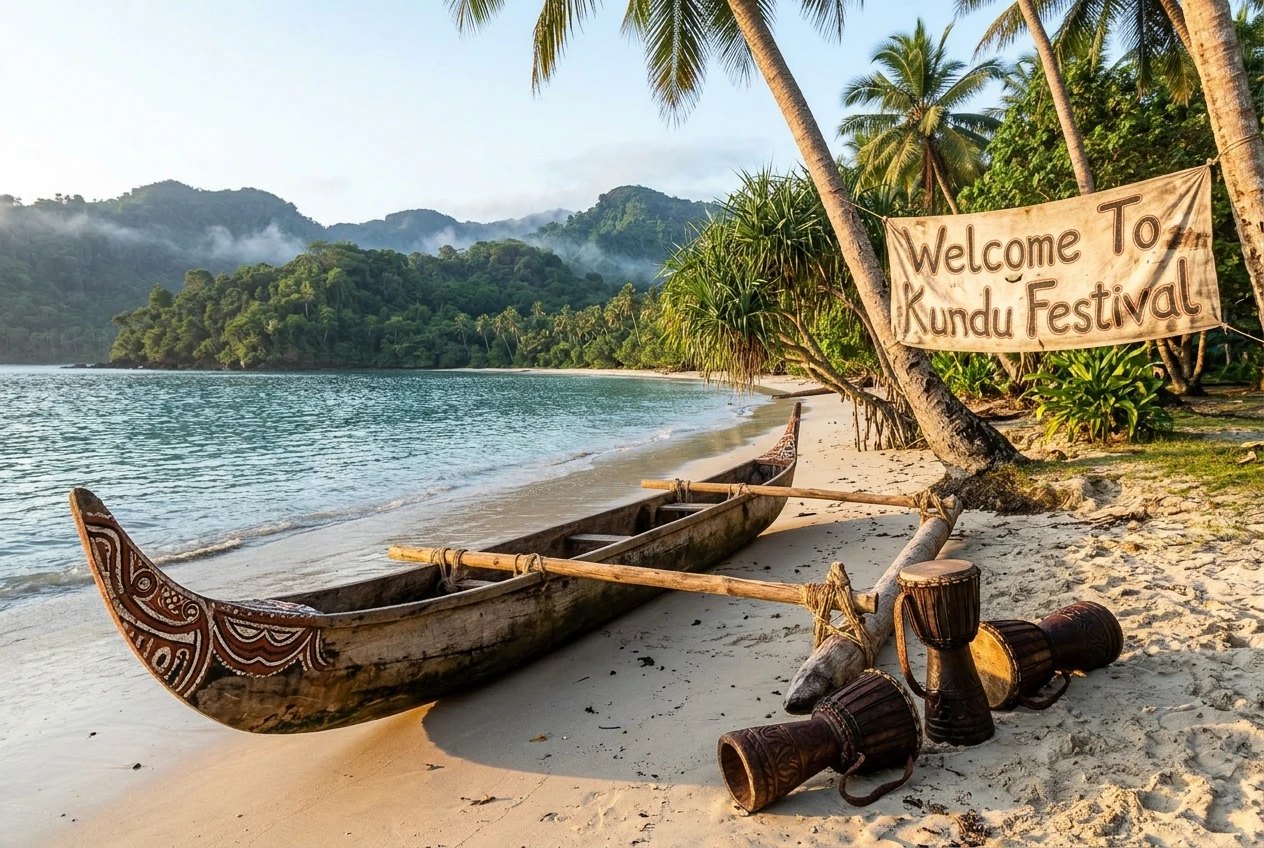
Coastal and river festivals often centre on canoes, kundu drums, water and trade routes. The Milne Bay Canoe and Kundu Festival in Alotau is one example. Canoes and carving carry the knowledge of the families who build and use them.
Island celebrations in the New Guinea Islands include mask festivals in the Gazelle Peninsula area around Kokopo and Rabaul. Masks and dance in this region can be tied to customary societies, so some things are meant to be seen only in certain ways.
If you are from one province and visiting another, remember that being Papua New Guinean does not make you an insider. Customs, language and protocol differ, and you are a guest in the same way a visitor from overseas is. Introduce yourself, say where you come from, and ask.
Before you book: why dates move
Fixed dates are the most common planning trap. Festival dates in Papua New Guinea can shift from year to year, and an event listed in a travel brochure or an older website may have been moved, shortened, merged with another event or cancelled. Funding, weather, community obligations, mourning periods, provincial government schedules and local security conditions can all change a date.
Before you pay for flights or accommodation that you cannot change, work through this list:
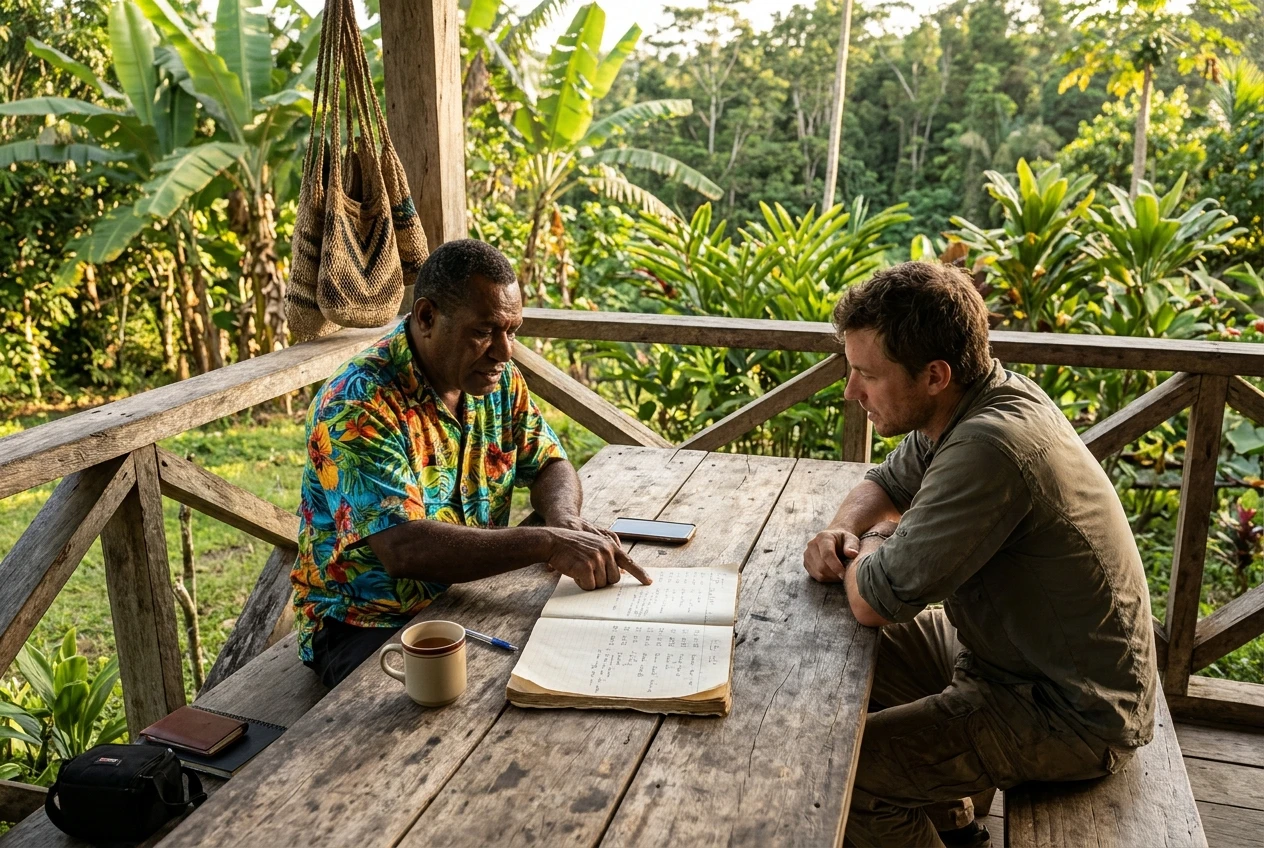
- Contact the organising body directly. For provincial shows this is often a show society, a provincial tourism office or a cultural committee. Ask for the dates in writing and ask when they will be finalised.
- Check with the provincial tourism authority or the national tourism body, and compare what they say with what the organisers say.
- Ask a local source: a guesthouse owner, a lodge, a church contact, a wantok or someone from the province. Local people usually know first when something has moved.
- Look at recent social media posts from the organisers and from people who attended the previous year, and treat them as clues rather than confirmation.
- Ask what the festival covers. Some events run over several days, with the main performances on only one or two.
Confirm again a week or two before you travel. A plan that depends on an unconfirmed date is a plan that may fail, and the cost of failure is often a non-refundable airfare.
If you are travelling from overseas, also check passport, visa and health requirements through official government sources, not through forums or social posts.
Getting there and staying there
Much of Papua New Guinea cannot be reached by a long road trip from Port Moresby, because the road network does not connect every province. Many places are reached by air or sea, and some by short flights followed by road or boat. Our essential travel tips cover wider trip planning. For a festival, a few things matter most.
Flights. Domestic flights can be full around festival time, and schedules can change. Book as early as you can once the dates are confirmed, check the change and cancellation terms, and leave a spare day on each end of your trip so that one delayed flight does not cost you the event.
Roads. The Highlands Highway links Lae with the Highlands towns, and road conditions and local security can vary. Ask local people and your accommodation about current conditions before travelling overland, and do not travel at night.
Accommodation. Rooms near a major show can be booked out well ahead. Ask at the time of booking what is included, whether there is power and water at all hours, and how far the venue is. In smaller places, a guesthouse or a family arrangement through a trusted contact may be the main option.
Costs to check. Prices change and festival periods can push them up, so get current figures rather than relying on old ones. The items to ask about are airfares, local transport to the venue, accommodation, meals, entry fees, any guide you hire and any customary fees for access to land or a village.
Carry enough cash in small notes. Not every place has working card machines or an ATM nearby, and change can be hard to find.
Etiquette on the ground
Good conduct at a PNG festival comes down to asking before you act and accepting the answer.
Photographs
Ask before you take a close-up photograph of a person. In Tok Pisin you can say, “Mi ken kisim piksa?” (May I take a picture?). A smile and a gesture toward your camera also work. Some people will agree, some will decline, and some will ask for a small payment. All of these are reasonable. If you agree, pay what you agreed, and if you do not want to pay, do not take the photo.
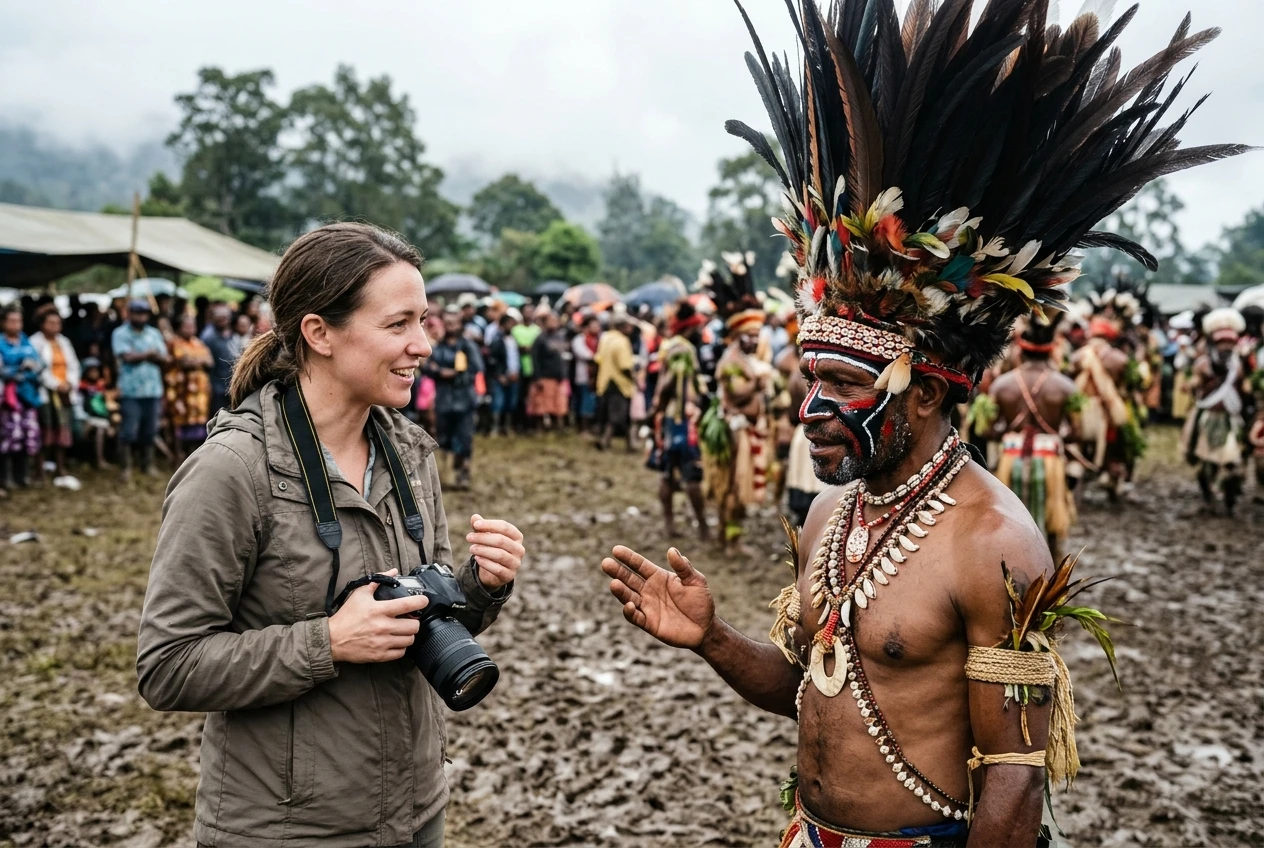
Do not follow dancers backstage while they are dressing, and do not take pictures of sacred objects or private ceremonies. Ask organisers before flying a drone, because it can disturb performers and offend onlookers. If you plan to publish photos online, especially of children, ask the people in them whether they agree.
Entry fees and customary landowners
Some shows charge an entrance fee, and in some cases the fee for visitors differs from the fee for locals. Ask at the gate and ask for a receipt. In places where a festival or a visit to a village takes place on customary land, the landowners may expect to be consulted or to receive a fee. Papa graun means landowner in Tok Pisin, and their permission matters. If you are not sure whom to ask, ask the organisers or your host to introduce you. Never go onto a village’s land, a cultural site or a garden without permission.
Our article on traditional leadership in Papua New Guinea explains how custom and local leaders handle decisions like these.
Dress and behaviour
Dress modestly, with shoulders and knees covered, and bring a rain jacket and sturdy shoes, because festival grounds can be wet and muddy. Do not touch headdresses, feathers, masks or body decorations. Do not walk across a performance area, and do not push to the front of a crowd. Alcohol is a problem at some public events. Staying sober helps you stay safe and shows respect.
Keep your valuables out of sight and stay with your group in crowds. Listen to the organisers and to your host about where to be, and leave if they advise it.
What to look for once you are there
Much of a festival can be read if you look carefully, but you should be careful about drawing conclusions.
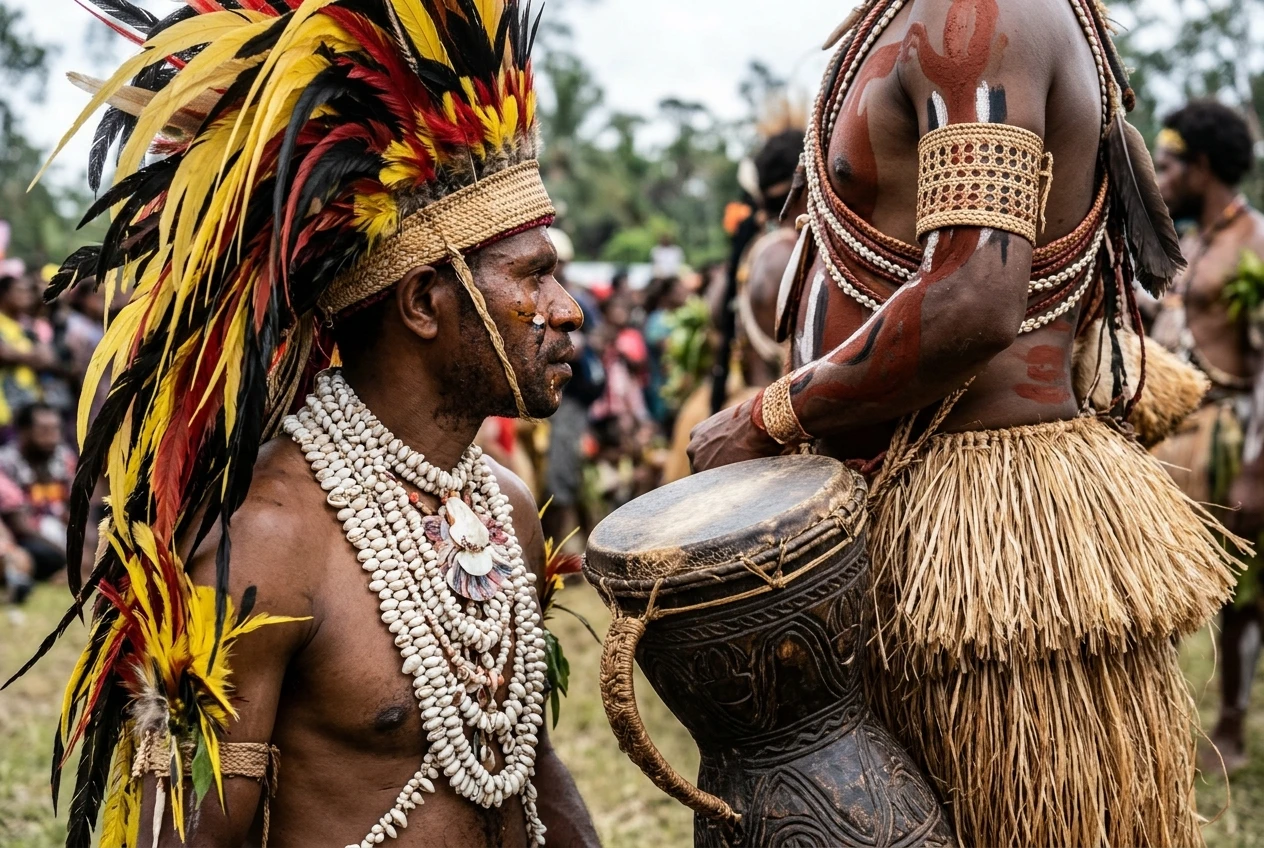
Decorations. Headdresses, face paint, shell ornaments, bilums, grass skirts and body designs often vary between groups. Different materials and patterns can mark different clans or places. You can see that two groups look different without knowing exactly what each element means.
Songs. Songs may be sung in the local language, and many tell about places, ancestors, or events. Listen first. A translated line from a host or a group member is worth more than a guess.
Dances. The movements, the rhythm of kundu drums and the way groups line up can tell you something about the story being told. Ask, “What is this dance about?” Then listen without correcting or interrupting.
Some meanings are not shared with outsiders, and some belong only to particular men, women or initiated people. If someone says a thing cannot be explained, accept it. Do not search for an interpretation online and repeat it as fact. It is better to say, “I saw this and I was told this,” than to claim you know what it means.
Festivals beyond the big names
Large shows get the most attention, but many communities hold smaller events: a church anniversary with traditional dance, a school cultural day, a district show, a village feast, an independence celebration or a local canoe race. These events can be more personal and less crowded, and they are also the ones least likely to be listed anywhere.
To find them, ask people. Contact provincial tourism offices, local churches, schools and community groups, and ask relatives or friends from the area. Local radio and community noticeboards may give dates that never appear online. Smaller events depend even more on a personal invitation, so do not turn up uninvited at a village event. Our feature on cultural festivals in Papua New Guinea is a good place to see the range of what is held, and it can give you names to ask about.
Going with respect
How you spend your money and what you say afterwards both matter.
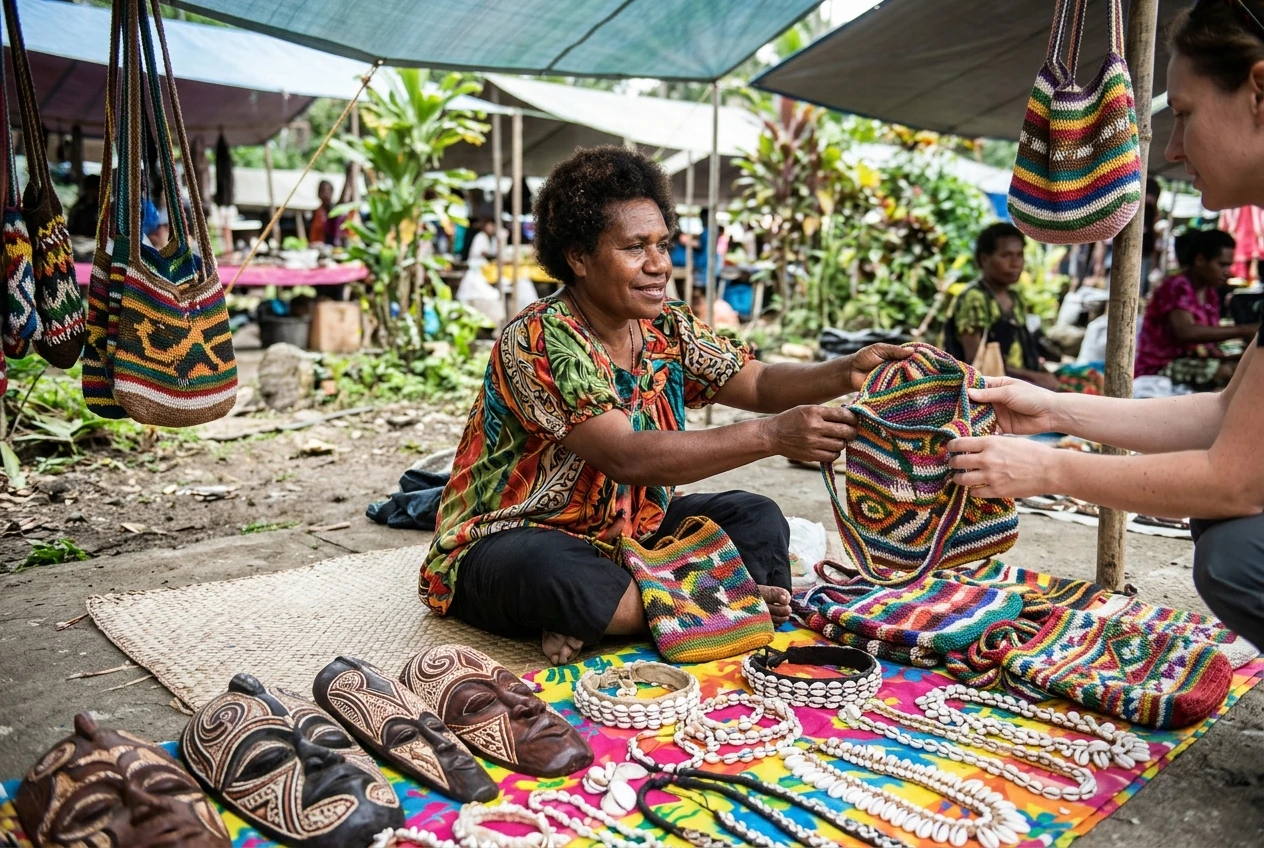
- Buy directly from artists and makers. Carvings, bilums, jewellery and other crafts bought from the person who made them put the money with that person. Ask about the price politely, and do not bargain so hard that the work is made worthless.
- Ask where an item comes from. If a seller cannot say who made it, you may not be supporting the maker. Be careful with objects that may be sacred or that may be restricted for export, and check the rules before you try to take anything out of the country.
- Pay for what you take. Pay for photos, guides, food and transport at the agreed price.
- Use local services. Local guesthouses, drivers, guides and food sellers keep the money in the community.
- Share accurate stories afterwards. Credit the group and the place by name, say what you were told and by whom, and do not claim to know more than you do. Avoid words such as “primitive” or “exotic”, and do not make one group stand for all of Papua New Guinea.
A festival is a chance to meet people, and a good visit is one the hosts are glad to have had.
Been to a festival in your own province or village? Send us your story and photographs through our contact page, and we may feature it, with your permission, in our community stories.