The best hotels in Port Moresby are not the same for every traveller. The city is spread over several districts, and the distance between them matters more than most booking sites show. A hotel that suits a week of meetings in Waigani can leave a holidaymaker with long, slow trips to everything else, and the reverse is also true.
This guide helps you choose by area first, then by what you must confirm before paying. It does not quote room rates or promise facilities, because prices, opening status and services change and only the hotel can give you current figures. Where hotel names appear, they are starting points for your own checking.
Choose your part of Port Moresby before you choose a hotel
Most visitors need one of three areas: the government and business district, the town centre, or the airport side.
Waigani and the government district. Waigani is where Parliament and many national government departments are based. Travellers meeting officials, attending conferences or dealing with ministries usually save the most time by staying here or close by. Hotels such as the Crowne Plaza and the Stanley Hotel are associated with this side of the city. Confirm each hotel’s current address and facilities on its own website before you decide.
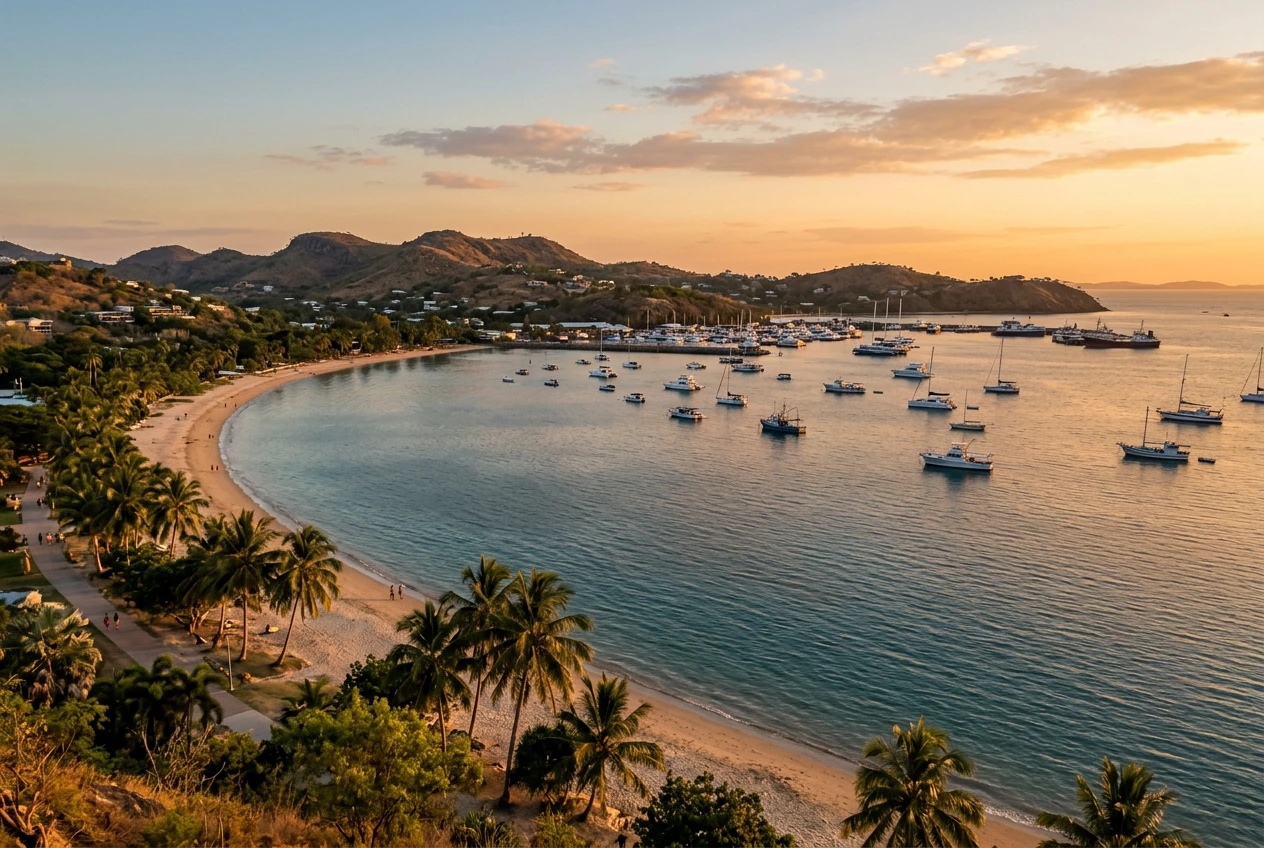
The town centre and the waterfront. Downtown Port Moresby sits around the harbour, with Ela Beach nearby. This area suits people with appointments at banks, shipping and trading offices, or those who want to be close to the waterfront. The Grand Papua Hotel and the Ela Beach Hotel are names to look up for this part of the city. Distances to Waigani are real, so check where your meetings are before choosing the waterfront for its view.
The airport side. Jacksons International Airport is on the north-east side of the city, and hotels such as the Airways Hotel and the Gateway Hotel are known for being close to it. This suits early or late flights, short stopovers and people connecting to provincial services. It is less convenient if most of your days are spent in town or Waigani.
A simple way to decide is to list every place you must visit in the first three days and count how many sit in each area. Choose the area that holds most of them, then compare hotels inside it.
What to check about security and getting around before you book
Port Moresby has a reputation for crime, and travel advisories from governments such as Australia and the United Kingdom discuss the risks for visitors. Read the current advisory from your own government’s foreign affairs department before you book, because advice is updated and old summaries can mislead. Treat the city with the same practical care you would give any large city where crime is a known concern, without assuming every visit goes badly. Many visitors stay without incident, and good preparation lowers the risk further.
Questions about security to put to the hotel directly:
- Is there a guarded entrance and a secured compound, and is security staffed around the clock?
- Are rooms locked with a key card or a conventional lock, and is there a safe in the room or at reception?
- Does the hotel offer an airport pickup, and is it done in the hotel’s own vehicle or by a named driver?
- Does the hotel advise guests on where they can and cannot walk, and at what times?
Transport deserves as much attention as the room. Travellers are commonly advised to arrange pickups through their hotel or a company they have confirmed, and to avoid walking between areas after dark. Ask the hotel how it handles trips to meetings, restaurants and the airport, and whether there is a charge. If you plan to hire a car and driver for several days, ask whether the hotel can recommend someone it trusts, and whether it will confirm the arrangement in writing.
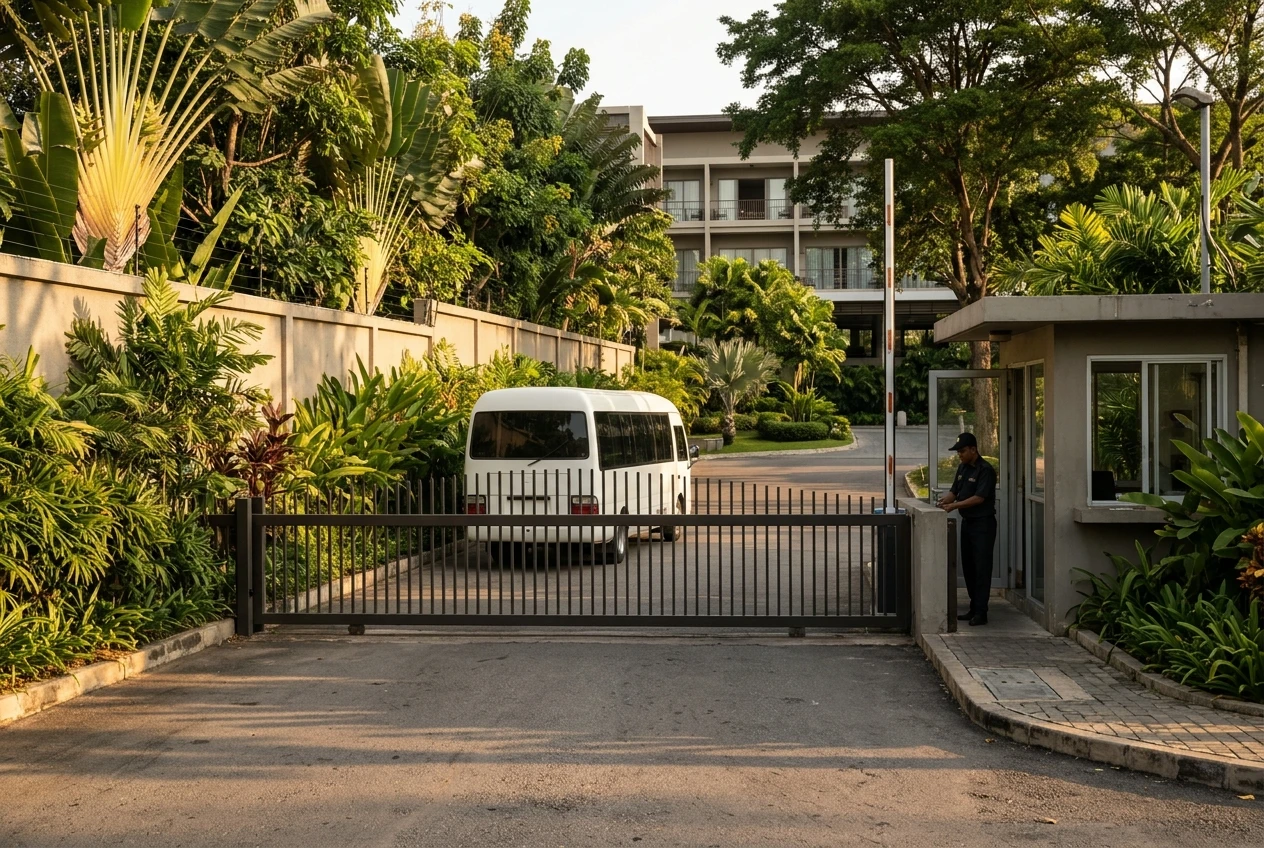
Traffic is another factor. Roads can be slow at peak times, so the distance on a map understates the travel time. Add a generous margin when you plan appointments, and ask the hotel what time you should leave for a given destination at the hours you will be travelling.
Hotels for business trips: meeting rooms, power, internet and distance to your appointments
For business travel, the room is only part of what you are paying for. You need a place that keeps you working and gets you to meetings on time.
Distance to appointments. Put the addresses of your meetings next to the hotel address and ask the hotel how long the trip takes at your travel times. A hotel in Waigani can make government meetings easy, while meetings with trading companies near the harbour may be better served by a town centre address.
Power. Electricity supply in Papua New Guinea is not always continuous, and Port Moresby is no exception. Ask whether the hotel has a backup generator, whether it covers the rooms or only the common areas, and how quickly it starts after an outage. If you work on a laptop, bring a fully charged power bank and keep key documents saved on the device, not only online.
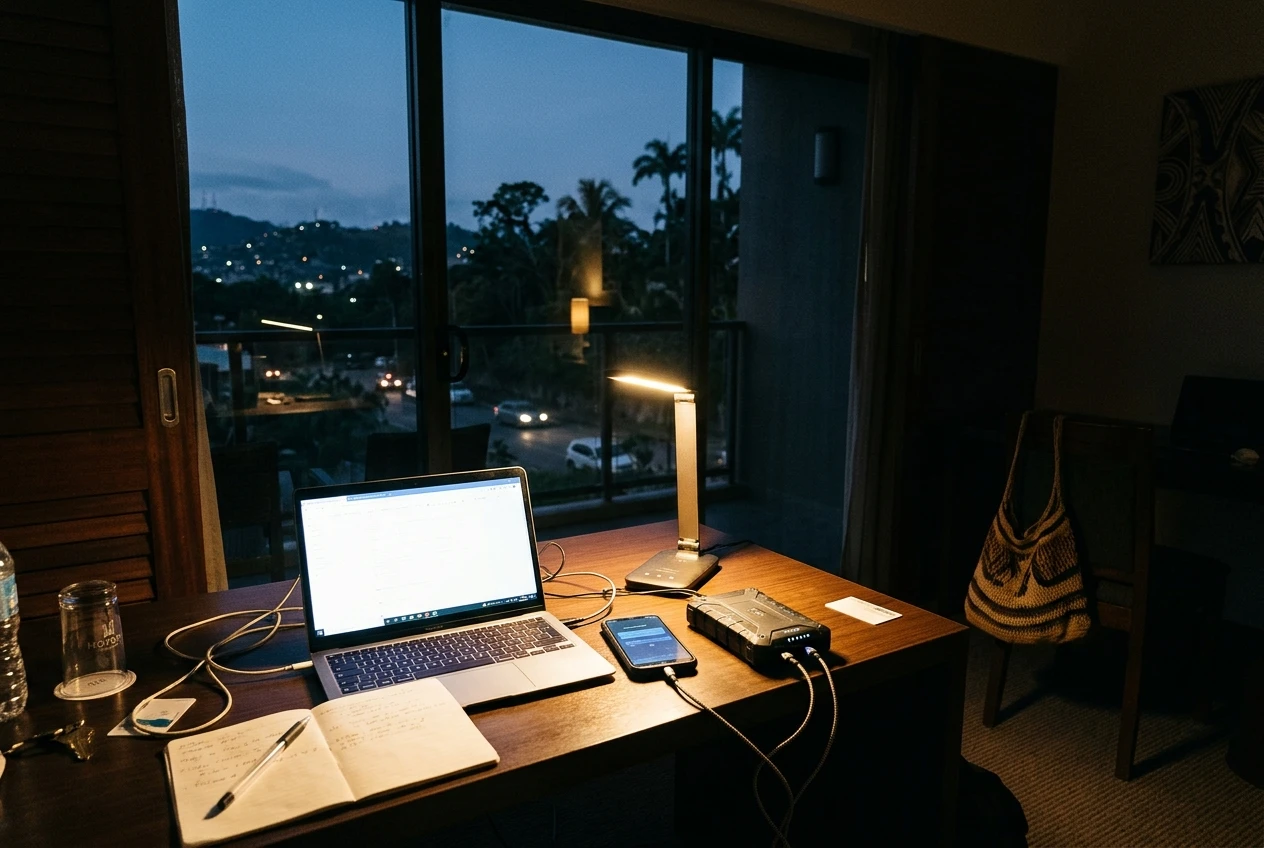
Internet. Ask for specifics, not a general promise of Wi-Fi:
- Is internet available in the rooms, or only in the lobby and business centre?
- Is it included in the room rate or charged separately?
- Is it stable enough for video calls?
- Is there a data cap?
A hotel that answers these questions clearly in writing is more likely to deliver. If you rely on video meetings, also consider a local SIM card and a phone hotspot as a backup, and check with the mobile operator what coverage and data packages are available to visitors.
Meeting rooms and business services. If you need to host meetings, ask about room capacity, projectors, printing and catering, and request a written quote. Confirm whether meeting rooms are in the same building as your accommodation. For one or two meetings, a hotel with a quiet restaurant or lounge area may be enough.
Working hours and airport timing. If you arrive late or leave early, confirm check-in and check-out arrangements and whether breakfast can be served before an early departure.
Hotels for leisure stays: pools, harbour views and arranging day trips
Visitors on holiday often want a pool, a view, and help organising what to do. Each of these is easy to advertise and worth checking.
Pools. A listed pool may be closed for maintenance or reserved for certain guests. Ask whether it is open now, what hours it is open, and whether non-residents can use it.
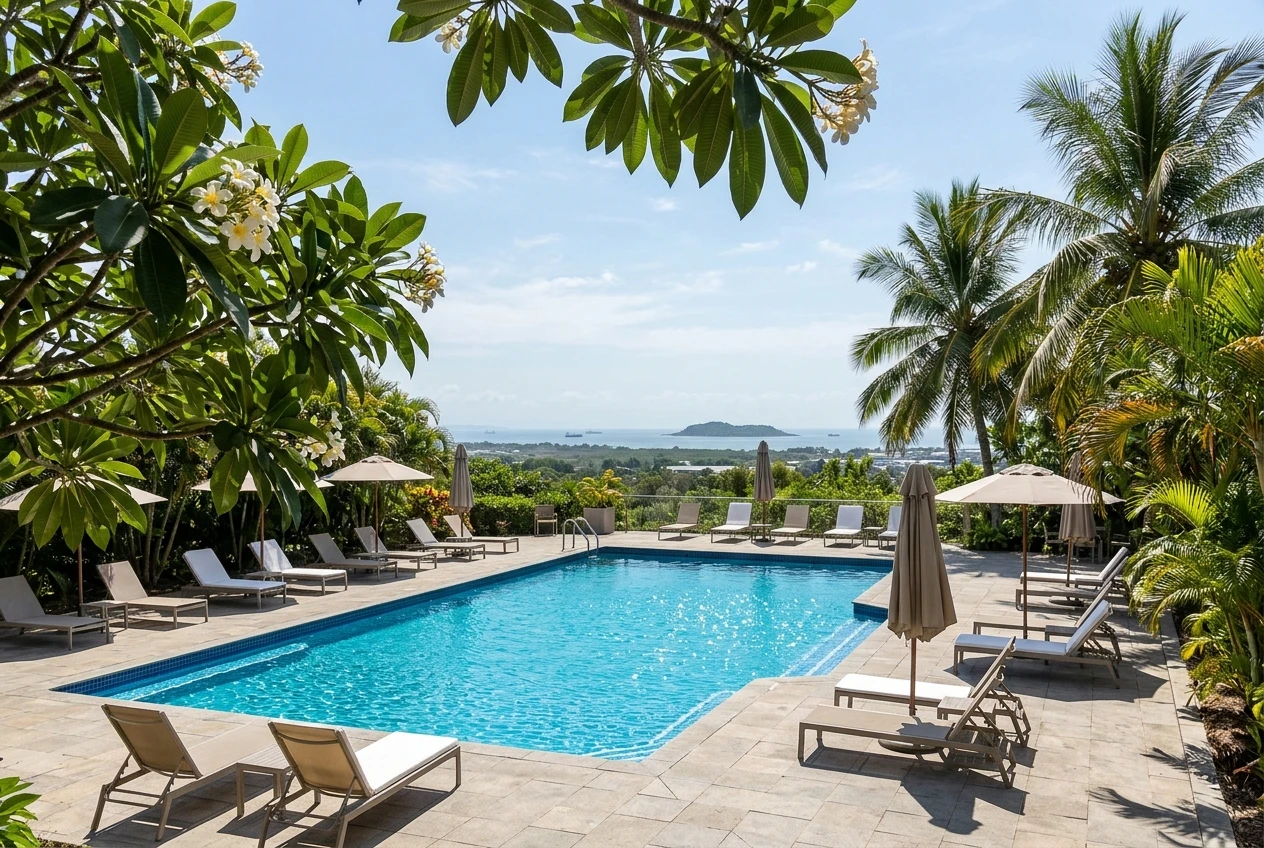
Harbour views. Not every room faces the water, and a hotel described as being by the harbour may have only some rooms with a view. Ask for a harbour-facing room in writing when you book, and confirm what the room will look like with the hotel. Hotels around the town centre and Ela Beach are the usual choice if the waterfront matters to you.
Day trips. Port Moresby is a base for visits outside the city. Loloata Island Resort sits offshore and is reached by boat, and Varirata National Park is a destination for bird watchers and walkers. Whether a hotel can arrange such trips, and with which operators, varies, so ask directly. Confirm the cost, the pickup time, the transport used and who is responsible if plans change. For any visit to a village or community, arrange it through people who have the landowners’ permission, in keeping with responsible tourism.
For holidaymakers, the best hotels in Port Moresby are often the ones that can answer these questions plainly and put the answers in writing.
Mid-range and budget options worth considering
Mid-range hotels, serviced apartments, and guesthouses can be good value, but the range in quality is wide, and many travellers choose them on price before checking the basics. A lower price is no bargain if security and power are poor.
For any budget option, confirm the following before paying:
- The property is inside a secured compound with a guard, and not only a locked gate.
- Water supply and hot water are reliable, and there is a generator or other backup for power.
- Rooms have working locks, and there is somewhere safe to leave valuables.
- The location is close enough to your destinations that you are not relying on daily taxis or unfamiliar public transport.
- Transport from the airport can be arranged by the property.
Serviced apartments suit longer stays because they usually include a kitchen and more space, but check what is supplied, who cleans, and whether internet and power are included in the rate.
Papua New Guineans visiting from other provinces have more choices. Some stay with relatives or in church-run guesthouses, which can be good options if the host can confirm security, transport and meals. Where a church or community organisation runs a guesthouse, contact them directly to confirm whether it is open to the public, what it charges and how bookings are made.
How to book safely and confirm details directly with the hotel
Booking platforms are convenient but may show out-of-date photos, descriptions or availability. Use them to compare, then confirm directly with the hotel before you pay.
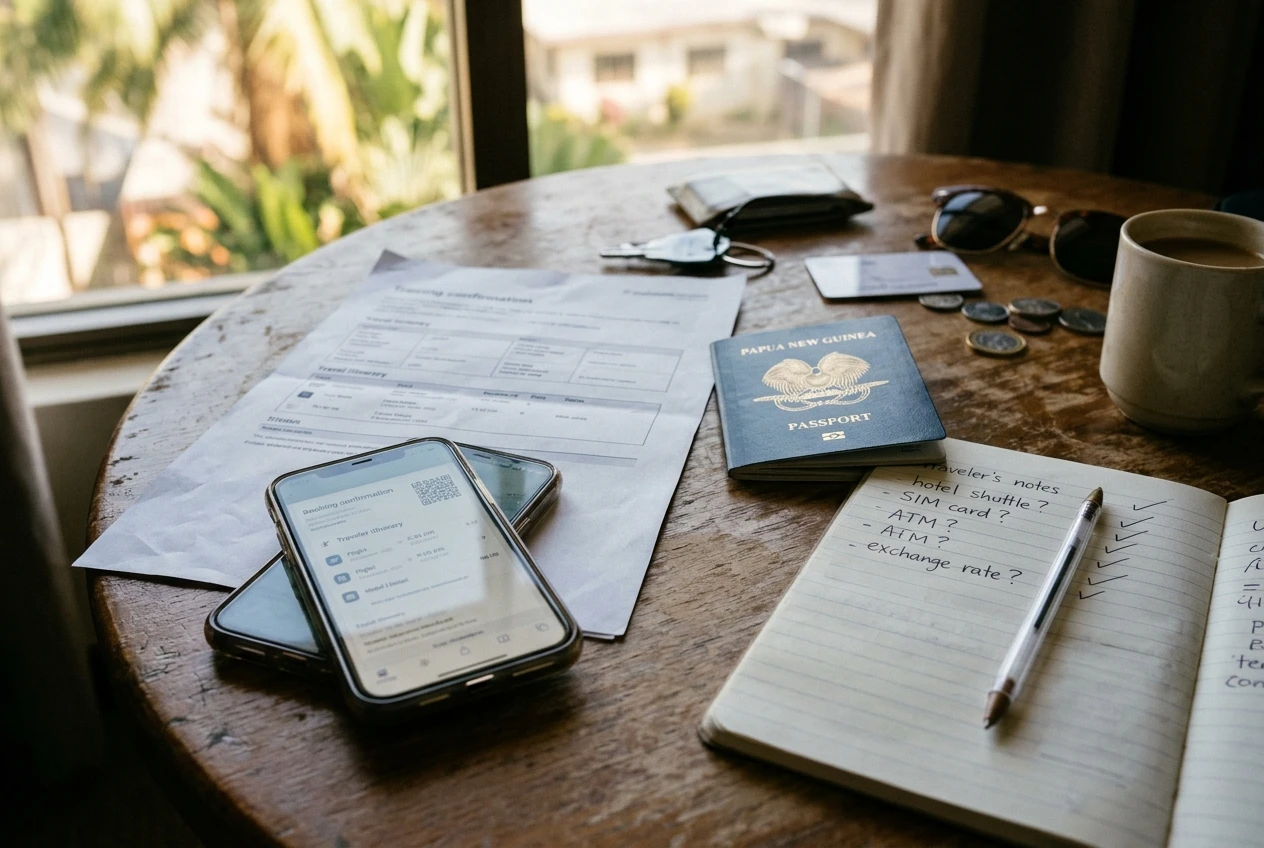
A safe booking routine:
- Find the hotel’s official website or email address yourself, and check that it matches the details on the booking platform.
- Email your questions about security, power, internet, airport pickup and any facility you are counting on, such as a pool or meeting room.
- Ask for the answers and the total price in writing, including taxes, service charges and extras such as airport transfers.
- Confirm the cancellation and change terms before you pay anything, including what happens if a flight is delayed or cancelled.
- Choose a payment method that protects you. A card payment through a recognised booking channel or the hotel’s own secure site is easier to dispute than a transfer to an unknown account.
- Keep the confirmation on your phone and on paper, with the hotel’s phone number and your pickup details.
Be cautious about any request to pay through a personal account, social media message or an unfamiliar email address. If a deal looks far cheaper than comparable hotels in the same area, ask why before sending money. Verify the hotel exists at the address given, and use a phone number from a source other than the one that offered you the deal.
Reconfirm your booking and pickup a day or two before you travel. Arrival is when plans are most likely to go wrong, especially for late flights.
Which type of stay suits which traveller
Government and ministry visits: a Waigani-area hotel, with a driver arranged through the hotel and confirmed internet and backup power.
Banking, trade and harbour-side business: a town centre hotel, with attention to how long trips to Waigani take if you have meetings there.
Short stopovers and early or late flights: an airport-side hotel with a confirmed pickup and a late check-in plan.
Holidays focused on the waterfront: a town centre or Ela Beach hotel, with a harbour-facing room confirmed in writing and day trips discussed before arrival.
Longer stays on a budget: a serviced apartment or guesthouse, but only after checking security, water, power and transport.
Papua New Guineans visiting from the provinces: hotel, guesthouse or family arrangement, chosen for secure transport from the airport and a safe place to stay.
Whichever you choose, the same checks apply: where your appointments are, how you will get there safely, whether power and internet will hold up, and whether the hotel has confirmed all of this in writing.
Before you book, read our guide on what travel insurance must cover on a remote Papua New Guinea trip, and check that your cover suits your plans in Port Moresby too.