Applying for a mining job in Papua New Guinea starts well before you see an advertisement. You need to know who is doing the hiring, which jobs your qualifications fit, and how to tell a real vacancy from a scam. This guide walks through the process in order, including what to do when your internet is poor or you live far from a town. For background on the mines themselves, the money they bring in and the laws behind them, read how mining shapes PNG first.
One caution applies to everything below. No application guarantees a job, and this article is general career guidance, not a list of current vacancies. Confirm every advertisement through the company’s official recruitment channels before you send documents or money to anyone.
Who actually hires for mining work: operators, contractors and labour hire companies
When people say “the mine is hiring,” several different employers may be involved. Knowing which one is advertising tells you where to apply and what to expect.

- The mine operator. This is the company that runs the mine, such as the operators of Ok Tedi, Lihir or Ramu Nickel. It usually employs its own core workforce directly, including trainees, apprentices and graduates.
- Contractors. Mines hire specialist companies for drilling, catering, security, construction, transport, camp services and equipment maintenance. These contractors employ their own staff and run their own recruitment, separate from the operator.
- Labour hire and recruitment agencies. Some agencies find workers on behalf of operators or contractors. A legitimate agency names the company or project it is recruiting for and does not ask the applicant to pay.
Company names change as mines are sold or restructured, so an old name you remember from a news story may no longer be the employer. Before applying, check who currently operates the mine and who is named on the advertisement. If you cannot work that out, treat the vacancy as unconfirmed.
Many jobs at a mine site are with contractors rather than the operator. If you only watch the operator’s careers page, you will miss those, and if you only chase contractor adverts, you will miss the operator’s trainee and graduate intakes. Follow both.
Which mining jobs match your qualifications and experience
A mine is a small town with a workforce to match, and the jobs go well beyond digging. Match yourself to the roles that fit what you have already done or studied.
Trades and technical roles
- Heavy diesel mechanics, auto electricians, fitters, boilermakers and welders
- Electricians and instrument technicians
- Plant and equipment operators, such as haul truck, excavator and dozer operators
- Process plant operators and laboratory assistants
Professional and graduate roles
- Geologists, mining engineers, mechanical and electrical engineers
- Surveyors and environmental officers
- Accountants, payroll and supply staff
- Safety, health and community relations officers
Support roles
- Catering and camp services, cleaning and laundry
- Drivers, store persons and warehouse assistants
- Security officers
- Administration and clerical work
If you are a school leaver, look for trainee, apprentice and entry-level intakes, and read what the advertisement says about the grade or year of school required. If you are a tradesperson, your trade certificate and your recorded work history matter most. If you are a graduate, check for graduate development programs, which are advertised on set dates and are usually competitive.
Be realistic about the match. Read the listed requirements line by line and compare them to your own certificates. An application that meets most of the stated requirements is far more likely to be read than one that meets few. If you fall short, note the gap, such as a missing licence or certificate, and work on closing it before the next advertisement.
Get your documents ready before a vacancy appears
Advertisements often close within a few weeks, and chasing paperwork after one appears wastes time you do not have. Prepare a folder now, on paper and, if possible, as scanned copies.
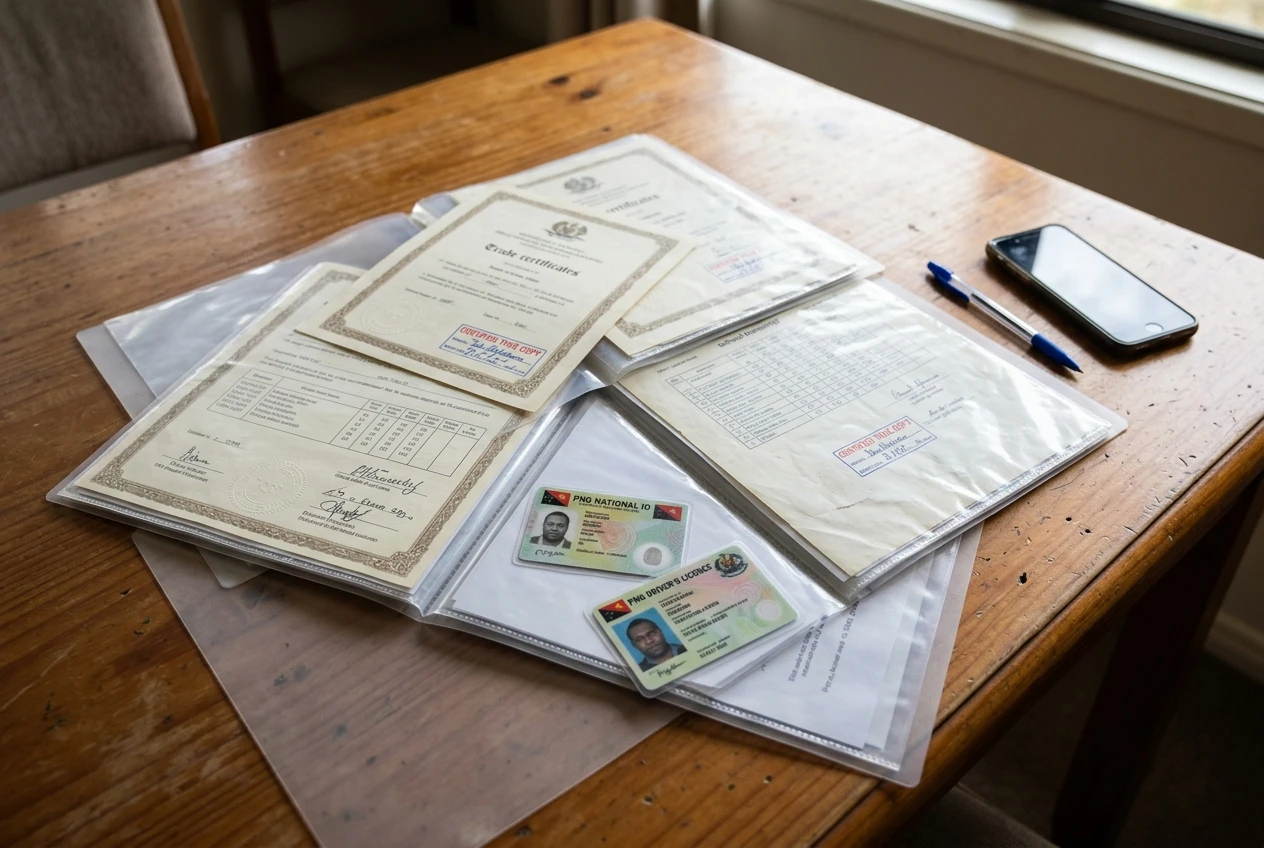
Employers commonly ask for the following, though each advertisement sets its own list:
- A current CV
- Certified copies of your school, trade or university certificates and academic transcripts
- Proof of identity
- A valid driver’s licence if the job involves driving or operating machinery
- Contact details for referees, such as a former supervisor, a teacher or a lecturer
- Evidence of any safety, first aid or equipment tickets you hold
- Any clearance or character documents the advertisement requests
Keep the originals safe and dry, and carry certified copies when you apply. Check that names and dates are the same on every document. A mismatch between the spelling of your name on a certificate and on your ID can cause delays at screening, so sort it out early.
Tell your referees in advance that they may be contacted, and confirm their phone numbers still work. A referee who cannot be reached, or who is surprised by the call, can end an otherwise good application.
Where to find real vacancies and how to spot a fake one
Start with the official sources. Look at the careers page on the company’s own website, and at the company’s verified social media pages if it has them. National newspapers sometimes carry advertisements, but check any newspaper vacancy against the company’s own channel before you act on it.
Third-party job sites and social media groups can help you find leads, but they also repeat old advertisements and sometimes carry fake ones. Treat them as pointers, never as proof. When you see a vacancy there, go to the company’s official channel and look for the same advertisement.
Warning signs of a fake or unreliable vacancy:
- You are asked to pay. Legitimate employers do not charge for applications, interviews, medicals or “placement.” A request for a fee, a mobile money transfer or a “processing” payment is the clearest sign of a scam.
- The contact is a personal address. Recruitment from a free webmail account or a private mobile number, with no company domain, deserves suspicion.
- There is no named employer or location. A vague advertisement offering “high salary mining work” with no job title, site or closing date gives you nothing to verify.
- The promises are too large. Guaranteed jobs, guaranteed visas or unusually high pay for little experience are typical of scams.
- Pressure to hurry. “Pay today or lose your place” is a tactic to stop you from checking.
- The advertisement is old. Reposted adverts circulate for months. Check the closing date and whether the company still lists the vacancy.
To verify a vacancy, find the company’s official website yourself, rather than clicking a link in the advertisement. Look for the same role on its careers page. If you cannot find it there, phone or email the company’s published contact details and ask. A real employer will answer.
Writing a CV and application that gets read
Recruiters at large operations can receive a very large number of applications for one role. Yours needs to be easy to scan and to match what was asked.
Keep the CV short and clear. Two pages is enough for most applicants. Put your name, phone number and email at the top, then a short summary of one or two sentences naming the type of work you want.
List work history in order, newest first. For each job, give the employer, your job title, the dates and two or three lines on what you did. Use specific details: the equipment you operated, the type of repairs you carried out, the size of the team you worked with. Only include what is true, because employers check.
Show your qualifications plainly. Name each certificate, the institution and the year. For trades, list your tickets and licences with their numbers or expiry dates where appropriate.
Match the advertisement. Read the selection criteria and address each one in your cover letter or application form. If the advertisement asks for two years of experience in a role, say clearly whether you have that and where you gained it.
Write a short cover letter. Three or four short paragraphs are enough: the job you are applying for, why your experience fits, and how you can be contacted. Spell the company name and job title correctly, and follow the instructions exactly, including the file format, the subject line and the closing date.
Proofread everything. A spelling error in your own name or in the company’s name suggests carelessness, and in safety-critical industries carelessness counts against you. Ask a teacher, church leader or friend to read it before you submit.
What happens after you apply: screening, medicals and interviews
Processes differ between employers, but the stages below are common. Do not assume all of them apply, and follow the instructions in your own advertisement.
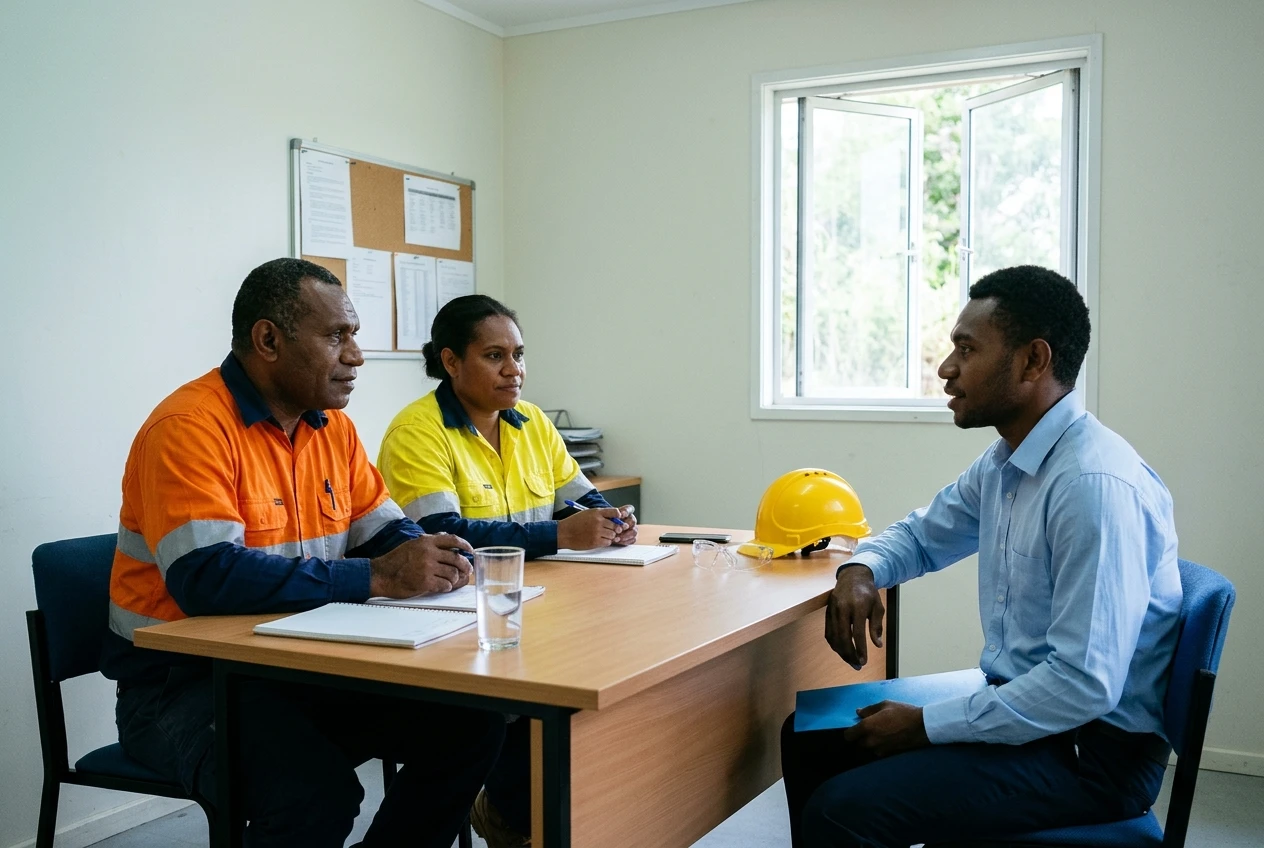
- Screening. Recruiters check your application against the selection criteria. Those who do not meet the basics are removed. Late applications and missing documents are common reasons for removal.
- Shortlisting and contact. Shortlisted applicants are contacted, usually by phone or email. Keep your phone charged and your number active, and check your email and messages often. Reply promptly, since a missed call can mean a lost place.
- Tests and assessments. Some roles include a practical test, a written test or a skills check, especially for operators and trades.
- Interview. Expect questions about your experience, your attitude to safety and your willingness to work a roster away from home. Think of two or three real examples from your work or training and be ready to describe them. Interviews may be held in person, by phone or by video.
- Reference checks. Your referees may be called to confirm your work history and character.
- Medical and fitness checks. Mining employers commonly require a medical examination before an offer is confirmed, because the work can be physically demanding and safety matters. The requirements depend on the job. The employer should tell you what is needed and arrange or specify the provider, and you should not be asked to pay a stranger for a “medical clearance.”
- Offer and induction. A written offer sets out the role, conditions and start date. Read it carefully and keep a copy. New workers typically go through a safety induction before starting work.
If you are unsuccessful, ask whether you can be considered for future intakes and keep your documents ready. Many people succeed on a later application because they improved their qualifications or experience in between.
Applying with weak internet or from a village or province
Limited internet access does not have to stop you. It means planning your online time and using other routes where the employer allows them.
- Prepare offline. Write your CV and cover letter on paper or in a phone notes app first, and have them checked by someone you trust. Then do the online part in one short session.
- Save the advertisement. When you find a vacancy, save the page or take a screenshot so you can reread the requirements and closing date without reconnecting.
- Keep files small. Large photos of documents can fail to upload. Save your CV and scanned certificates as compact PDFs where you can, and combine documents into one file if the employer allows it.
- Choose your moment. Connection quality varies through the day and by location. Try the upload in a town, at a school or at a community or church facility with better coverage, rather than where the signal drops.
- Ask for help. A relative, teacher or friend in a larger centre may be able to send the application for you. Give them your documents and the exact instructions, and ask for confirmation once it is sent. Do not hand your original certificates or personal details to a stranger offering to apply “for a fee.”
- Use paper options when offered. Some advertisements accept hand-delivered or posted applications. Follow the stated address and allow enough time for transport and mail to arrive before the closing date.
- Keep your phone reachable. Selection often runs through calls and messages. If you have limited credit, keep enough for incoming and returning calls during the weeks after you apply.
After submitting, note the date, the method and the contact details you used. If you do not hear back by the date given in the advertisement, make one polite enquiry through the company’s official contact details.

Where local and landowner community hiring fits in
Many mining operations have commitments to employ and train people from the surrounding communities, and landowner groups often take part in discussions about jobs, training and business contracts. How this works depends on the project, its agreements and the company’s own policies, so the details differ from one mine to the next.
If you come from a host community, ask through proper channels. These may include your landowner association, the community affairs or community relations office of the operator, or your local leaders. Find out how local intakes are announced and what the company requires, such as training, certificates or a medical. Local hiring still normally involves meeting the requirements for the job.
Be careful with anyone who claims they can place you on a list for money, or who says that your landowner status guarantees a position. Legitimate processes run through the company or through recognised community organisations, and you should be able to confirm them with the company directly.
Local training programs and apprenticeships can give you the qualifications to compete for better roles. If a program is advertised, verify it with the company or the training institution first, as you would with any vacancy.
Subscribe to the PAPUANIUGINI.ORG newsletter to get verified mining career guidance and updates sent to you.