Choosing among the universities in Papua New Guinea is easier when you begin with the job you want and work backwards. A Grade 12 student who picks a campus first often discovers later that the course leads nowhere near the work they imagined. A student who starts with the work can ask a better question: which qualification does this job require, and who teaches it?
This guide is for Grade 12 students, their parents and teachers, and for young people and graduates comparing options. It is also for Papua New Guineans overseas who are helping a relative decide. It names institutions only where the facts are well established, and it does not quote fees, deadlines or intake numbers, because these change and only the institution can confirm them. Wherever money or dates are involved, the advice is to ask in writing and keep the reply.
Start with the work you want, then pick the course
Write down two or three jobs you could see yourself doing. Be specific: “mining engineer”, “registered nurse”, “primary school teacher”, “accountant”, “network technician”. A job title tells you far more than a vague interest such as “something with science”.
For each job, find out four things:
- The minimum qualification. Is it a certificate, a diploma or a degree? Some jobs, such as nursing and engineering, have formal professional requirements that a general degree does not meet.
- The subjects you need at Grade 12. Most science, engineering and health courses expect certain subjects and results. Check this early, because it decides which subjects you should work hardest on in your final year.
- Who employs people in this job. Government departments, provincial health authorities, mining companies, banks, churches and schools all hire differently.
- Where the course is taught. Some qualifications are offered at only a few institutions, which may be far from home.
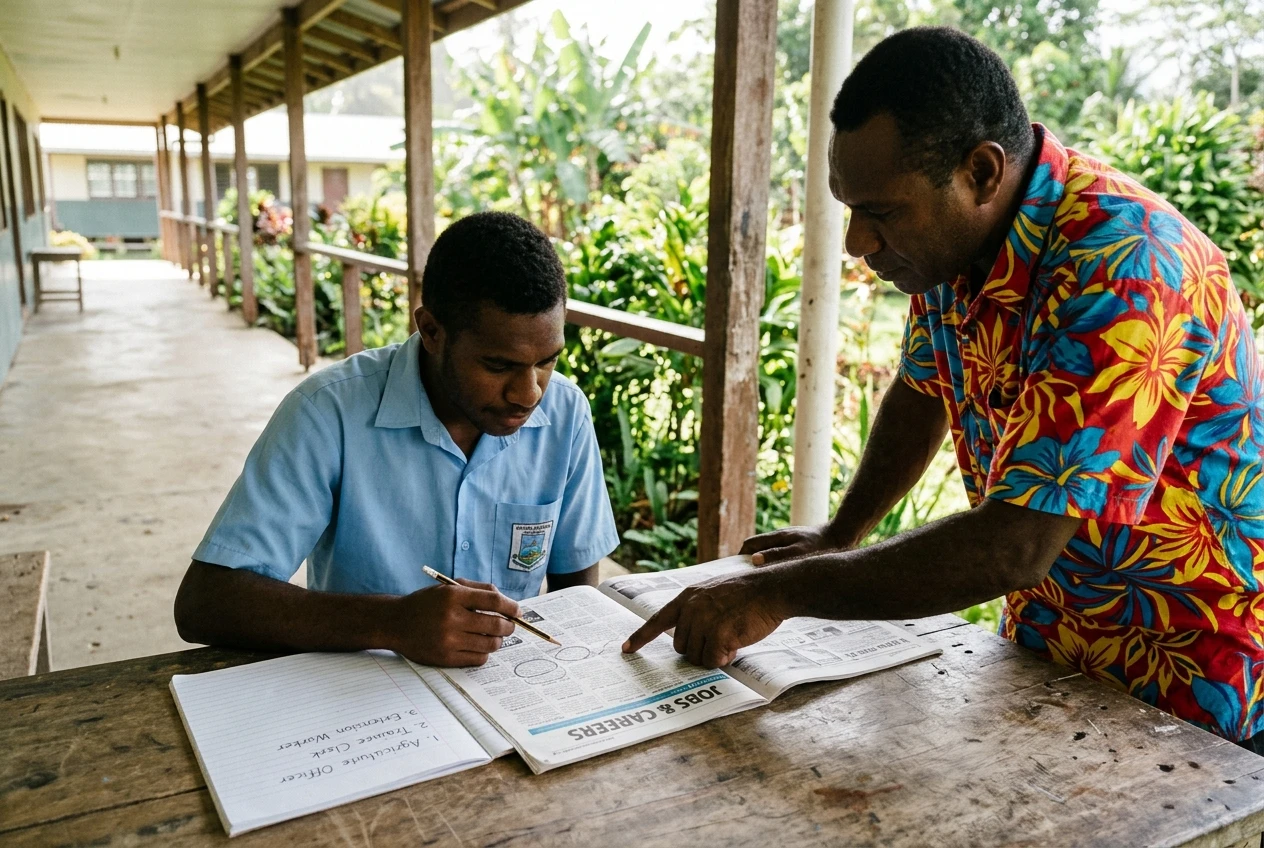
The best sources are people who already do the job. A teacher at your school, a nurse at the local health centre, a relative working at a mine or a bank: ask them what they studied, what they would do differently, and what the first year of work was like. Job advertisements in newspapers and on employer websites are also useful, because they list the qualifications employers actually ask for.
Once you have this, you have a short list of courses. Only then does it make sense to compare campuses.
The main higher education options in PNG and how they differ
Higher education in PNG falls into three groups: public institutions, church-run institutions and private institutions. Each has strengths, and the right one depends on the course and on what your family can manage.
Public universities
Public universities are established and funded mainly by the national government. The best-known are the University of Papua New Guinea (UPNG) in Port Moresby, the Papua New Guinea University of Technology (Unitech) in Lae, the University of Goroka, and the University of Natural Resources and Environment (UNRE) at Vudal in East New Britain. Between them they cover a wide range of fields, including medicine and health sciences, law, engineering, education, agriculture, business and science.
Places at public institutions are usually competitive and are allocated by academic results. They are often the first choice for professional courses such as medicine and engineering.
Church-run universities
Several of the country’s universities are run by churches. Divine Word University in Madang is run by the Catholic Church, and Pacific Adventist University in Port Moresby by the Seventh-day Adventist Church. Church-run institutions have long been involved in teaching, health training and community work in PNG, and they offer courses well beyond theology, including education, nursing and health, business and information technology.
They usually have their own application processes and their own rules on conduct, so read these before applying. Ask each one how its fees compare with public options for your specific course, because the answer differs by programme.
Private institutions
Private institutions are run as independent organisations and are not funded mainly by government. Western Pacific University is one that readers frequently ask about. Some private colleges offer practical business, accounting and computing courses with flexible timetables.
The key question for any private provider is whether its programme is officially recognised. A qualification is only useful if employers, professional bodies and other institutions accept it. Ask the provider for proof of its recognition, and confirm with the national government department responsible for higher education.
Universities, technical colleges and vocational training: which path fits which goal
A university degree is one route, and for many careers it is not the fastest or the cheapest. Technical colleges and vocational training entrees teach skills that employers need now, and the courses are often shorter.
If your goal is… Paths to consider A profession with a legal or professional licence (doctor, lawyer, engineer, registered nurse) A university degree or an approved health or professional programme Working with your hands: electrical, mechanical, carpentry, plumbing, welding A technical college or vocational trade course, sometimes followed by an apprenticeship Office or business work: bookkeeping, administration, retail management A certificate or diploma at a college, or the early years of a business degree Farming and agribusiness A course in agriculture at a university or a rural training institution Teaching An education qualification at a university or an approved teacher training programme
A certificate or diploma can also be a stepping stone. Some institutions allow credit from a diploma toward a degree, so a student who cannot afford four years at once can finish a shorter qualification, work, and return. Ask each institution whether it accepts credit from other courses, and get the answer in writing.

Skilled trades are worth serious thought. Electricians, mechanics, heavy-equipment operators and welders are needed across PNG, including in towns and at mining and construction sites. Whether a trade pays better than a degree depends on the person, the place and the employer, so look at actual job advertisements before deciding.
How applying works and what to check before you pay anything
Each institution runs its own application process, so the details differ. In general, the process looks like this:
- Find the official application information. Use the institution’s own website, its admissions office, or a printed prospectus. Do not rely on a social media post or a message forwarded from a friend.
- Check the entry requirements for your course. These cover Grade 12 results, subject requirements, and sometimes an interview or entrance test.
- Gather your documents. Typically you need certified copies of your results, identification, and photographs. Ask the admissions office for the current list.
- Note the closing date. Deadlines vary by institution and by course. Applying late can mean waiting a full year.
- Submit and keep proof. Keep copies of everything you send, and a receipt for anything you pay.
Before you pay any money, work through these checks:
- Is the payment request coming from the institution’s official office, and can you confirm it by phoning or visiting?
- Is the payment going into an account in the institution’s name, rather than to a person’s private account or mobile wallet?
- Do you have a written receipt that names the purpose of the payment?
- Can you find the course and institution through the national higher education authorities, or through a school careers officer?
- Has anyone promised you a guaranteed place, guaranteed scholarship or guaranteed job? No genuine institution can promise these in exchange for money.
If something seems wrong, stop and ask your school’s careers teacher, or visit the institution’s campus office in person. A few days of checking costs nothing. A fee paid to a false agent is usually lost.
Paying for study: scholarships, sponsorship and other support to ask about
For most families, cost decides the choice. Fees, accommodation, food, books and travel to the campus all add up, and the total differs from one institution to the next. Do not rely on a figure from a friend or a social media post. Ask the finance or admissions office for the full cost of your specific course for the full length of study, and ask what is charged beyond tuition.
Then ask about support. These are the main kinds to look into:
- Government study assistance. The national government has run tertiary study assistance schemes for students at approved institutions. The names, eligibility rules and amounts change, so ask the institution’s student services office and the national higher education department what is currently available and how to apply.
- Institution scholarships and fee waivers. Some universities offer scholarships for high results, or support for students in particular fields or from particular backgrounds. Ask the admissions office directly.
- Provincial and district support. Some provincial governments and district development authorities have assisted students from their areas. Ask your local member’s office or provincial education office whether a programme exists and what the conditions are.
- Employer and company sponsorship. Some employers, including mining and resource companies, sponsor students in fields they need. Conditions often include working for the company for a period afterwards. Read the terms carefully before signing.
- Church and community support. Churches and community organisations have supported students in many places. Speak to your church leader or community organisation early, not at the last moment.
- Overseas scholarships. Governments and universities abroad offer scholarships to students from PNG, with their own application windows and selection criteria. Check each provider’s own website for current details.
When any offer arrives, ask whether it covers tuition only or also living costs, whether it must be repaid or has a work obligation attached, and what happens if your results fall below a required level. Any scholarship that asks you to pay a fee to receive it should be treated with great suspicion.
Relatives overseas who plan to help can be most useful by paying fees directly to the institution’s official account and keeping the receipt, rather than sending cash through intermediaries.
Careers that connect to study: mining, health, teaching, business and technology
Study leads to work in different ways in different fields. The points below describe the general pattern, not a guarantee of any job.
Mining and technical careers
Mining is a large part of PNG’s economy, and it employs people in many roles besides digging: engineers, geologists, surveyors, electricians, mechanics, heavy-equipment operators, accountants, health and safety officers, environmental officers and community relations staff. Different roles need different qualifications, from trade certificates to engineering and science degrees. If you want to see how the industry is structured, who runs the mines and what rules apply, read our overview of the Papua New Guinea mining industry.
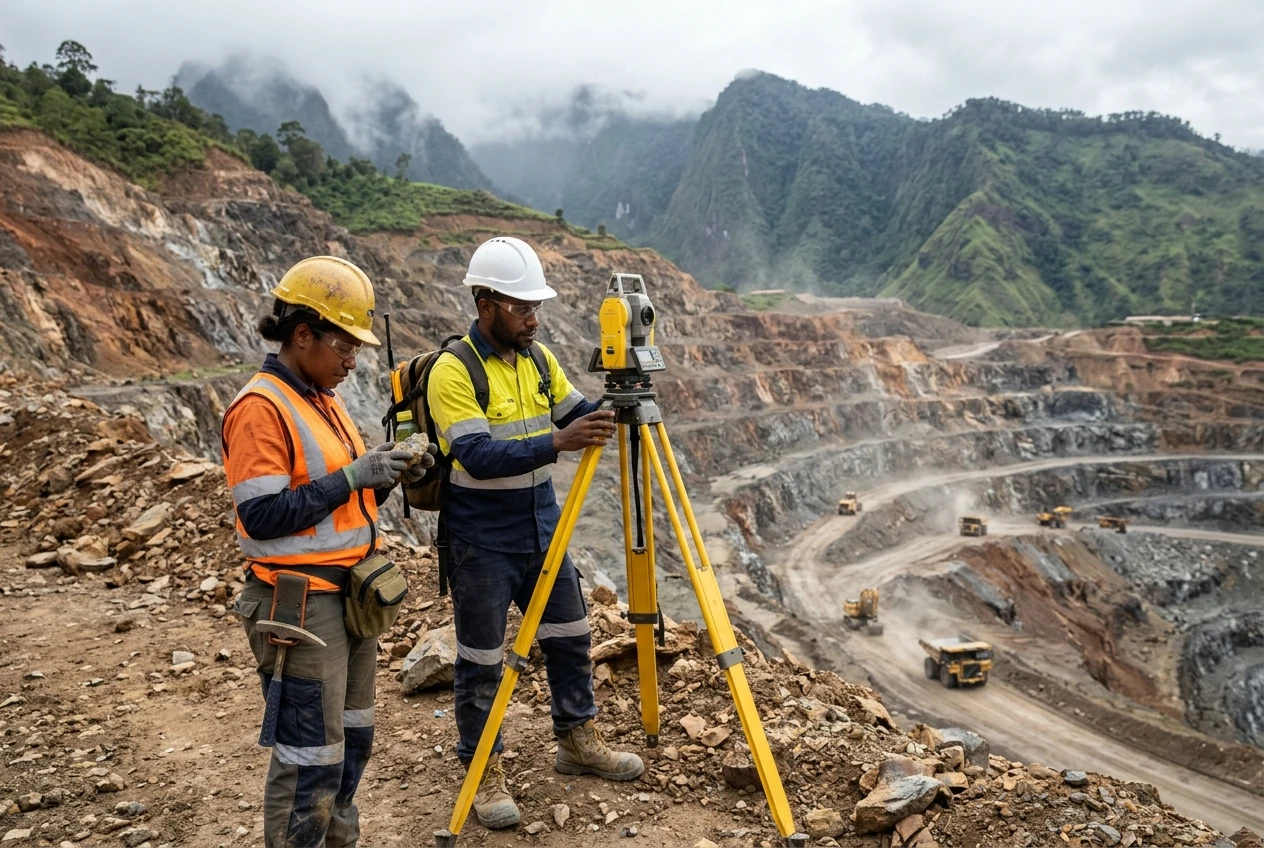
A few practical points apply to anyone aiming at this field. Check the qualifications named in real job advertisements, and use official company recruitment channels only. Companies do not charge applicants to apply, so any request for payment is a warning sign. Some companies run graduate programmes and apprenticeships, and the entry requirements are published by the companies themselves.
Health
Doctors, nurses, community health workers, pharmacists, laboratory technicians and health extension officers all need specific approved training, and health work is regulated. Before enrolling, confirm that the programme leads to registration with the relevant professional body. Health students often spend part of their training at hospitals or health entrees, so ask about placements and where they take place.
Teaching
Teachers are needed in every province, and many positions are in rural and remote schools. Teaching qualifications are offered at several universities and approved institutions. Ask how graduates are registered and posted, and whether the course includes supervised classroom practice.
Business, accounting and administration
Business and accounting graduates work in banks, government, private companies, churches and non-government organisations. Many also start their own small businesses. Accounting and finance careers may require professional membership beyond a degree, so ask the institution which professional bodies recognise its programme.
Information technology and digital skills
Computing, networking, software and data skills are useful in almost every sector, from banking to mining to logistics. Some work can be done remotely, but remote work depends on reliable power and internet, which not every location has. Choose a course that teaches practical skills, such as networks, databases, and web and software development, and ask whether students get regular access to computers.
Even careful planning does not guarantee that a graduate finds a job quickly. Our earlier report on the Opposition Leader urging graduates to “build your own door” discusses the unemployment problem. This is why a course with practical skills, and some experience in a workplace or a small business, strengthens a graduate’s position.
Studying with poor internet or far from a campus
Many students live far from a campus and cannot count on steady internet or electricity. This affects both applying and studying, and both can be planned for.
For applying:
- Ask the institution whether applications can be made on paper, and whether forms are available through your school, a provincial office or a regional centre.
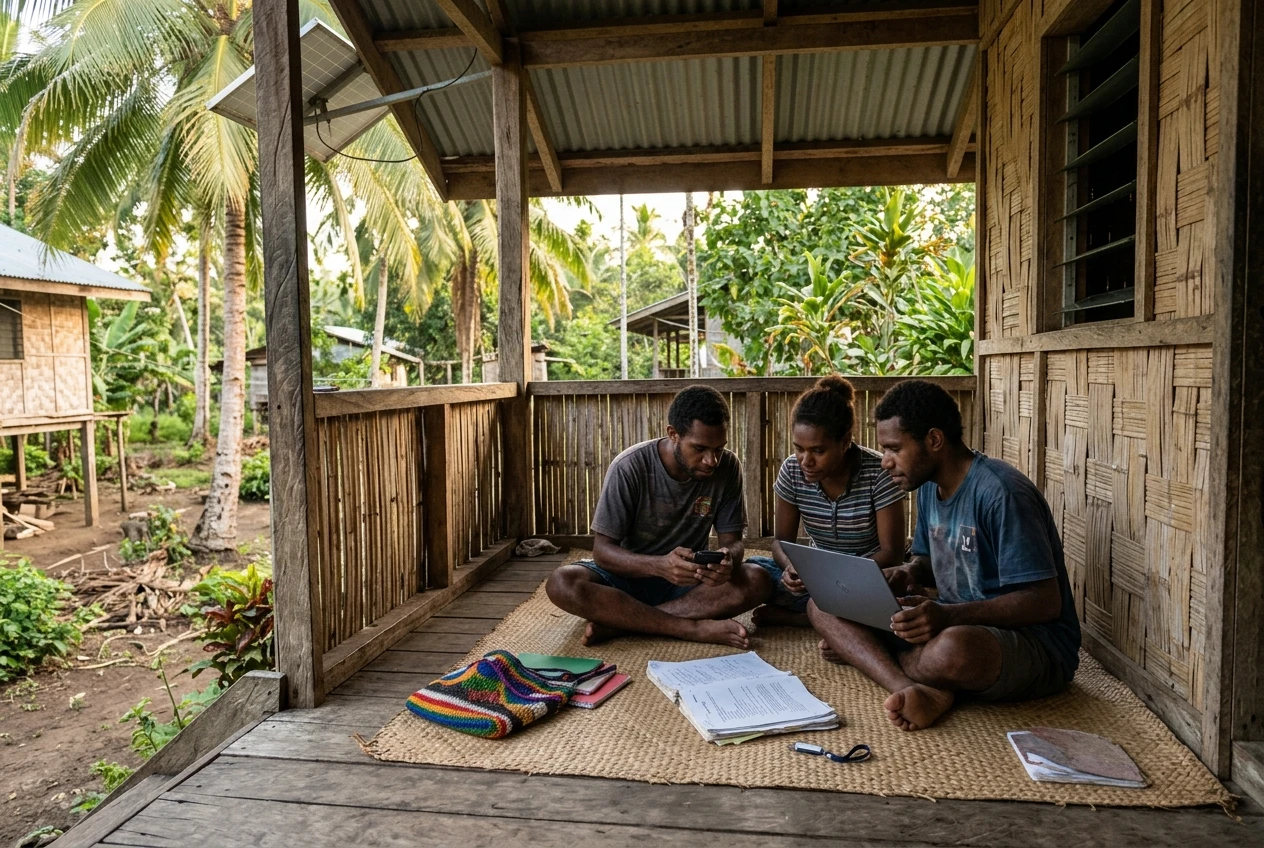
- If you have to go online, use a town internet centre or your school’s computer room, and plan one session to collect all the information you need. Save downloads such as prospectuses and application forms to a phone or a USB drive so you can read them offline.
- Write down the admissions office’s phone number and email, and ask for confirmation of receipt in a form you can keep, such as an SMS or a stamped copy.
For studying:
- Ask whether the institution offers distance or flexible study, and how materials are delivered: printed packs, USB drives, email, or an online learning platform. Ask whether there are regional or provincial study entrees near you.
- Ask whether assessments can be submitted offline or at a local centre, and what happens during a power or network outage.
- Download readings and videos while you have a connection, and use them offline afterwards. Many phones can store a full course’s worth of documents.
- Form a study group with other students nearby, so that one person’s data bundle or laptop helps several people.
Distance study takes steady discipline, because nobody is checking attendance. It also suits students who are working or looking after family. Ask the institution how much support distance students receive from tutors, and how they are reached.
Questions students and parents ask most
Which of the universities in Papua New Guinea is best?
There is no single best university. The right one is the one that teaches your chosen course, recognises your results, is officially accepted by employers and professional bodies, and costs an amount your family can manage. Compare institutions course by course, not by name.
Is a church-run or private university as good as a public one?
Quality varies by institution and by programme within each institution. What matters is whether the qualification is officially recognised and accepted by employers. Ask for the evidence in writing, and speak to graduates who work in the field.
Do I need a degree to get a good job?
Not for every career. Many skilled trades and technical jobs need certificates or diplomas, and these can be quicker and cheaper. Some professions, such as medicine, law and engineering, do require a degree. Check the requirements for the job you want.
What if my Grade 12 results are not high enough?
Ask the institution about foundation or bridging courses, diplomas that can lead to a degree, and options to repeat or improve results. Technical and vocational courses have different entry requirements, so these may still be open to you.
How do I avoid scams?
Use only official application channels, pay only into accounts in the institution’s name, and keep receipts. Be careful of anyone who promises a guaranteed place, scholarship or job in exchange for a fee. If you are unsure, go to the institution’s office or ask a careers teacher.
I live overseas. How can I help a relative choose?
Start with the relative’s chosen career and work through the steps above together. Ask the institution for written fee details, pay directly into the official account, and keep the receipts. Your relative will gain most from your help in researching courses and checking recognition, as well as in paying fees.
Share your story and stay connected
If you have studied in Papua New Guinea, or you are studying now, we would like to hear how you chose your course and how you found work, or what you are still working toward. Send us your story, and it may be considered for a PAPUANIUGINI.ORG community story, so that other students can learn from what you decided and what you found.
You can also join the PAPUANIUGINI.ORG newsletter to receive new education and career guides as we publish them.