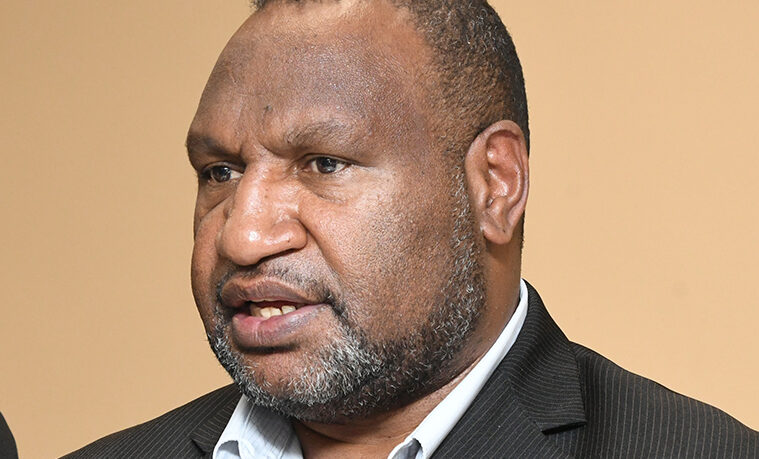
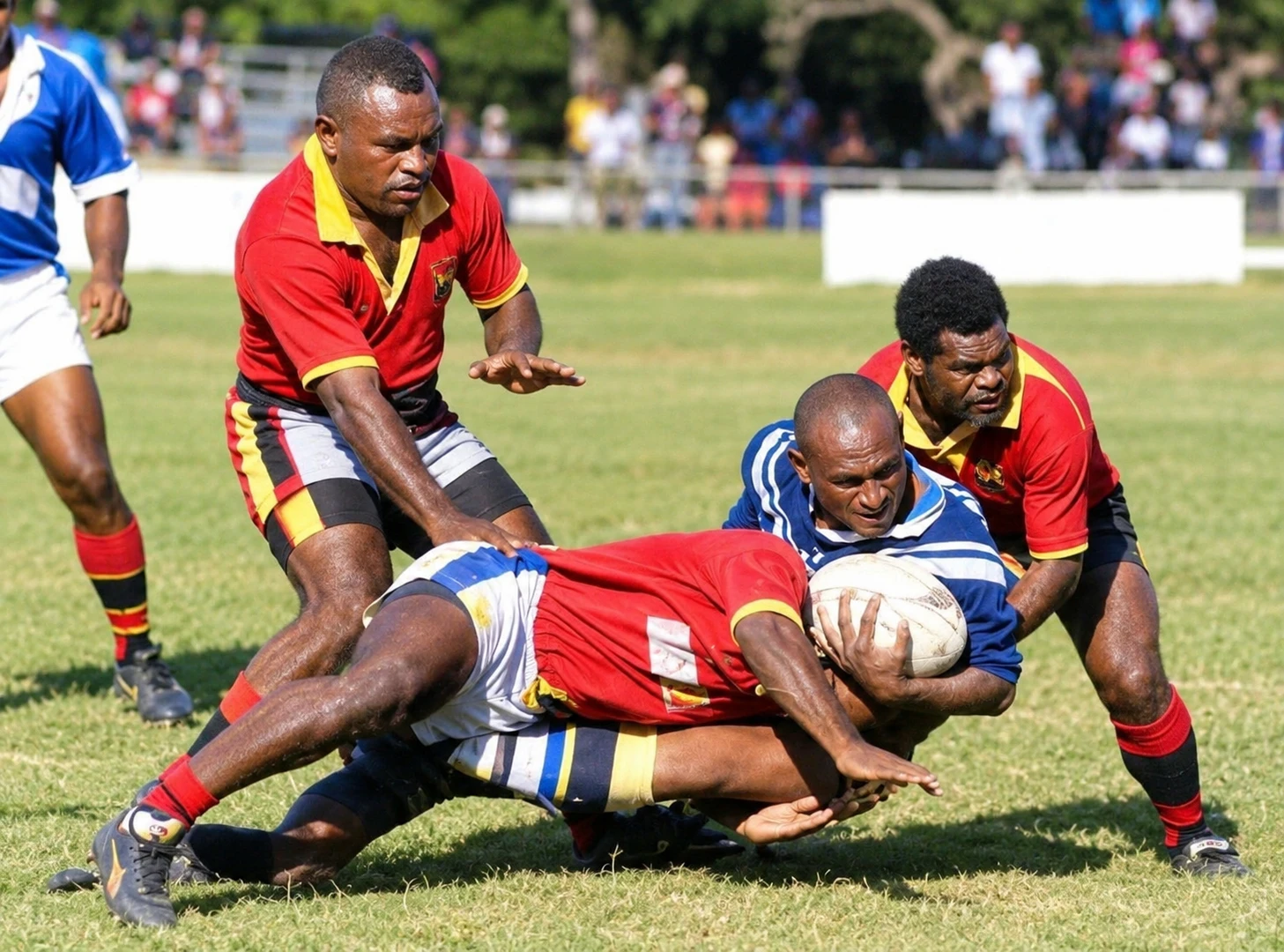
The Prime Minister, James Marape, has used an old photograph of himself playing rugby league to deliver a personal message to young Papua New Guineans: the choices made in your twenties can shape the rest of your life, so set goals early and be prepared to make sacrifices.
In a public message signed as Hon. James Marape, MP, Prime Minister of Papua New Guinea, he recounted the decision at age 23 that redirected his life, from the rugby league fields of Port Moresby to his home in Tari, and eventually into national politics. The message is a personal reflection rather than a policy announcement, and it is presented here as the Prime Minister’s own account.
From Port Moresby rugby league to a different dream
According to the Prime Minister, he was 19 in 1991 and playing for Port Moresby Souths in the Port Moresby Rugby League, which he described as PNG’s premier rugby league competition at the time. He played for Souths from 1991 to 1993, joined Post Pumas in 1994, and also represented the University of Papua New Guinea (UPNG) while studying there.
He said that while he loved the game, his education and Christian faith always came first, and he did not play on Saturdays because of his Sabbath observance.
He noted that his younger brother, Larsen Marape, was the better player and went on to represent PNG as a Kumul from 2005 to 2013. The Prime Minister reflected that he might also have become a Kumul had he made rugby league his life’s ambition.
The 1994 decision: leaving the city for Tari
In 1994, at 23, he left Port Moresby and returned to Tari. He wrote that he walked away from city life, rugby league, friendships and opportunities in the capital to live among his people and pursue his interest in politics and public service.
He continued to play in Tari in 1995 and 1996, and occasionally for Dobo Warriors while undertaking postgraduate studies at UPNG in 1997, but said the sport was no longer his priority. In his words, he gave up the dream of wearing the Kumuls jersey to pursue another: wearing the national Kumul emblem as an elected Member of Parliament.
A long road to Parliament
The Prime Minister said he spent years living and working among his people before contesting his first election in 2002, describing the journey as one that required patience, discipline, commitment and sacrifice.
The public record supports that it was not a quick path. Mr Marape first contested the Tari-Pori seat in 2002, an election in which voting in the then Southern Highlands Province was cancelled because of widespread violence. He won the seat in 2007 and retained it in 2012 and 2017. He served as Minister for Education from 2008 to 2011 and Minister for Finance from 2012 to 2019, before being elected Prime Minister on 30 May 2019. He was re-elected Prime Minister after the 2022 National General Election.
That means roughly 13 years passed between his return to Tari in 1994 and his first election to Parliament in 2007.
Sponsored: Explore today’s featured resource
“Do not waste your twenties”
The central message is about life stages. The Prime Minister described the years from birth to 10 as growing under parents’ care, and 10 to 20 as years of learning, schooling and discovering one’s abilities. He singled out the years from 20 to 30 as one of the most important stages of life, when young people pursue education, build skills, form relationships, start careers and decide who they want to become.
He acknowledged that not everyone will become a sports star, politician or business leader, and encouraged young people to pursue whatever calling they have, naming farmers, teachers, doctors, engineers, entrepreneurs, tradespeople and community leaders. Pursuing a goal, he said, may require giving up comfort, entertainment, some friendships or a current lifestyle.
His advice, in summary
The Prime Minister closed with a list of principles for young people:
- Dream big and set your goals early
- Get an education and work hard
- Respect your parents and honour God
- Stay disciplined and make sacrifices
- Never give up
- Do not follow the crowd; find your own path
He also stressed that a person’s background and circumstances do not have to determine their destination. He said he was sharing his story so that every young person would have the courage to discover their own path, rather than copy his.
Why the message resonates, and its limits
PNG has a young population, and many of the decisions the Prime Minister describes, such as whether to stay in town or return to the village, or whether to prioritise study, sport or work, are familiar to families across the country.
At the same time, readers will recognise that the message is a personal story told by a serving leader. Personal discipline matters, but young people’s opportunities also depend on factors outside their control, including access to schools, jobs, training and services, particularly in rural provinces. The message focuses on individual choices. It does not set out new government programmes for youth, and none were announced alongside it.
The bottom line
Prime Minister Marape’s message to young Papua New Guineans is simple: the twenties are a foundation decade, every worthwhile dream demands sacrifice, and the courage to choose your own path matters more than following the crowd. His own example, leaving the city and the rugby field at 23 for a political journey that took more than a decade to bear fruit, is the illustration he offers.
Sponsored: See this partner offer
Frequently asked questions
What did PM Marape say to young Papua New Guineans? He urged them to dream big, set goals early, get an education, work hard, respect their parents, honour God, stay disciplined, make sacrifices and never give up. He stressed that the years from 20 to 30 are among the most important stages of life.
What does “do not waste your twenties” mean in his message? He described the twenties as the stage when young people pursue education, build skills, form relationships, start careers and decide who they want to become. His point is that the decisions made in those years shape what follows.
Did James Marape play rugby league? Yes. By his own account, he played for Port Moresby Souths from 1991 to 1993, joined Post Pumas in 1994 and represented UPNG while studying there. He later played in Tari in 1995 and 1996, and occasionally for Dobo Warriors in 1997.
Why did he leave Port Moresby in 1994? He wrote that at 23 he walked away from city life, rugby league, friendships and opportunities in the capital to live among his people in Tari and pursue his interest in politics and public service.
Who is Larsen Marape? He is the Prime Minister’s younger brother, whom James Marape described as the better player. Larsen represented PNG as a Kumul from 2005 to 2013.
Did the Prime Minister announce any new youth programmes? No. The message is a personal reflection and does not set out new government programmes for young people, and none were announced alongside it.
When was James Marape first elected to Parliament? He first contested the Tari-Pori seat in 2002 and won it in 2007. He retained it in 2012 and 2017.
How long did it take him to reach Parliament after returning to Tari? Roughly 13 years passed between his return to Tari in 1994 and his first election to Parliament in 2007.
When did he become Prime Minister? He was elected Prime Minister on 30 May 2019 and was re-elected after the 2022 National General Election. Before that he served as Minister for Education from 2008 to 2011 and Minister for Finance from 2012 to 2019.
Does he expect young people to follow his path? No. He said he shared his story so that every young person would have the courage to discover their own path. He also noted that not everyone will become a sports star, politician or business leader, and encouraged young people to follow whatever calling they have.