The Department of Information and Communications Technology (DICT) and the Centre for Excellence in Financial Inclusion (CEFI) signed a Memorandum of Understanding (MoU) on 30 October 2026 to boost financial inclusion in PNG. The partnership aims to connect the Government’s digital initiatives with the financial services Papua New Guineans need to save, transact and plan for the future.
The agreement brings together two institutions at the centre of two national reforms: the build-out of PNG’s digital public infrastructure, and the long-running effort to bring more citizens into the formal financial system. No budget, targets or implementation timeline have been made public yet, so the agreement is best read as a framework for cooperation rather than a programme with measurable deliverables.
What the MoU commits DICT and CEFI to
Under the MoU, DICT and CEFI pledged to work closely to bridge the gap between government digital initiatives and financial services. Both institutions reaffirmed a shared commitment to using technology to make banking and digital services accessible to all Papua New Guineans.
The two partners bring different strengths. DICT leads the Government’s digital identity and digital government programme. CEFI coordinates financial literacy and inclusion work with provinces, districts, universities and financial institutions. An MoU of this kind usually sets out intentions and areas of cooperation, and the detailed arrangements follow later.
Aligning financial services with national digital systems
DICT Secretary Steven Matainaho emphasised the need to align financial services with national digital systems. He pointed to three projects supporting that vision: PNG’s Digital Public Infrastructure (DPI), the national Digital ID, and the Service Wallet application, which the announcement described as upcoming.
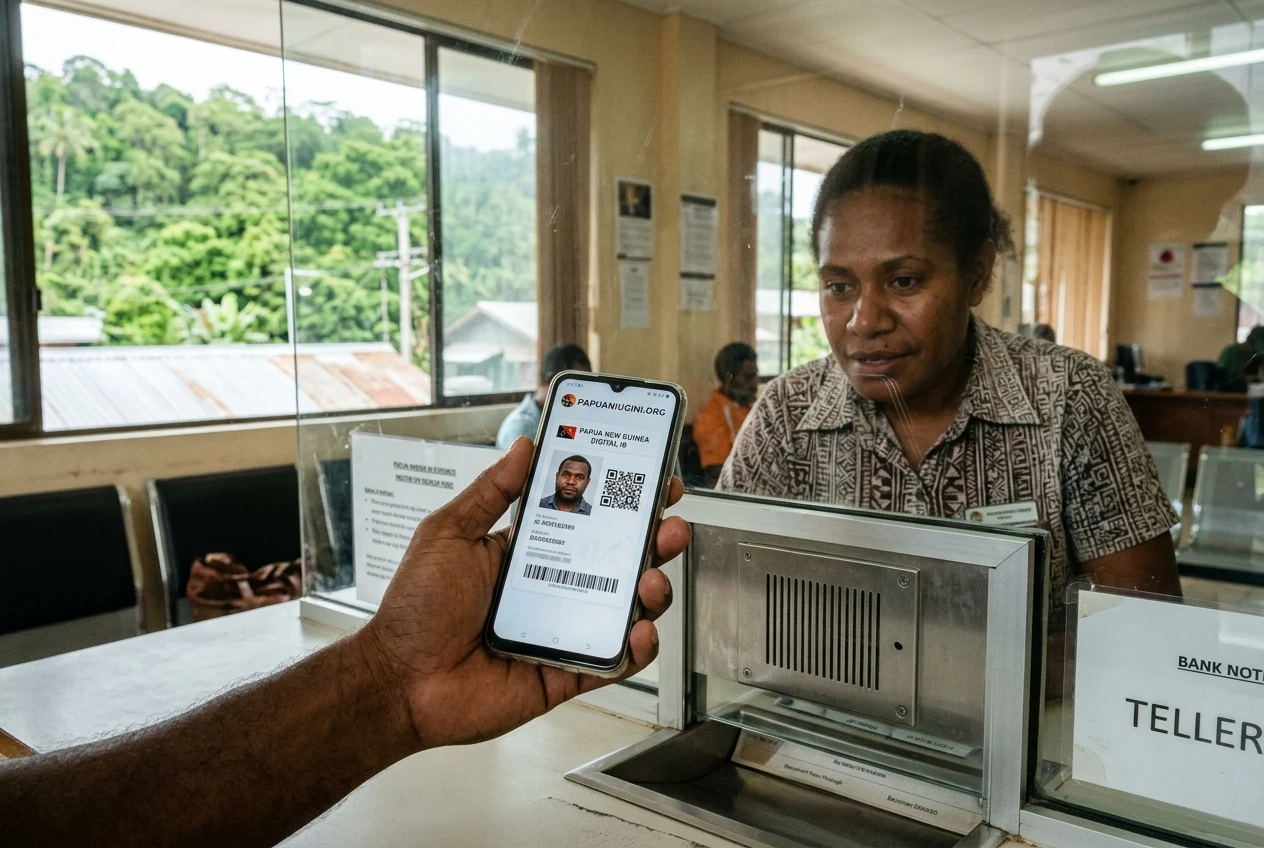
The partnership builds on groundwork already in place. PNG’s national digital ID, SevisPass, and its companion SevisWallet app were launched in late 2025 as foundational layers of the country’s DPI. DICT has also signed earlier agreements with financial institutions:
- NASFUND: an agreement to use SevisPass for electronic “know your customer” (eKYC) checks when onboarding members.
- MiBank: an agreement allowing people registered on SevisPass and SevisWallet to open accounts with the bank.
Every bank and financial institution must verify who its customers are before opening an account. Today that usually means presenting physical documents in person. A trusted digital ID can let an institution confirm a customer’s identity remotely, which could reduce the number of trips a person has to make to a branch in town.
The identification barrier in rural PNG
Access to formal banking remains a major hurdle for many Papua New Guineans in remote areas. CEFI’s Acting Executive Director, Peter Samuel, said the collaboration will directly target the challenges faced by rural communities, particularly around official identification and banking requirements.
For many families in outstations and remote villages, distance from a bank branch is one obstacle, and missing documents are another. Without the papers needed to open an account, a person cannot get started even if a branch is nearby.

DICT’s own DPI programme lead has described the case of a woman from Buka, Bougainville, who in 2018 needed a passport but had neither a birth certificate nor a national identification card, both of which were prerequisites. Her case shows how a gap in identification can keep people away from services long before they reach a bank counter.
CEFI has community-level financial inclusion networks and DICT runs the digital ID systems. Together they are in a position to work on both parts of the problem: getting people identified, and making sure financial institutions accept that identification.
CEFI’s Innovation Hub and local fintech
Mr Samuel also highlighted CEFI’s Innovation Hub, which focuses on developing financial technology, encouraging innovation and supporting local start-ups.
CEFI has been active in this area. It has signed an MoU with the PNG University of Technology (Unitech) to establish a Fintech Incubation Centre in Lae, where solutions developed would be tested in the Bank of Papua New Guinea’s regulatory sandbox before reaching the wider market. A regulatory sandbox lets a new financial product operate under supervision on a limited basis before a full launch.

The announcement did not specify how the Innovation Hub will work alongside DICT’s digital platforms. A national digital ID and a group of local fintech developers could, however, produce homegrown products that rely on government-verified identity.
Part of a wider financial inclusion push
The DICT agreement adds a digital-government dimension to a growing list of CEFI partnerships. CEFI, chaired by the Governor of the Bank of Papua New Guinea, has signed MoUs with:
- the provincial governments of West New Britain, Milne Bay and Madang;
- the Wau-Waria District Development Authority, in June 2026;
- tertiary institutions and superannuation funds.
These partnerships are aligned with the National Financial Inclusion Strategy 2023 to 2027.
Earlier agreements have largely focused on financial literacy training and outreach. This one links financial inclusion directly to the identity and digital service systems the Government is building.
What this means for readers
For someone without a bank account, the practical question is what to do now. Nothing in the announcement describes a new registration process or a date when services will change, so there is nothing new to apply for yet.
What exists today is the earlier work: SevisPass and SevisWallet are available, and NASFUND and MiBank have agreed to use them. Anyone planning to open an account or join a fund should ask the institution directly whether it accepts SevisPass registration, because acceptance depends on each institution’s own agreement and systems.
Families who lack a birth certificate or national identification card face the same problem the Buka case describes. The MoU says it will target that problem, but it does not yet explain how.
What remains to be seen
As with any MoU, the impact will depend on implementation. These are the main factors to watch:

- Targets and timelines: No public figures have been released on how many people the partnership aims to reach, or by when.
- Connectivity and devices: Digital ID and wallet services depend on mobile coverage, data costs and access to smartphones, all of which remain uneven outside urban centres.
- Digital literacy: People who are new to formal banking may also be new to apps and online verification, so CEFI’s financial education work has to go alongside the technology. Our guide to digital skills for getting a job in Papua New Guinea when your data is limited covers some of the basics. ****
- Legal and data safeguards: PNG’s legal framework for digital identity is still developing, following Cabinet’s approval of the National Digital Identity Policy 2025. Public trust will depend on how personal and biometric data is protected.
The bottom line
The agreement signals that the Government’s digital identity programme and the country’s financial inclusion agenda are being deliberately linked. For rural Papua New Guineans who have been excluded from banking because they lack recognised identification, that link could lower a long-standing barrier. Whether it does will become clearer once DICT and CEFI publish concrete plans, targets and progress reports.
Frequently asked questions
What is CEFI? The Centre for Excellence in Financial Inclusion is a PNG institution, chaired by the Governor of the Bank of Papua New Guinea, that works with government bodies, educational institutions and financial organisations to expand financial literacy and access to financial services.
What did DICT and CEFI agree to? On 30 October 2026, the two institutions signed an MoU to work together to bridge the gap between government digital initiatives and financial services, with a focus on making banking and digital services accessible to all Papua New Guineans.
What is SevisPass? SevisPass is PNG’s national digital ID, launched in late 2025 as part of the country’s digital public infrastructure, alongside the SevisWallet app.
How could this help people in rural areas? According to CEFI, the partnership will target the identification and banking requirements that prevent many rural Papua New Guineans from accessing formal financial services.