If you are a head teacher waiting for the tuition fee subsidy, a board member trying to explain a bare account to parents, or a Papua New Guinean abroad reading about the national debt, you may wonder whether the two are connected. They can be, but the connection has to be shown with documents, not assumed. This guide sets out how to follow PNG national debt and education funding from the budget papers in Waigani to the bank statement of one school.
Our news coverage of the debt, including the debate over the national debt figure, tells you what leaders are saying. This article shows you how to test those claims against records anyone can obtain.
Why a debt figure in Waigani can show up as an empty school account
The national government collects revenue from taxes, resource royalties and dividends, and it borrows. It then spends on many things at once: salaries, health, roads, law and order, education and repaying what it has borrowed. When repayments grow, the amount left for everything else shrinks, unless revenue grows by the same amount or the government borrows more.
That is the logic behind the claim that debt eats into school funding. The claim is plausible. Whether it is true for your school depends on evidence at each stage, and each stage can fail for reasons that have nothing to do with debt.

There are four points where money can be reduced or delayed:
- The budget sets an allocation for the tuition fee subsidy.
- The Treasury decides how much cash to release and when.
- The Education Department and the provincial education office pass the money on.
- The school receives it, or part of it, or none of it.
A shortfall at your school could start at any of these points. The method below lets you find out which one.
Debt service versus education spending: how to read the two lines in the national budget
The national budget is published as a set of documents by the Department of Treasury. The main budget papers list planned spending by department and by programme. Treasury also publishes later reports that compare what was planned with what happened, such as a mid-year update and a final outcome report. Titles change, so check the Treasury website for the current names and the dates on each.
Find two lines and put them side by side:
- Debt service. Look for wording such as “debt service”, “interest payments” or “public debt charges”. Interest and loan repayments are usually reported separately, so note both. Write down the amounts, the year, and whether each figure is planned or actual.
- Education. Find the Department of Education’s total allocation, and then the lines inside it. Look for the subsidy to schools, which may sit under a programme name rather than the words “tuition fee”.
Three habits keep this honest.
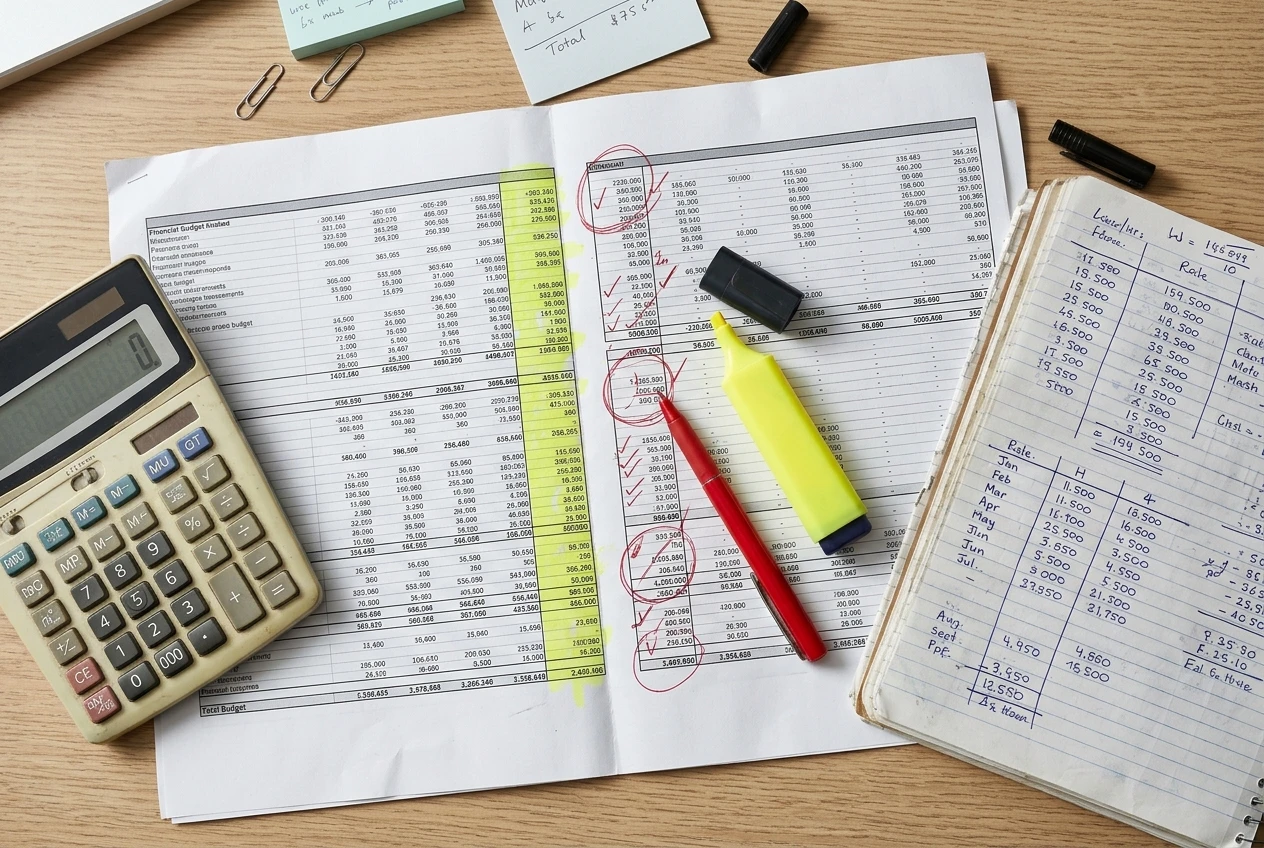
First, compare like with like. A planned figure from the budget and an actual figure from the final outcome report are different things, and mixing them produces false conclusions.
Second, look at more than one year. A single year tells you little. If debt service rises across several budgets while the education subsidy stays flat or falls, that pattern is worth reporting. If both rise, the simple version of the debt story weakens.
Third, work in kina and in proportions. Calculate each line as a share of total spending. A figure that looks large in kina may be a small share of a budget that has also grown.
Keep a plain table with columns for year, document name, debt service, education total, subsidy line, and whether the figure is planned or actual. That table is your evidence base, and anyone can check it against the same documents.
Where the tuition fee subsidy sits in the budget and what the allocation actually promises
An allocation is a ceiling on planned spending. It is not a bank deposit. A budget line says the government intends to spend up to that amount on the subsidy during the year, and no school receives anything until money is released and passed down.
Read the allocation for three details:
- What it covers. The subsidy is meant to replace or reduce the fees families would otherwise pay. Check how the budget papers or Department of Education notices describe what the money pays for, and at which grade levels, because this determines what your school should expect.
- How it is calculated. Schools are normally funded according to enrolment. Ask your provincial education office for the rate the department uses and the enrolment figure it holds for your school. If its enrolment figure is lower than your real enrolment, your school will be underpaid even when the national money arrives in full.
- When it is meant to arrive. Funding is usually paid in instalments across the school year. Ask the provincial office for the official payment schedule. Without a stated schedule you cannot say a payment is late.
Do not treat the national allocation as a promise to your school. It is a promise about the national total, and what your school should get is a smaller calculation you can work out from the rate and your enrolment.
Following the money down: from Treasury release to provincial office to your school
The same funding-trail approach we used for health funding applies to schools. If you want to see how it works for another service, read how health money travels from Waigani to the aid post.
For schools, trace each stage in order and record what you find.
Stage 1: the national release
Ask whether Treasury has released funds for the subsidy and for which period. Public releases, ministerial statements, and Department of Education notices to schools are the places to look. Note the date of each announcement and what it actually says. A statement that funds “will be released” is different from a statement that funds “have been released.”
Stage 2: the provincial office
The provincial education office or the provincial treasury holds or passes on the money in many cases. Visit or write to the office and ask three questions in writing: what amount it received for your school’s subsidy, on what date, and when it transferred that amount to the school. Written answers can be kept. Verbal answers cannot be checked later.
Stage 3: your school’s own records
The school’s bank statements show what actually arrived and on what date. Combine them with the cash book, the receipts issued, and the board’s meeting minutes. These three records together show what was received, how it was spent, and what the board knew at the time.
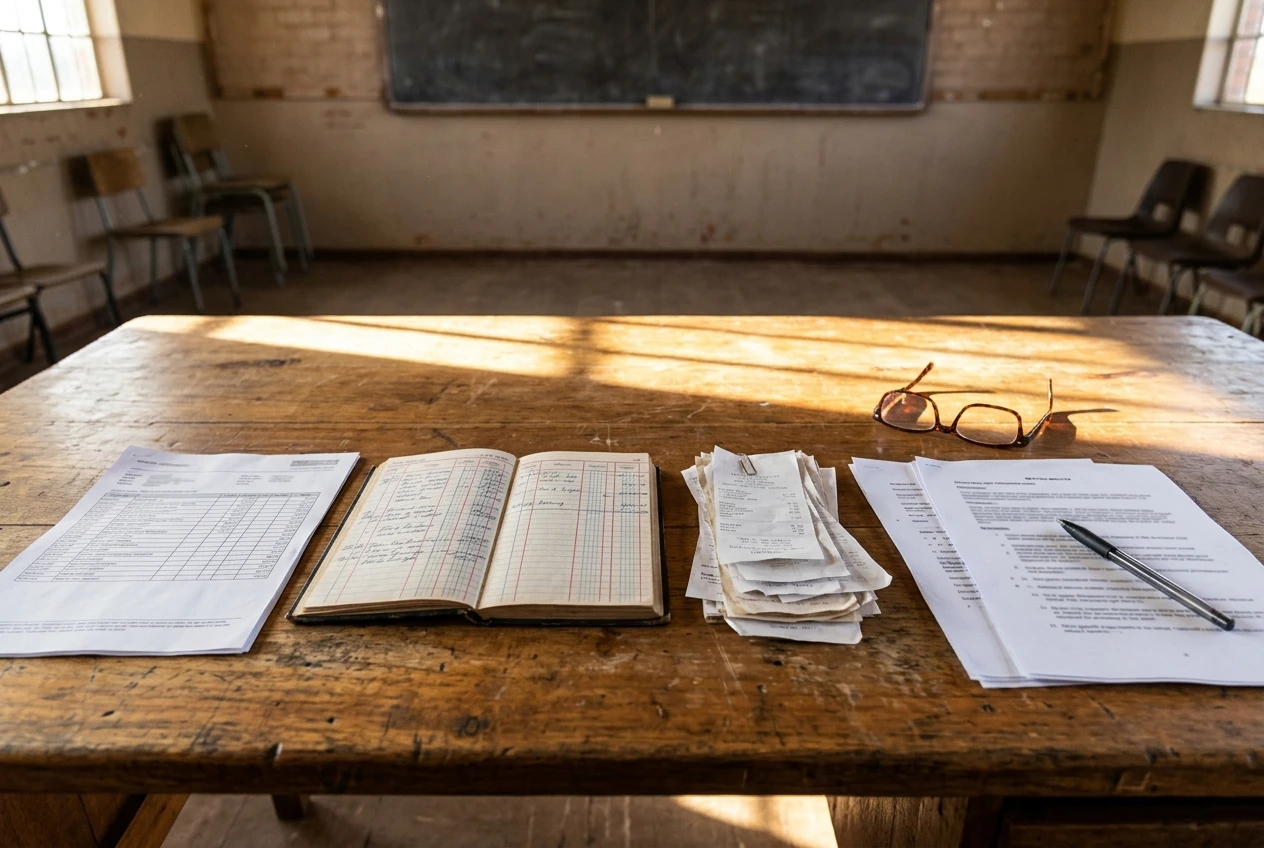
If you are a parent, student or overseas reader without access to the account, ask the board for a summary of subsidy payments received. Boards that manage public money for a school can be asked to explain it.
Compare the stages
Put the three amounts in a row: the national release, the amount the provincial office says it forwarded, and the amount the school’s bank statement shows. The gap between any two neighbouring figures tells you where the money slowed or shrank. A gap between the budget allocation and the national release points toward Treasury cash decisions, which is where debt pressure could be a factor. A gap between the provincial office and the school points toward local handling, and debt cannot explain that.
Warning signs that a subsidy is late, partial or missing, and how to record them
Common signs include:
- A payment arrives after the term it was meant to cover.
- The amount is smaller than the rate multiplied by your enrolment.
- The provincial office cannot say when it received the money.
- The school receives funds in uneven or unexplained amounts.
- Fee-free education is announced, but families are still asked to pay fees to keep the school running.
- Enrolment figures held by the department differ from your own register.
Record each one the same way. Write the date you noticed it, the amount expected and the amount received, the source of your expected figure (for example, the rate quoted by the provincial office), and who you spoke to. Keep copies of bank statements and any letters, and photograph notices that show dates.
Separate what you know from what you suspect. “The school received less than the rate multiplied by enrolment in Term 2” is a fact you can document. “The shortfall was caused by national debt” is a conclusion, and you can only make it if a published source says so. If you have no such source, report the gap and say its cause is unknown.
Why debt is only one explanation: mismanagement, timing and revenue shortfalls
When money does not reach a school, debt is one candidate among several, and a careful reader keeps all of them open.
Revenue shortfalls. If the government collects less than it planned, it may release less cash than the budget allowed, even if debt repayments stay the same. Compare planned revenue with actual revenue in the Treasury outcome reports.
Timing. Cash can arrive late without being reduced. A delayed payment can be made up in the next quarter. Check whether the full-year total eventually matched the allocation before deciding the school was shortchanged.
Administrative errors. Wrong enrolment counts, outdated bank details, and missing paperwork can hold up a payment at the provincial level.
Mismanagement or misuse. Public money can be diverted or poorly accounted for at any level. This must never be alleged without evidence. If your records show money received by one office and not accounted for, report the documents to the appropriate oversight body and let it investigate. Our coverage of allegations about Education Department contracts shows why claims in this area need to be tied to named sources.
Debt. If debt service takes a growing share of spending and the Treasury or another credible source states that it has constrained education releases, that supports the link. If you have only the budget table, you can show that debt service and education spending moved in particular ways. You cannot show cause from the table alone.
Writing it this way protects you and gives your findings credibility with officials and journalists, who will ask exactly these questions.
What you can do with your findings
Take your records in the following order.

Start with the school board. Present the table of expected and received payments at a board meeting and ask for the minutes to record it. A board that has seen the figures can act together, and the minutes become part of the record.
Write to the provincial education office. Ask in writing for the amount received, the date, and the reason for any difference. Keep a copy and note when you sent it. If there is no reply, a second letter with the first attached shows you followed the proper process.
Go to the national level if the provincial office points upward. If the provincial office says it did not receive the funds, write to the Department of Education with your figures, and ask the same questions about the national release.
Approach the press with documents, not opinions. A journalist can use a clear one-page summary: the school’s name and province, the amount due, the amount received, the dates, and the documents behind each figure. Offer the documents and let the reporter verify them.
Compare notes with other schools. If neighbouring schools see the same pattern, the problem is probably higher up the chain. A single school’s gap may be a local error, but several schools with the same gap in the same province suggests a shared cause.
Papua New Guineans overseas can help too. You can ask relatives who sit on school boards what their schools received, help organise the figures into a table, and share them with us.
Share what your school actually received this year, and when it arrived, so we can verify it and include it in our education funding coverage.