A school in a remote part of Papua New Guinea raises practical questions before it raises any large ones. How does the teacher get there? Where do they sleep? What do they teach from, and who do they call when something goes wrong? These questions decide whether a school opens each Monday, and they are the ones this series puts to teachers in remote areas of Papua New Guinea.
This is the first piece in the teachers strand of our inspiring stories series, so it sets out how the strand works. Every account in the series comes from a teacher’s own words, given with their permission, or from a community submission we have checked. Any claim about conditions is attributed to the teacher who made it or to an official source. We keep to that rule in this opening piece too. It names no teacher and quotes nobody, because we will not put words in a teacher’s mouth or present a general picture as one person’s experience.
What follows is the shape of the feature and the questions behind it. Students and young people thinking about teaching can use the questions to find out what a posting involves. Papua New Guineans overseas can use them to ask the right things of a relative or old teacher back home.
A School Day in a Remote Community, Told by the Teacher Who Lives It
A school day looks different in every district, and it only becomes real when the teacher describes it. The first thing we ask is simple: walk us through an ordinary day from waking to sleeping.
The questions that follow are practical:
- What time does the day start, and what has to be done before the children arrive?
- How do students get to school, and how far do they come?
- How many children are in the room, and what ages are they?
- What is taught in the morning and what in the afternoon, and which parts of the day depend on the weather?
- What happens when a child is absent for days because of a garden, a funeral, a feast or a flooded track?
- What does the teacher do after the children go home?
A teacher’s answers to these questions say more than any summary of “challenges facing rural education”. They show that the job includes preparing lessons by hand, keeping records, looking after the school buildings, talking with parents and, often, being the person in the community who has most recently seen a larger town.
We also ask about language, because Papua New Guinea has hundreds of distinct languages and the children in one classroom may not all speak the same home language. Which language does the teacher use to explain a new idea? When does English come in? Teachers can answer that question better than anyone, and the answer differs between communities. This is why we do not write one “typical” school day. We publish the day as the teacher tells it and name the place it happened.
Getting There and Staying There: Travel, Housing and Distance from Services
For many teachers, the first lesson of a remote posting is the journey. Our questions here are plain. How did you travel to the school the first time: on foot, by boat, by road, by small aircraft, or by some combination? How long did it take, and what did it cost? Who paid? How often can you leave, and how do you get supplies in?
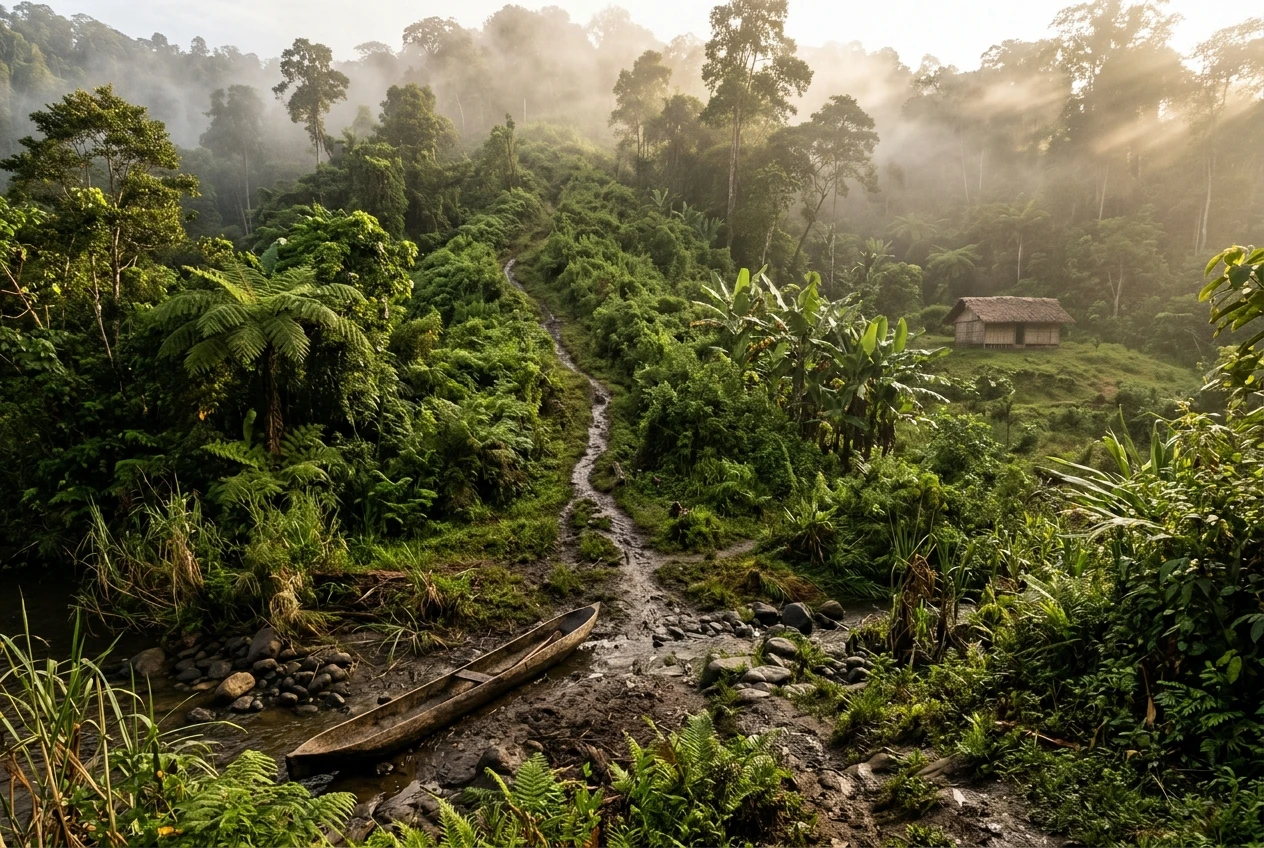
Then we ask about housing, because where a teacher lives affects whether they stay:
- Is there a teacher’s house, and who built it?
- Does it have a water supply, a toilet, a kitchen, a way to charge a phone or a lamp?
- Does the teacher live alone, or with a family?
- If the teacher’s family lives elsewhere, how often do they see each other?
And we ask about distance from services. Where is the nearest health centre, and how long does it take to reach? Where does the teacher collect pay, buy food, send a message, or get a document signed? Can they get a phone signal, and where? The hub’s own research on education in Papua New Guinea starts from a simple point: do not assume every reader, or every teacher, has reliable internet, electricity or transport. These questions find out what the actual situation is, one posting at a time.
If you are thinking about teaching, these are the questions to ask before you accept a posting, not after. Ask the school, the district education office, or a teacher who has served there. Find the district on a map first; our guide to every province on the Papua New Guinea map, sorted by region is a good place to see where a province sits and what surrounds it. Then ask how people reach the school, not just how far away it is. On a map, two places that look close can be a long journey apart.
If you are a teacher with a story about getting to your school, the journey itself is worth telling, with the dates, the route, and who helped you.
Teaching Several Grades in One Room with Very Few Books
A multi-grade class means one teacher responsible for children of more than one grade at the same time. It can happen wherever a school has fewer teachers than grades. A teacher in that position is planning, teaching and marking for several levels at once.
We ask teachers to explain how they do it in practice, because the methods are worth recording:

- How do you divide the room and the time?
- Do older children help younger ones, and how do you organise that?
- Which lessons can all grades share, and which have to be taught separately?
- How do you keep one group working while you teach another?
Then we ask about materials. How many textbooks does the school have, and who uses them? What does a teacher do when there are not enough, or when the ones they have are old? Some teachers copy lessons onto a board, draw charts by hand, or use objects from around the village to teach counting, measurement or science. We want the actual examples, in the teacher’s words, with the subject and grade named.
This section is also where we ask about what the teacher brings from their own training. Teachers who have studied at a university or a teachers college often have a view on whether their course prepared them for a multi-grade room. That view is useful to anyone choosing where to study. Our guide to choosing a university in Papua New Guinea covers the institutional side; a teacher’s account of what the course did and did not cover is the part no prospectus gives you.
When Pay, Supplies or Support Arrive Late: What Teachers and Official Sources Say
This is the section where accuracy matters most, because the claims are serious and the details differ from case to case. A teacher might say their pay arrived weeks after it was due. They might say school supplies reached the district office but not the school. These are important things to report, and also easy to get wrong.
So we handle them in a fixed way:
- We report what the teacher says, as theirs. If a teacher says a payment was late, we write that the teacher said so, and when and where it happened, if they are willing to say.
- We do not turn one account into a national rule. One teacher’s experience in one district is one teacher’s experience. It is real, and it is not a statistic.
- We look for an official source alongside it. That means published statements, reports or announcements from bodies such as the national Department of Education and the Teaching Service Commission, with the date and source named.
- We give the responsible office the chance to respond where a specific complaint is made against it, and we say plainly if it did not.
- We separate what is confirmed from what is alleged. The hub’s editorial standard is to distinguish confirmed information from allegation and opinion, and teachers’ accounts are held to it like any other source.
We also ask teachers what they did when support was late. Did they cover costs themselves? Did the community help? Did they write to the district office, and what came of it? These details show how teachers work through delays, and they treat teachers as capable adults handling a difficult situation rather than as people to be pitied.
Teachers who have a payment or supply problem they want to raise should keep records: dates, amounts, names of the offices contacted, and any written replies. Those records make an account easier for us to verify and easier for an official body to act on.
What the Village Gives Back to Its Teacher
Most accounts of remote teaching describe what the teacher gives to the community. The other side is just as important, and it is where the idea of a teacher as an outsider who arrives to help begins to fall apart. Communities look after the people who teach their children.
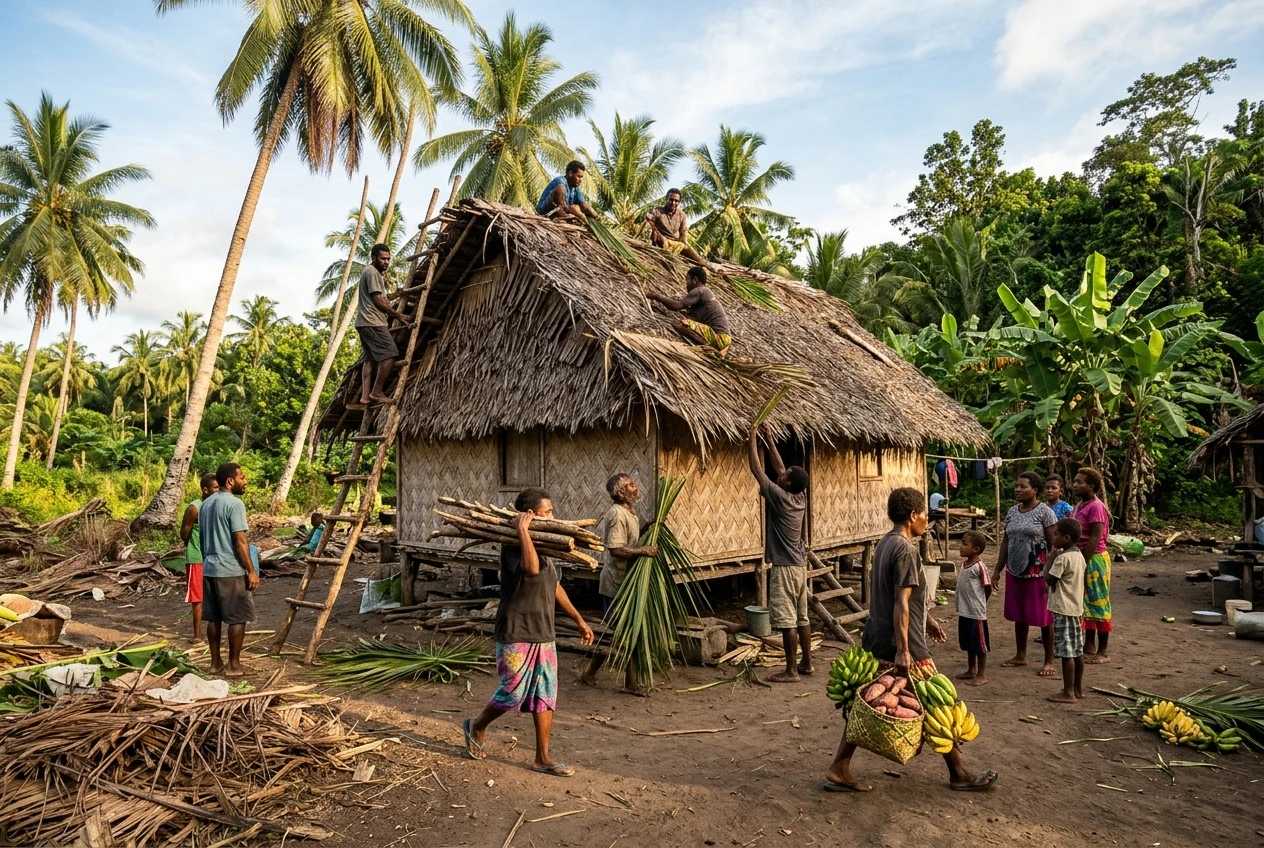
We ask teachers what that looks like in their own experience:
- Did the community help build or repair the teacher’s house or the classroom?
- Did families share food, or help with gardens, firewood or water?
- How was the teacher welcomed when they arrived, and by whom?
- Do parents and local leaders take part in school decisions, and how?
- Has the community helped the teacher through illness, a death in the family, or a long wait for pay?
We ask these questions carefully, because customs differ between communities and regions. The hub’s approach to culture is to avoid treating Papua New Guineans as belonging to one tradition, so we record each teacher’s account as belonging to a specific place. For background on how authority and custom operate in communities, our piece on how village elders and custom keep the peace gives context for the relationships a teacher walks into.
This section also corrects a common picture. A teacher in a remote community is not simply alone. The teacher and the village depend on each other, and the account that shows both sides is more accurate than one that shows only hardship.
Why They Stay, and What Their Former Students Went On to Do
Teachers have reasons for staying in a hard posting, and we ask for them directly rather than assuming them. Some stay because of family connections to the area, some because of a commitment to a particular group of children, some because they have built something at the school that they want to finish. We record the reasons the teacher gives, in the teacher’s words, and we do not offer them on the teacher’s behalf.
The second half of this question is about outcomes. Where a teacher has been at a school long enough, former students may have gone on to further study, to work, to a trade, or back to the village to farm or lead. We ask the teacher what they know about this, and we ask for names only where the former student has agreed to be named. Where a teacher can say that a former student became a nurse, a pilot, a pastor or a teacher, we want to know what year they left school, and how the teacher knows. A claim about a former student gets the same checking as any other claim.
For readers deciding on their own path, these accounts show something no brochure can: what a career in teaching looks like years later. Students who want to study teaching will find practical help in our guide to finding and applying for scholarships as a PNG student, which covers funding for further study.
What Would Help Rural Teachers Most, According to the Teachers Themselves
The last question we ask every teacher is open: if you could change one thing about teaching where you are, what would it be?
We report the answers as given, and we do not add our own list of recommendations. Teachers will name different priorities depending on where they work. One may say it is housing, another transport, another books, another a reliable pay schedule, another a visit from an inspector or adviser who understands the conditions. All of these are legitimate answers, and each belongs to a particular place and time.
Where several teachers in different districts name the same need, we say so, and we say how many teachers we spoke to. We do not claim that a handful of accounts represents every teacher in the country. Where an official source has published a plan or commitment that touches on the need, we link to it, so readers can see what has been promised and what teachers say has arrived.
This approach follows the hub’s wider editorial principle: examine public decisions and their consequences using evidence, ask what promises were made and what progress has been achieved, and always treat the people in the story with dignity.
Send Us a Teacher’s Story
Do you know a teacher serving in a remote part of Papua New Guinea, or were you taught by one? Send us their story, with their permission, and we will verify it and may feature it in our inspiring stories series.
The most useful submissions include the teacher’s name and school, the province and district, how long they have taught there, and a few of their own words about the day, the journey, the classroom or the reasons they stay. If a photograph is available, tell us who took it and whether the people in it have agreed to its use. If you are a teacher yourself, you are welcome to send your own account, and you decide how much to share and how you are named.