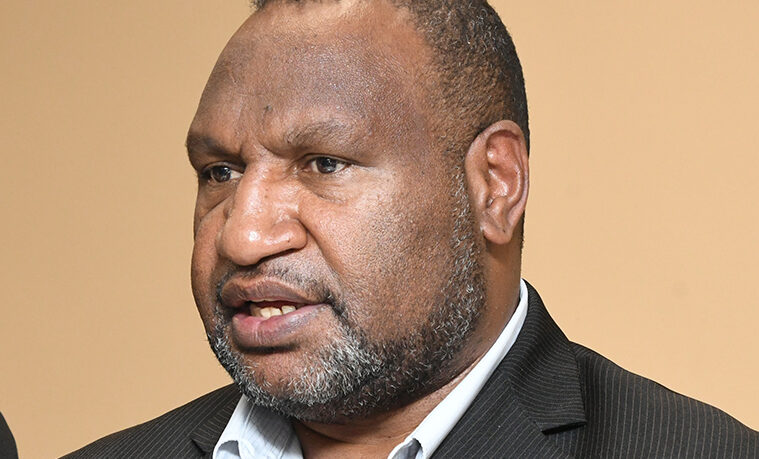
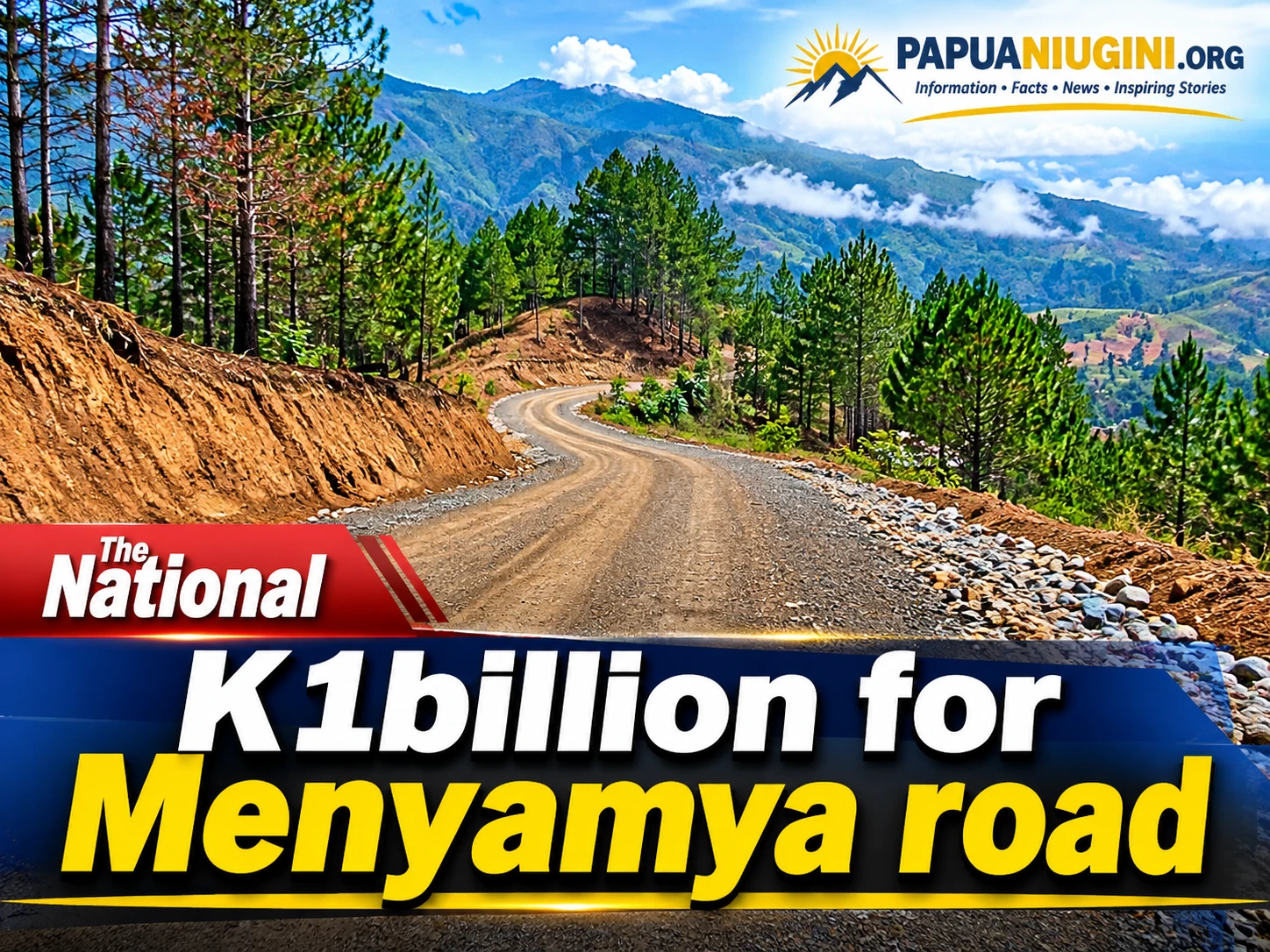
Menyamya District in Morobe Province is set to receive K1 billion to seal the 122-kilometre Bulolo Menyamya road, Prime Minister James Marape has announced. The money comes through a contract negotiated with the Asian Development Bank (ADB) under its financing programme.
Marape made the announcement while opening four major projects in Menyamya, as reported by The National on 30 October 2026. He said the district had shown it deserved the Government’s support.
A sealed road changes how people travel, sell their produce and reach services. This article sets out what was announced, why the Government says Menyamya was chosen, and which questions are still unanswered.
What was announced: K1 billion through ADB financing
The central commitment is a K1 billion contract, negotiated with the ADB, to seal the 122 km road between Bulolo and Menyamya. The Prime Minister announced it at the opening of four major projects in the district.
The figures reported so far:
Item Detail Funding K1 billion Financier Asian Development Bank, under its financing programme Road Bulolo to Menyamya, Morobe Province Length 122 km Work Sealing the road Announced by Prime Minister James Marape Occasion Opening of four major projects in Menyamya
Dividing K1 billion by 122 km gives roughly K8.2 million per kilometre. Treat that as a rough average only. Official reports have not said how the money will be split between sealing, bridges, drainage, design and supervision, and those costs rarely fall evenly along a road through rugged country.
Why Menyamya: the trans-national highway connection
The Prime Minister linked the funding to the recently commissioned trans-national highway, which runs through Menyamya District. Because of that route, the Government says it will support the district to fix its roads.
According to the report, Menyamya now has road links to:
- Gulf Province
- Eastern Highlands Province
- 41-Mile in Huon Gulf District
- Lae, Morobe’s provincial capital and PNG’s main industrial port city
Marape argued that the benefits would reach beyond local people to the provinces and districts the road connects. He described Menyamya as becoming “a core contributor to the progress, well-being and development of the country.”
A sealed link between Bulolo and Menyamya would tie the district more firmly to the Lae corridor. If the road holds up, that could shorten trips with produce for market, patients going to hospital and public servants travelling to rural stations. These are possible gains, not promised outcomes. What people actually get will depend on how the work is done and how the road is kept up.
Agriculture and economic opportunity
Deputy Prime Minister John Rosso said the road was what Menyamya had been waiting for. He pointed to the district’s agricultural base and named pandanus, coffee and apples among its commodities.
Rosso urged landowners to stay on their land and invest in it rather than leave. He encouraged locals to become entrepreneurs, using the government services now reaching the district.
Farmers in remote districts often lose income when produce spoils on slow, rough roads, or when freight charges take a large share of the sale price. A sealed surface can cut travel time and reduce wear on vehicles, which lowers the cost of getting a bag of coffee or a load of fresh produce to buyers. How much farmers gain will still depend on buyers, prices, transport availability and support services, not on the road alone.
Readers who want practical background on moving produce from rural areas can read our guide on how to transport goods in rural Papua New Guinea.
Performance-based support: what the Government is signalling
Marape said districts that had performed well over the last five years would receive more support from the Government, and he presented Menyamya as an example.
Rosso credited Mining Minister and local MP Solen Loifa with delivering the major projects in the district. He said the Government would back performing MPs and their districts.
Rewarding delivery can encourage better use of public funds. It also raises questions that citizens are entitled to ask:
- What measures define a “performing” district, and are they published?
- How will districts with weaker capacity, often the ones in greatest need, avoid falling further behind?
- With the 2027 National General Election approaching, how will project selection stay transparent and based on need?
These questions do not weigh against Menyamya’s case. They are the tests any large public investment should meet, in any district.
The unsealed highway debate and the Highlands Highway comparison
The trans-national highway has drawn criticism on social media because it remains unsealed. Rosso responded directly. He said the Government had commissioned the road and that its development was no different from that of the Okuk (Highlands) Highway.
He gave a short history. In 1953, colonial patrol officers and indigenous labourers cut a bush track by hand through to the Western Highlands, and the first Land Rover was driven from Lae to Mount Hagen. There were no proper bridges, only wet crossings. The road from Lae to Hagen was sealed in 1978, by Barclay Brothers among others, roughly 25 years later.
Rosso’s point was that what he called the Pangu highway will also need time to reach that standard. The comparison is useful context, but it does not answer every concern. A road that stays unsealed for years has real costs in maintenance, vehicle damage and safety, and travellers pay those costs in the meantime. The Bulolo Menyamya road will be watched as an early sign of how quickly the wider corridor is upgraded.
Keeping the road usable after it is sealed
Sealing a road is one expense. Keeping it in good condition is a separate and continuing one. Drains block, culverts wash out, and landslides cut roads in mountainous country, and a sealed surface deteriorates quickly if repairs wait. Reports so far say nothing about who will fund and carry out maintenance on this road.
That gap is common with new infrastructure. Our article on who looks after PNG’s new roads, bridges and clinics after the ribbon is cut looks at why maintenance so often falls behind and what communities can ask for.
What is still unknown
Several details have not been made public. Treat these as open questions until official documents are released:
- Financing terms: whether the ADB funding is a loan, a grant or a mix, and what the repayment terms are.
- Timeline: when tendering, construction and completion are expected.
- Contractor: who will build the road and how they will be selected.
- The four projects: official reports did not list which four projects were opened in Menyamya.
- Maintenance: how the sealed road will be funded and maintained once built.
- Land and community issues: how landowner consultation and compensation will be handled along the 122 km route.
Papuaniugini.org will update this story as the Department of Works and Highways, the Morobe Provincial Government or the ADB release further information.
What to watch next on the Bulolo Menyamya road
The announcement is the start of the process. The signs that show whether it is moving forward are public ones:
- A published tender notice or contractor announcement.
- A stated start date and completion date.
- Clear information on whether the K1 billion is borrowed or granted.
- A consultation process with landowners and communities along the route.
- A named agency responsible for maintenance after the road is sealed.
Readers in Menyamya, Bulolo and along the route can ask their local leaders for each of these. The more openly the information is shared, the easier it is for communities to prepare, whether that means planning a market, seeking contract work or raising land concerns early.
A large commitment that now needs delivery
The K1 billion pledge to seal the 122 km Bulolo Menyamya road is a major commitment for one rural district. It builds on the new trans-national highway and on Menyamya’s existing links to Gulf, Eastern Highlands and Lae.
If the road is delivered well, it could open markets for the district’s coffee, pandanus and apple growers and improve access to services. Whether it does will depend on what follows: clear financing terms, a published timeline, open contracting and a maintenance plan that keeps the road usable for decades.
What do you think the Bulolo Menyamya road will mean for your community? Share your view in the comments below.
Source: K1bil for Menyamya road, The National, 30 October 2026