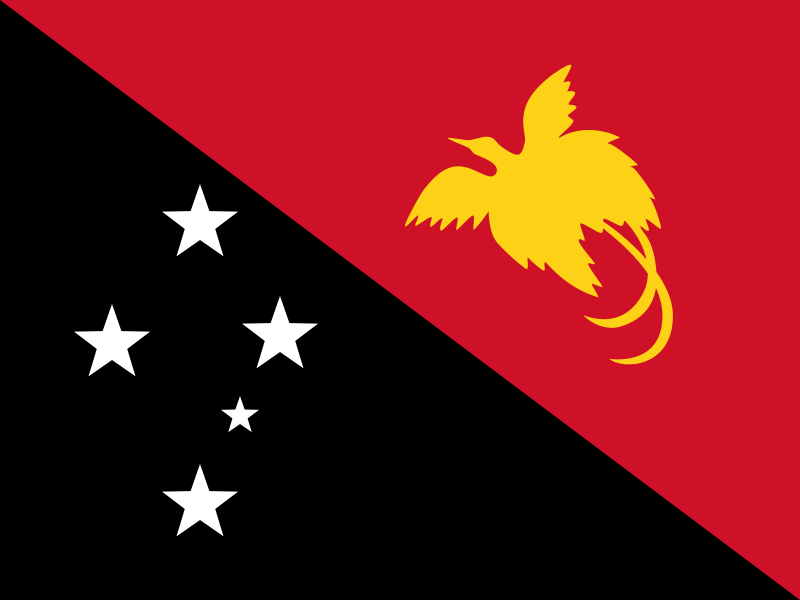
How a Nation of hundreds of tongues talks to itself. Papua New Guinea has around 840 living languages according to Ethnologue, the catalogue kept by SIL International. That is roughly one in eight of the world’s languages, spoken in a single country. The languages spoken in Papua New Guinea range from Enga and Melpa in the Highlands to Tolai in East New Britain, and each is used by a community that may number in the thousands rather than the millions.
People still talk to each other across those boundaries every day, in markets, offices, churches, schools and on the phone. This article explains how: the local language every person is born into, the three languages that connect people across regions, and the one that holds the nation’s laws.
Why Papua New Guinea has so many languages
Counts of languages depend on where a linguist draws the line between two languages and two dialects. Ethnologue’s total has shifted slightly between editions as new surveys come in. Other catalogues, such as Glottolog, use different criteria and reach different totals. Treat “around 840” as a well-sourced estimate, not a census count, and expect to see slightly different figures elsewhere.
The causes of the diversity are mostly geographic and historical. People have lived on the island of New Guinea for at least tens of thousands of years, which gave languages a very long time to diverge. The terrain also keeps communities apart. Steep Highland ridges, swamps, large rivers and hundreds of islands meant that valleys and coastal stretches could go for generations with little regular contact. A language spoken in one valley drifted away from the one spoken a day’s walk over the ridge.
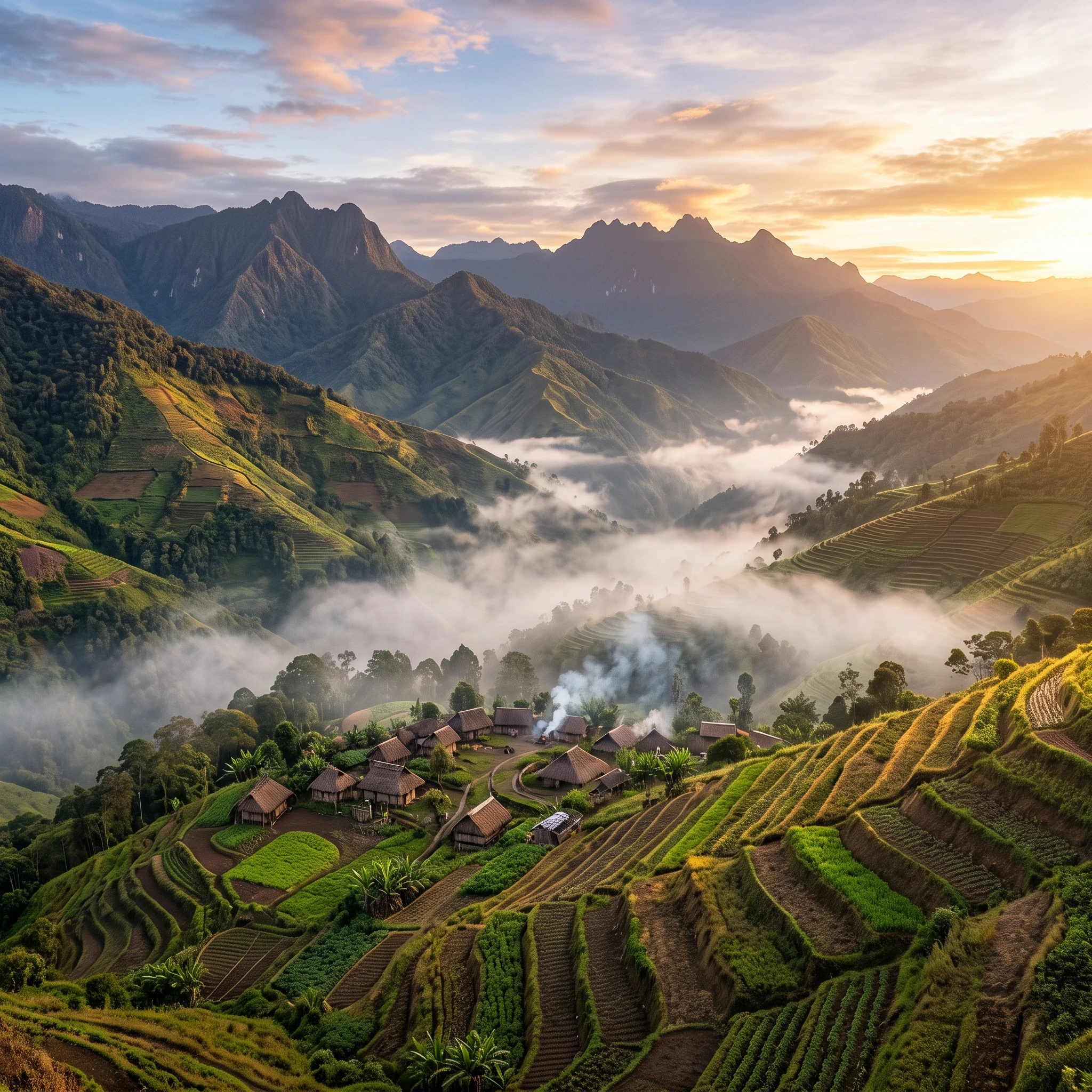
Linguists usually sort the country’s languages into two broad groups:
- Austronesian languages, found mainly along the coasts and on the islands. They are linked to seafaring peoples who reached the region roughly three thousand years ago, and they number around 200.
- Non-Austronesian languages, often called Papuan languages. This is a label of convenience, not a single family. It covers many separate families, the largest of which is Trans-New Guinea, and it includes most Highland languages.
You can see how the geography lines up with the language map in our guide to every province on the Papua New Guinea map, sorted by region. A single province, such as Morobe or Madang, can contain dozens of languages that are not mutually understood.
Tok ples: the home language of a village and a clan
Tok ples means, literally, “talk place”: the language of a place and its people. It is the first language most Papua New Guineans learn, spoken in the household, at gardens and at village gatherings. If you ask a Papua New Guinean “Tok ples bilong yu em wanem?” (what is your tok ples?), the answer tells you where their family comes from, often more precisely than the name of a province.
Tok ples is not one language. It is a category: every one of the 800-plus local languages is somebody’s tok ples. Many have only a few thousand speakers, and some have fewer. The largest, such as Enga, Melpa, Kuman (in Chimbu) and Huli, have speakers in the tens of thousands up to the low hundreds of thousands in the figures Ethnologue reports. Even these are small next to the national populations of most countries.
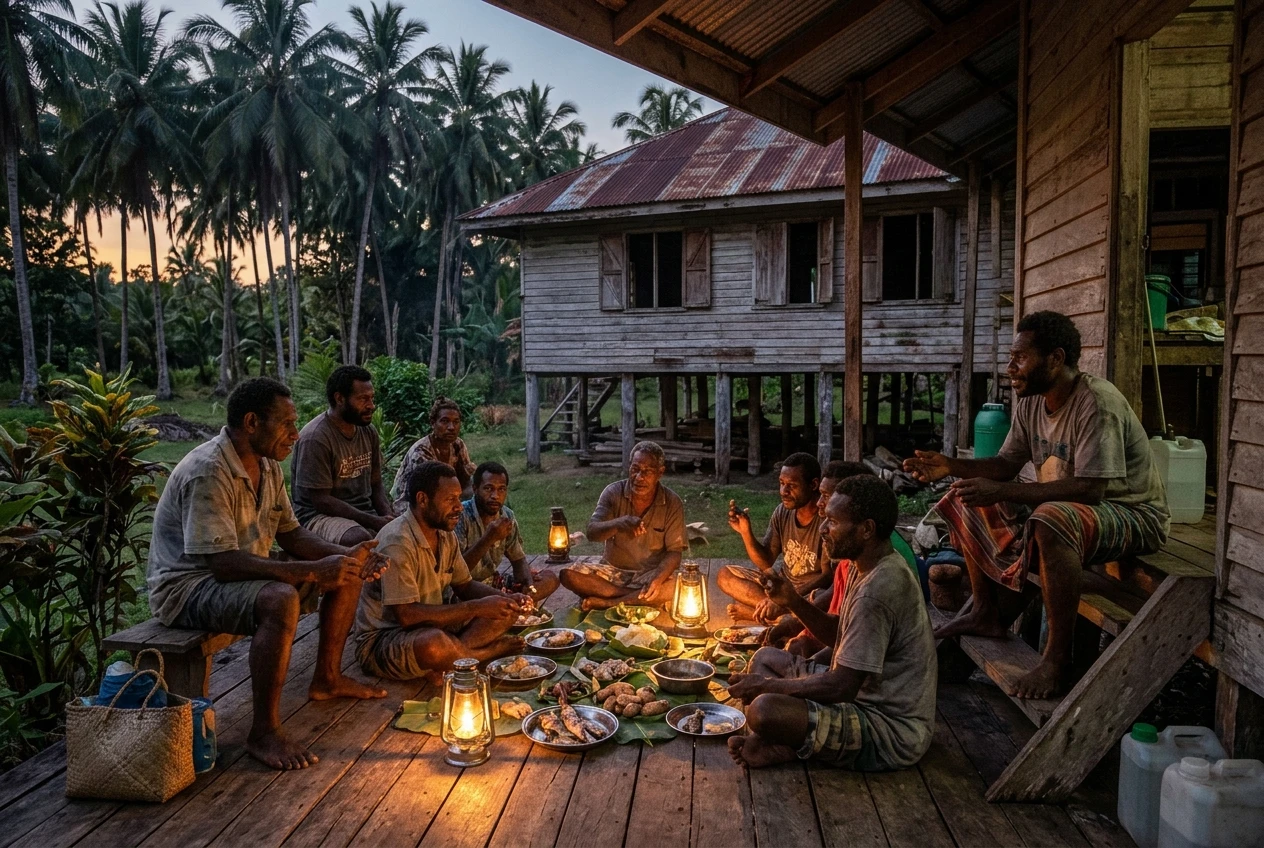
Tok ples carries things that the common languages do not carry as well: clan names, place names, songs, oral histories, kinship terms, and the words for gardening, customary law and ceremony. A person’s tok ples also sets out who counts as a wantok, a word from Tok Pisin meaning “one talk”. Speaking the same language creates an expectation of mutual help. In a city, a wantok may be the person who finds a newcomer a place to stay or a job lead.
Because the word covers so many different languages, writers should avoid treating “tok ples” as a language that can be learned. It is better to name the actual language: Tolai, Motu, Enga, Kâte, Kuanua, and so on.
Tok Pisin: how a trade language became the voice of the nation
Tok Pisin is an English-based creole, and the most widely understood language in the country. It began as a pidgin, a simplified contact language, in the nineteenth century. Labourers from many language groups were recruited to work on plantations in places including Queensland, Samoa and German New Guinea. They had no shared language, so they built one from the vocabulary of the English-speaking traders and overseers around them, combined with the grammar patterns of Melanesian languages. The name comes from the English words “talk” and “pidgin”.
German colonial rule in the northern part of the country left a few words behind. The verb rausim, “to remove”, comes from the German raus. Other words arrived by different routes: pikinini (child) has Portuguese roots and reached Tok Pisin through English. Related English-based creoles exist in Vanuatu, where it is called Bislama, and in Solomon Islands, where it is called Pijin.
The colonial period explains how the language spread, and the broader background is covered in our article on what you need to know about Papua New Guinea. After the Second World War, Tok Pisin spread further through the police, labour recruitment, the churches, and the movement of workers between regions. Today it is used in markets, buses, offices, church services and radio broadcasts. Wantok, a weekly newspaper, is published in it.
A pidgin has no native speakers by definition. Tok Pisin has since become a first language for some people, especially in towns such as Lae, Madang and Wewak and in households where parents come from different language groups. That change from second language to first language is what linguists mean by creolisation. Ethnologue’s figures put second-language speakers in the millions and first-language speakers far lower, in the low hundreds of thousands at most. Both figures vary by edition and by how a “speaker” is defined, so they are best read as an indication of scale.
Tok Pisin is also not a “broken English”. It has its own grammar. One example is the pronoun system, which distinguishes between “we including you” (yumi) and “we excluding you” (mipela), a distinction English does not make.
Hiri Motu and its roots in the Port Moresby region
Hiri Motu is a simplified form of Motu, the language of the Motu people who live around what is now Port Moresby. It takes its name from the hiri, the annual trading voyages in which Motu sailors travelled by sailing canoe to the Gulf of Papua to exchange clay pots for sago. These trading contacts gave neighbouring peoples reasons to understand some Motu.

During the colonial period in the southern part of the country, then called Papua, a pared-down version of Motu was adopted by the police and administration as a working language. It was known as Police Motu. It was later renamed Hiri Motu, reflecting its older trading roots and removing the link to policing.
Hiri Motu is concentrated in the Papua region: the National Capital District, Central Province and the Gulf area. Reference works commonly give figures of about 100,000 to 120,000 speakers, drawn largely from census data around the year 2000. Those numbers have been falling, because Tok Pisin has been gaining ground in Port Moresby, including among younger people. Because the data is old, readers should treat the figure as a rough guide.
Motu and Hiri Motu are not the same thing. Motu is the full language of the Motu and Koita communities of the Port Moresby area. Hiri Motu is the simplified lingua franca built from it, and it is spoken as a second language by many people who are not Motu.
English in classrooms, courts and parliament
English reached Papua New Guinea through British and Australian administration, and it remains the language of the formal state. Acts of Parliament are written in English. Textbooks, court records, government forms, contracts and university lectures are in English. The country’s English-language newspapers and television news bulletins use it as their main language.
Fluency varies widely. Many people who finish secondary school or university speak English confidently, while others, particularly in rural areas with limited schooling, understand little. This gap means that a government notice printed only in English can be out of reach for readers who speak Tok Pisin and tok ples perfectly well.
In daily life, English usually sits alongside the other languages instead of replacing them. In Parliament, written law and formal procedure are in English, while debate often moves between English and Tok Pisin. Village courts, which hear local disputes under custom, generally run in the language the community actually speaks. An office worker in Port Moresby may greet a colleague in Tok Pisin, write an email in English, and call a relative in tok ples on the way home.
Which languages are official, and what that means in daily life
Reference works generally describe English, Tok Pisin and Hiri Motu as the official languages of Papua New Guinea. In 2015 Parliament also recognised Papua New Guinean Sign Language as a fourth official language, which was an important step for Deaf communities. Because the wording of the legal provisions is more nuanced than most summaries suggest, anyone who needs to cite them for an essay or a legal purpose should consult the Constitution and the relevant Acts directly.
In practice, “official” does not mean equally used. English is the language of legislation and formal administration, and Tok Pisin is the language of everyday communication across regions. Hiri Motu’s reach is mostly confined to the Papua region and is shrinking. None of the 800-plus local languages is official, yet they are the languages in which most people first speak, pray, joke and settle family matters.
For students working on school assignments, a safe way to put it is: three official languages in use for national and cross-regional communication, a fourth recognised in 2015 for Sign Language, and hundreds of local languages with no official status.
Vernacular education and the fight to keep small languages alive
Children arriving at school in a village often speak only their tok ples. Teaching them in English from the first day makes learning harder, because they have to learn to read and understand the subject at the same time as learning a new language. Starting in the 1990s, a reform introduced elementary schools in which the first three years (a preparatory year and two elementary grades) were taught in the local language or a language the children understood, with English introduced as the main language of instruction from grade 3. Many communities wrote down their languages for the first time to make this possible.
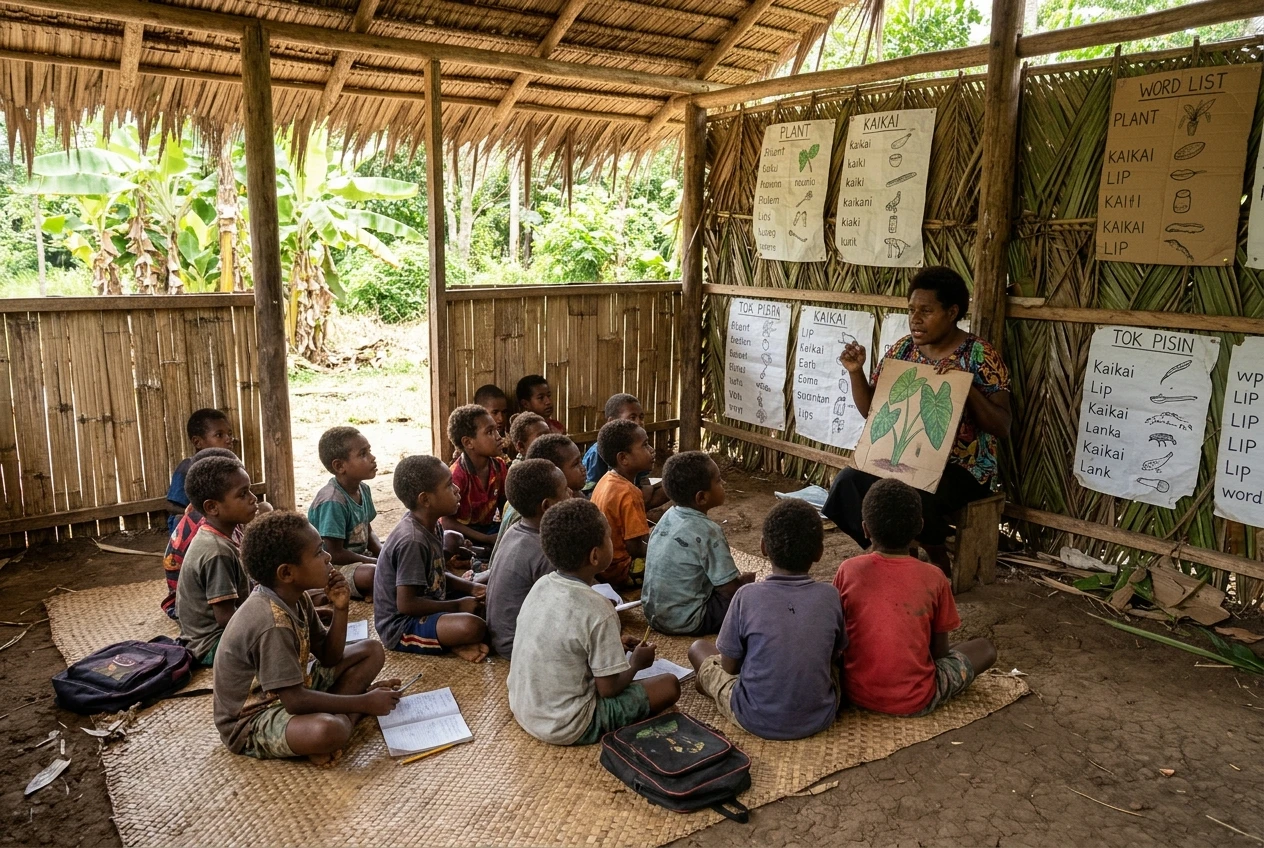
Government policy on the language of instruction has been revised since then, and there has been public debate about whether children are better served by earlier English. The current policy of the National Department of Education is the document to check before quoting any detail.
Researchers who track endangered languages, including those behind UNESCO’s Atlas of the World’s Languages in Danger, point out that many languages with very small speaker numbers are at risk. A language is most at risk when children stop learning it at home. In towns, children from mixed-language families often default to Tok Pisin or English, since those are the languages both parents share.
For Papua New Guineans overseas and for parents wanting to pass on a language, a few practical steps help:
- Speak the tok ples at home as the everyday language, not only on special occasions.
- Ask elders to tell stories, sing and name plants, places and relatives, and record them with their permission.
- Write down word lists and family names with their meanings, and check spellings with fluent speakers.
- Connect with other speakers from the same area through church groups, community associations and social media.
A language that is spoken, recorded and used by children has a far better chance of surviving than one that is only remembered.
Common questions about PNG languages, with a few Tok Pisin phrases explained
How many languages are spoken in Papua New Guinea?
Around 840 living languages, according to Ethnologue. Other catalogues give slightly different totals because they draw the boundary between language and dialect differently.
What is the most widely spoken language?
Tok Pisin is the most widely understood across regions, and most speakers learned it as a second language. Among local languages, Enga, Melpa, Kuman and Huli are among those with the most speakers.
Does everyone in Papua New Guinea speak Tok Pisin?
No. Use varies by region, age and schooling. Many people speak their tok ples plus Tok Pisin, and some also speak English or Hiri Motu.
Is Tok Pisin the same as English?
No. It draws most of its vocabulary from English, but it has its own grammar, such as the yumi and mipela distinction, and an English speaker will not understand it without learning it.
A few Tok Pisin phrases
- Gude (hello), Monin (good morning), Apinun (good afternoon), Gutnait (good night)
- Yu stap gut? (How are you?) and the reply Mi stap gut (I am well)
- Wanem nem bilong yu? (What is your name?)
- Tenkyu tumas (thank you very much)
- Sori (sorry)
- Mi no save (I don’t know)
- Lukim yu (see you later)
- Wantok (someone who speaks your language, and by extension, a person you owe and are owed loyalty)
- Haus sik (hospital), literally “sick house”
Phrase spellings can vary between speakers and publications, since Tok Pisin has an official orthography that not everyone follows in informal writing.
Tell us which language you grew up speaking and what your village calls it. Send your story through our Contact page so we can feature community voices from every province.