

Rugby league in Papua New Guinea is played and followed in a country with more than 800 languages, where a journey between two provinces can mean a different language, different customs and a different history. Few things are watched, argued about and celebrated across all of that. The Kumuls, the national team, are one of them. A Highlands market and a coastal village can end up discussing the same match in different languages.
This article asks how one game manages that, using examples from the Highlands, the coast, the islands and the diaspora. It also covers where the story gets complicated.
A Game Played in Every Province, in Every Language
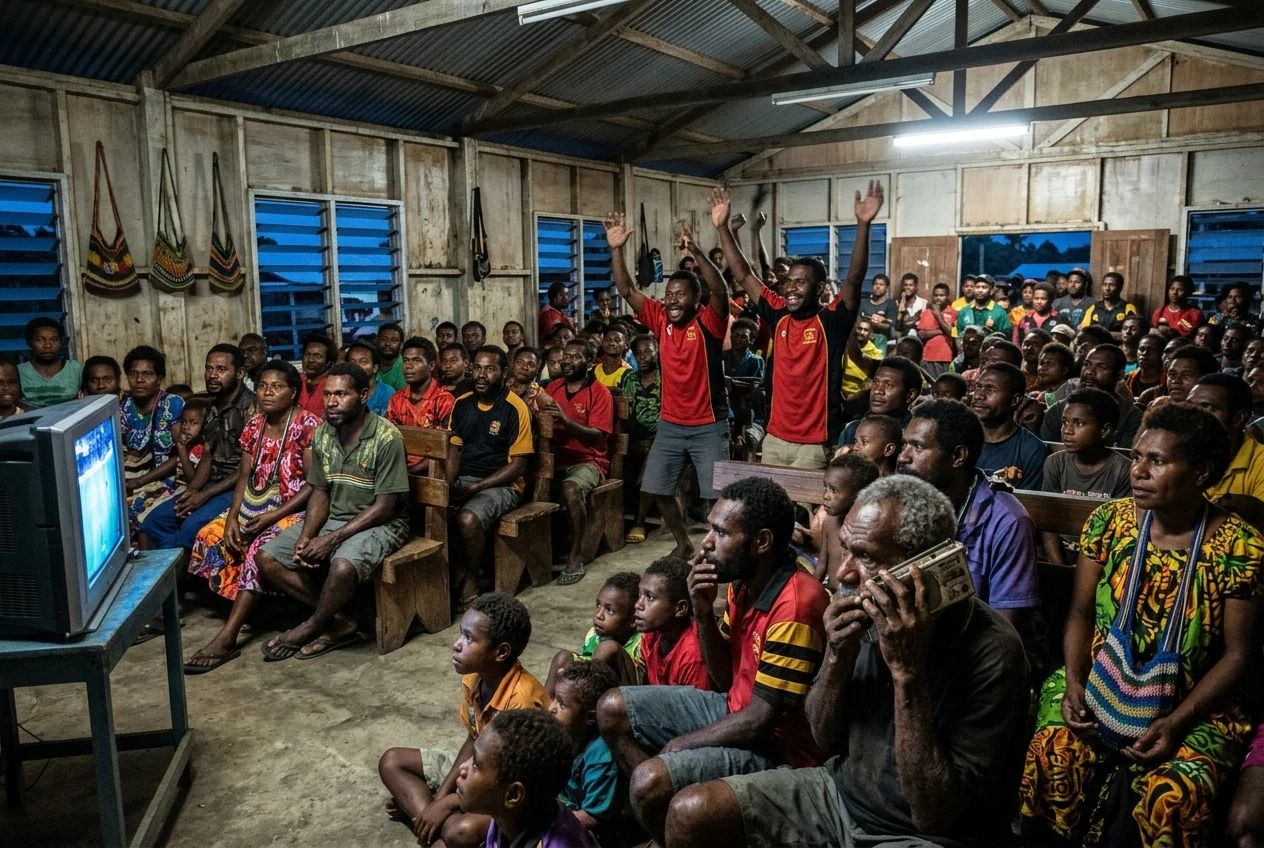
Rugby league is widely regarded as Papua New Guinea’s national sport, and the reason is reach more than rules. The game needs a ball, an open patch of ground and enough people to make two sides. Those are available in almost every village and town in the country.
Language is not a barrier on the field. Players from different language groups coordinate through Tok Pisin and through the plain logic of the game: a pass, a tackle, a try. Commentary and sideline talk move between Tok Pisin, English and local languages, often in the same conversation.
The sport also gives people a shared reference point that does not belong to any one region. A Papua New Guinean from Kundiawa and another from Alotau may have little in common culturally, but both know what it means when the Kumuls score late.
How Rugby League Reached PNG and Became the National Sport
Rugby league arrived under Australian administration, carried by the same colonial networks that brought schools, police, mission stations and workplaces to the territory. Australia’s own passion for the game shaped what was played in those places. As more Papua New Guineans took up the sport, organised competitions grew in the main towns and then beyond them.
The game stayed after independence in 1975 because it had already taken root locally. Papua New Guineans were not just receiving a foreign sport; they were adapting it, playing it their own way and building their own competitions. For the wider background on this period, our Papua New Guinea history timeline sets out the events around independence.
An imported sport can become a national one when people stop thinking of it as imported. In PNG that happened because the game suited communities that already valued physical courage, team loyalty and public gatherings.
The Kumuls and the Moments the Whole Country Stops
The national team takes its name from the kumul, the bird of paradise that appears on the national flag. The name ties the team to the country’s best-known symbol rather than to any province.
When the Kumuls play, particularly against Australia or in a World Cup, attention shifts toward the match. People gather around radios and televisions in homes, canteens and community halls, and those with phone coverage follow along online. Games in Port Moresby draw crowds that include supporters who travelled from other provinces.
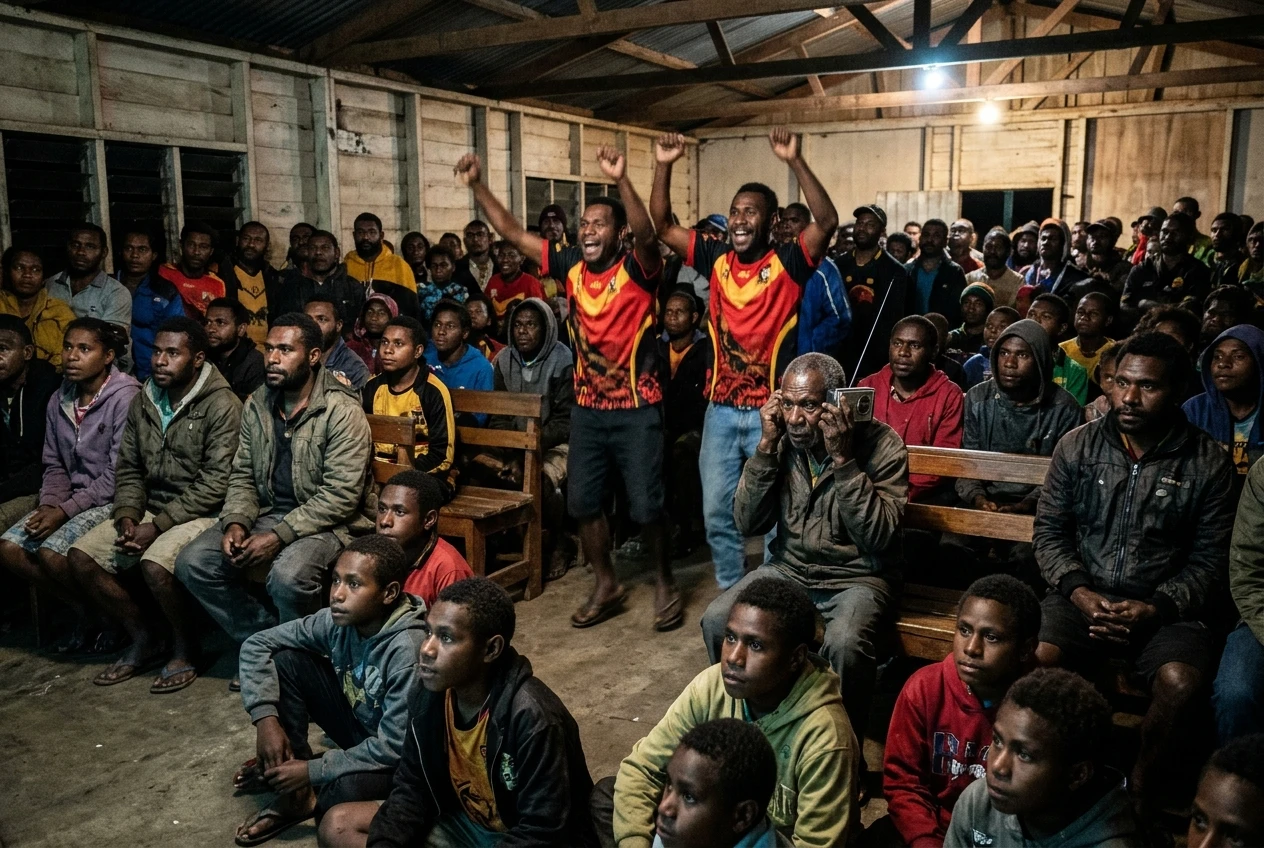
PNG co-hosted matches at the 2017 World Cup and the Kumuls reached the quarter-finals. That tournament put the national team in front of home crowds in a way that many fans had not experienced before, and it is still referred to as a high point.
A national team works as a unifier because everyone can claim it. A Kumuls shirt does not say which province or language group you come from.
From Village Fields to Stadiums: Grassroots League Across the Regions
The sport looks different depending on where you are standing.
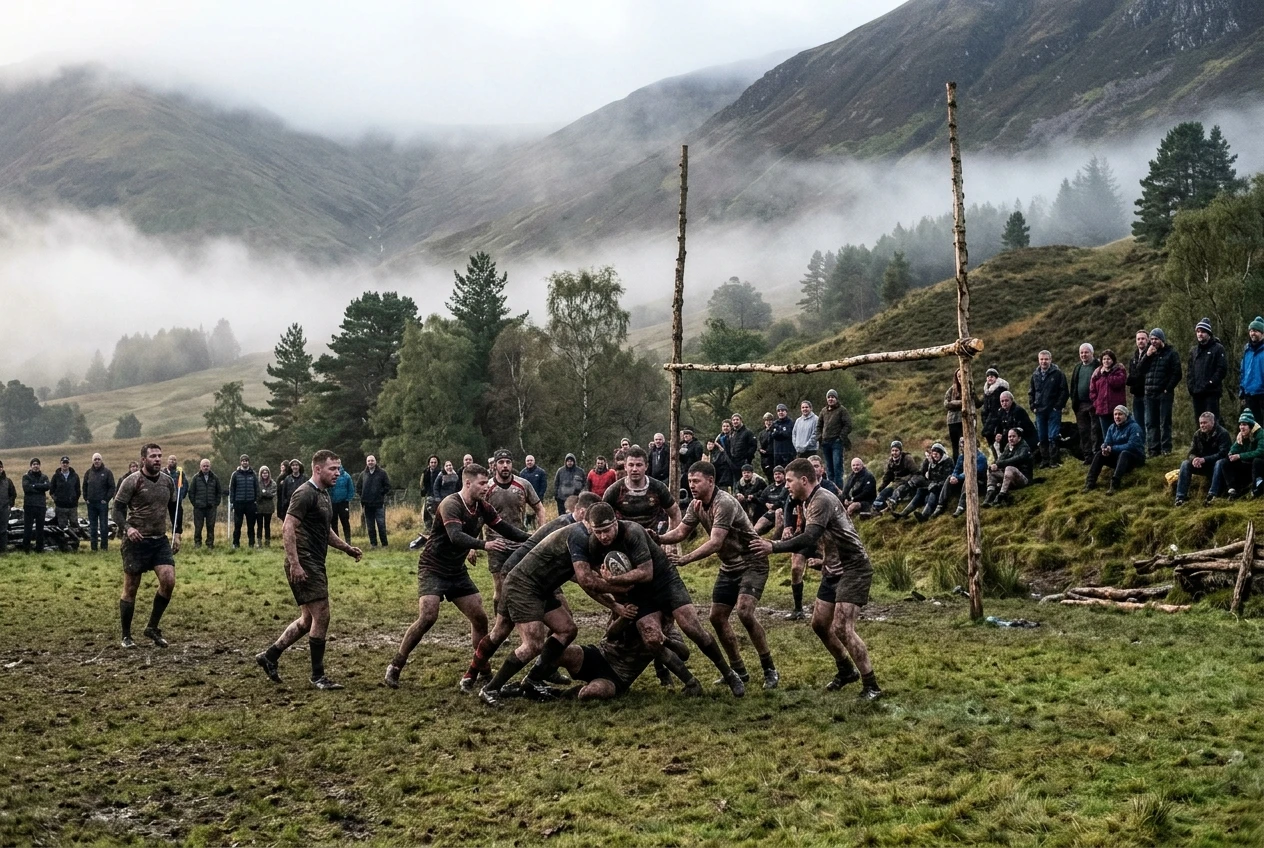
- Highlands towns: Places such as Mount Hagen, Goroka and Mendi are known for passionate crowds and for producing strong, physical players. Local club sides carry the identity of their district, and match days can draw large gatherings.
- Coastal communities: In towns such as Lae and Madang, league sits alongside other sports and often follows a more mixed crowd, with workplace and school teams playing a big part.
- Islands: In New Guinea Islands towns such as Kokopo and Kimbe, local competitions carry a strong community identity and often connect to the same networks that organise church and school events.
- Port Moresby: The capital draws people from every province, so club and school games there often mix supporters with very different backgrounds.
Club names often come from towns or provinces, such as the Lae Tigers and the Mendi Muruks, so supporters see their own place represented. Below that level, the game exists on school grounds, village fields and community pitches that rarely appear in any news coverage. Much of what the national team becomes starts in those places.
If you want to place these regions on a map, our guide to every province on the Papua New Guinea map sorts them by region.
What Happens When Rival Communities Share One Team
This is where the game does something difficult. Competition between neighbouring groups can be intense in PNG, and local rivalries are real. Yet when a province team, a school side or the national team is chosen, players from groups that might compete off the field are asked to work together.
The pressure to win gives them a reason to cooperate. Selection, in principle, rewards skill rather than origin, and a good player becomes valued by a whole team’s supporters regardless of where he or she comes from.
This does not remove rivalry. Supporters often back a star from their own area first, and disappointment over selection can feed old tensions. What the sport provides is a place where people from different backgrounds can be on the same side, at least for eighty minutes. For many young players, a representative team may be the first place they spend extended time with people from another language group.
Why PNG Fans Follow State of Origin and the NRL So Passionately
Many Papua New Guineans follow Australia’s National Rugby League (NRL) closely, and the annual State of Origin series between Queensland and New South Wales draws particular loyalty. Fans in PNG often pick a side, and Queensland support is especially strong. People talk about the games at work and in markets, and some gather in groups to watch them.
There are a few reasons for this connection:
- Familiar players: Papua New Guineans have played at the top level of Australian league, and fans follow their progress closely.
- Geography: Queensland is Australia’s nearest state to PNG and has strong ties to the country through travel, work and family.
- Quality of play: The NRL and State of Origin represent the highest standard of the sport, so they attract fans who want to see the game played at its best.
The Hunters, a Port Moresby based team, compete in Queensland’s state competition and won the 2017 premiership. That gave PNG fans a local side measured directly against Australian clubs.
There is also an annual Prime Minister’s XIII match in Port Moresby against an Australian side, which links the game to relations between the two governments.
Papua New Guineans Overseas and the Game as a Link to Home
For Papua New Guineans living in Australia, particularly in Queensland, rugby league is one of the most direct ways to stay connected with home. Community teams, gatherings and informal matches bring people together, and Kumuls fixtures are often watched as a group.
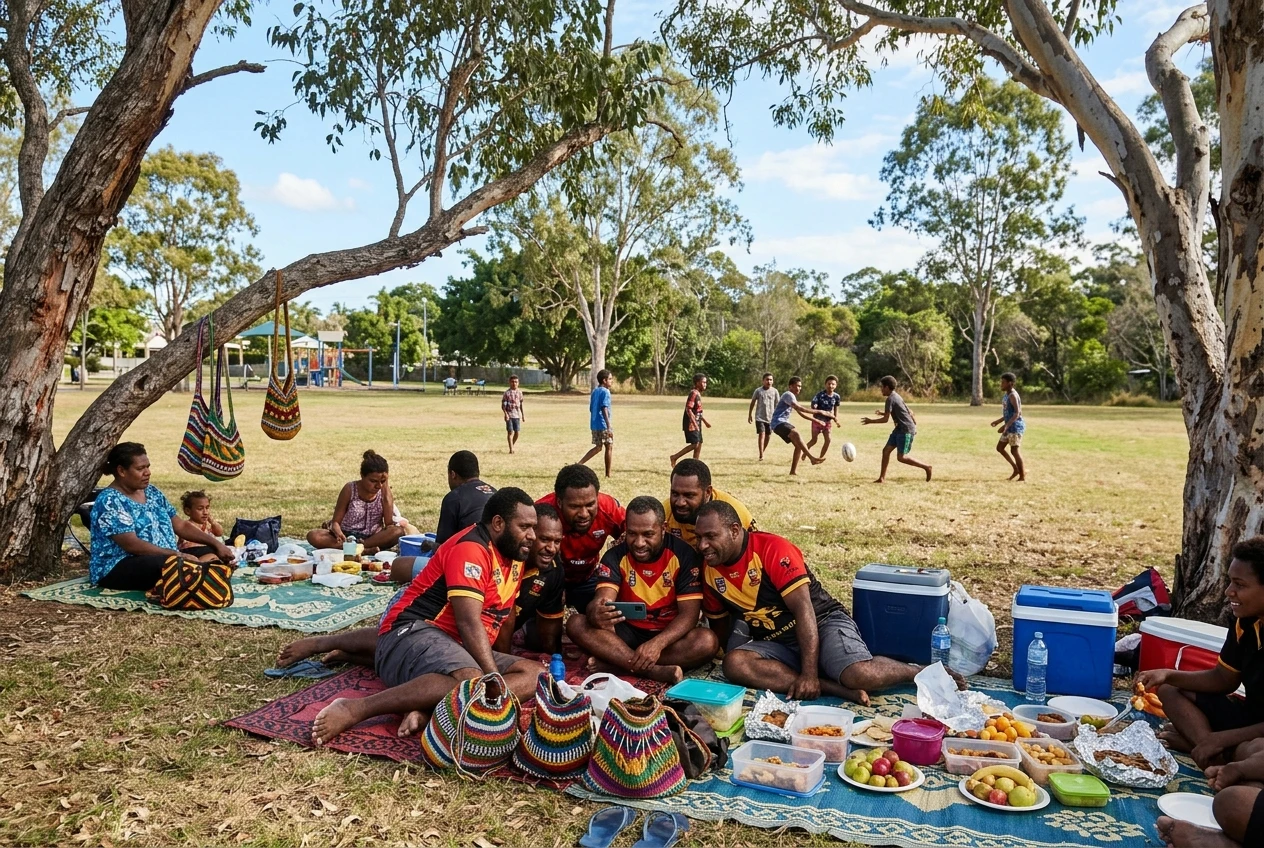
The game gives people overseas something specific to talk about with relatives in PNG. A phone call can start with the score. For students and workers living far from their provinces, a match is a reason to meet others who share the same background.
It also helps the next generation. Children born or raised abroad may know little about their parents’ village, but they often know the Kumuls. Rugby league can be a first step toward asking questions about heritage, language and home province. For readers who want to follow that curiosity, our piece on the cultural festivals that show PNG at its most spectacular is a good next read.
Where the Chiefs and the Next Generation of Players Fit In
The planned PNG Chiefs team, announced in 2024 with a view to joining the NRL, is the next stage in this story. If it goes ahead as planned, it will give young Papua New Guineans a professional pathway based in their own country rather than only through moving abroad. We cover the meaning of the name and identity in our PNG Chiefs identity article, so this article does not repeat it here.
For a young player in a village or town, the existence of a home based professional team changes what is imaginable. Clubs, schools and local competitions may gain more attention if a clear route to the top exists.
Because plans like this depend on funding, facilities and organisation, readers should check current announcements from the clubs and league bodies for timing and details.
The Limits of the Story: Rivalry, Resources and Pitch Behaviour
A fair account of rugby league in Papua New Guinea has to include its problems.
Rivalry can turn ugly. The same strong identification with a team or district that makes matches exciting can lead to trouble. Crowd disputes and fights have occurred at some games, and old community disagreements can follow players and supporters to the ground. Not every match unites; some reveal divisions.
Resources are uneven. Facilities, equipment and coaching vary widely between regions. Many players develop on rough or unmarked fields, and talented players in remote areas may never be seen by selectors. A national game that depends on a few well-supported centres leaves many players out.
Behaviour on the pitch matters. Violence and indiscipline during matches harm the sport’s reputation and put players at risk. Referees, clubs and community leaders play a part in keeping games safe, and supporters have a role too.
The sport is not the only thing that unites people. Churches, schools, markets and family networks all connect Papua New Guineans across regions. Rugby league adds to them rather than replacing them, and it cannot solve problems of governance, services or inequality.
Acknowledging these limits makes the achievements more credible. The game earns its place because it works in difficult conditions, not because it is free of difficulty.
Share Your Rugby League Story
Tell us about the rugby league team, field or player that matters most in your village, town or province. Send your story through our Contact page and it could be featured in our community stories.

